Hear from Our Customers
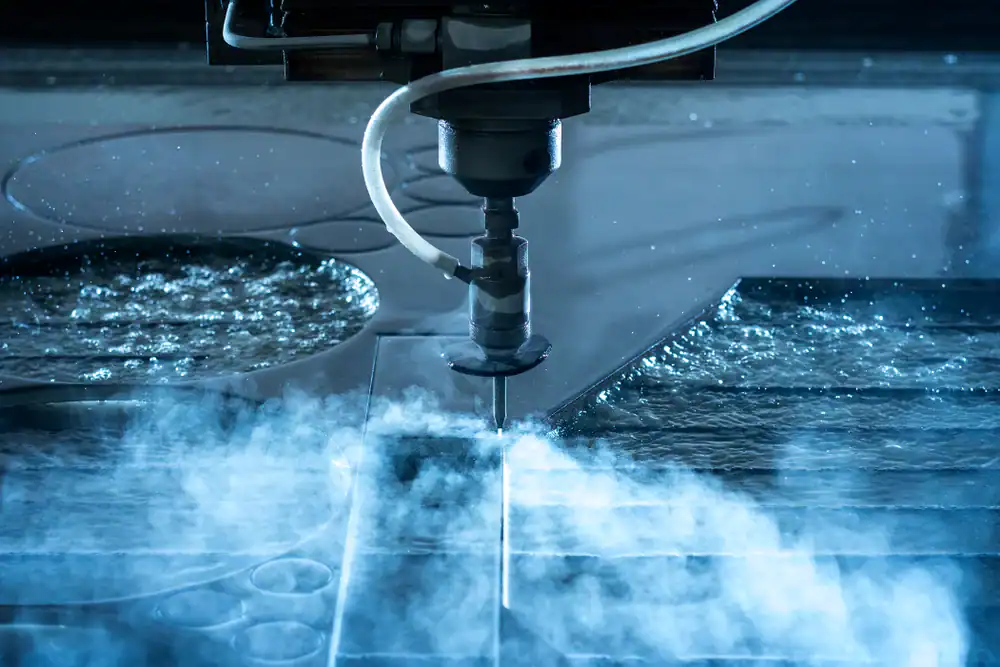
You need components that meet spec without the headaches of heat-affected zones, burrs, or edges that need rework. Waterjet cutting gives you that because there’s no thermal process altering your material properties.
The edge comes out clean. The dimensions stay accurate. And you’re not paying for secondary operations to fix what traditional cutting damages.
Whether you’re working with thick steel plate, aluminum, composites, or architectural metals, the cut quality stays consistent. No recast layers. No hot cracking. No discoloration that needs grinding out later.
That means your parts go straight into assembly or installation. Your timelines stay on track. And you’re not eating costs on material waste or do-overs because something warped during cutting.
We run Flow Mach 500 CNC controlled systems that cut directly from your CAD files. That means what you design is what you get, with tolerances holding to ±0.003″ across the entire part.
We’re based in West Islip and serve manufacturers, fabricators, and designers across Long Island, NY who need precision without the overhead of owning waterjet equipment themselves. Our team includes experienced designers who can take your concept and turn it into production-ready plans if you need that support.
Every component gets inspected for dimension, edge finish, and squareness before it leaves our shop. You’re not getting parts that “mostly” meet spec—you’re getting components that fit your application the first time.
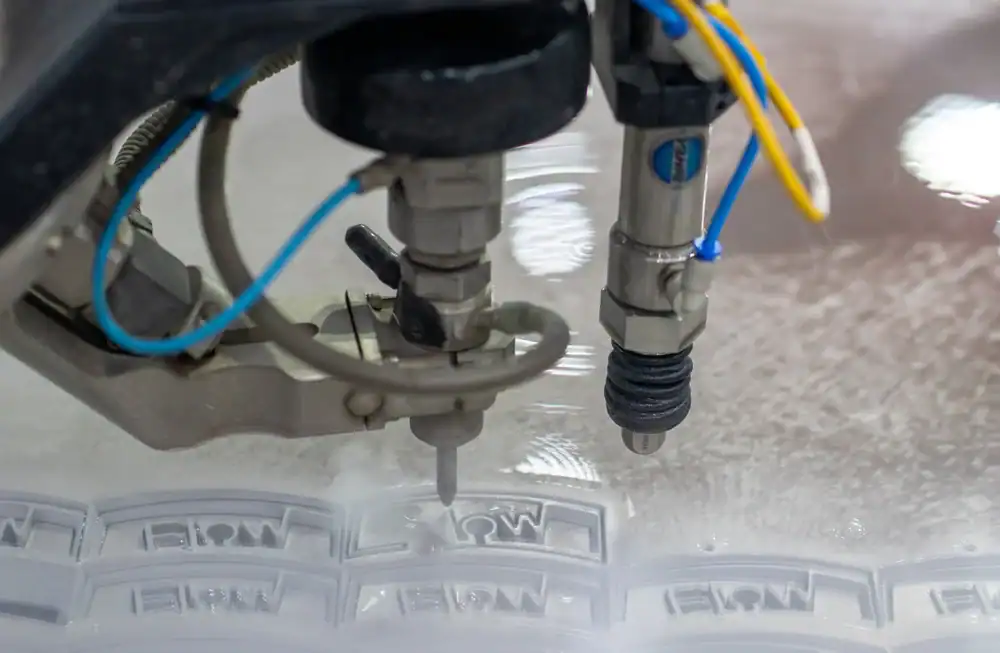
The process starts with your CAD file. Our CNC system reads your design and maps the exact cutting path, accounting for material thickness and edge quality requirements.
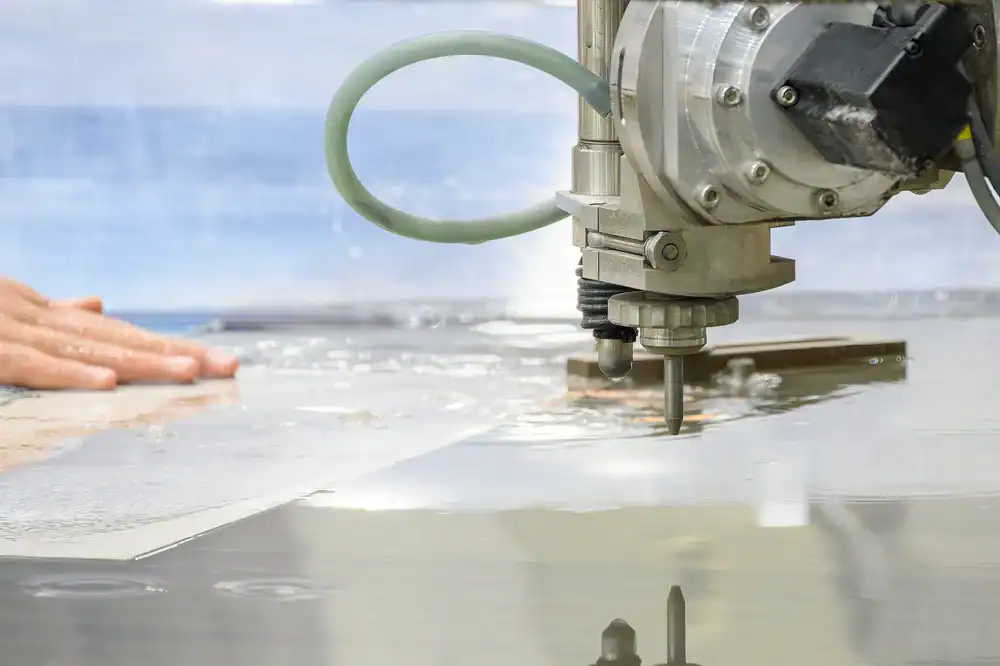
Water gets pressurized to around 60,000 PSI and mixed with garnet abrasive. That stream cuts through your material with a kerf width of about 0.030″—narrow enough to maximize material usage and maintain tight nesting.
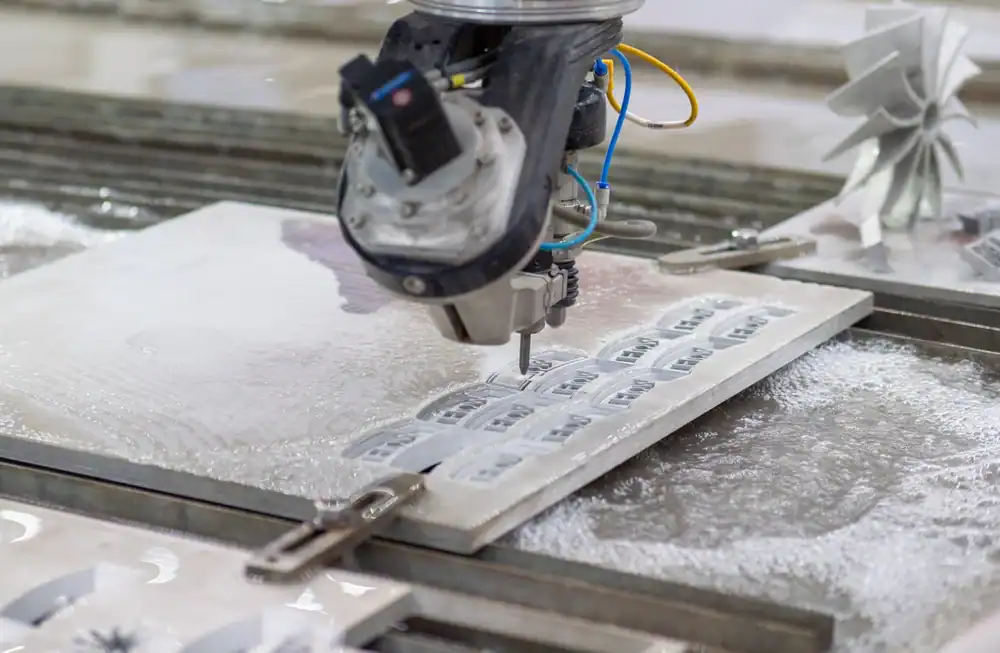
The cutting head moves along your programmed path, controlled by the CNC system. There’s no blade wearing down or torch heat warping the material. Just a focused stream that cuts clean through thicknesses up to 12 inches.
Because there’s no heat, your material properties stay intact. No hardening at the cut edge. No softening from thermal exposure. The molecular structure of your material remains exactly as it was before cutting.
After cutting, each part gets pulled and inspected. We check dimensions against your specs, verify edge quality, and confirm squareness. If it doesn’t meet the tolerances you need, it doesn’t ship.
Ready to get started?
You get parts cut to your exact specifications with Q3 to Q5 edge quality ratings, depending on your application requirements. That edge finish comes straight off the machine—no secondary grinding or deburring needed for most applications.
Material versatility matters when you’re working on varied projects across Long Island, NY’s manufacturing and architectural sectors. We cut metals, composites, stone, glass, and plastics with the same equipment. You’re not limited by what a plasma table or laser can handle.
Design support is included when you need it. If you’re still working through the engineering phase, our team can help optimize your design for waterjet cutting. That means better material utilization, faster cutting times, and lower costs for your project.
Bohemia’s industrial corridor includes aerospace suppliers, marine fabricators, and architectural metalworkers who all face the same challenge: finding precision cutting that doesn’t compromise material integrity. Waterjet cutting solves that because the process is inherently cold. Your stainless stays stainless. Your aluminum doesn’t get heat streaks. Your composites don’t delaminate.
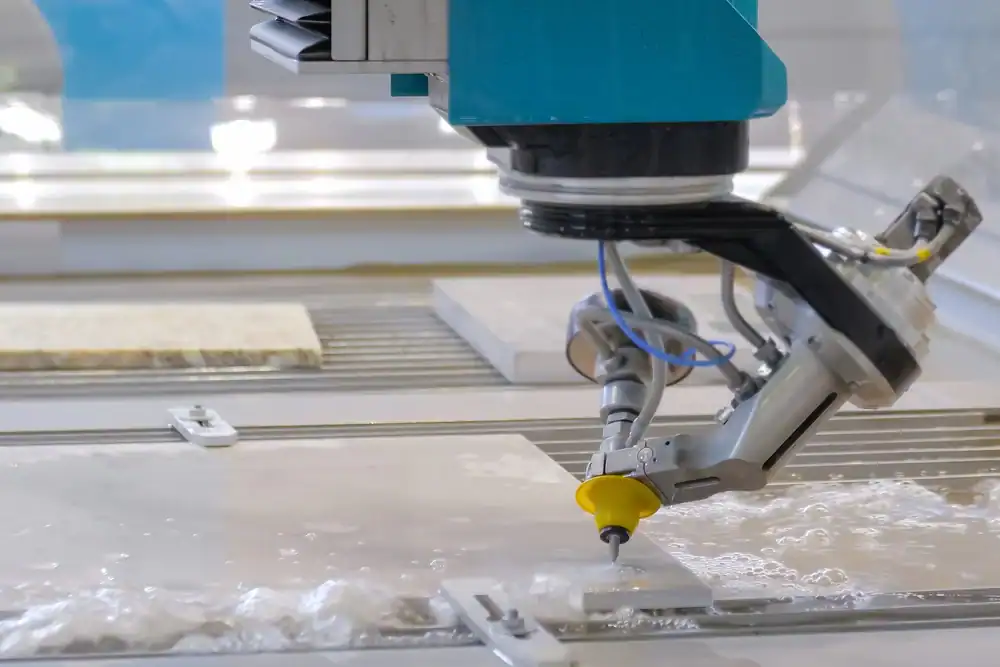
Waterjet cutting works across nearly any material you’re likely to specify. Metals like steel, stainless, aluminum, titanium, and copper cut cleanly without heat distortion. Composites, carbon fiber, and fiberglass cut without delamination because there’s no thermal stress pulling layers apart.
Stone, granite, marble, and glass cut precisely for architectural applications. Plastics, rubber, and foam cut without melting or compression. Even exotic materials like Inconel or hardened tool steel cut effectively because the abrasive stream doesn’t care about material hardness the way traditional tooling does.
The real advantage shows up when you’re working with materials that don’t respond well to heat. If laser or plasma would warp it, harden the edge, or create a heat-affected zone that compromises your application, waterjet cutting eliminates that problem entirely. The material stays at ambient temperature throughout the cutting process.
Our CNC waterjet systems hold tolerances to ±0.003″ to ±0.005″ depending on material thickness and complexity. That’s tight enough for most precision manufacturing applications without requiring secondary machining.
The accuracy stays consistent across the entire part because there’s no tool deflection or wear changing your dimensions mid-cut. The water stream doesn’t dull like a blade or drift like a torch. Your first part and your hundredth part come out dimensionally identical.
Edge squareness matters for fit and assembly. Waterjet cutting maintains perpendicularity through the full thickness of your material. You’re not dealing with taper or bevel that throws off your assembly tolerances. That’s especially critical when you’re cutting thick plate where even a degree or two of taper creates major fit issues.
For applications requiring even tighter tolerances, we can program multiple passes or adjust cutting speed to achieve the edge quality and dimensional accuracy your project demands.
Turnaround depends on material availability, cutting complexity, and current shop schedule. Simple cuts on common materials often complete within a few days. More complex projects with multiple setups or specialized materials might take a week or two.
The advantage of CNC waterjet cutting is that programming happens quickly. Once we have your CAD file, our system can generate toolpaths and start cutting without the lengthy setup traditional machining requires. You’re not waiting for custom tooling or fixturing to be fabricated.
We can usually accommodate rush projects if you’re facing a tight deadline. Long Island, NY’s manufacturing pace means we understand that timelines shift and you sometimes need parts faster than originally planned. Communication matters here—the earlier you can give us visibility into your schedule, the better we can plan cutting time.
Production runs benefit from the setup efficiency of CNC control. After the first part is programmed and verified, subsequent parts run automatically. That means larger quantities don’t necessarily mean proportionally longer lead times.
Most waterjet cut parts don’t require secondary finishing because the edge quality comes out clean enough for direct use. You get a satin-smooth finish without burrs, slag, or rough spots that need grinding.
Edge quality ratings range from Q1 (roughest, fastest cutting) to Q5 (smoothest, slower cutting). For structural components where the edge won’t be visible, Q3 works fine and cuts faster. For parts where appearance or smoothness matters, Q5 delivers a finish that looks almost polished.
Compare that to plasma cutting, which leaves dross and slag that must be ground off. Or laser cutting, which can leave a recast layer that needs removal for critical applications. Or mechanical sawing, which leaves burrs and tool marks requiring deburring.
The only time you might need secondary operations is when you require threaded holes, counterbores, or features that waterjet can’t create. But the perimeter cutting and through-holes come out ready to use. That saves you time and labor costs on finishing work.
Waterjet cutting costs more per hour than plasma or oxy-fuel cutting but less than laser for thick materials. Our operating costs run around $14 per hour, which includes water, abrasive, power, and equipment wear.
Where waterjet cutting saves you money is in reduced material waste and eliminated secondary operations. The narrow kerf width means you can nest parts tighter, getting more components from each sheet. The clean edge finish means you’re not paying for grinding or deburring labor.
For prototype work or short runs, waterjet cutting often costs less overall because there’s no expensive tooling to amortize. You send a CAD file and get parts. No dies to build. No custom fixtures to fabricate. Changes to your design just mean updating the program.
Thick material cutting is where waterjet really shows cost advantages over laser. Laser cutting slows dramatically and loses edge quality on materials over half an inch thick. Waterjet maintains consistent cutting speed and quality through materials up to 12 inches thick. If you’re cutting 2-inch plate, waterjet will likely cost less and deliver better results than laser.
Waterjet cutting scales effectively from single prototype parts to production runs of hundreds or thousands of components. The CNC programming means setup time is minimal regardless of quantity.
For prototypes, you get the advantage of cutting directly from your CAD design without investing in hard tooling. Make design changes, update the file, and cut a new version. That iteration speed helps you refine your design before committing to production.
Production runs benefit from the repeatability of CNC control. Once the program is verified on the first part, every subsequent part comes out identical. There’s no tool wear changing your dimensions or edge quality degrading as you cut more parts.
The economic crossover point depends on your specific application. For simple shapes in thin material, stamping or laser might be more cost-effective at very high volumes. For complex shapes, thick materials, or moderate production quantities, waterjet cutting often delivers the best combination of quality, flexibility, and cost. You’re not locked into a single design because tooling is expensive to change.
Useful Links
Other Services we provide in Bohemia