Hear from Our Customers
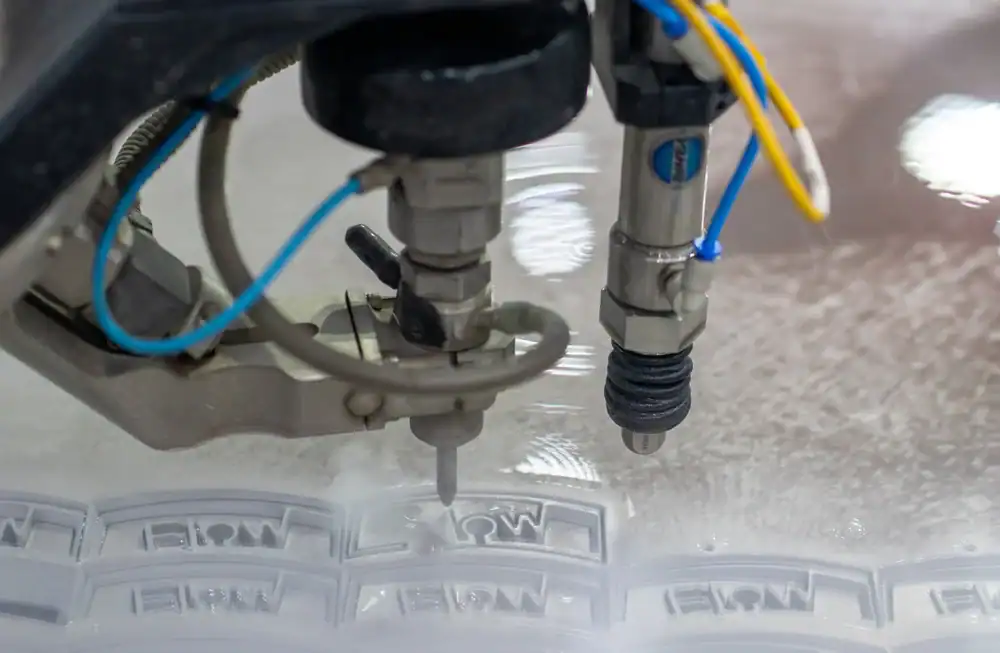
You’re not looking for someone who can “try” to cut your parts. You need them done right the first time, on spec, without the usual headaches that come with heat-based cutting methods.
That’s what high pressure water cutting in Centereach, NY does differently. The process uses a focused stream of water mixed with abrasive garnet to cut through virtually any material without generating heat. No warping. No microcracks. No changes to your material’s properties.
What that means for you: thinner materials don’t buckle, hardened metals don’t lose their temper, and brittle stone doesn’t shatter mid-cut. You get parts that match your design file down to ±0.003 inches, with edges clean enough that most jobs skip secondary finishing entirely.
If you’re dealing with complex shapes, tight tolerances, or materials that don’t respond well to saws or lasers, this is the process that handles it without the drama. One setup. One cut. Done correctly.
We operate out of Centereach, NY, serving manufacturers, fabricators, contractors, and designers across Long Island, NY and the surrounding tri-state area. We run a Flow Mach 500 system—CNC-controlled and programmed directly from your CAD files.
That means your drawings translate into cuts without interpretation errors or manual adjustments. What you design is what gets produced. We’ve built our reputation on that consistency, especially with clients who can’t afford rework or delays.
Whether you’re prototyping one piece or running a production batch, the process stays the same. Load your file, confirm material and thickness, and we handle the rest. No tooling changes. No heat zones. No surprises.
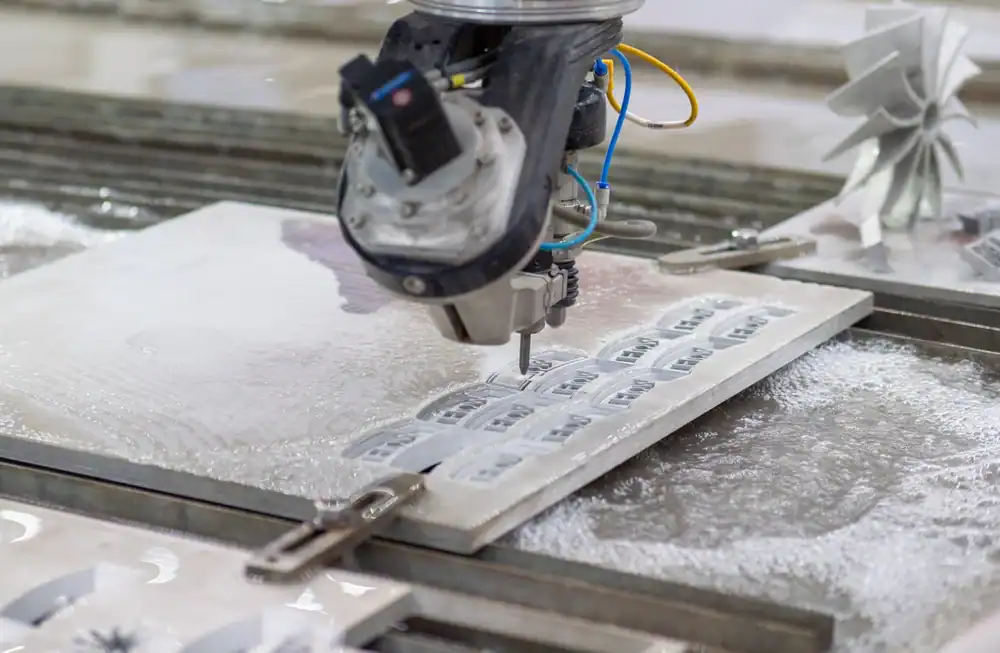
The process starts with your CAD file. You send us your design—DXF, DWG, or most vector formats work—and we program it directly into the CNC system. No redrawing. No approximations.
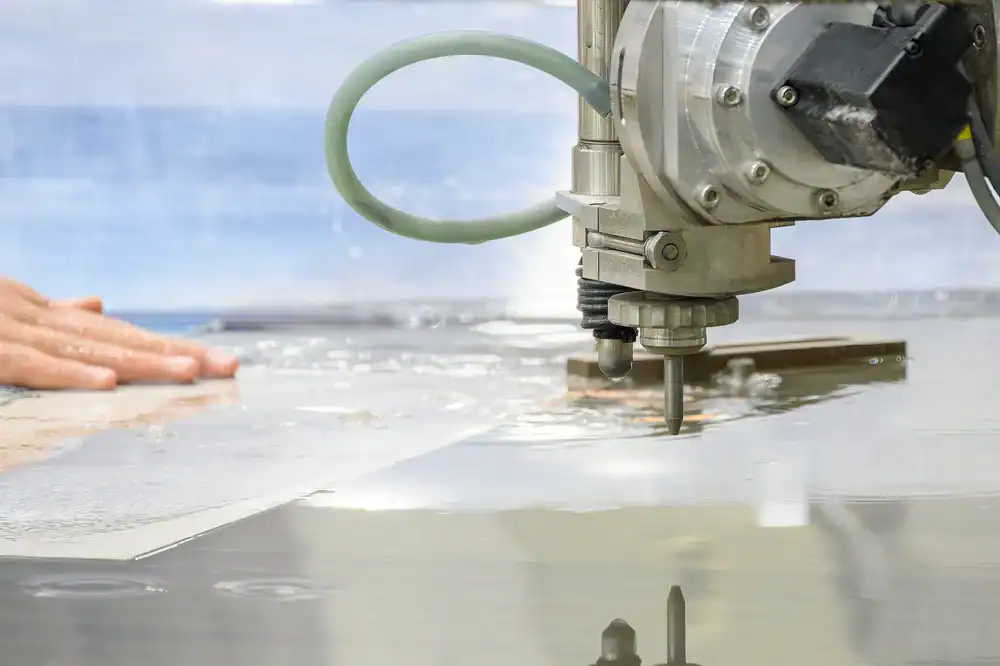
From there, we set up your material on the cutting bed. The waterjet nozzle follows the programmed path, directing a stream of water and garnet abrasive at up to 60,000 PSI. It cuts through the material in a single pass, with a kerf width thinner than most saw blades. Because there’s no heat involved, the material doesn’t expand, contract, or harden along the cut line.
Once the cut is complete, parts come off the table ready to use. Edges are smooth and burr-free in most cases. If your specs call for tighter tolerances or specific finishes, we can dial in those details before the first cut. You’ll see a test piece if needed, so there’s no guessing about how the final run will turn out.
Turnaround depends on complexity and volume, but most jobs move faster than you’d expect. No tool changes means no downtime between cuts, even if you’re switching materials or shapes mid-run.
Ready to get started?
You get direct CAD-to-cut programming, so your files drive the machine without manual layout. That eliminates human error and keeps dimensions consistent across every piece, whether you’re ordering one or a hundred.
Material flexibility is built in. Metal, stone, glass, composites, plastics, rubber—if it’s cuttable, we can handle it. Thickness isn’t a limiting factor either. We’ve cut materials from paper-thin gaskets to steel plate over an inch thick, all on the same machine.
For Centereach-area contractors and fabricators, that versatility matters. Long Island, NY projects often involve custom architectural elements, marine components, or specialized manufacturing work where off-the-shelf parts don’t exist. Waterjet cutting fills that gap without requiring you to invest in dedicated equipment or deal with multiple vendors for different materials.
You also avoid the environmental and safety issues that come with thermal cutting. No fumes, no hazardous byproducts, and no fire risk. The water and abrasive get filtered and recycled. If you’re working in occupied buildings or tight spaces around Centereach, that’s a practical advantage you’ll notice immediately.
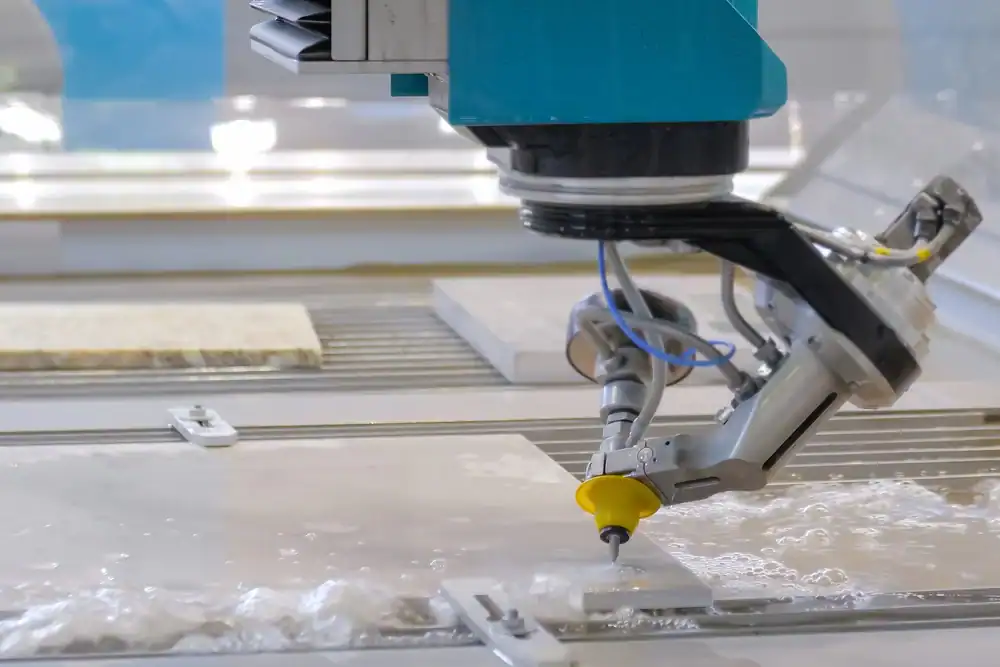
Waterjet cuts materials that would crack, melt, or distort under heat-based methods. Tempered glass, for example, shatters when you try to cut it with a saw due to internal tension. Waterjet handles it cleanly because there’s no mechanical stress or temperature change.
The same goes for composites and laminates. Laser cutting can delaminate layers or burn resin. Plasma leaves a heat-affected zone that weakens the edge. Waterjet keeps everything intact because it’s a cold process—just erosion from high-pressure water and abrasive.
Hardened tool steels, titanium, and Inconel are also easier to cut with waterjet. These materials resist traditional machining and dull cutting tools quickly. Waterjet doesn’t care about hardness. It cuts through without wearing down or requiring tool changes, which saves time and keeps costs predictable.
Standard waterjet cutting holds tolerances around ±0.005 inches, which covers most fabrication and manufacturing work. If your project requires tighter specs, we can achieve ±0.002 inches with test cuts and calibration, though that level of precision takes more setup time.
Accuracy depends partly on material thickness and type. Thinner materials (under half an inch) tend to hold tighter tolerances because there’s less opportunity for the stream to wander. Thicker materials can still hit tight specs, but it requires slower cutting speeds and sometimes multiple passes.
The CNC control helps maintain consistency across production runs. Once we dial in the settings for your first part, every subsequent piece comes out the same. That repeatability matters when you’re making parts that need to fit together or match existing components without adjustment.
Most waterjet cuts produce edges smooth enough to use as-is, especially on metals and plastics. You’ll see some texture from the abrasive, but it’s typically finer than what you’d get from a saw or plasma cutter. For parts that get welded, bolted, or hidden from view, no additional finishing is usually necessary.
If you need a polished edge or specific surface finish, that’s a secondary operation. But even then, waterjet gives you a head start. There’s no slag to grind off, no heat scale to remove, and no burrs to deburr. You’re starting with a clean edge that just needs smoothing, not major rework.
Thicker materials sometimes show a slight taper where the stream exits the bottom of the cut. It’s minimal—usually a few thousandths of an inch—but if your design can’t tolerate it, we can compensate by adjusting the cutting angle or slowing the feed rate. It’s worth discussing during setup if edge quality is critical to your application.
Laser cutting is faster on thin metals—usually under a quarter inch—and works well for high-volume production of simple shapes. But it generates heat, which creates a hardened edge zone on steel and can warp thin materials. If you’re cutting aluminum or stainless, you’ll also deal with reflective issues that slow the process or require special equipment.
Waterjet doesn’t have those limitations. It cuts any metal at any thickness without heat distortion, and it handles reflective materials like copper and brass without issue. The tradeoff is speed—waterjet is generally slower than laser on thin stock. But for thicker materials, complex shapes, or jobs where edge quality matters, waterjet often ends up faster overall because you’re skipping secondary operations.
Cost-wise, waterjet makes sense when you’re cutting a variety of materials or thicknesses. You don’t need different machines or setups for steel versus aluminum versus stone. One system handles everything, which matters if you’re a fabricator or contractor in Centereach dealing with diverse project requirements.
Yes. Architectural work is one of the most common applications for waterjet cutting in the Centereach area. Contractors and designers use it for custom stone countertops, decorative metal panels, glass inlays, and intricate tile patterns that would be nearly impossible to produce with traditional tools.
The CNC programming handles complex curves, tight radiuses, and detailed patterns without slowing down. If your design includes interior cutouts, sharp corners, or repeating elements, the machine follows the path exactly as drawn. You’re not limited by blade size, bit diameter, or operator skill—the file defines the cut.
For stone specifically, waterjet solves the brittleness problem. Granite, marble, and engineered stone crack easily under mechanical cutting due to internal stress. Waterjet eliminates that risk because there’s no physical force—just water pressure doing the work. That means you can cut thinner slabs, tighter corners, and more delicate designs without breakage or waste.
Turnaround depends on material, thickness, complexity, and how many parts you need. Simple cuts on thinner materials can often be completed within a day or two. More intricate designs or thicker stock take longer because the cutting speed slows down to maintain accuracy.
Production runs move faster per piece once setup is complete. The first part takes the most time—programming, material staging, and test cuts if needed. After that, the machine runs continuously without tool changes or adjustments. If you’re ordering multiples, the per-piece time drops significantly.
We can give you a more specific timeline once we see your design file and know what material you’re working with. Most projects in the Centereach area get scheduled within a few days, and rush jobs can often be accommodated if you’re up against a deadline. The key is getting us your CAD file early so we can review it and flag any potential issues before we start cutting.
Useful Links
Other Services we provide in Centereach