
Hear from Our Customers
You’re not dealing with warped edges or heat-affected zones that throw off your tolerances. Custom waterjet cutting in Commack, NY means your parts come back within 0.003″ to 0.005″ of spec, ready to use without secondary operations eating into your timeline.
No slag to grind off. No dross waste to clean up. No thermal distortion changing your material properties halfway through the cut.
Whether you’re working with 10-gauge stainless or quarter-inch acrylic, the cut quality stays consistent. That’s what happens when you use high pressure water cutting instead of methods that introduce heat into the equation. Your production schedule stays on track because you’re not fixing problems that shouldn’t exist in the first place.
We serve the Long Island, NY manufacturing community from our West Islip location, just minutes from Commack. We understand what you’re up against: tight deadlines, tighter tolerances, and the reality that most Long Island, NY shops don’t have the luxury of keeping every capability in-house.
That’s why our waterjet cutting services in Commack, NY focus on being the precision cutting resource you can actually rely on. When your project needs complex geometries, mixed materials, or tolerances that don’t leave room for error, you need equipment and experience that can deliver without the usual excuses.
We’ve built our reputation on understanding what manufacturers, fabricators, and machine shops actually need: accurate cuts, reasonable turnaround times, and straightforward communication about what’s possible.
You send us your design files or specs, and we review them for any potential issues before cutting starts. If there’s a better way to nest your parts or a material consideration you should know about, we’ll tell you upfront.
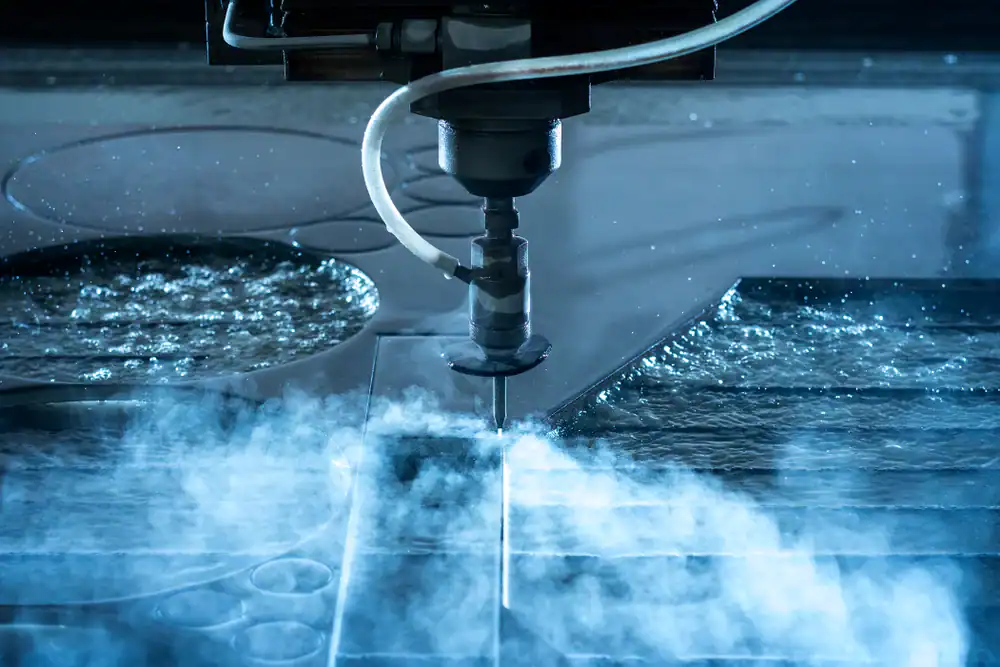
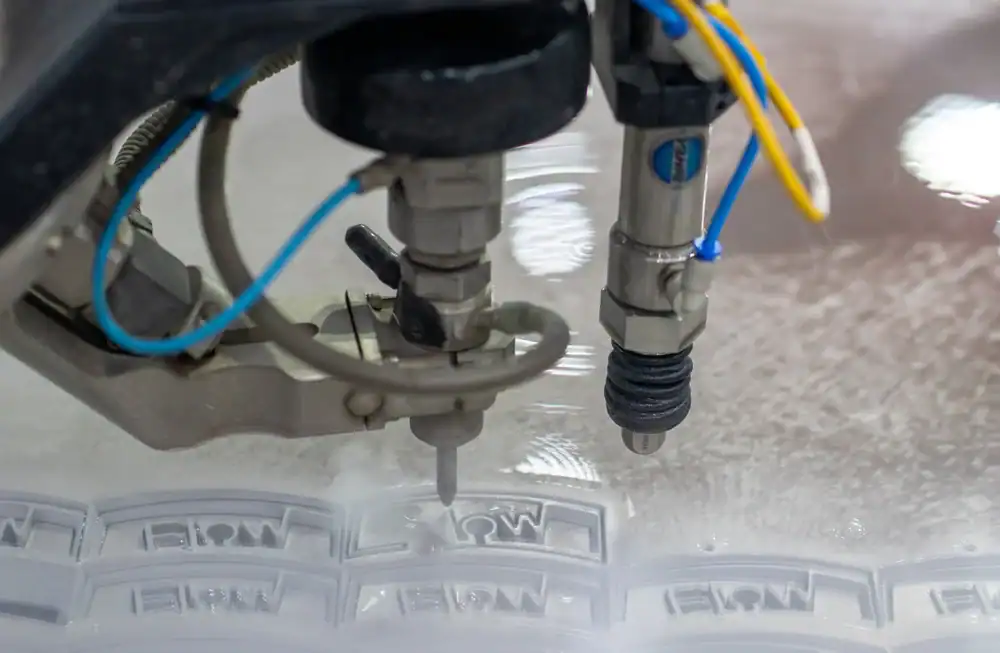
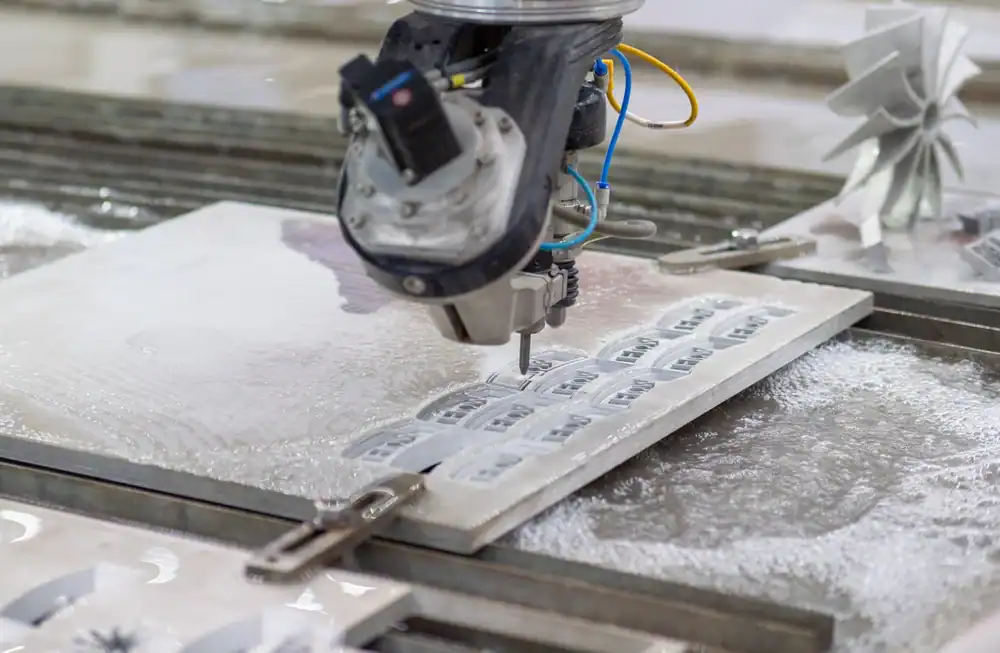
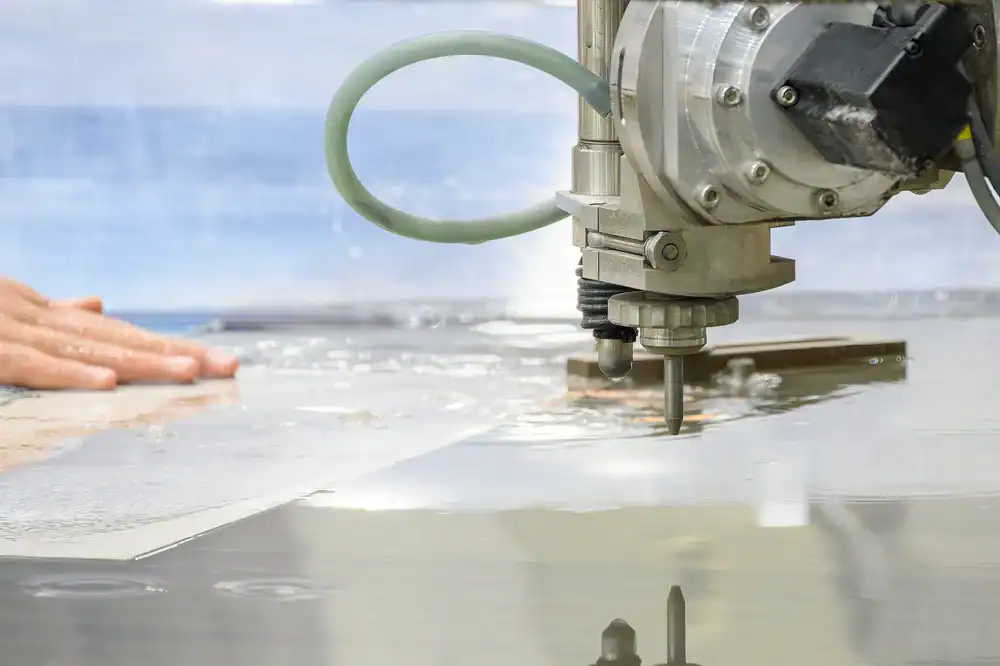
Once everything’s confirmed, we program the cut path and load your material onto the cutting table. The abrasive waterjet cutting process in Commack, NY uses a stream of water mixed with garnet abrasive at nearly 60,000 PSI to cut through your material. No heat means no warping, no hardened edges, and no change to your material’s properties.
For most jobs, you’re looking at same-week turnaround depending on material thickness and complexity. Thinner materials can often be stacked to increase efficiency and reduce your per-part cost. After cutting, parts come off the table ready to use, with edge quality that typically eliminates secondary finishing operations.
The process handles everything from intricate interior cutouts to simple profile cuts, all with the same narrow kerf width that minimizes material waste. You get exactly what you specified without the compromises that come with thermal cutting methods.
Ready to get started?
High pressure water cutting in Commack, NY handles materials you can’t easily cut with other methods. Stainless steel, aluminum, titanium, tool steel—metals cut clean without heat-affected zones. Stone, glass, ceramics, and composites that would crack or chip with conventional methods cut precisely without edge damage.
Material thickness from 0.010″ up to 10″ depending on what you’re cutting. Complex shapes with tight inside radii, sharp corners, and intricate details that would require multiple setups with traditional machining. You can cut different materials in the same setup without changing tooling or adjusting parameters.
For Long Island, NY manufacturers dealing with the supply chain challenges everyone’s facing, this versatility means fewer vendors to coordinate with. One cutting method handles your prototype work, your production runs, and those odd jobs that don’t fit anywhere else. The process works for aerospace components requiring tight tolerances, architectural elements needing clean edges, and automotive parts where precision matters.
You’re not paying for secondary operations to clean up rough edges or remove heat distortion. Parts come off the table ready for assembly or finishing, which matters when you’re trying to hit deadlines without adding extra steps to your workflow.
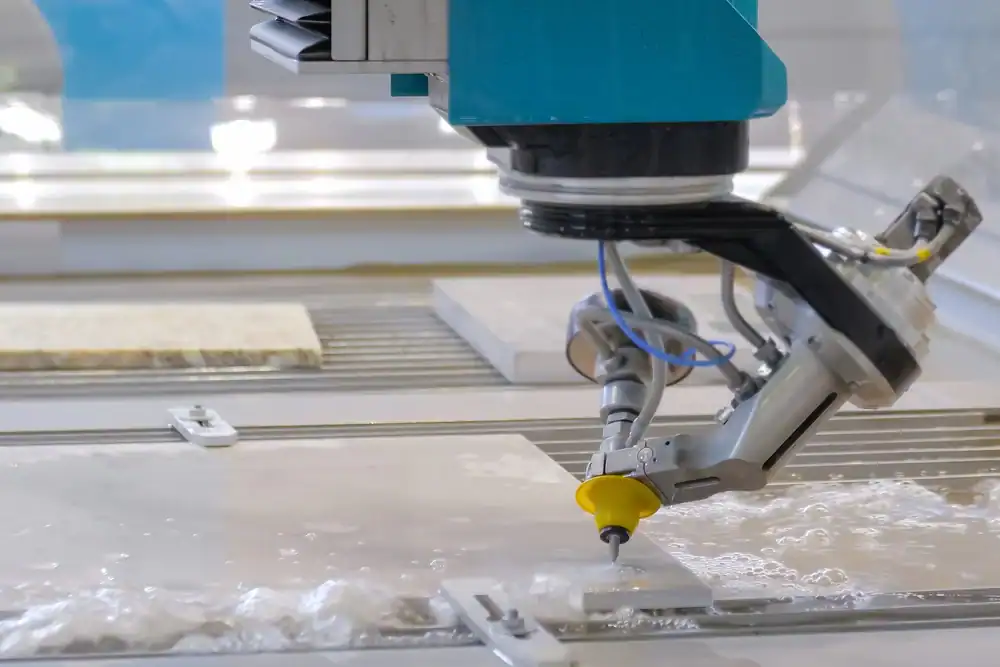
Waterjet cuts materials that would be damaged by heat-based cutting methods. Tempered glass stays tempered because there’s no thermal stress. Composites and laminates don’t delaminate because you’re not introducing heat that weakens the bonding layers.
Titanium and other exotic metals cut without work hardening the edges, which matters if you’re doing any secondary machining. Rubber, foam, and gasket materials cut cleanly without melting or compression. Even stacked materials—you can layer thinner sheets and cut them simultaneously to increase productivity.
The real advantage shows up when you’re working with materials that have different hardness levels or when you need to cut dissimilar materials in the same job. The waterjet doesn’t care if it’s cutting through hardened tool steel or soft aluminum. The process stays consistent, which means you’re not adjusting parameters or switching equipment mid-job.
The cutting stream is water and abrasive at high pressure, not a heat source. Your material stays at room temperature throughout the entire cutting process, which means it doesn’t expand, contract, or warp from thermal stress.
That’s critical when you’re working with tight tolerances. Laser and plasma cutting introduce enough heat to change the material’s dimensions as it heats up and cools down. With waterjet, what you program is what you get because the material isn’t moving around from thermal expansion.
The cold cutting process also means there’s no heat-affected zone along the cut edge. Material properties stay consistent right up to the edge, so you’re not dealing with hardened or softened areas that behave differently than the rest of your part. For precision work where every thousandth matters, that consistency is the difference between parts that fit and parts that need rework.
Standard waterjet cutting delivers tolerances between 0.003″ and 0.005″ for most applications. That’s tight enough for the majority of manufacturing and fabrication work without requiring secondary operations.
If you need tighter tolerances, some systems can hold 0.001″ depending on material type, thickness, and part geometry. Thinner materials generally hold tighter tolerances than thicker stock. Simple profiles are easier to hold to tight specs than complex shapes with multiple direction changes.
The key is that these tolerances are achievable without post-processing in most cases. You’re not relying on secondary grinding or machining to bring parts into spec, which saves time and money. For comparison, plasma cutting typically runs 0.020″ to 0.050″ tolerance, and even laser cutting usually sits around 0.005″ to 0.010″. When your assembly requires parts that fit together precisely the first time, those differences matter.
Waterjet handles material thickness from 0.010″ thin sheets up to 10″ thick plate, though the practical range depends on what you’re cutting. Metals like aluminum and stainless steel cut effectively up to 6″ to 8″ thick for most applications. Softer materials like plastics and rubber can go thinner without issues.
Thicker materials take longer to cut because the stream needs more time to penetrate and maintain cut quality through the entire depth. But unlike drilling or milling, you’re not limited by tool reach or rigidity. The waterjet stream cuts straight through regardless of thickness.
For production efficiency, thinner materials can be stacked and cut simultaneously. If you’re cutting 0.060″ aluminum parts, you can stack multiple sheets and cut them all in one pass. That reduces your per-part cost and speeds up delivery time for larger quantities. The process works whether you’re cutting one thick piece or multiple thin pieces in the same setup.
The cutting process creates minimal material waste because the kerf width—the width of the cut itself—is very narrow, typically around 0.030″ to 0.040″. That means more usable parts from each sheet of material compared to wider-kerf cutting methods.
The abrasive material used in the cutting stream is garnet, a natural mineral that’s non-toxic and environmentally safe. Spent garnet and cut material collect in the catcher tank below the cutting table and can be disposed of normally. There are no hazardous fumes, no toxic chemicals, and no oil or coolant to manage.
Parts come off the table clean and ready to use in most cases. You’re not dealing with slag, dross, or heat scale that needs grinding or chemical removal. For many applications, the edge quality is good enough to use as-is without deburring or finishing. That eliminates cleanup steps and gets your parts into production faster without additional handling.
Turnaround time depends on material type, thickness, part complexity, and current shop capacity. Most jobs complete within the same week once material is confirmed and programming is done. Simple profile cuts in thinner materials can often be completed in a day or two.
Thicker materials and complex geometries with tight inside radii take longer because the cutting stream moves more slowly to maintain edge quality. But you’re still looking at faster turnaround than traditional machining for complex shapes, especially when you factor in the elimination of secondary operations.
For Long Island, NY manufacturers in Commack and surrounding areas, local proximity means faster communication and quicker delivery compared to shipping parts across the country. If there’s a question about your design or material, we can address it immediately rather than waiting for email exchanges across time zones. That responsiveness matters when you’re working against tight production schedules and can’t afford delays from miscommunication.
Useful Links
Other Services we provide in Commack