Hear from Our Customers
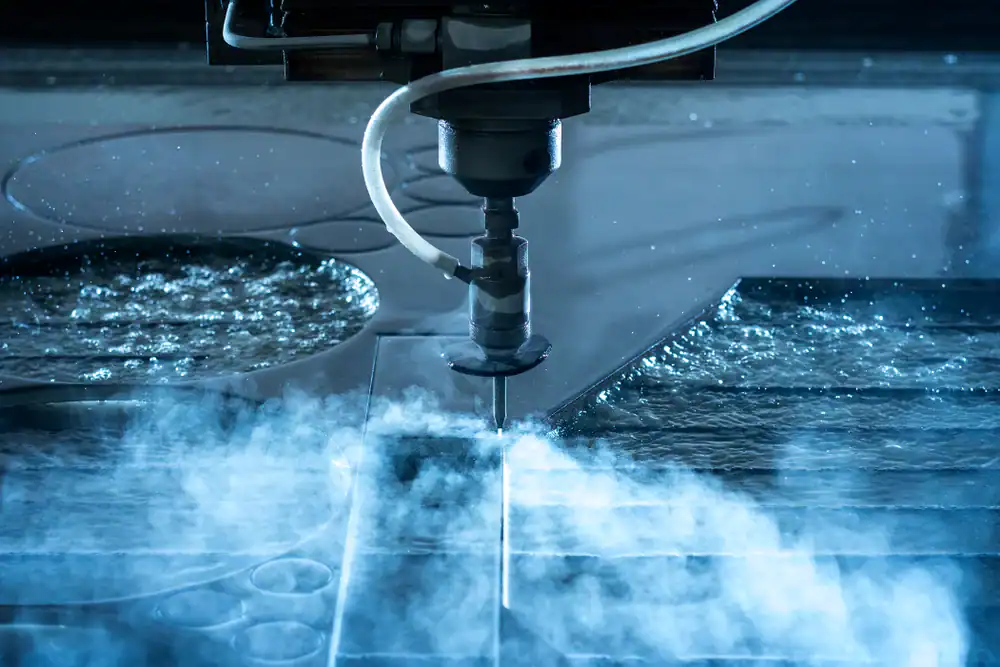
Your material doesn’t get torched, burned, or warped. Waterjet cutting services in Copiague, NY use cold cutting technology, which means no heat-affected zones that compromise your parts. The edge quality comes out smooth enough that you’ll skip secondary finishing on most jobs.
Tolerances hit ±0.005 inches consistently. If your project demands tighter specs, modern abrasive waterjet cutting in Copiague, NY can reach ±0.001 inches. That’s the difference between parts that fit right the first time and parts that need rework.
The kerf stays narrow—usually under 0.04 inches. Less material turns into scrap. Your cost per part drops because you’re not throwing away expensive stock. When you’re cutting titanium or specialized composites, that waste reduction matters to your bottom line.
We operate right here in Copiague, serving Long Island, NY’s manufacturing community with precision cutting services. You’re working with operators who understand the difference between a prototype run and production volume, and how to set up each job accordingly.
Copiague sits in the middle of New York’s industrial corridor—12,250 manufacturers across the state, over 600,000 workers who need reliable fabrication partners. You need a waterjet cutting shop in Copiague, NY that answers the phone, quotes fast, and delivers on time. That’s what keeps your production schedule intact.
We handle materials from 0.005 inches thick up to 12 inches. Steel, stainless, aluminum, titanium, brass, copper. Glass, ceramics, carbon fiber, composites. Granite, marble, acrylic, polycarbonate. If you can ship it to us, we can cut it.
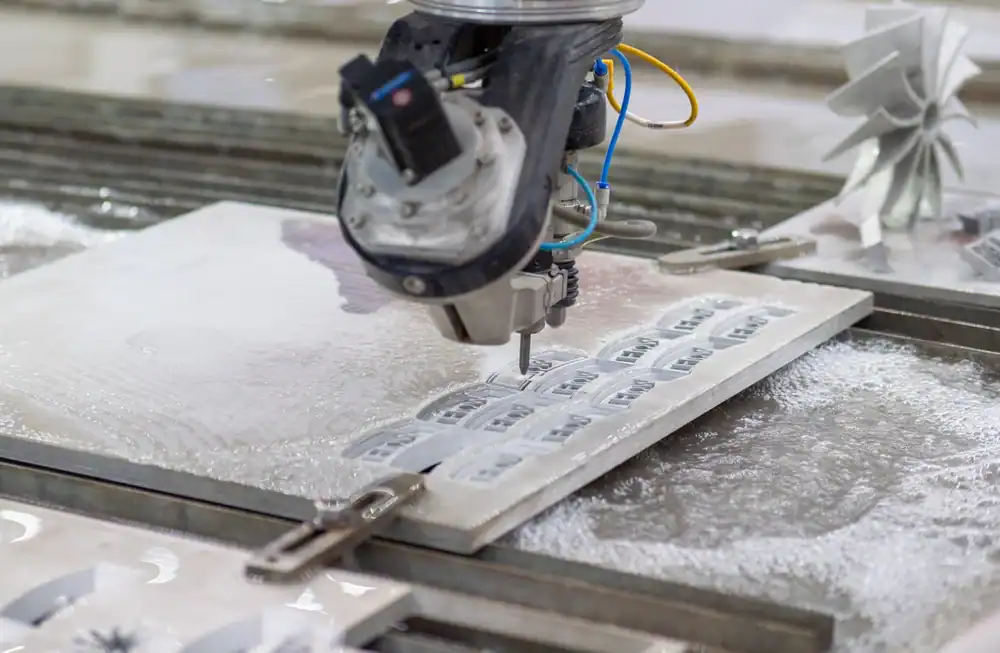
You send us your CAD file or design specs. We review it for manufacturability and flag anything that might cause issues before we start cutting. If your design needs adjustment for optimal cutting, you’ll know upfront—not after we’ve already run the job.
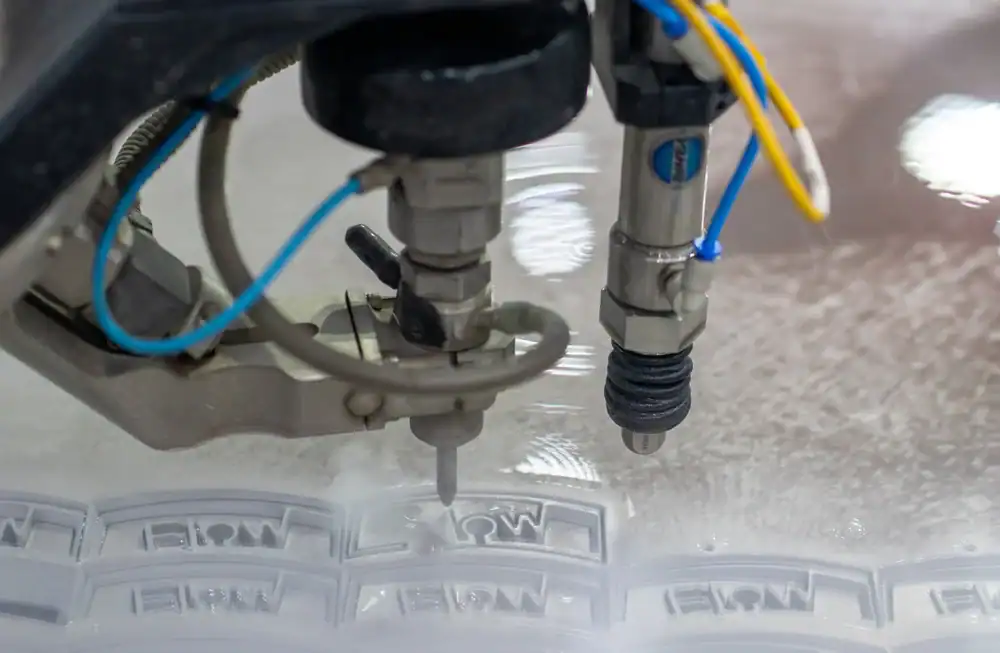
Our waterjet system runs at pressures up to 90,000 PSI. For harder materials, we add garnet abrasive to the stream. The nozzle follows your programmed path with CNC precision. No tooling changes between different materials or thicknesses. One setup handles multiple parts if that’s how your job is structured.
After cutting, parts come off the table ready for your next operation. Most edges don’t need deburring or grinding. You’re not waiting on secondary processes that add days to your timeline. If you need specific edge finish requirements, we adjust feed rates and abrasive flow to hit your specs.
Quality checks happen throughout the run, not just at the end. Water pressure stays consistent. Nozzle wear gets monitored. If something drifts out of tolerance, we catch it before you receive parts that don’t meet spec.
Ready to get started?
Custom waterjet cutting in Copiague, NY starts with material consultation. You’re not expected to know whether pure water or abrasive cutting works better for your application. We guide you through material selection, thickness limitations, and edge finish expectations based on your end use.
Complex geometries don’t require special tooling. Your aerospace brackets with tight inside radii, automotive gaskets with intricate profiles, architectural panels with artistic cutouts—they all run on the same machine. Programming handles the complexity. You don’t pay for custom dies or punches that only work for one design.
Long Island, NY’s manufacturing sector spans aerospace, automotive, electronics, and precision metal fabrication. Waterjet cutting services in Copiague, NY support all these industries because the process adapts to different requirements. Turbine blades need zero thermal distortion. Circuit boards need clean edges without delamination. Stone countertops need smooth cuts without chipping. Same technology, different applications.
Turnaround depends on your job complexity and our current queue, but most projects move faster than traditional machining. No waiting for tooling fabrication. No heat treatment to relieve stress. No secondary operations to clean up burned edges. Your parts move from cutting table to shipping in less time.
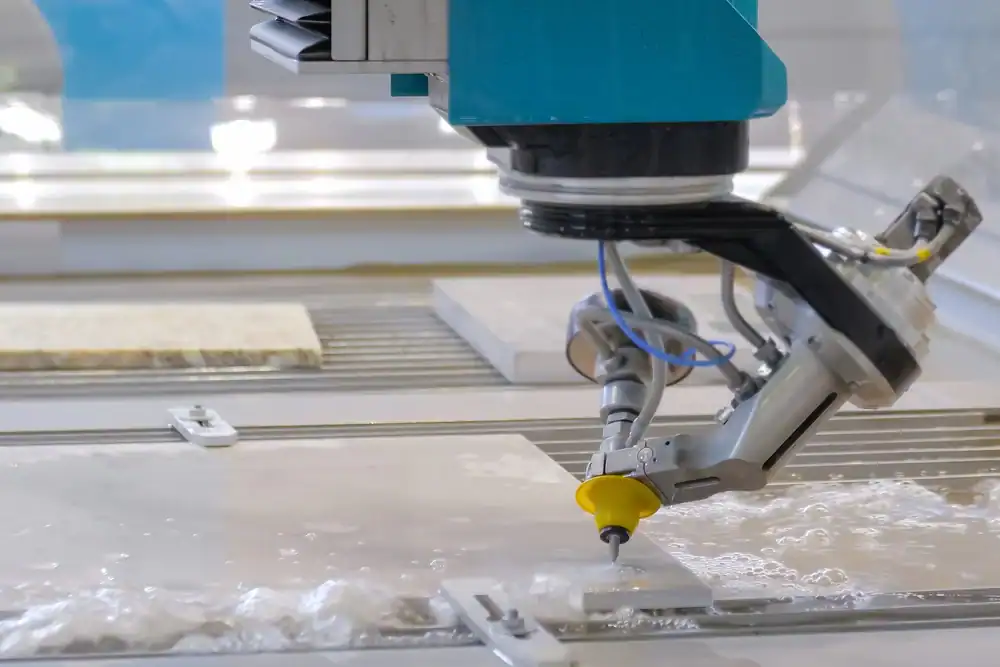
Waterjet cuts materials that would crack, melt, or deform under thermal cutting methods. Tempered glass comes out without shattering because there’s no heat shock. Composites and carbon fiber don’t delaminate because there’s no burning through the resin matrix. Titanium doesn’t work-harden at the cut edge because the process stays cold.
Reflective materials like copper and brass cause problems for laser cutting—the beam bounces back and creates inconsistent cuts. Waterjet doesn’t care about reflectivity. Thick materials beyond plasma or laser capacity still cut cleanly with waterjet. We’re talking 6-inch steel plate, 8-inch aluminum, 12-inch foam or plastic.
You can also stack thinner materials and cut multiple parts in one pass. That’s not practical with thermal methods because heat conducts between layers and welds them together. With waterjet, you’re just pushing water through—no fusion, no sticking.
Standard waterjet cutting holds ±0.005 inches without special effort. That covers most fabrication work—brackets, panels, plates, structural components. Your parts fit together, holes align with fasteners, assemblies go together without force.
Precision waterjet cutting pushes tighter when your application demands it. With proper setup, fresh nozzles, and controlled cutting parameters, you can hit ±0.001 inches on critical dimensions. That’s machining-level accuracy from a cutting process. Aerospace components, medical device parts, precision instruments—they all live in this tolerance range.
The catch is that tighter tolerances mean slower cutting speeds. We’re making more passes, using finer abrasive, reducing feed rates. Your per-part cost goes up. For most jobs, ±0.005 inches delivers what you need without the extra expense. When you genuinely need tighter specs, we’ll set up for it. But we’ll also tell you if your print is calling out precision you don’t actually need for the application.
Most waterjet cuts come off the table with smooth edges that don’t need deburring. The water stream doesn’t create the rolled edge or slag that plasma leaves behind. There’s no heat-affected zone with hardened material that needs grinding off like you get from laser or torch cutting.
Thicker materials sometimes show a slight taper—the top edge is marginally wider than the bottom edge. We’re talking thousandths of an inch over several inches of thickness. For parts where that taper matters, we adjust the cutting head angle to compensate. The result is a straight edge through the full thickness.
Edge finish quality depends partly on cutting speed. Faster cuts leave slightly rougher edges with visible striation marks. Slower cuts produce smoother edges that look almost milled. If your parts are going into an assembly where edge finish doesn’t matter, we run faster and save you money. If you’re cutting architectural panels where aesthetics count, we slow down and deliver the finish you need. You tell us what matters for your application, and we set parameters accordingly.
Waterjet cutting runs slower than laser or plasma for simple straight cuts in thin material. Where waterjet wins is in setup time and versatility. There’s no tooling to fabricate, no fixtures to build, no dies to machine. You send a CAD file, we program it, and we start cutting. That matters when you’re running prototypes or low-volume production.
Complex shapes actually favor waterjet because cutting speed doesn’t change much based on geometry. A laser has to slow down for tight corners and intricate details. Waterjet maintains consistent speed through curves, radii, and complex profiles. Your per-part time stays more predictable.
Thick materials flip the speed equation entirely. Laser and plasma lose efficiency as thickness increases—multiple passes, slower speeds, more heat buildup. Waterjet cuts 4-inch plate almost as easily as 1-inch plate. The stream just takes longer to penetrate, but it’s still a single pass. For heavy fabrication work, waterjet often finishes faster than thermal methods once you factor in the full process.
Pure waterjet uses only pressurized water—no abrasive added to the stream. It works for soft materials like foam, rubber, gaskets, paper, textiles, and thin plastics. The cut is extremely fine, and there’s zero contamination from abrasive particles. Food processing equipment, medical applications, and clean room manufacturing often require pure waterjet for this reason.
Abrasive waterjet adds garnet sand to the water stream. That’s what cuts hard materials—metals, stone, glass, ceramics, composites, thick plastics. The abrasive particles do the actual cutting work. Water is just the delivery system that accelerates the garnet to cutting speed. About 80% of waterjet cutting jobs use abrasive because most industrial applications involve hard materials.
The nozzle setup differs between the two methods. Pure waterjet uses a smaller orifice and jewel nozzle. Abrasive waterjet uses a mixing chamber where garnet gets introduced into the stream, then a longer focusing tube to accelerate the mixture. You can’t run abrasive through a pure waterjet nozzle—it would destroy the jewel immediately. Switching between methods means changing nozzle assemblies, which takes a few minutes but isn’t complicated.
Waterjet makes sense for small runs because setup costs stay low. You’re not amortizing expensive tooling across hundreds of parts. There’s no minimum quantity where the economics suddenly work. One part costs more per piece than a hundred parts, but you’re not stuck ordering volume you don’t need just to hit a price break.
Programming time is the main setup cost. Simple shapes program in minutes. Complex geometries take longer but still don’t approach the cost of building dedicated tooling. If your design changes between runs—and it often does during product development—you just reprogram. No scrapping expensive dies or punches that no longer match your current design.
Material waste stays minimal regardless of run size. The narrow kerf means you’re not losing significant stock to the cutting process. Nesting software arranges parts efficiently on your sheet or plate to maximize yield. For expensive materials like titanium, Inconel, or specialized composites, that waste reduction often justifies waterjet cutting even when other methods might cut faster. You’re paying for material, not just cutting time.
Useful Links
Other Services we provide in Copiague