Hear from Our Customers
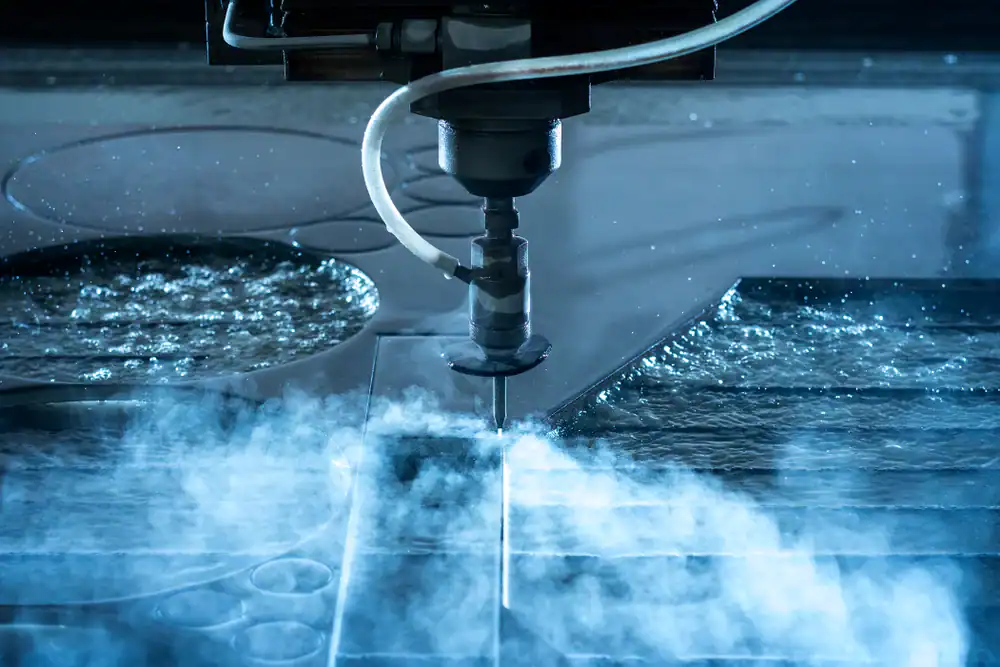
You’re not dealing with burn marks, warped edges, or parts that need rework. High pressure water cutting slices through metal, stone, glass, and composites without introducing heat into the equation. That means no material distortion, no hardened edges, and no secondary finishing eating into your timeline.
The cut you get is the cut you use. Tolerances hold to ±.005 inches, even on intricate geometries that would challenge laser or plasma systems. Whether you’re running aerospace components, architectural panels, or custom fabrication work, the edge quality stays consistent across aluminum, stainless steel, granite, or PTFE.
You also avoid the waste that comes with traditional cutting methods. Abrasive waterjet cutting in Deer Park, NY uses a thin kerf width, so more of your material ends up in the finished part instead of scrap. That’s fewer material orders, lower costs per piece, and faster project completion when you’re working against a deadline.
We operate out of West Islip, serving manufacturers, contractors, and designers across Long Island, NY—including Deer Park’s industrial corridor. This area has deep roots in aerospace and defense manufacturing, and that legacy shows up in the expectations customers bring to the table. Tight tolerances aren’t a nice-to-have here. They’re the baseline.
We work with architects who need custom panels, machine shops that need backup capacity, and engineers who need parts that meet spec without rework. Our equipment runs CNC-controlled waterjet systems capable of handling everything from 1/8-inch nylon gaskets to 6-inch stainless plate.
Deer Park sits in a manufacturing zone with access to skilled labor and industrial infrastructure, which means you’re not waiting days for a local shop to respond. You’re working with a team that understands the pace and precision your projects require.
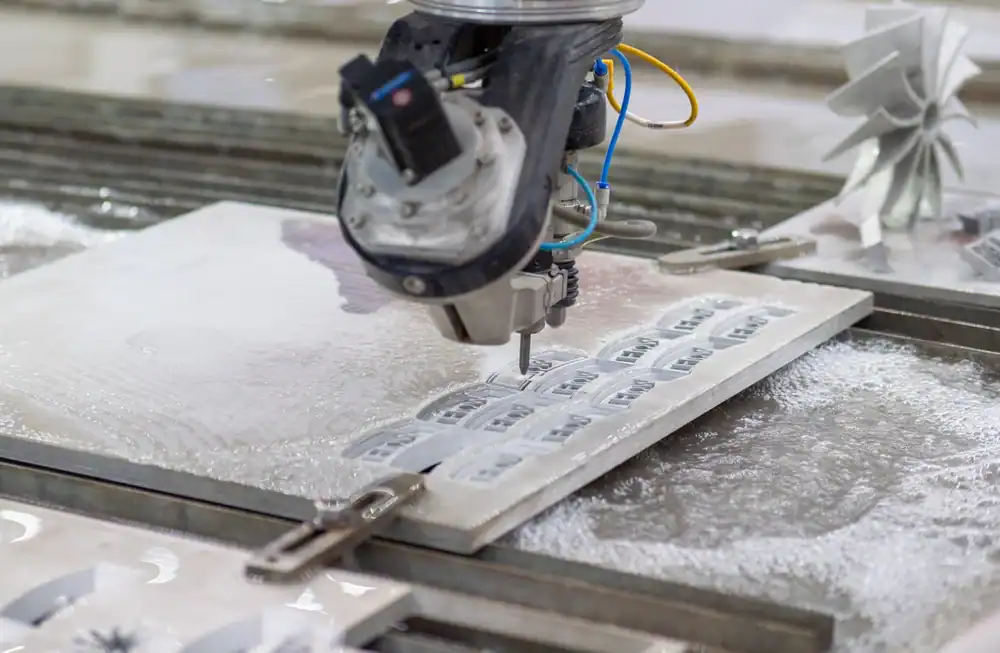
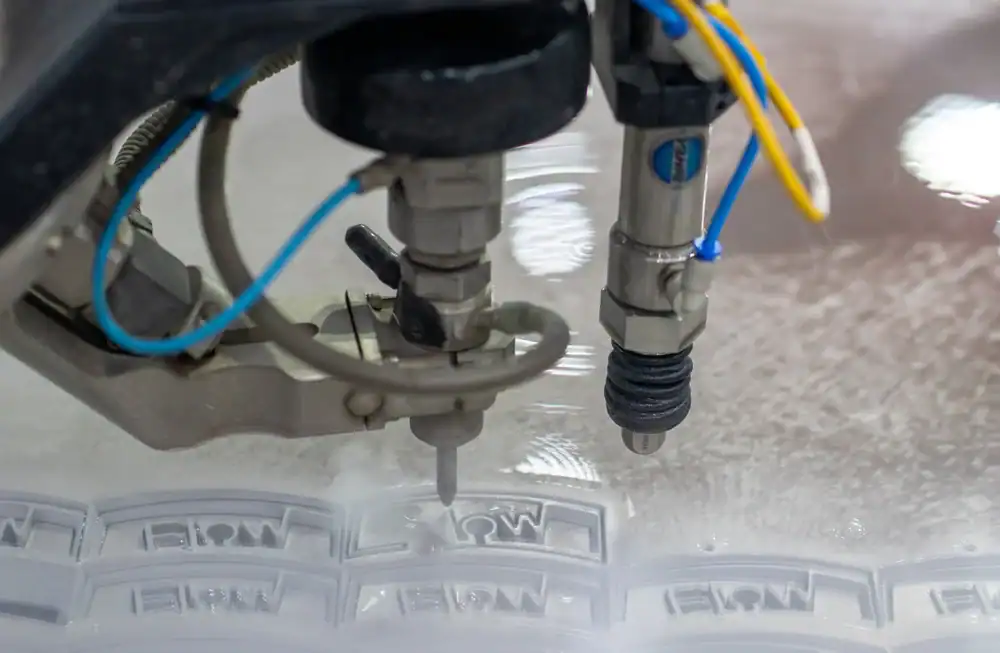
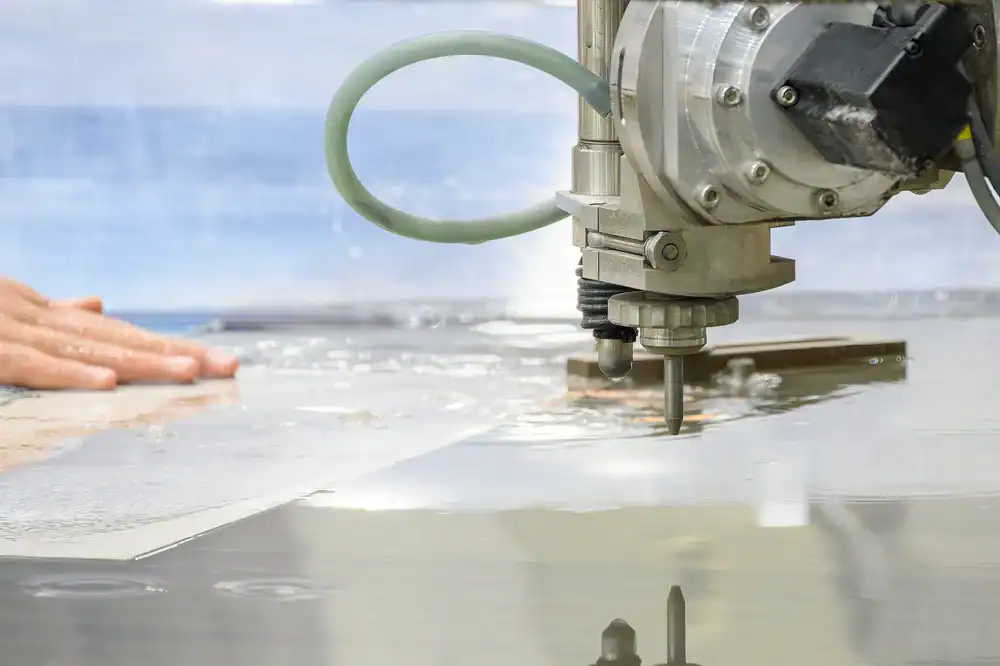
It starts with your design file—CAD, DXF, or a marked-up print. We review the material specs, thickness, and tolerances you need, then program the CNC system to match those requirements. The waterjet nozzle follows the toolpath at pressures up to 60,000 PSI, mixing water with garnet abrasive to cut through your material.
The stream is thinner than a pencil lead, which keeps the kerf narrow and the heat-affected zone nonexistent. You don’t get the oxidation, melting, or micro-cracking that shows up with thermal cutting methods. The part comes off the table ready for assembly or installation, not secondary machining.
Turnaround depends on complexity and material, but most projects move from file to finished part within days. If you’re running a repeat order, the program stays on file so subsequent runs start faster. You send the specs, we confirm the timeline, and the parts ship when promised.
Ready to get started?
Our waterjet systems handle metals like aluminum, stainless steel, brass, copper, and Inconel without work hardening the cut edge. You also get clean cuts on stone—granite, marble, quartz—plus ceramics, glass, and composites that would crack or delaminate under heat-based methods. Plastics like nylon, PTFE, PVC, and urethane cut without melting. Rubber, foam, gasket materials, even hardwoods—all fair game.
Deer Park’s industrial base includes automotive suppliers, HVAC fabricators, and custom machine shops. Many of those operations need parts that can’t tolerate heat distortion or require materials that don’t play well with lasers. Waterjet fills that gap. It’s also faster than you might expect—abrasive cutting runs up to four times quicker than pure waterjet, so high-volume orders don’t stall your production schedule.
If you’re prototyping, you can test multiple iterations without investing in hard tooling. If you’re scaling up, the same process that cut your prototype handles your production run. The flexibility matters when your project scope shifts or your customer changes specs mid-stream.
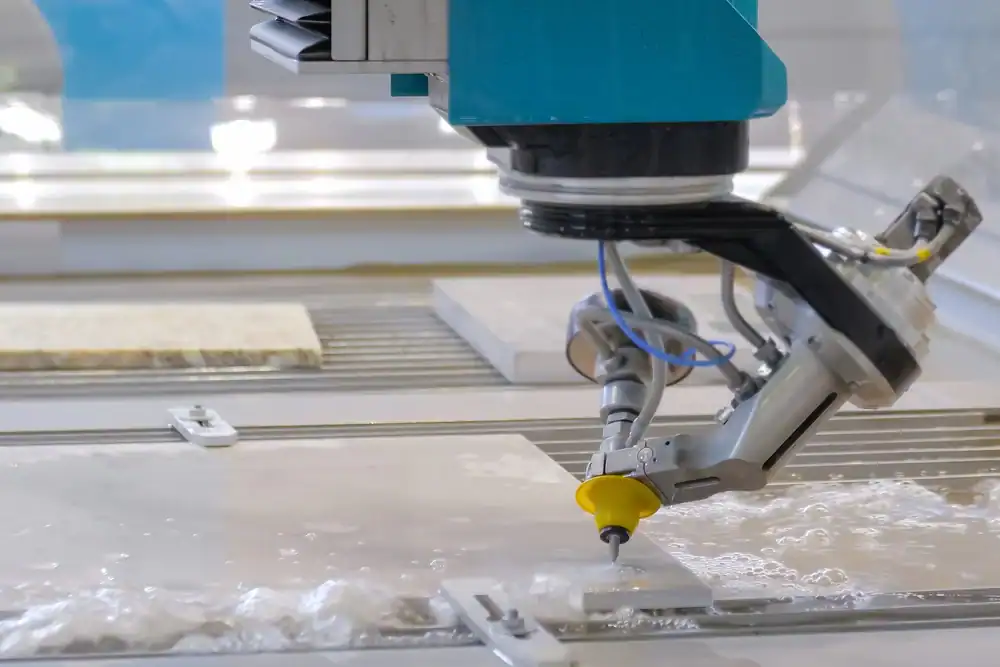
Standard waterjet cutting holds tolerances around ±.005 inches on most metals, including aluminum and stainless steel. If you’re working with composites or softer materials, you’re looking at ±.009 inches, which still beats most other non-machining processes.
Tolerance consistency depends on material thickness, nozzle size, and cutting speed. Thicker materials may see slightly wider tolerances near the bottom of the cut due to stream divergence, but that’s manageable with taper compensation in the CNC programming. If your design calls for tighter specs, secondary machining can bring critical features within a few thousandths.
The key advantage is that you’re not introducing thermal stress, so the part doesn’t warp after cutting. That means the dimensions you program are the dimensions you get, without the post-cut movement you’d see from laser or plasma work.
Waterjet doesn’t generate heat, so you avoid the heat-affected zone that comes with laser cutting. That matters when you’re working with materials that harden, warp, or discolor under thermal stress. Stainless steel, for example, won’t develop oxidation or edge discoloration with waterjet. Plastics won’t melt or emit fumes.
Laser cutting is faster on thin materials—under 1/4 inch—and works well for high-volume production of simple shapes. But once you’re cutting thicker stock, intricate patterns, or materials like stone, glass, or composites, waterjet becomes the more versatile option. You also get better edge quality on thicker metals without the secondary grinding that lasers often require.
If your project involves multiple material types or thicknesses that would require different laser setups, waterjet handles the variety without retooling. That flexibility cuts down on lead time and setup costs, especially for custom or low-volume work.
Most custom projects move from file submission to finished parts in three to five business days, depending on material availability and machine queue. Simple cuts on in-stock materials can turn around faster. Complex geometries or specialty materials might add a day or two.
If you’re running a repeat order, turnaround improves because the CNC program is already on file. We’re not re-programming or re-nesting your parts—just loading material and running the job. That’s where waterjet efficiency really shows up for production work.
Rush jobs are possible when the schedule allows. If your project hit a snag and you need parts by end of week, call before submitting the file. We’ll tell you straight whether it’s doable or not, and what it’ll take to make it happen.
Waterjet cuts steel plate up to 6 inches thick, though cutting speed slows as thickness increases. Most structural steel, stainless plate, and aluminum stock falls within the 1/4-inch to 2-inch range, which cuts efficiently without excessive machine time.
Thicker materials require slower traverse speeds to maintain cut quality through the entire depth. The abrasive stream needs time to erode the material cleanly, especially on harder alloys. But you’re still getting a finished edge without the slag, dross, or heat distortion that plasma cutting leaves behind on thick plate.
If your design involves thick sections with tight inside corners or small radii, those features might need adjustments to accommodate the kerf width and stream dynamics. We’ll flag those during file review so you’re not surprised when the parts arrive.
CAD files make programming faster and more accurate, but they’re not the only option. DXF, DWG, and PDF formats work as long as the dimensions are clear and the geometry is defined. If you’re working from a hand sketch or a marked-up print, we can convert that into a usable toolpath—it just adds a step to the process.
The cleaner your file, the faster we can generate a quote and start cutting. If there are ambiguities in the design—unclear dimensions, missing tolerances, or features that won’t translate to waterjet—we’ll reach out before programming the job. That back-and-forth saves you from getting parts that don’t match your intent.
For repeat orders, the file stays on record. You reference the job number, confirm quantity and material, and we’re cutting without re-creating the setup. That’s where having a solid file upfront pays off over multiple runs.
Tempered glass is the main limitation—it shatters under the pressure of the waterjet stream. Certain laminated materials or composites with internal stresses can also react unpredictably, though most standard laminates cut fine. If you’re working with an exotic or untested material, it’s worth running a test piece before committing to a full production run.
Diamonds and some hardened tool steels take excessive machine time to cut, making them impractical for waterjet. But most industrial materials—metals, plastics, stone, ceramics, rubber, foam, wood—handle the process without issue. If you’re unsure whether your material is compatible, send the specs over. We’ll tell you whether it’ll work or suggest an alternative approach.
The versatility is one of waterjet’s biggest strengths. You’re not limited to conductive materials like you are with EDM, or non-reflective materials like you are with laser. If it’s solid and fits on the table, there’s a good chance waterjet can cut it.
Useful Links
Other Services we provide in Deer Park