Hear from Our Customers
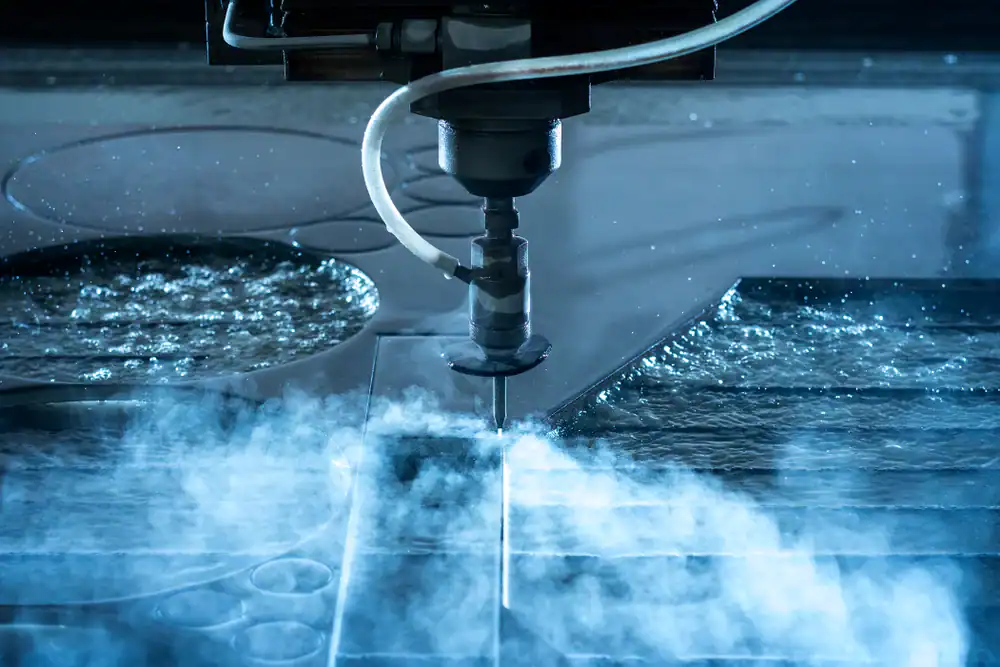
You’re dealing with materials that can’t handle heat. Composites that crack under thermal stress. Metals that warp when traditional cutting methods get involved.
High pressure water cutting solves that. No heat-affected zones means no microscopic cracks in aerospace components. No warping in precision parts. No material property changes that throw off your tolerances.
You get parts cut to exact specifications the first time. That means no additional machining to clean up rough edges. No secondary operations to hit your dimensions. The needle-thin cutting stream handles complex geometries in virtually any material without the back-and-forth that eats into your production schedule.
Your manufacturing costs drop because you’re not paying for extra finishing work. Your floor space isn’t tied up with multiple machines to complete what waterjet cutting handles in one pass. You’re running leaner without sacrificing the precision your customers expect.
We serve the manufacturers, aerospace companies, and precision fabricators operating in East Islip’s industrial corridor. We’re local to West Islip, which means we understand the standards you’re held to.
East Islip’s manufacturing sector doesn’t have room for suppliers who can’t deliver consistent quality. Companies like the aerospace manufacturers and pharmaceutical operations in this area need cutting services that meet regulatory requirements without constant quality issues.
We’ve built our reputation on delivering parts that match your specifications. When you’re producing components for jet engines or precision assemblies, you need a cutting process that doesn’t introduce variables. That’s what abrasive waterjet cutting provides—and that’s what we deliver.
You provide your specifications and material. We review your drawings to confirm dimensions, tolerances, and any special requirements your parts need to meet.
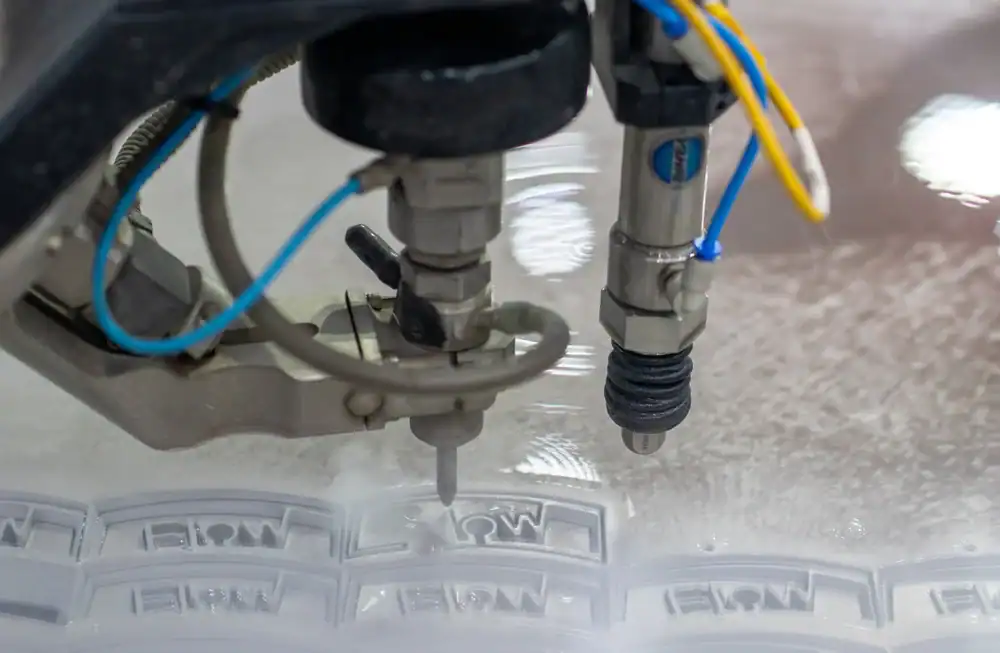
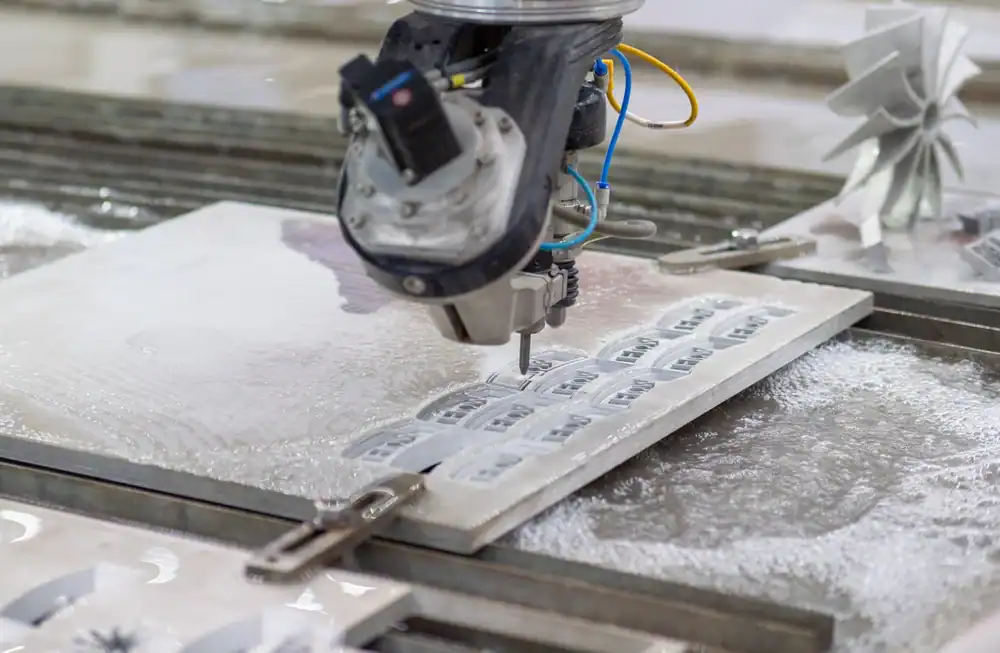
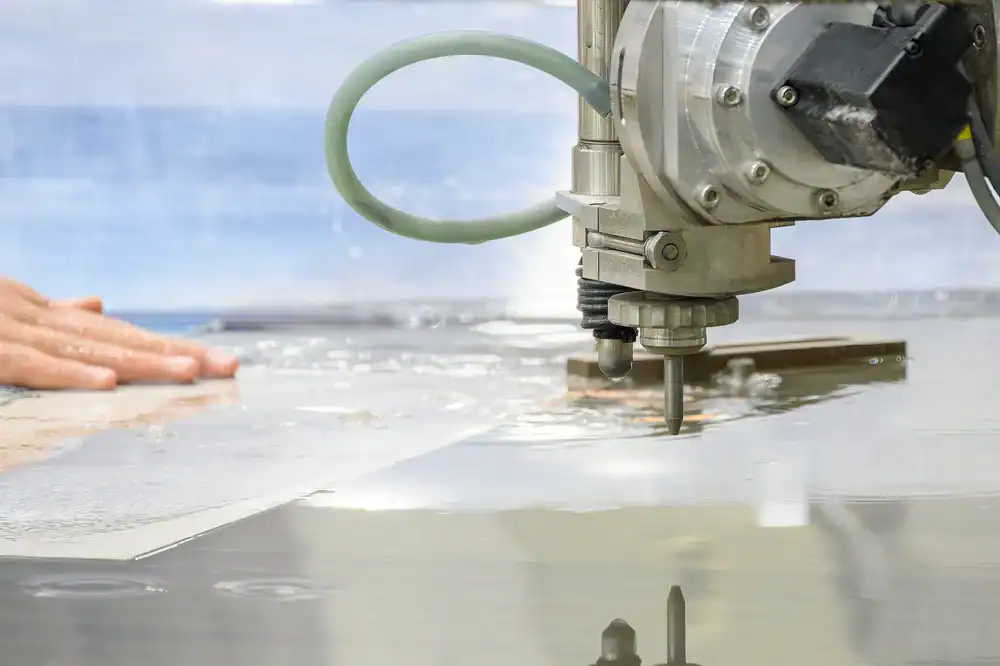
Our CNC-controlled waterjet system cuts your parts using a stream of water mixed with abrasive garnet. The pressure reaches up to 60,000 PSI, but the process stays cold—no heat means no distortion. The cutting head follows your programmed path with precision that exceeds what traditional drilling or plasma cutting can achieve.
You receive parts with smooth edges and accurate dimensions. Because the waterjet stream is so fine, we’re cutting exactly where you need us to without excess material removal. Complex shapes, tight inside corners, intricate patterns—the system handles it without tool changes or setup delays.
If you need prototypes before committing to a production run, the same process applies. We’re not changing tooling or reconfiguring equipment between one-off parts and volume orders. That flexibility means you’re not waiting weeks to test your designs.
Ready to get started?
You’re getting cuts in metals, composites, glass, stone, rubber, plastics—basically any material your operation uses. Thickness ranges from thin foils to several inches, all with the same cold-cutting process that protects material integrity.
East Islip’s aerospace sector needs this capability because you’re working with advanced alloys and composites that can’t tolerate heat. The pharmaceutical and medical device manufacturers in the area need clean cuts without contamination—waterjet cutting is USDA-approved for food contact, which tells you how clean the process runs.
Your parts come out with tolerances tight enough for precision assemblies. We’re talking accuracy that reduces your secondary finishing operations by 30 percent or more, based on industry standards. When Collins Aerospace or the other aerospace operations in this region need components, they need cuts that don’t introduce stress points or weak zones.
You also get design flexibility. Because we’re not limited by tool geometry or heat constraints, complex parts that would require multiple setups on traditional equipment get cut in one operation. That’s fewer touchpoints, less handling, and lower risk of dimensional drift between operations.
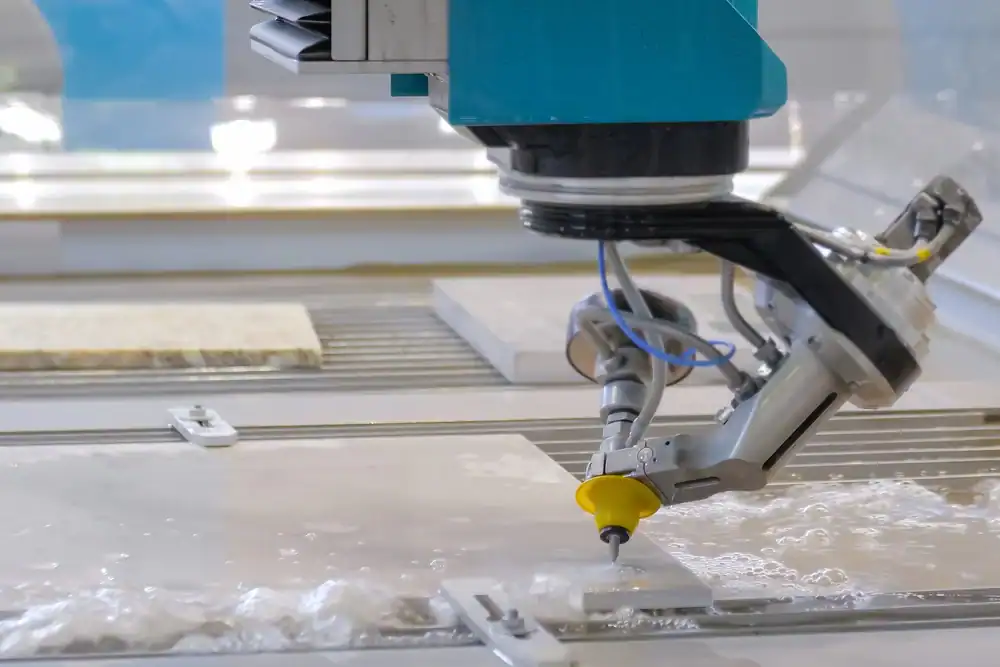
Waterjet cutting works on virtually any material your operation uses. Metals like aluminum, stainless steel, titanium, and Inconel cut cleanly without heat-affected zones. Composites and carbon fiber—common in aerospace applications—stay intact without delamination.
You can cut plastics, rubber, and foam without melting or compression. Glass, stone, and ceramics that would crack under thermal stress cut smoothly. Even layered materials or sandwiched composites cut in one pass without separating the layers.
The cold-cutting process means heat-sensitive materials don’t warp or change properties. For East Islip’s pharmaceutical and medical device manufacturers, that matters when you’re working with materials that have strict specifications. You’re not introducing variables that affect how the material performs in your final product.
Waterjet cutting doesn’t generate heat, which immediately separates it from laser or plasma cutting. You’re not dealing with heat-affected zones, warping, or hardened edges that need additional finishing. That matters when you’re cutting materials that lose their properties under thermal stress.
Compared to CNC machining, waterjet cutting handles harder materials without wearing down cutting tools. You’re not replacing drill bits or end mills, and you’re not limited by tool geometry when cutting complex shapes. The cutting stream is thinner than most cutting tools, which means tighter nesting and less material waste.
Accuracy is comparable to or better than CNC drilling for most applications. You’re getting dimensional precision without the tool deflection that can happen with traditional machining. For aerospace components where tolerances are measured in thousandths of an inch, that consistency matters. The process doesn’t create mechanical stress in the material, so you’re not introducing points where cracks could develop later.
Standard waterjet cutting holds tolerances around ±0.003 to ±0.005 inches, depending on material thickness and type. For most industrial and aerospace applications in East Islip, that’s tight enough to meet specifications without secondary operations.
Thinner materials generally allow tighter tolerances because there’s less stream deflection as the water passes through. Thicker materials—several inches of steel or aluminum—might see slightly wider tolerances, but you’re still within ranges that work for structural components and assemblies.
The consistency matters as much as the tolerance. You’re not seeing drift between the first part and the hundredth part in a production run. CNC control means the cutting path stays accurate throughout the job. For manufacturers running volume production, that consistency reduces scrap and keeps your costs predictable. When you’re cutting parts for regulated industries like aerospace or pharmaceutical, that repeatability is what keeps you compliant.
Cutting speed depends on material type, thickness, and the level of edge quality you need. Softer materials like aluminum or plastic cut faster than hardened steel or titanium. Thinner materials cut faster than thick plate.
The advantage isn’t always raw cutting speed—it’s the elimination of secondary operations. You’re not spending time deburring edges, grinding away heat-affected zones, or machining parts to final dimensions after cutting. The waterjet delivers finished edges in one pass.
Setup time is often faster than traditional machining because you’re not changing tools for different geometries or materials. The same cutting head handles inside corners, outside contours, and piercing holes without stopping to swap equipment. For prototype work or short production runs, that flexibility means you’re cutting parts sooner. When East Islip manufacturers need quick turnaround on custom components, the reduced setup time matters as much as the cutting speed itself.
Waterjet cutting produces smooth edges with minimal to no burrs, depending on your material and the quality level you specify. Most parts come off the machine ready to use without additional finishing. You’re not grinding, filing, or deburring like you would after plasma cutting or mechanical sawing.
The edge quality relates to cutting speed. Slower cutting produces smoother edges with finer finish. Faster cutting leaves a slightly rougher edge but still cleaner than most thermal cutting processes. For parts where edge finish affects performance—like aerospace components or precision assemblies—you specify the quality level you need.
The cold-cutting process means you’re not dealing with hardened edges or recast material that needs removal. There’s no oxide layer to clean off like you’d see with laser cutting. For manufacturers in East Islip’s pharmaceutical or medical device sectors, that cleanliness matters when contamination isn’t acceptable. You’re getting parts that move directly into your assembly process without extra handling or finishing steps that add cost and time.
Yes. The same process works whether you’re cutting one prototype or a thousand production parts. You’re not investing in dedicated tooling or fixtures that only make sense at high volumes. That flexibility matters when you’re testing designs before committing to full production.
For prototype work, you can make design changes between parts without retooling. If your first cut reveals a dimension that needs adjustment, we reprogram and cut the next iteration. That rapid iteration helps East Islip’s manufacturers refine designs faster than processes that require new tooling for each change.
Production runs benefit from the same precision and consistency. CNC control means part one hundred looks like part one. You’re not seeing tool wear that degrades quality as the run continues. For aerospace and industrial manufacturers in the area, that consistency keeps your production predictable. The lack of heat distortion means you’re not adjusting parameters mid-run to compensate for warping or material changes. You set it up right once, and it runs clean through your order.
Useful Links
Other Services we provide in East Islip