Hear from Our Customers
You’re not dealing with another round of rejected parts because the tolerances were off. You’re not explaining to your client why the metal warped or why the edges need grinding down. You’re moving forward.
Custom waterjet cutting in Elmont, NY means your parts come back right. Smooth edges that don’t need secondary finishing. Complex shapes that hold to spec. Materials that aren’t stressed, burned, or compromised by heat.
Whether you’re cutting quarter-inch steel or three-inch granite, the process stays cold. No heat-affected zones. No metallurgical changes. No explaining why the material properties shifted after cutting. Just accurate parts that fit your design and meet your deadline.
We’ve been running abrasive waterjet cutting in Elmont, NY for over two decades. We’ve worked with architects who need intricate inlays, contractors managing tight schedules, and manufacturers who can’t afford rework.
Elmont sits in the middle of Long Island, NY’s manufacturing corridor, close enough to NYC to serve the five boroughs but with the space and setup to handle volume work. That location matters when you need fast turnaround without sacrificing quality.
We’re not the cheapest option, and that’s intentional. You’re paying for cuts that don’t need fixing, materials that aren’t wasted, and timelines that don’t slip because someone had to redo the job.
You send us your design file or sketch. We review it, confirm material specs, and flag anything that might cause issues before we start cutting. If your tolerances are tighter than the material can handle, or if there’s a better way to nest parts and save you money, we’ll tell you.
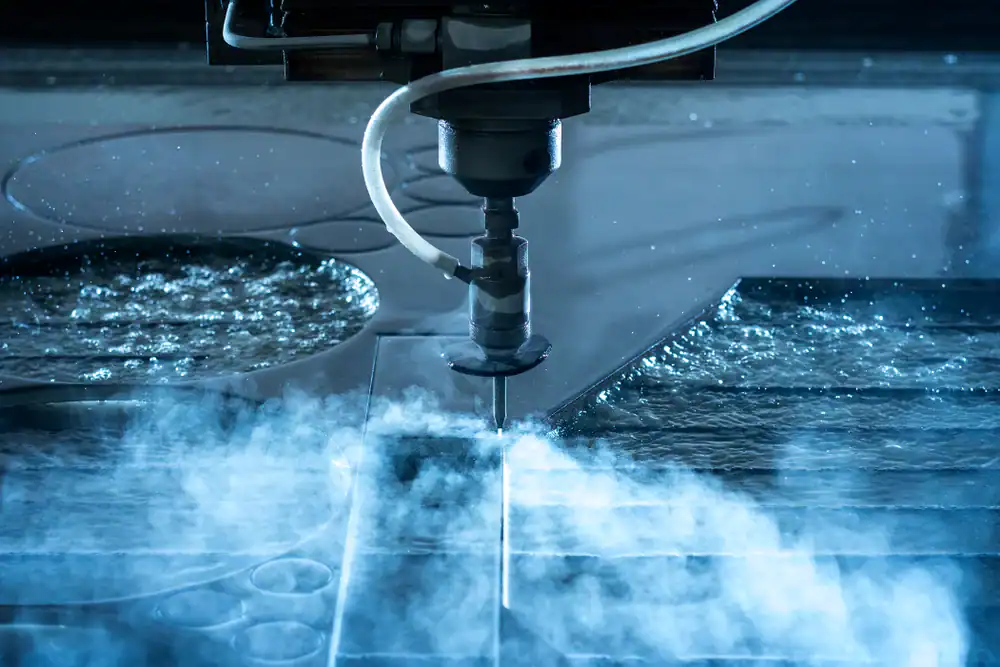
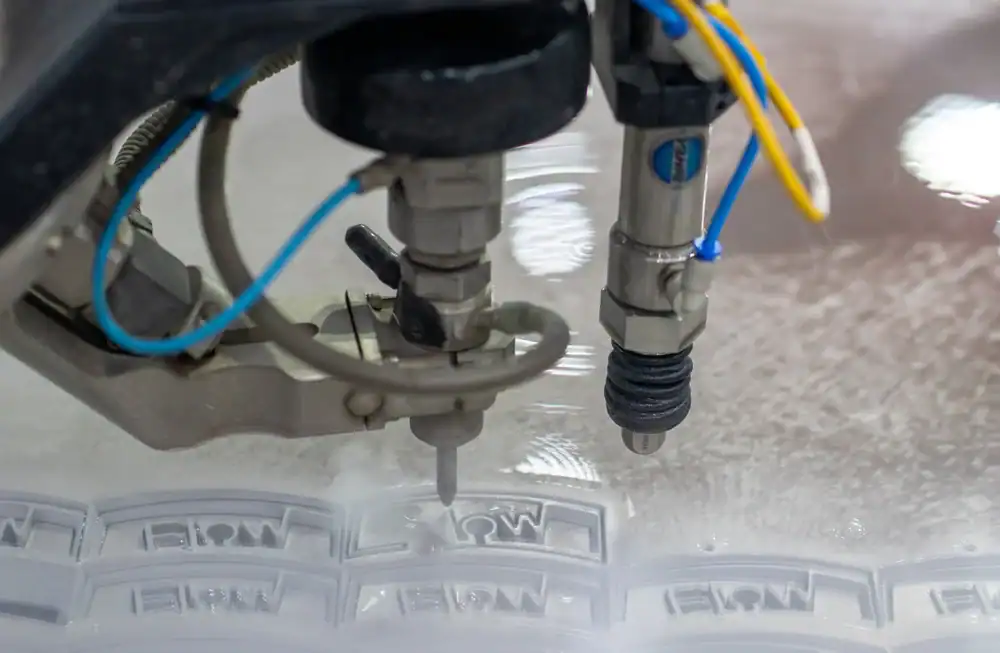
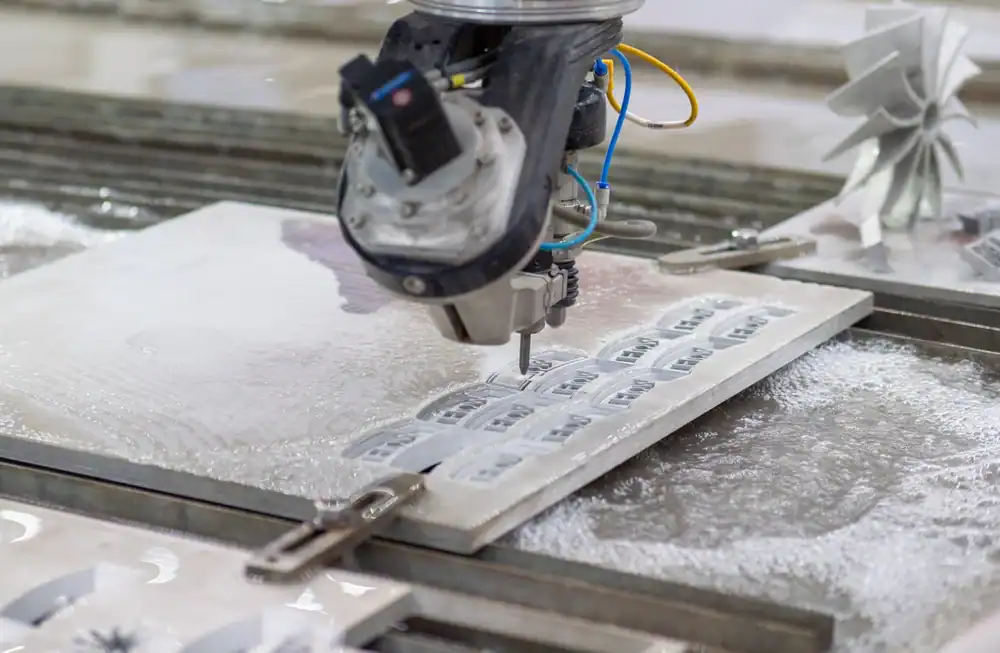
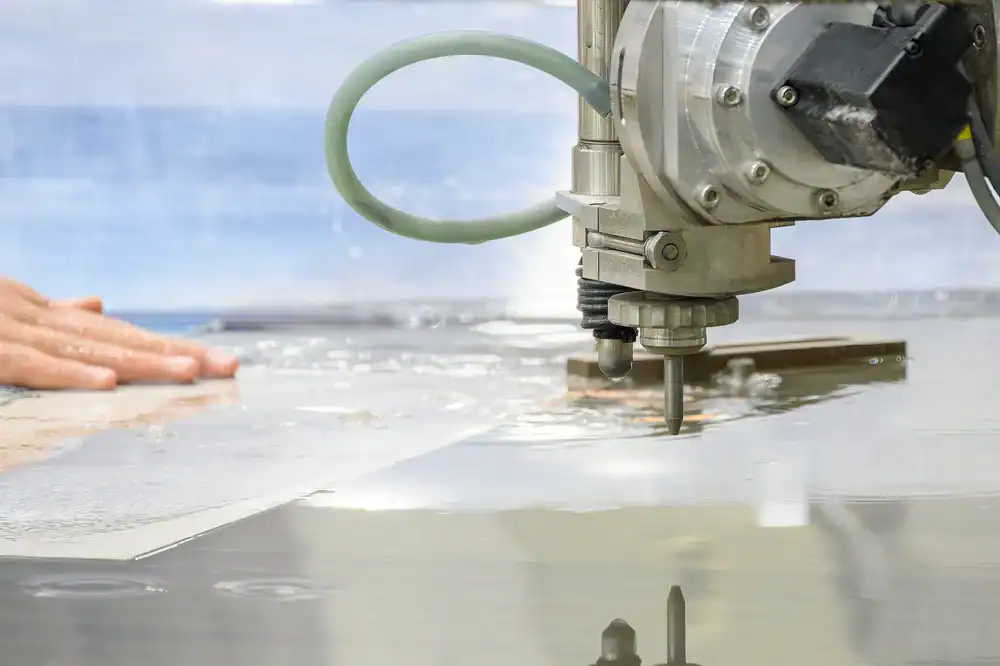
Once everything’s confirmed, your material goes on the cutting table. A high-pressure water stream mixed with abrasive garnet cuts through at up to 60,000 PSI. The stream is thinner than a strand of hair, which is how we hold accuracy within 0.005 inches. There’s no blade dulling, no heat building up, no tool changes between materials.
After cutting, parts come off the table ready to use or move to the next stage of your process. Most jobs don’t need deburring or edge work. If your project requires additional fabrication or finishing, we can handle that too, but the waterjet cutting itself usually gets you 90% of the way there.
Ready to get started?
You get cuts in metal, glass, stone, rubber, composites, foam, wood, and tile. One process handles all of them without changing tooling or setup. That matters when you’re prototyping and need to test different materials quickly, or when your design mixes multiple substrates.
Our proximity to the architectural and design markets in Manhattan and Brooklyn means we see a lot of custom work: metal panels for building facades, stone inlays for lobbies, acrylic signage, and specialty parts that don’t fit standard manufacturing. The waterjet handles intricate patterns and tight inside corners that other cutting methods can’t touch.
For production runs, we can nest parts to minimize waste and reduce your per-unit cost. The CNC control means repeatability across hundreds of pieces. And because there’s no heat, you’re not dealing with warped parts at the end of a long run or material properties that drift as the job progresses.
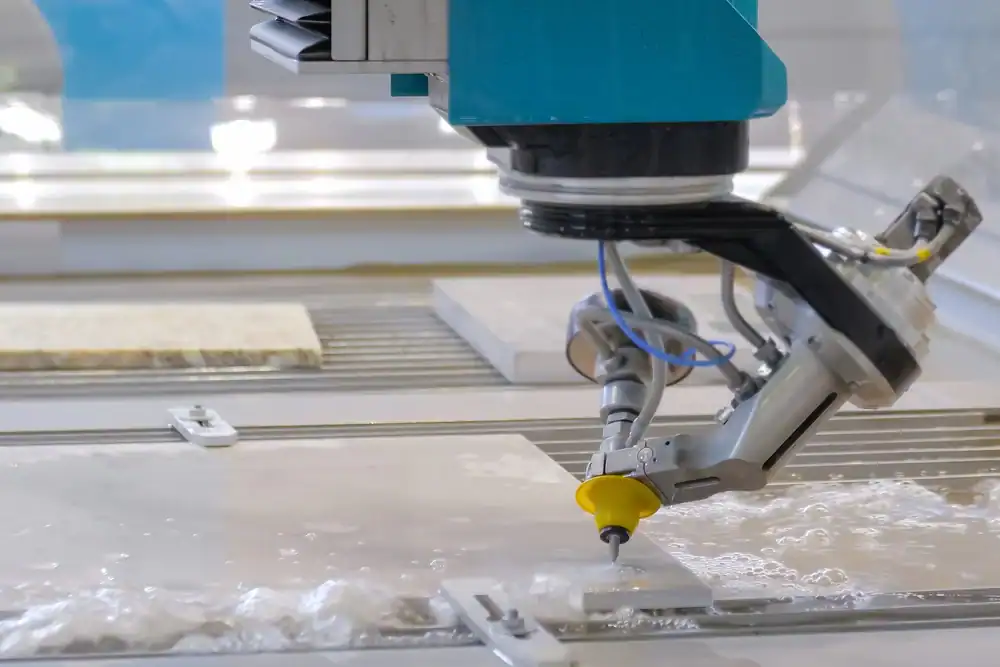
We cut metals like steel, stainless, aluminum, brass, copper, and titanium. Stone and tile including granite, marble, and ceramic. Glass, both standard and tempered. Plastics and composites like acrylic, polycarbonate, and carbon fiber. Rubber, foam, wood, and gasket materials.
The limitation isn’t the material hardness, it’s the thickness and whether the material can handle getting wet. We’ve cut everything from eighth-inch aluminum sheet to three-inch steel plate. If you’re not sure whether your material works with waterjet, send us the specs and we’ll tell you straight.
Certain brittle materials like thin glass need slower cutting speeds to avoid fracturing, and some composites have specific abrasive requirements to prevent delamination. That’s where experience matters. We’ve been running these machines long enough to know what works and what doesn’t.
Waterjet holds tolerances within plus or minus 0.005 inches on most materials. That’s tighter than plasma, which typically runs around 0.020 inches, and comparable to laser for thinner materials. Where waterjet wins is on thicker stock and materials that don’t respond well to heat.
Laser cutting works great on thin metals but struggles with anything over half an inch. The heat also creates a heat-affected zone that changes the material properties right at the cut edge. If you’re welding or machining after cutting, that can cause problems. Plasma is fast but rough, and the kerf width is wider, so you lose more material and can’t hold tight tolerances.
Waterjet doesn’t have those issues. The cut is cold, so there’s no HAZ, no hardened edges, no thermal distortion. The kerf is narrow, usually under 0.04 inches, so you’re not wasting material. And because the stream is controlled by CNC, you get the same accuracy on part one and part one hundred.
Most jobs run within three to five business days from file approval to finished parts. Rush work can happen faster if the schedule allows, and larger production runs might take longer depending on volume and material availability.
The actual cutting time depends on material thickness, complexity, and how many parts you need. Simple shapes in thin material cut quickly. Intricate designs in thick steel take longer because we slow the cutting speed to maintain edge quality. We’ll give you a realistic timeline upfront based on your specific job.
If you’re in Elmont or the surrounding Long Island, NY area, pickup and delivery can usually happen same-day or next-day. For clients in the five boroughs, we coordinate delivery based on your schedule. The goal is to keep your project moving without sacrificing quality because we rushed the setup or pushed the machine too hard.
We can do either. If you’ve already purchased material or you’re working with specific stock that’s part of a larger order, bring it in and we’ll cut it. If you need us to source material, we work with suppliers across the tri-state area and can usually get what you need within a few days.
Sourcing through us sometimes saves you money because we buy in volume and can often get better pricing than one-off orders. It also saves you the hassle of coordinating delivery and making sure the material specs match what your design requires. We’ll verify everything before cutting starts.
For specialty materials or specific certifications like aerospace-grade metals, lead times can be longer. Let us know upfront what you need and we’ll tell you what’s realistic. If there’s a faster way to get the material or a comparable alternative that works for your application, we’ll walk through the options.
Waterjet works for both. Prototyping is common because there’s no expensive tooling to build and we can cut one part or a hundred without setup penalties. Change the design file and we’re cutting the new version in minutes.
For production, waterjet makes sense when you need precision, when you’re working with materials that don’t respond well to other cutting methods, or when the part geometry is too complex for stamping or punching. We’ve run jobs from single custom pieces to several thousand parts, depending on what the project requires.
The per-part cost comes down as volume increases because we can optimize nesting and reduce material waste. If you’re comparing waterjet to stamping or laser cutting for high-volume work, we’ll be honest about where waterjet makes sense and where it doesn’t. Sometimes it’s the right process for the whole job, sometimes it’s better for specific components while other methods handle the rest.
Elmont puts you close to the entire tri-state manufacturing and design ecosystem without the overhead and delays that come with operating inside NYC proper. You get fast access to experienced waterjet services without paying Manhattan prices or dealing with congestion that slows down delivery.
We’re fifteen minutes from Queens, thirty minutes from Brooklyn, and accessible to the Long Island, NY manufacturing corridor. That matters when you’re coordinating multiple vendors on a project or when you need to see parts in person before committing to a full run. Local means you can stop by, check progress, and adjust on the fly if something changes.
We’ve been in this location for over twenty years. We know the local contractors, architects, and manufacturers. We understand the pace and the standards that projects in this market demand. You’re not explaining what waterjet cutting is or why tolerances matter. We’ve done this enough times to know what you need before you finish asking the question.
Useful Links
Other Services we provide in Elmont