Hear from Our Customers
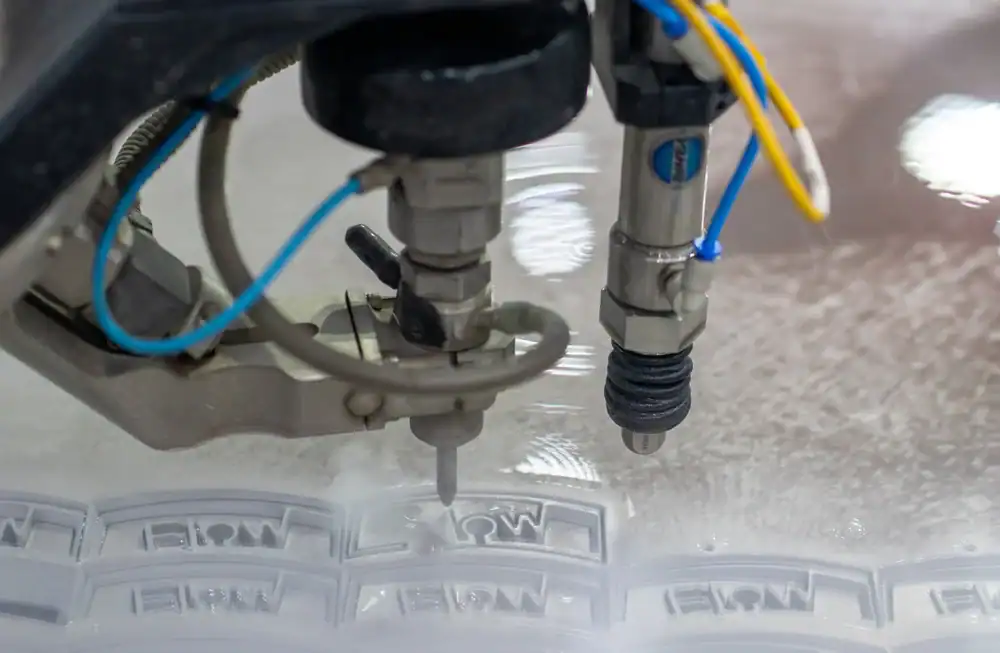
You’re not looking for someone to “try their best” with your material. You need parts that fit, edges that don’t need rework, and cuts accurate enough that your assembly team isn’t fighting tolerances all day.
That’s what we deliver with waterjet cutting in Floral Park, NY. We’re talking about a cold-cutting process that holds tolerances within ±0.005 inches, cuts through materials up to 8 inches thick, and leaves edges clean enough that secondary finishing becomes optional, not mandatory.
No heat-affected zones. No hardening. No warping. Whether you’re running prototypes or full production, our process stays consistent because water pressure doesn’t fluctuate like torch temperature does. You send us a CAD file, we turn it into a part that matches your specs without the usual back-and-forth about why the dimensions shifted.
We operate right here in Floral Park, NY, which means when you call, you’re talking to the people who actually run the machines. No phone trees. No offshore support tickets.
We’ve built our reputation cutting parts for manufacturers, fabricators, HVAC contractors, and design shops across Long Island, NY who need precision work without the production delays that come from sending jobs three states away. When your timeline matters, proximity matters too.
You’re working with people who understand the difference between “close enough” and “within spec.” That distinction keeps your projects moving and your rework costs down.
The process starts with your design file. CAD, DXF, DWG—we work with standard formats so you’re not reformatting drawings just to get a quote. Send us your specs, material requirements, and quantity, and we’ll tell you what it costs and when you’ll have it.
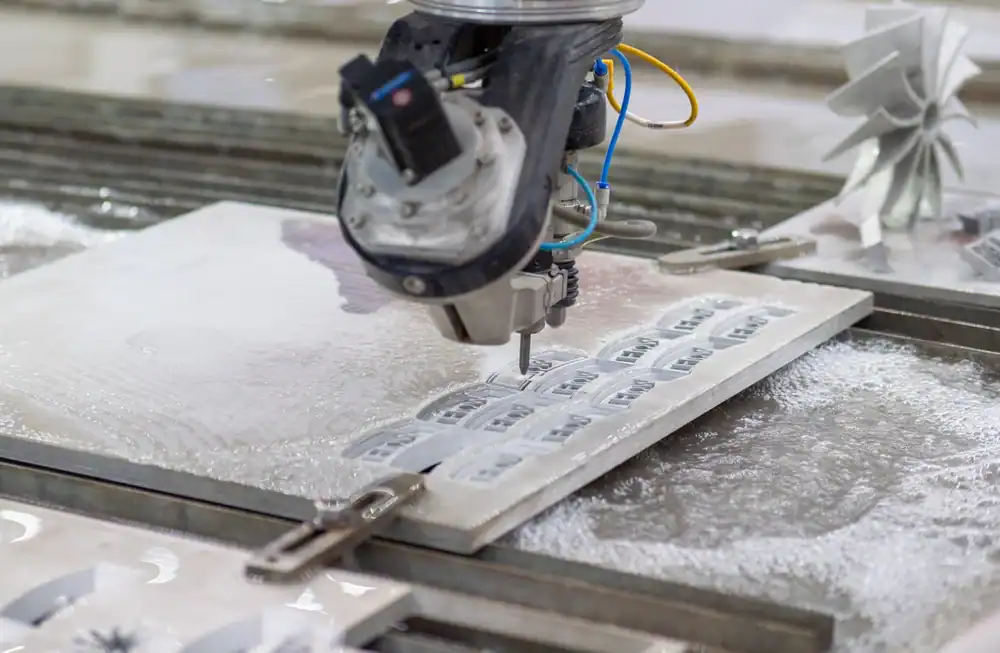
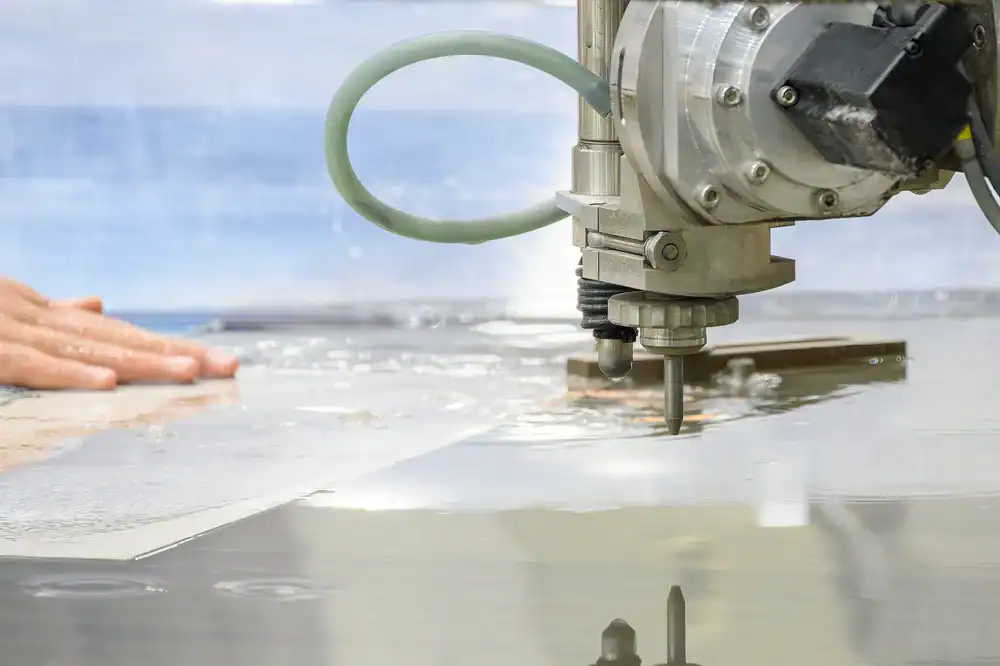
Once approved, your file goes straight to our CNC waterjet system. High-pressure water mixed with abrasive garnet cuts through your material following the exact path programmed from your design. No heat, no mechanical stress, no tool wear changing your dimensions halfway through a production run.
After cutting, parts come off the table ready for inspection. Depending on your application, that might be final inspection before shipping, or it might be the starting point for additional machining, welding, or finishing work you’re handling in-house. Either way, you’re getting parts that match the dimensions you specified, cut from the material you chose, delivered on the timeline we committed to.
Ready to get started?
Our waterjet cutting services in Floral Park, NY handle materials your other cutting methods struggle with. Metals, composites, stone, glass, plastics, rubber—if it’s solid, we can cut it. Thickness capacity goes up to 8 inches, which covers most structural steel, plate aluminum, and thick composites without needing multiple setups or specialized tooling.
The kerf width stays narrow, typically under 0.04 inches, which means you’re wasting less material on each cut. When you’re working with expensive alloys or tight nesting requirements, that adds up fast. You get more parts per sheet and less scrap heading to the dumpster.
For manufacturers and contractors in Floral Park, NY, this matters during project planning. You can spec tighter part layouts, reduce material orders, and still hit your quality benchmarks. HVAC contractors cutting custom ductwork components, fabricators producing mounting brackets, or designers creating architectural panels all benefit from the same advantage: material efficiency without compromising precision.
Complex geometries don’t require special tooling or programming workarounds. Sharp internal corners, small holes, intricate patterns—our waterjet handles them as part of the standard process because there’s no tool diameter limiting your design options.
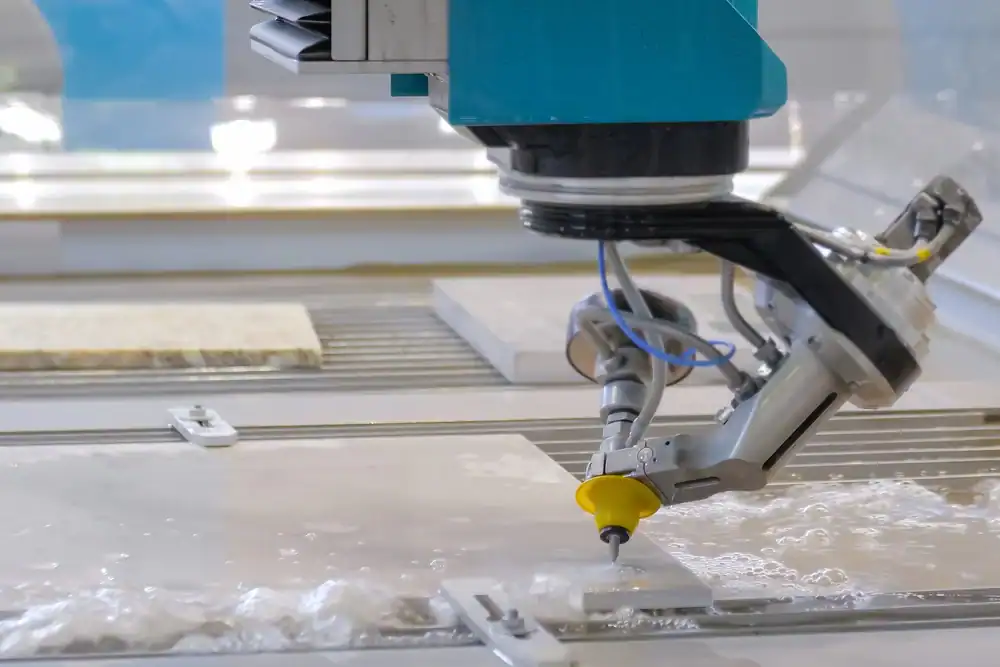
Waterjet cutting works across virtually any solid material you’re likely to spec for manufacturing, fabrication, or construction projects. Metals including stainless steel, aluminum, titanium, brass, and copper cut cleanly without heat distortion. Composites like carbon fiber, fiberglass, and Kevlar cut without delamination or fraying that you’d see with mechanical cutting methods.
Stone, granite, marble, and tile cut precisely for architectural and design applications. Glass and acrylic cut without chipping or cracking. Plastics from HDPE to polycarbonate, rubber, foam, and gasket materials all process cleanly.
The cold-cutting process means you’re not limited by melting points, hardness ratings, or thermal sensitivity. If you’re working with exotic alloys for aerospace components or combining dissimilar materials in a single assembly, our waterjet handles it without changing tooling or process parameters. That flexibility matters when your project specs call for materials that would normally require multiple vendors or specialized equipment.
Waterjet cutting maintains consistent accuracy through thick materials because the cutting stream doesn’t deflect or wander like mechanical tools do under load. High-pressure water mixed with abrasive garnet creates a cutting force that stays perpendicular to the material surface, even when cutting through 6 or 8 inches of steel plate.
CNC control manages the cutting speed based on material thickness and type, slowing down for thicker sections to maintain edge quality and dimensional accuracy. The system compensates for stream lag automatically, so your finished part dimensions match your CAD file regardless of whether you’re cutting quarter-inch aluminum or 4-inch stainless.
For thick materials, this eliminates the taper and edge quality issues you’d typically see with plasma or laser cutting. The top edge and bottom edge of your cut maintain the same dimensional accuracy, which matters when you’re drilling mounting holes or welding assemblies where alignment across the full material thickness determines fit quality. You’re not compensating for taper or cleaning up rough bottom edges before parts move to the next operation.
Turnaround time depends on part complexity, material type, and current production schedule, but most custom waterjet cutting projects in Floral Park, NY complete within 3-5 business days from file approval to pickup or delivery. Simple parts with straightforward geometry often finish faster, sometimes same-week for urgent requests.
Complex parts with intricate details, thick materials, or large quantities take longer because cutting time increases with detail level and material thickness. A sheet of quarter-inch aluminum with basic shapes cuts significantly faster than 4-inch stainless with tight-radius curves and small internal features.
Rush services are available when your project timeline demands it. The key to faster turnaround is getting us your complete specs upfront—material type, thickness, quantity, and tolerance requirements. When we’re not waiting on clarifications or revised files, your parts move straight into production. For ongoing production work or repeat orders, we can often schedule your jobs in advance to guarantee delivery dates that align with your assembly or installation schedules.
Most waterjet cutting applications don’t require secondary finishing because the process produces clean edges without burrs, heat-affected zones, or rough surfaces that need cleanup. The abrasive waterjet creates a surface finish that’s typically smooth enough for direct use in assemblies, welding, or installations.
Edge quality depends partly on cutting speed and material type. Slower cutting speeds produce smoother edges, while faster production cutting may show slight striations on thicker materials. For most manufacturing and fabrication work, those striations don’t affect function or fit, so parts go straight from the waterjet table to your next operation.
When your application demands specific edge finishes—like polished edges for architectural metalwork or deburred edges for medical device components—those finishing operations are simpler and faster than what you’d face after thermal cutting. You’re removing minimal material and dealing with edges that are already dimensionally accurate, not correcting for heat distortion or grinding away hardened zones. That reduces finishing time and cost compared to cleaning up after plasma or laser cutting.
Waterjet cutting works efficiently for both prototype runs and full production quantities because there’s no hard tooling to amortize across part volume. Whether you need one prototype part to test fit or 500 production pieces, the per-part setup cost stays consistent.
For prototypes, that means you can iterate designs without paying for new tooling each time. Send us a revised CAD file, and we cut the updated version without the lead time or cost penalties you’d face with stamping dies or custom cutting tools. That speeds up your development cycle and reduces the cost of design changes.
For production runs, CNC programming ensures every part matches the first one. Our waterjet doesn’t experience tool wear that changes dimensions over time, so part 500 holds the same tolerances as part 1. Nesting software optimizes material usage across your production quantity, reducing per-part material cost as volume increases. You get production efficiency without the upfront tooling investment that makes low-volume manufacturing prohibitively expensive with traditional methods.
Waterjet cutting eliminates heat-affected zones that laser and plasma cutting create, which matters when you’re working with materials where thermal distortion, hardening, or metallurgical changes affect performance. Aerospace components, precision brackets, and parts headed for welding or heat treatment benefit from cold cutting that doesn’t alter material properties.
Material versatility gives waterjet an advantage when your projects involve non-metals or materials that don’t respond well to thermal cutting. Stone, glass, composites, plastics, and rubber cut cleanly with waterjet but can’t be processed with laser or plasma. If you’re running mixed-material projects, waterjet handles everything without switching to different cutting processes.
Thickness capacity extends further with waterjet. While laser cutting typically maxes out around 1 inch on steel and plasma struggles with clean edges on thick materials, waterjet cuts up to 8 inches while maintaining edge quality and dimensional accuracy. For structural steel fabrication, heavy equipment parts, or thick plate work, waterjet provides capabilities that thermal cutting methods can’t match without significant edge cleanup and secondary operations.
Useful Links
Other Services we provide in Floral Park