Hear from Our Customers
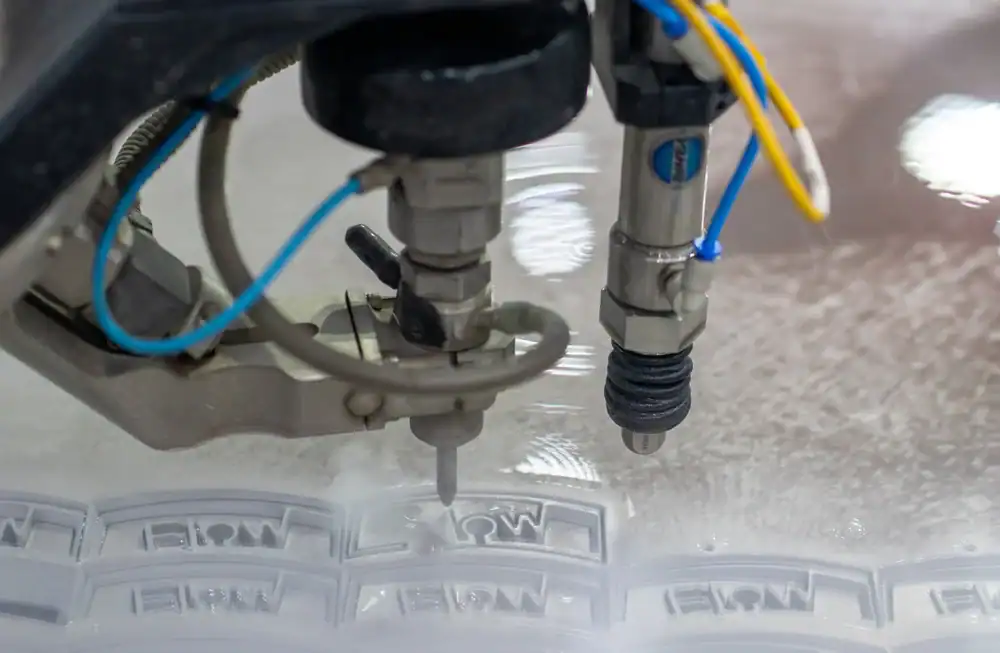
You’re working with tight tolerances and tighter deadlines. The last thing you need is warped material, rough edges, or parts that need rework before they’re usable.
Waterjet cutting in Hampton Bays, NY gives you clean cuts through metal, composites, plastics, and more—without the heat distortion that comes with laser or plasma. The edge quality is smooth enough that most parts skip secondary finishing entirely. That’s time back in your schedule and cost out of your budget.
Whether you’re prototyping a single piece or scaling into production, you get the same precision. No minimum order requirements means you can test your design before committing to a full run. And because the process is cold, your material stays structurally sound from the first cut to the last.
This is how you move from concept to finished part without the usual headaches. Fast positioning between cuts keeps production moving. Multiple material types handled in the same session. Intricate geometries that would take hours on a CNC mill done in minutes.
Tri-State Waterjet has been serving manufacturers across Hampton Bays, NY and the surrounding tri-state area for over 20 years. We’ve cut parts for aerospace, automotive, electronics, and defense contractors who can’t afford mistakes.
Hampton Bays sits in the heart of Long Island, NY’s manufacturing corridor, home to over 38 fabrication and specialty manufacturing companies. We understand the pace here. Quick turnarounds aren’t a nice-to-have, they’re expected.
Our shop runs advanced CAD integration and CNC-controlled waterjet systems. We’re ISO 9001:2015 certified, which matters when you’re cutting parts that need documentation and consistency. You get experienced operators who’ve handled everything from 0.010″ acrylic to 10″ stainless steel.
You send us your CAD file or concept sketch. Our designers review it and convert it into a production-ready cutting path. If there are tolerance issues or design elements that won’t cut cleanly, we flag them before we start.
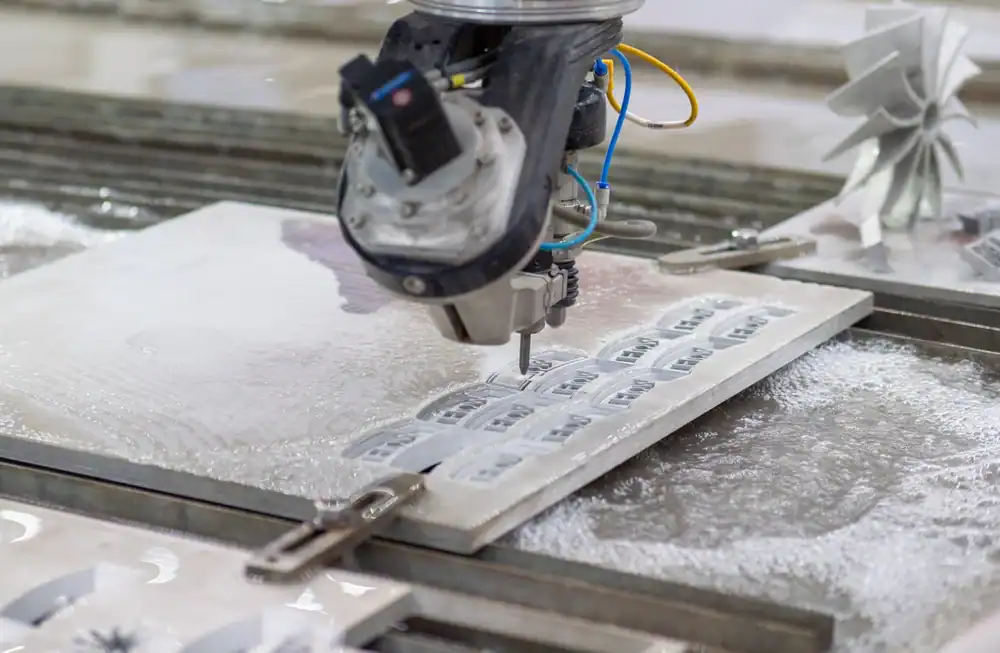
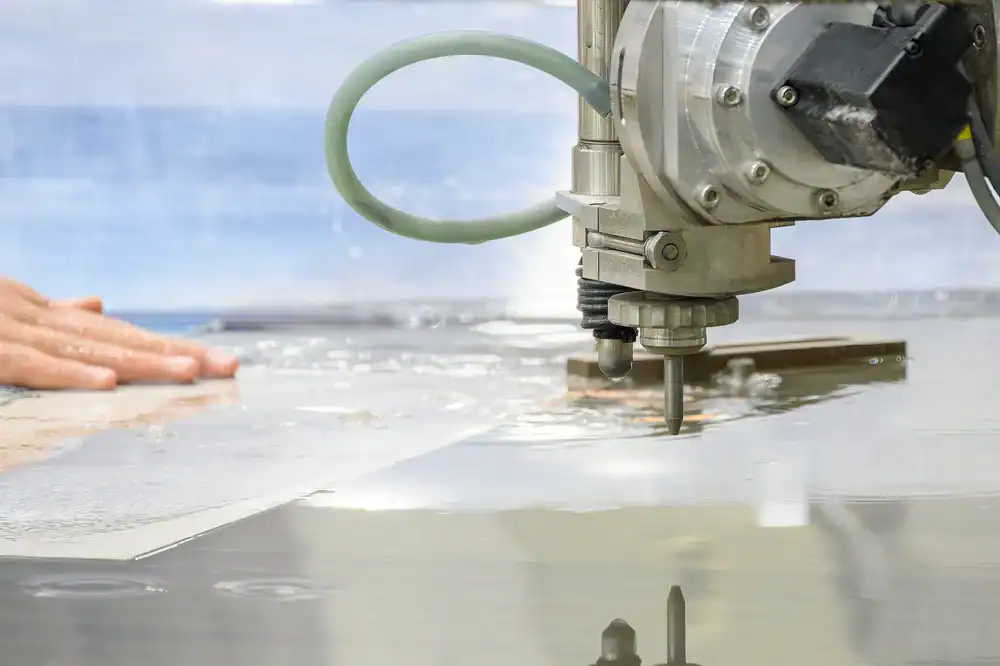
Once the file is programmed, your material goes on the cutting table. The waterjet nozzle delivers a focused stream of high pressure water mixed with abrasive garnet. It cuts through your material following the programmed path with a kerf width that’s typically narrower than a laser.
The cutting head moves quickly between features, and because there’s no heat, there’s no waiting for material to cool. Thin materials can be stacked to increase throughput and lower your per-part cost. Thicker materials cut just as cleanly, just slower.
After cutting, most parts come off the table ready to use. The edges are smooth with minimal burr. If you need additional services like milling, welding, or finishing, we handle that in-house so you’re not coordinating between multiple shops.
Ready to get started?
Every custom waterjet cutting project starts with material compatibility review. We cut metals, composites, glass, stone, rubber, foam, and plastics. If your material can’t handle heat, waterjet cutting in Hampton Bays, NY is often your only option for complex shapes.
You get cuts with tolerances tight enough for aerospace and medical device work. The cold cutting process means no hardened edges, no thermal stress, and no material property changes. Your parts maintain their original strength and flexibility.
Long Island, NY’s manufacturing sector increasingly demands faster prototyping and shorter production runs. Our waterjet cutting services handle single prototypes up to full production volumes without tooling changes or setup fees. You’re not locked into minimum quantities, and you’re not paying for dies or fixtures that only work for one design.
The process generates minimal waste. Abrasive waterjet cutting uses garnet that gets deposited into a catch tank along with the cut material. No toxic fumes, no dust in the air, no environmental permits needed for standard materials. For shops in Hampton Bays, NY dealing with strict environmental standards, that matters.
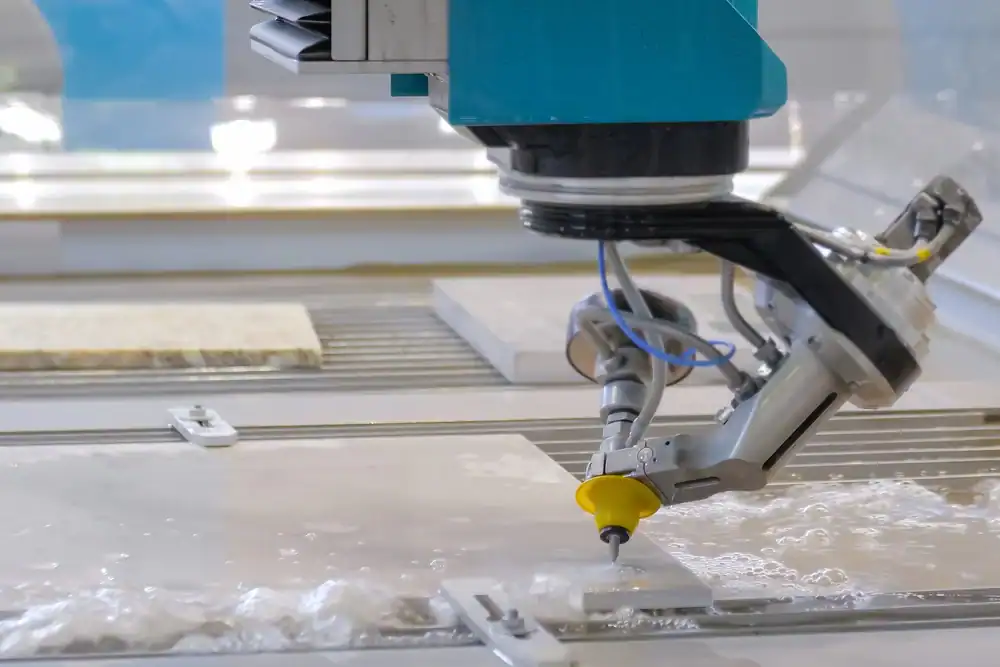
Waterjet cuts anything that doesn’t dissolve in water. That includes materials that are too hard for traditional machining, too thick for laser, or too heat-sensitive for plasma.
Composites are a perfect example. Carbon fiber, fiberglass, and layered materials delaminate under heat. Waterjet keeps them intact because there’s no thermal stress. You get clean edges without fraying or separation between layers.
Thick metals are another area where waterjet outperforms. While laser cutting typically maxes out around 1 inch in steel, waterjet in Hampton Bays, NY routinely cuts through 6-inch plate and thicker. The cut quality stays consistent through the entire depth, which isn’t always true with other methods.
Reflective materials like aluminum, copper, and brass cause problems for lasers because they bounce the beam. Waterjet doesn’t care about reflectivity. Same with materials that harden when exposed to heat—waterjet leaves them soft and workable.
Both processes deliver tight tolerances, but they handle materials differently. Laser creates a heat-affected zone around the cut edge. For some applications, that’s fine. For others, it creates problems.
Heat-affected zones change the material’s hardness and can cause micro-cracking in certain alloys. If you’re cutting parts that will be welded, bent, or undergo additional machining, those hardened edges complicate your downstream processes. Waterjet cutting services avoid this entirely because the process is cold.
Laser is typically faster on thin materials under a quarter-inch. Once you get into thicker stock, waterjet becomes more efficient. There’s no drop-off in cut quality as thickness increases, and you’re not dealing with dross or slag that needs grinding.
The kerf width—the amount of material removed by the cutting process—is comparable between the two methods. Waterjet typically runs slightly wider, but we’re talking about differences measured in thousandths of an inch. For most applications, both methods hit the required tolerances without issue.
Simple cuts on standard materials usually ship within 2-3 business days. Complex geometries or thick materials take longer, but we’re still talking days, not weeks.
The speed advantage comes from not needing custom tooling. Your CAD file becomes the cutting path directly. There are no dies to build, no fixtures to machine, no setup time beyond loading your material onto the table. That’s why waterjet cutting in Hampton Bays, NY works so well for prototyping—you can test a design on Monday and have parts in hand by Thursday.
Production runs depend on quantity and complexity. A motor mount plate that’s 1.25 inches thick might take 18 minutes to cut all the features. Multiply that by your quantity, add some buffer for material loading and quality checks, and you have a realistic timeline.
Rush service is available when you’re up against a deadline. We run multiple shifts and can prioritize urgent projects, but that’s a conversation to have upfront so we can manage the schedule properly.
Most parts come off the waterjet table ready to use. The cutting process naturally produces smooth edges because the abrasive erosion happens gradually, not through melting or shearing.
You’ll see a slight texture on the cut edge—that’s the abrasive doing its work. For parts that need cosmetic perfection or will be visible in the final assembly, light deburring or sanding takes care of it. But for functional parts, brackets, plates, and components that get assembled into larger systems, the as-cut finish is usually acceptable.
Compare that to laser or plasma cutting, where you’re grinding off slag, dealing with hardened edges, or smoothing out rough zones. Those secondary operations add time and cost to every part. With custom waterjet cutting, you skip most of that.
Thicker materials sometimes show a slight taper in the cut—wider at the top surface than the bottom. For most applications, we’re talking about a few thousandths of an inch over several inches of thickness. If your tolerances are tight enough that this matters, we adjust the cutting parameters or program a slight compensation into the path.
Waterjet handles both. There’s no economic penalty for cutting one piece versus one hundred. You’re not amortizing tooling costs across a production run, so small batches make financial sense.
Manufacturers in Hampton Bays, NY use waterjet cutting services for short-run production all the time. Medical device components, custom architectural metalwork, replacement parts for equipment—these are applications where you might need 10 pieces now and 20 more in six months. Waterjet accommodates that without requiring you to commit to inventory you don’t need yet.
For higher volumes, the process scales through automation and multi-head systems. Thin materials get stacked, so one cutting pass produces multiple parts. Nesting software arranges parts on the material sheet to minimize waste, which keeps your per-part cost down even as quantities increase.
The flexibility matters when your demand fluctuates or you’re still refining the design. You can run a small batch, test the parts in the field, make revisions, and run another batch without scrapping tooling or eating setup costs. That’s how you iterate quickly without burning through your budget.
A CAD file in DXF or DWG format gives us everything we need to quote accurately. We can see the geometry, measure the cutting path length, and calculate machine time. If you have specific material requirements—grade, thickness, finish—include those details.
No CAD file yet? A dimensioned sketch works. We need to know the overall size, the complexity of the cuts, and what material you’re using. Photos of existing parts help if you’re looking to replicate something.
Tolerance requirements affect the quote because tighter tolerances sometimes require slower cutting speeds or multiple passes. If you need +/- 0.005″ instead of +/- 0.010″, mention that upfront. Same with edge finish—if you need a specific surface roughness, we need to know before quoting.
Quantity matters less than you’d think for waterjet cutting in Hampton Bays, NY, but it still factors in. We can optimize material usage and cutting paths for larger runs, which brings the per-part price down. For single prototypes, you’re paying for the machine time and material, but there’s no setup penalty that makes small quantities prohibitively expensive.
Useful Links
Other Services we provide in Hampton Bays