
Hear from Our Customers
You need parts that fit the first time. No warping from heat. No secondary finishing eating into your timeline. No material waste inflating your costs.
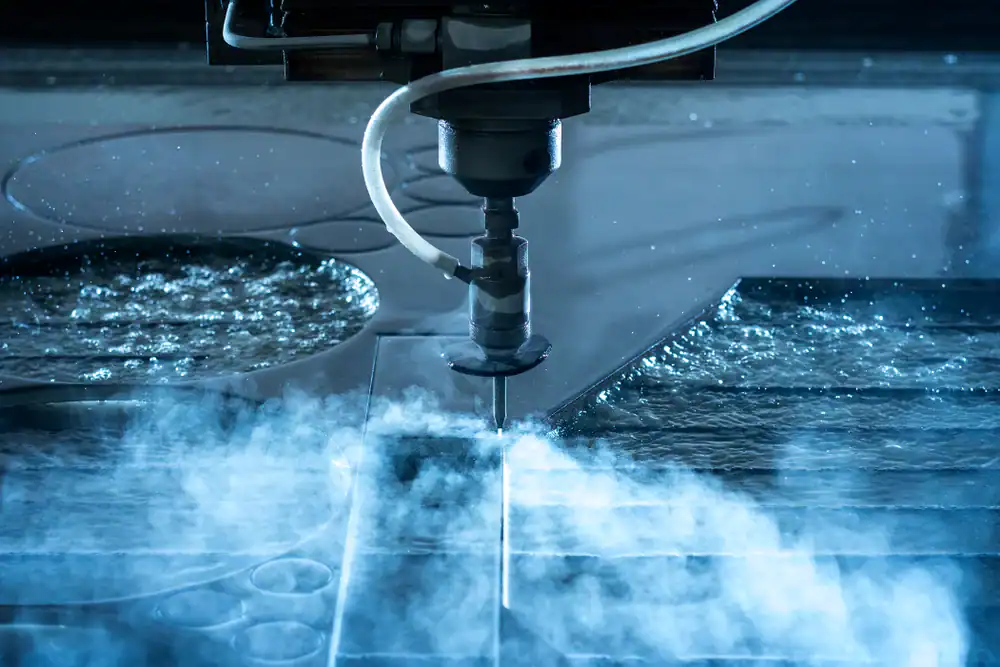
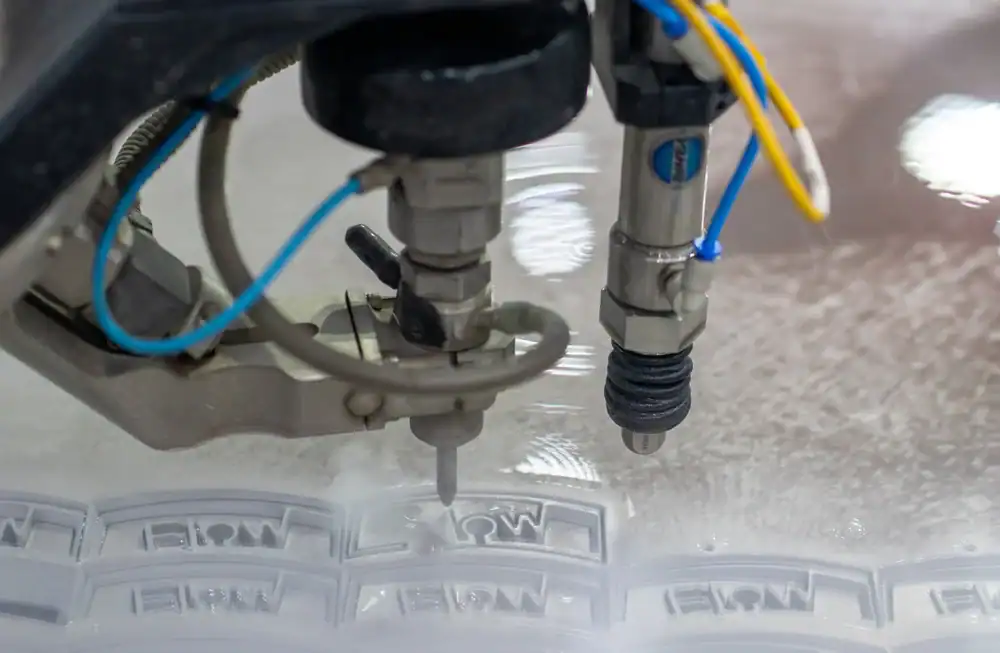
High pressure water cutting removes those variables. The process uses a focused stream of water mixed with abrasive particles to slice through metals, composites, glass, stone, and plastics without generating heat. That means your material properties stay intact. No hardened edges. No thermal distortion. No compromised tolerances.
For manufacturers in Lake Ronkonkoma working on aerospace components, medical devices, or architectural metalwork, this matters. You’re often dealing with expensive materials and tight specifications. Waterjet cutting services in Lake Ronkonkoma give you accuracy within ±0.005 inches while maintaining the structural integrity of whatever you’re cutting. The edge quality is clean enough that most parts skip secondary operations entirely.
We serve the Lake Ronkonkoma area with precision cutting technology that meets the demands of Long Island, NY’s manufacturing sector. Suffolk County is home to over 2,000 manufacturers spanning aerospace, medical devices, pharmaceuticals, and advanced fabrication. These industries don’t have room for error.
We understand what’s at stake when you’re producing critical components. Our waterjet cutting shop handles everything from prototype development to production runs, working with the materials and tolerances your projects require. Whether you’re an architect specifying custom metalwork or a contractor needing intricate cuts for a commercial build, you’re working with people who know the process inside and out.
Lake Ronkonkoma’s proximity to major manufacturing hubs means fast turnaround when deadlines tighten. You get local service with the technical capability to handle complex geometries and thick materials.
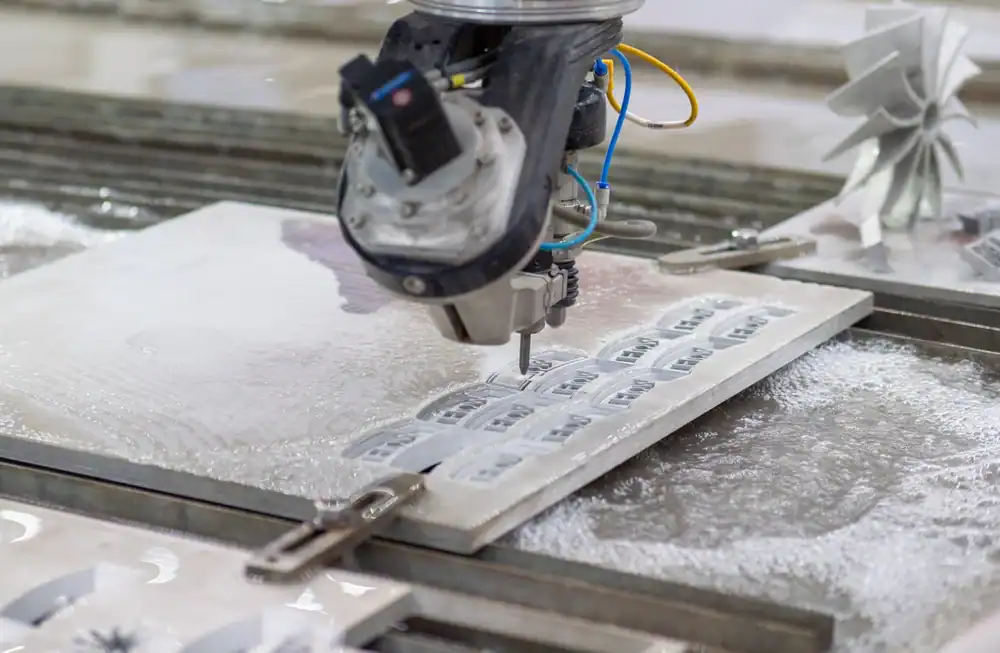
The process starts with your CAD file or technical drawing. Our CNC waterjet system translates your design into precise cutting paths. There’s no tooling to create, no dies to manufacture. That’s why waterjet cutting works well for both one-off prototypes and production quantities.
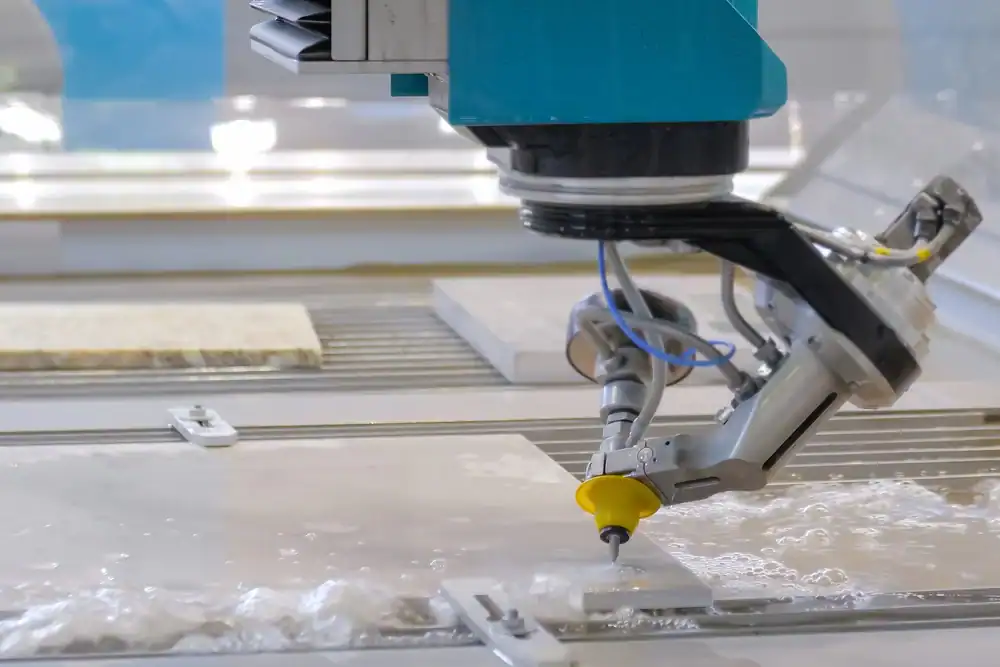
Once your file is loaded, the cutting head moves across your material using a stream of water pressurized up to 60,000 PSI. For harder materials like steel, titanium, or composites, we add garnet abrasive to the water stream. The abrasive waterjet cutting process in Lake Ronkonkoma can handle materials up to 12 inches thick in aluminum and 9 inches in stainless steel.
The narrow kerf—typically 0.03 to 0.04 inches—means minimal material waste. You’re not losing expensive stock to wide cutting paths. The system can execute sharp internal corners, small holes, and intricate patterns that would require multiple setups with conventional machining. After cutting, most parts come off the table ready to use. No deburring. No heat treatment to reverse warping. Just clean edges and accurate dimensions.
Ready to get started?
Custom waterjet cutting in Lake Ronkonkoma handles the materials your projects demand. Aluminum, stainless steel, titanium, Inconel, brass, copper. Composites like carbon fiber and fiberglass. Plastics including acrylic, polycarbonate, and UHMW. Glass, stone, ceramic, and rubber. If you’re working with multiple material types in a single assembly, you’re not juggling multiple vendors.
The process accommodates complex geometries without special tooling. Need tight-radius curves? Internal cutouts? Nested parts to maximize material usage? The CNC system executes those details with repeatable accuracy. For Long Island, NY’s aerospace and medical device manufacturers, that precision matters when you’re producing components with strict tolerances and documentation requirements.
Turnaround depends on complexity and material, but the lack of tooling setup means faster transition from drawing to finished part. You’re not waiting weeks for custom dies or fixtures. For architects and designers working on custom installations around Lake Ronkonkoma, that flexibility speeds up project timelines when you’re coordinating with contractors and construction schedules.
The environmental profile is cleaner than thermal cutting methods. No hazardous fumes. No heat-affected zones creating metallurgical changes. The water and garnet abrasive are recyclable, and the process runs quieter than plasma or laser systems.
Waterjet cutting works on materials that don’t respond well to heat or mechanical stress. Reflective metals like copper and brass that deflect laser beams. Composites like carbon fiber that delaminate under heat. Tempered glass that shatters with thermal shock. Thick titanium that work-hardens under mechanical cutting.
The cold-cutting process means you can work with heat-sensitive plastics without melting or distorting edges. For manufacturers in Lake Ronkonkoma producing multi-material assemblies, this eliminates the need to source different cutting methods for different components. You get consistent edge quality across your entire material list.
Waterjet also handles material thicknesses that challenge other processes. While laser cutting typically maxes out around 1 inch in steel, waterjet systems cut up to 9 inches in stainless. That capability matters for heavy fabrication, structural components, and industrial equipment manufacturing common in Suffolk County’s industrial sector.
The water stream stays below 140°F at the cutting point. That’s cool enough to prevent any metallurgical changes or thermal expansion in your material. When you’re working with aerospace-grade aluminum or medical-grade stainless steel, maintaining material properties is non-negotiable.
Traditional thermal cutting methods create a heat-affected zone that changes the material’s hardness, introduces residual stress, and can cause warping as the part cools. You end up with dimensional changes that throw off your tolerances. Waterjet cutting in Lake Ronkonkoma eliminates that variable entirely.
The CNC control system positions the cutting head with precision that holds ±0.005 inch tolerances across the entire cut path. For parts requiring even tighter specs, secondary passes can achieve ±0.001 inch. The narrow kerf width and minimal cutting forces mean there’s no material deflection during the process. What you program is what you get, without compensation factors for heat expansion or mechanical pressure.
Simple cuts in common materials can turn around in 24 to 48 hours. More complex geometries, thicker materials, or high-volume production runs take longer, but you’re still looking at days, not weeks.
The speed advantage comes from eliminating tooling. With stamping or punching, you’d wait for die fabrication before cutting the first part. With waterjet, we go straight from your CAD file to cutting. That matters when you’re prototyping designs or responding to urgent production needs in Lake Ronkonkoma’s fast-moving manufacturing environment.
Material availability affects timeline more than cutting complexity. If you’re supplying the material, turnaround depends on when it arrives. If we’re sourcing it, common alloys and plastics are readily available through Long Island, NY suppliers. Exotic alloys or specialty composites may add lead time. The actual cutting process is efficient—the system runs continuously once programmed, and multiple parts can nest on a single sheet to maximize throughput.
Most waterjet-cut parts come off the table ready to use. The edge quality is smooth with minimal burr, especially compared to plasma or oxy-fuel cutting. For many applications, that surface finish is acceptable as-is.
When you do need secondary operations, it’s usually light deburring or edge breaking, not extensive grinding or machining. That’s a significant time and cost savings compared to processes that leave heavy slag, rough edges, or heat-affected zones requiring removal. Medical device manufacturers and aerospace fabricators in Lake Ronkonkoma appreciate this because it reduces handling steps and maintains traceability.
The exception is when you need specific surface finishes for functional reasons—like sealing surfaces or bearing surfaces. In those cases, you’d machine or grind those features regardless of cutting method. But for the majority of structural parts, brackets, panels, and components, waterjet cutting delivers usable edges without additional work.
Waterjet has higher operating costs per hour than plasma, but lower costs than laser for thick materials. The real cost comparison depends on your specific application and what happens after cutting.
If you’re cutting thin sheet metal in high volumes with simple geometries, plasma is cheaper. If you’re cutting reflective metals, composites, or materials thicker than an inch, waterjet becomes more cost-effective because it handles those materials in a single setup without secondary operations.
The narrow kerf reduces material waste, which matters when you’re working with expensive alloys or trying to nest multiple parts efficiently. For custom fabrication and prototype work common in Lake Ronkonkoma’s manufacturing sector, the elimination of tooling costs makes waterjet economical even for low quantities. You’re not amortizing die costs across production runs. Every part costs the same whether you’re making one or one hundred.
Standard waterjet systems cut flat materials in 2D paths, which covers the majority of fabrication needs—plates, sheets, structural components, and flat patterns that later form into 3D assemblies.
Advanced 5-axis waterjet systems can cut beveled edges and true 3D contours by tilting the cutting head while moving across the material. This capability is growing in the industry as manufacturers need more complex geometries for aerospace components, turbine blades, and sculptural architectural elements. The technology allows cutting compound angles and chamfers in a single setup.
For most manufacturing applications around Lake Ronkonkoma, 2D cutting handles the requirement. You’re producing parts that bolt together, weld into assemblies, or mount into equipment. The precision and material versatility matter more than 3D capability. When projects do require beveled edges or angled cuts, 5-axis waterjet technology provides that option without moving to a completely different cutting process.
Useful Links
Other Services we provide in Lake Ronkonkoma