Hear from Our Customers
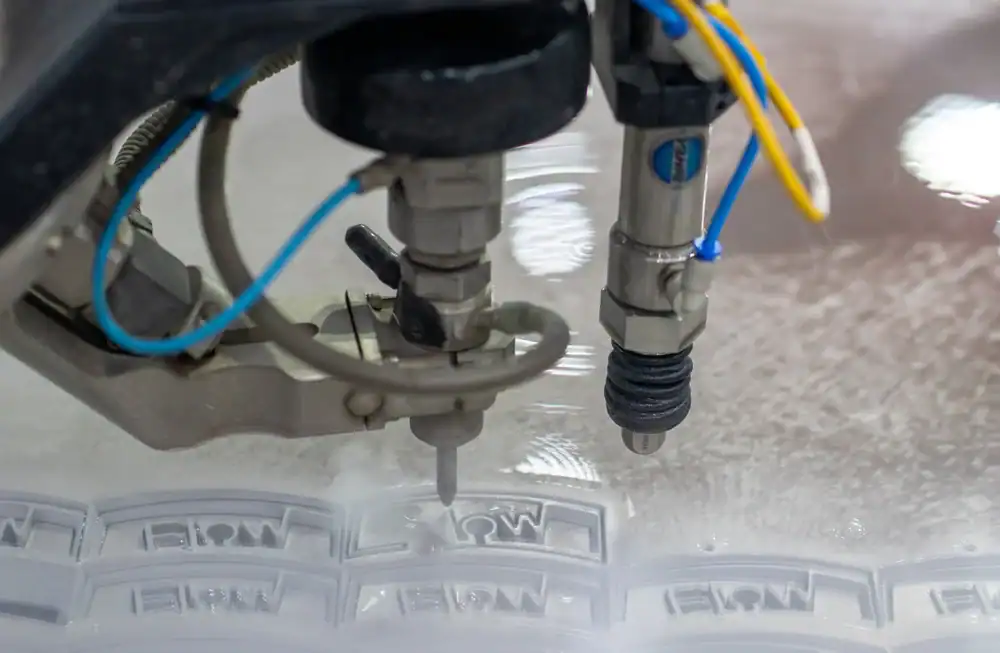
Your material stays intact. No warping from heat. No hardened edges that need grinding down later. No secondary finishing eating into your timeline or budget.
Waterjet cutting in Levittown, NY means you’re working with a process that handles aluminum, stainless steel, titanium, stone, glass, and composites—all without changing your setup or worrying about thermal distortion. The abrasive waterjet cutting process cuts through materials up to several inches thick while holding tolerances within .001″ where your specs demand it.
You get parts that fit the first time. Prototypes that actually test your design, not your patience. Production runs that don’t leave you with scrap piles and rework orders. Whether you’re an architect specifying decorative metalwork for a commercial build, a fabricator producing custom brackets, or an engineer prototyping composite components, the cut quality you receive directly impacts what happens next in your workflow.
We bring traditional machining expertise to waterjet cutting services in Levittown, NY. That background matters when you’re evaluating a project—knowing what tolerances are realistic, which materials will behave how, and where potential issues might surface before they cost you time.
We hold ISO9001 and AS9100d certifications, plus ITAR compliance for defense-related work. Those aren’t just letters on a wall. They’re systems that ensure your files stay secure, your specs get followed, and your parts get documented properly.
Levittown’s business landscape—from Northwell Health’s medical device needs to the manufacturing shops serving aerospace and automotive markets—requires cutting services that understand both precision and turnaround. When Stop & Shop needs custom fixtures or a local contractor needs architectural metalwork, the projects don’t wait. We offer emergency service availability for exactly those moments when a machine part failure or design change puts your timeline at risk.
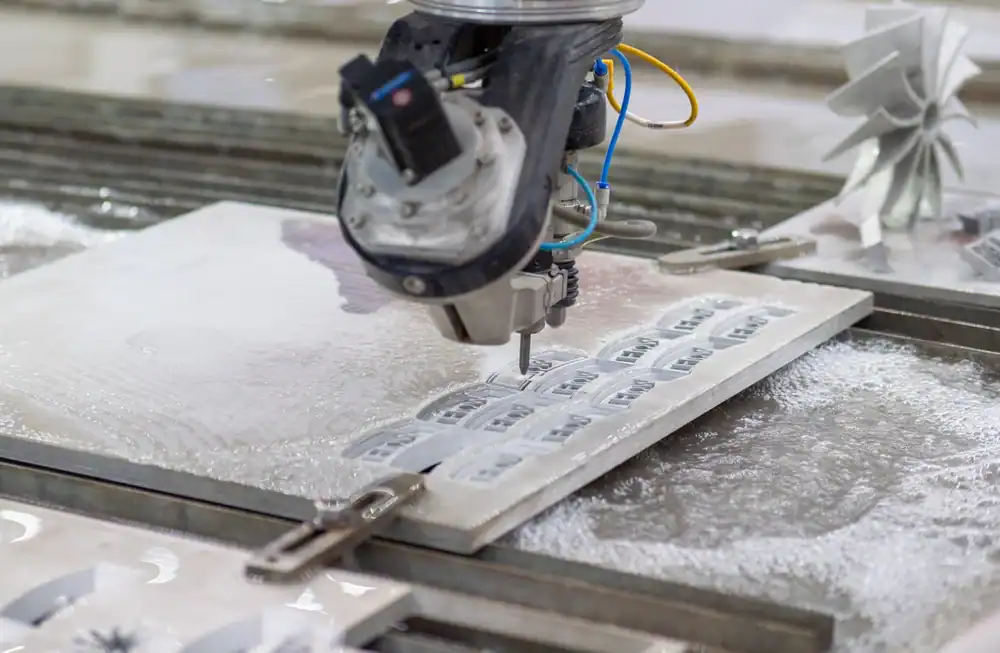
You start with your design file—DXF, DWG, or even a sketch if you’re still working through the concept. We review it for manufacturability. Not to change your design, but to flag anything that might cause issues: inside corners that need specific radii, tolerances that require multiple passes, or material thicknesses that affect cut speed.
Once the file is dialed in, programming happens through CNC controls. Our waterjet cutting system in Levittown, NY follows those paths with a stream of water pressurized up to 60,000 PSI, mixed with garnet abrasive for harder materials. The cutting head moves across your material, eroding through it without generating heat. No molten edges. No hardened zones. No material stress that shows up later as warping or cracking.
For thicker materials or tighter tolerances, multiple passes refine the edge. For production runs, nesting software arranges your parts to minimize waste—sometimes reducing scrap by 30% compared to traditional cutting methods. You’re not paying for material that ends up in the dumpster.
Setup time stays low because there’s no tooling to fabricate or change. One setup handles multiple part geometries. That’s why custom waterjet cutting in Levittown, NY works for single prototypes and thousand-piece production runs alike.
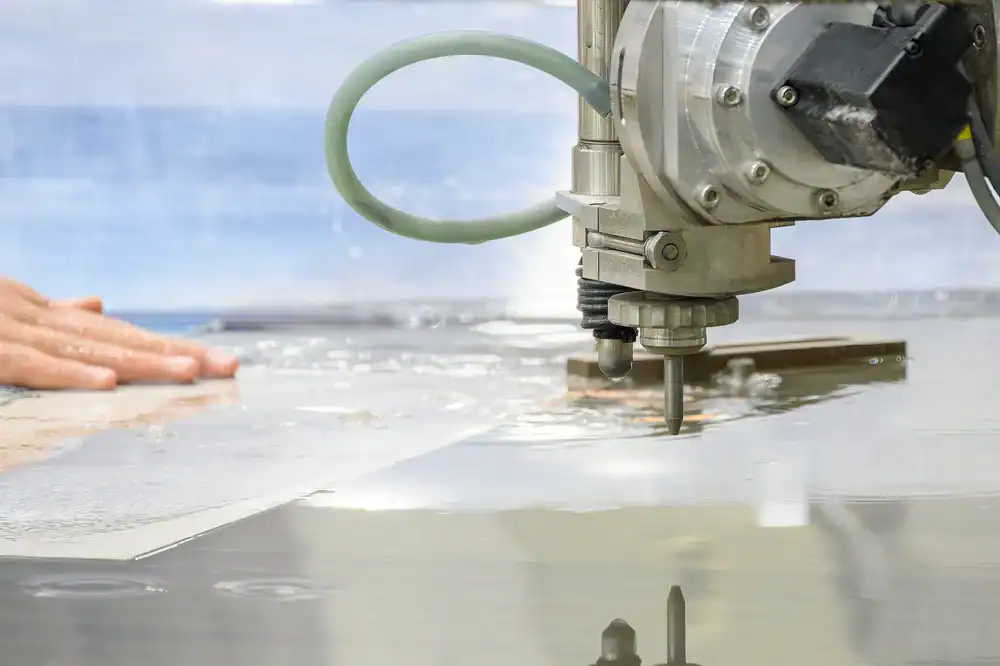
Ready to get started?
Material consultation happens before cutting starts. If you’re uncertain whether your specified material will perform as expected, or if an alternative might save cost without compromising function, that conversation happens up front. Our machining background means we’ve seen how materials behave under stress, in assemblies, and after finishing processes.
We offer design services if you need help translating a concept into a manufacturable file. Sometimes you know what the part needs to do but haven’t finalized the geometry. Sometimes you have a sample part that needs reverse engineering. Either way, you’re not stuck trying to learn CAD software to get a quote.
Our waterjet cutting services in Levittown, NY include edge quality that typically eliminates deburring. You receive parts ready for welding, assembly, or installation—not parts that need another shop’s time before they’re usable. For Levittown’s architecture and design community, that means decorative metalwork, stone inlays, and glass panels arrive ready to install. For the area’s industrial fabricators and automotive shops, brackets and custom components fit without modification.
Turnaround depends on complexity and queue, but the process itself is fast. Abrasive waterjet cutting runs up to four times faster than conventional waterjet methods. When you need emergency service—a broken machine part, a last-minute design change, a project that suddenly moved up—that capacity exists.
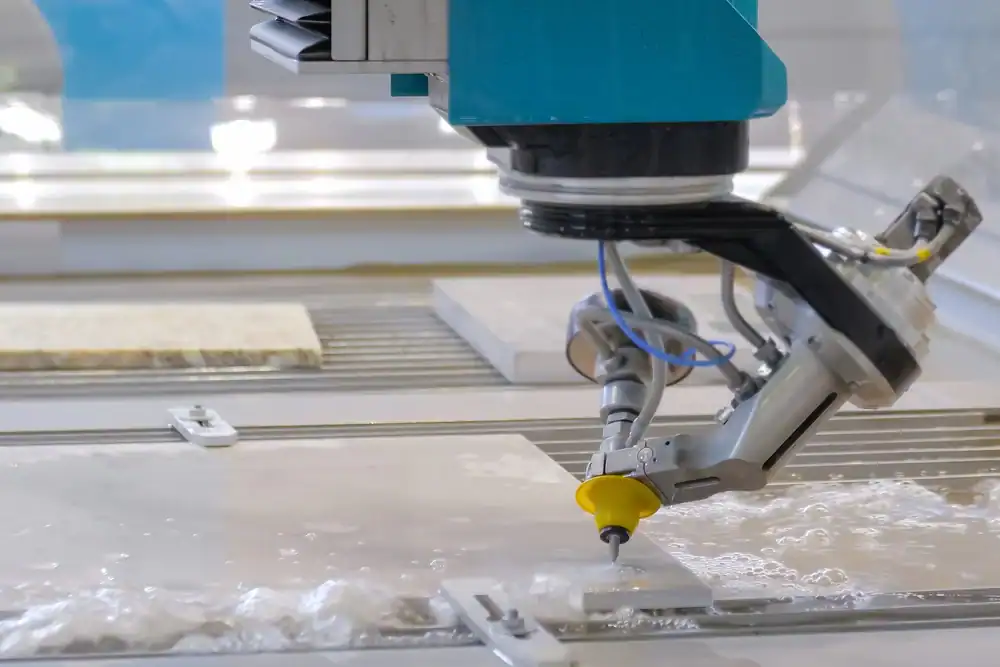
Waterjet cutting in Levittown, NY handles materials that would crack under laser heat, melt under plasma, or dull saw blades within minutes. Ceramics, glass, and stone cut cleanly without thermal shock fractures. Composites and laminates—carbon fiber, fiberglass, Kevlar—cut without delamination because there’s no heat pulling layers apart.
Titanium and hardened tool steels cut without creating heat-affected zones that change the material properties you engineered into your design. Thick aluminum plates cut without the edge warping that happens when lasers pump heat into the material. You can even cut rubber, foam, and gasket materials that would compress or melt under other processes.
The cold cutting process means you’re not limited by melting points or thermal sensitivity. If a material exists in sheet or plate form, waterjet cutting can handle it. That versatility matters in Levittown’s diverse industrial base—aerospace parts in exotic alloys, architectural metalwork in stainless and bronze, automotive components in aluminum and composites all run through the same system.
Laser cutting works well for thinner materials—typically under half an inch for most metals. Beyond that thickness, cut quality degrades and speed drops significantly. Waterjet cutting in Levittown, NY handles materials several inches thick without losing edge quality or precision. If your parts are thicker than a quarter inch, waterjet likely makes more sense.
Heat-affected zones are the other major difference. Lasers create a narrow band of altered material along every cut edge—hardened, discolored, sometimes warped. That matters if you’re welding (the hardened zone can crack), powder coating (the discoloration shows through), or holding tight tolerances (the warping throws off your dimensions). Waterjet cutting eliminates those issues entirely because the process stays cold.
Material limitations also differ. Lasers struggle with reflective materials like copper and brass—the beam reflects back and damages the machine. Lasers can’t cut stone, glass, or ceramics at all. If your project involves multiple material types or anything beyond basic metals, waterjet gives you options that lasers don’t.
Standard waterjet cutting in Levittown, NY holds tolerances around ±.005″ for most applications. That’s tight enough for brackets, panels, decorative work, and the majority of fabricated parts. For critical dimensions—mounting holes that need to align precisely, mating surfaces, gauge blocks—tolerances can tighten to ±.001″ with multiple passes and proper fixturing.
Those numbers assume proper material support and appropriate thickness for the tolerance required. Thinner materials can shift slightly during cutting, which affects precision. Thicker materials take longer to cut, which can introduce minor variation. The consultation process addresses these factors for your specific project.
Compare that to plasma cutting, which typically runs ±.030″ or wider, or oxy-fuel cutting that struggles to hold anything tighter than ±.060″. Even laser cutting usually stays around ±.005″ for standard work. Waterjet matches or beats other thermal processes while avoiding the heat damage they create. For Levittown manufacturers producing aerospace components or precision industrial parts, those tolerances matter. Your parts either fit in the assembly or they don’t—there’s no partial credit.
Waterjet cutting costs more per hour than plasma or oxy-fuel cutting, but less than you’d pay for the same job when you factor in the full process. You’re not paying for secondary finishing to clean up rough edges. You’re not scrapping parts that warped from heat. You’re not dealing with hardened edges that dull your drill bits during assembly.
Setup costs stay low because there’s no custom tooling to fabricate. A laser cutting job might need specific fixtures or programming for each part geometry. Waterjet cutting in Levittown, NY uses the same setup whether you’re cutting one prototype or a hundred production pieces. That matters significantly when you’re testing designs or running small batches.
Material waste affects your real cost per part. Waterjet cutting reduces scrap by up to 30% through efficient nesting and narrow kerf width—the actual cut width is smaller than most other processes, so parts can nest closer together. If you’re cutting expensive materials like titanium, stainless, or composites, that waste reduction often covers the difference in cutting rates.
For thicker materials, waterjet often costs less than laser cutting because lasers slow down dramatically as thickness increases. A two-inch aluminum plate might take three times longer on a laser than a waterjet, assuming the laser can even handle that thickness effectively.
Complex geometries are where waterjet cutting in Levittown, NY excels. The cutting stream is narrow—typically .030″ to .040″ diameter—which allows intricate patterns, tight curves, and detailed work that would require multiple setups or specialized tooling with conventional methods. Architectural metalwork with ornate patterns, automotive parts with complex profiles, and aerospace brackets with weight-reduction cutouts all cut in a single operation.
Inside corners require understanding kerf radius. The waterjet stream has width, so perfectly sharp inside corners aren’t physically possible—you’ll get a small radius equal to roughly half the kerf width. For most applications, that .015″ to .020″ radius is irrelevant. For applications where sharp corners matter structurally or aesthetically, the design needs to account for that radius, or a secondary operation (wire EDM, broaching) handles those specific features.
The CNC control allows complex tool paths without speed penalties. A laser or plasma torch can cut straight lines quickly but slows down on curves and details. Waterjet maintains consistent cutting speed regardless of path complexity. That means your intricate parts don’t cost dramatically more than simple rectangles—the programming takes longer, but the actual cutting time stays proportional to cut length, not complexity.
Turnaround for waterjet cutting services in Levittown, NY depends on three factors: current queue, material availability, and cutting time. Simple parts in common materials often complete within days. Complex parts, large production runs, or specialty materials take longer—sometimes a week or two depending on what else is running.
We offer rush service for legitimate emergencies. A broken machine part that’s stopping your production line gets priority. A design change that affects an installation deadline gets accommodated when possible. That flexibility matters in Levittown’s industrial environment where downtime costs real money and construction schedules don’t adjust for cutting delays.
The actual cutting process is faster than most people expect. Abrasive waterjet cutting runs significantly quicker than conventional waterjet methods—up to four times faster for many materials. A part that might take an hour on an older system could finish in fifteen minutes on modern equipment. Setup time stays minimal because there’s no tooling to build or change between jobs.
Communication affects turnaround as much as cutting speed. When your file arrives with clear specs, correct dimensions, and realistic tolerances, programming happens quickly. When a design needs clarification or material substitution discussions, that adds time. The consultation process up front prevents delays later—better to spend twenty minutes discussing your project requirements than to cut parts that don’t meet your actual needs.
Useful Links
Other Services we provide in Levittown