Hear from Our Customers
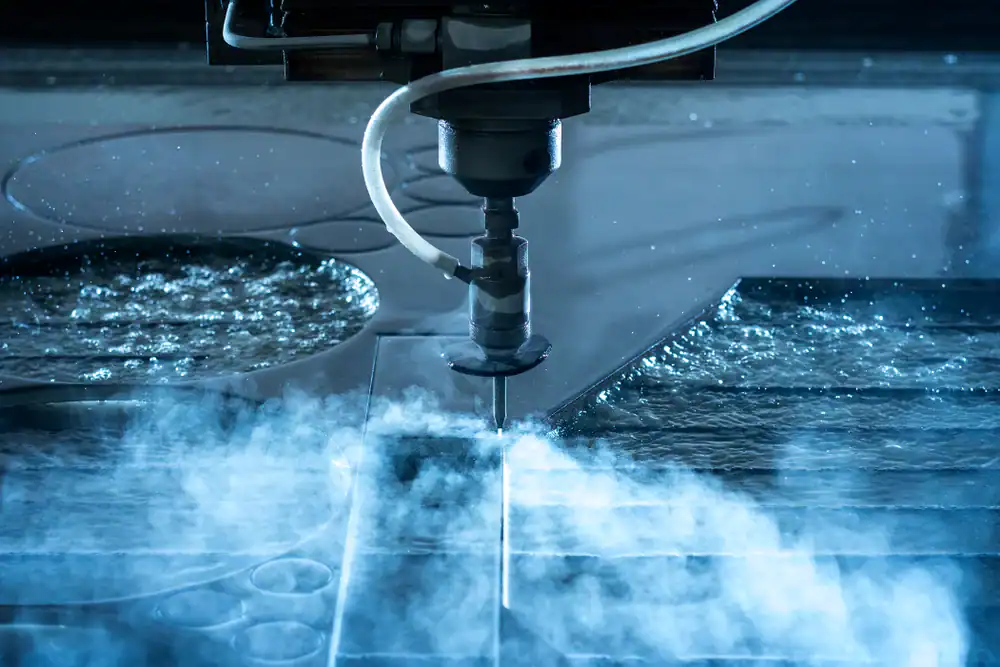
You’re dealing with tight tolerances and materials that can’t afford heat damage. Plasma leaves you with warped edges and extra finishing work. Laser burns through your budget on thicker materials and creates heat-affected zones that compromise structural integrity.
Waterjet cutting in Long Beach, NY solves that. The process uses high pressure water cutting—up to 60,000 PSI—mixed with abrasive particles to slice through metals, composites, glass, ceramics, and plastics without generating heat. No warping. No hardened edges. No secondary grinding or deburring.
You get smooth, burr-free edges straight off the machine. That means your parts move directly to assembly or installation. For aerospace components where tolerances matter, or automotive parts that need to fit precisely, this process eliminates the rework loop that eats into your schedule and budget.
We serve the Long Beach, NY industrial community with CNC waterjet cutting that meets the demands of local aerospace, automotive, and manufacturing operations. We’re positioned to support the concentration of precision manufacturers and contractors throughout Nassau County who need reliable turnaround without sacrificing accuracy.
Long Beach’s proximity to JFK Airport and the broader New York metro manufacturing corridor means you’re often working under tight deadlines with zero margin for error. We understand that reality. Our facility handles everything from one-off prototypes to production runs, working with the materials your projects require—aluminum, stainless steel, titanium, carbon fiber, and specialty alloys.
You send us your CAD file or technical drawing with material specs and tolerances. We review it for any potential issues—areas where the kerf width might affect fit, or where lead-ins and lead-outs need adjustment. If something looks off, we’ll flag it before cutting starts.
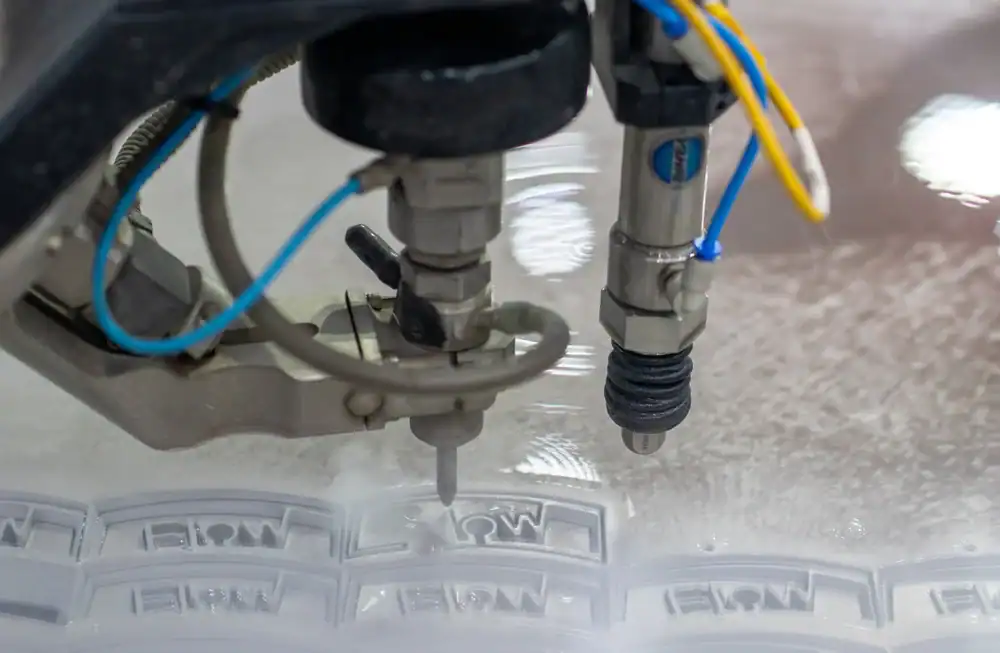
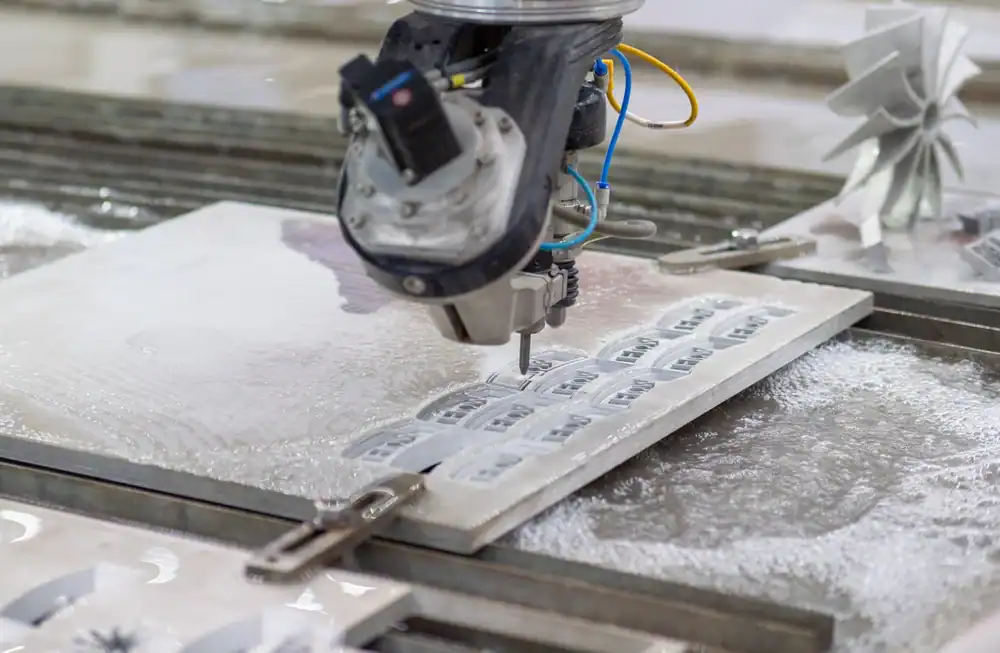
Once the file is dialed in, we load your material onto the cutting bed and program the CNC system. The waterjet head follows your design path precisely, mixing water with garnet abrasive to cut through the material. For thicker metals or harder materials, we adjust pressure and feed rate to maintain edge quality. The process is cold, so there’s no heat-affected zone to worry about.
After cutting, parts come off the table ready to use. There’s no slag, no burn marks, no hardened edges that need grinding down. If you need additional finishing or fabrication, we can handle that too. Most projects turn around within a few days, depending on complexity and material availability.
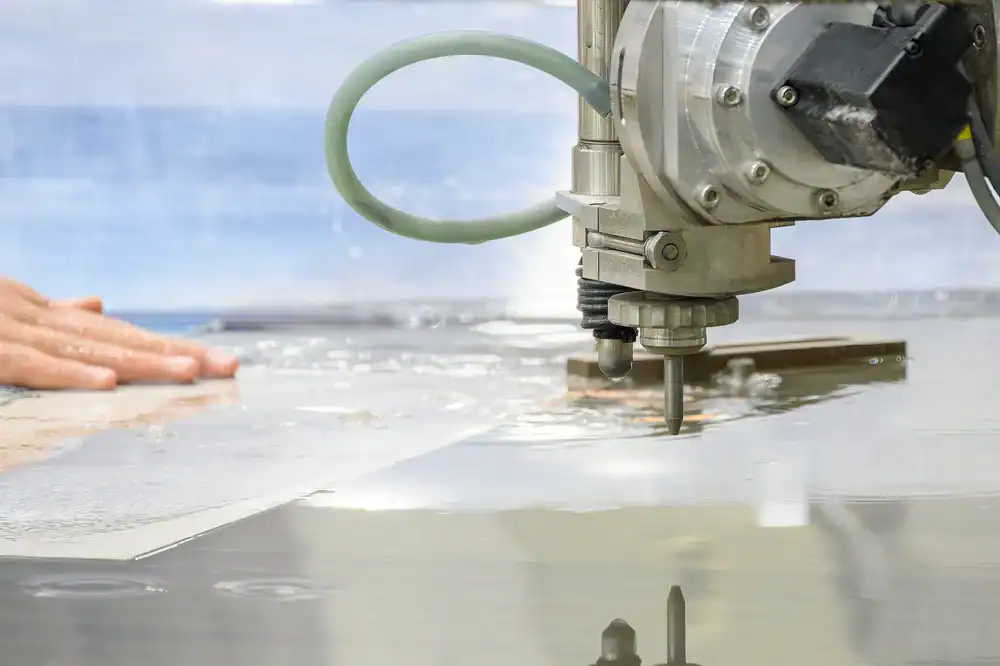
Ready to get started?
Abrasive waterjet cutting in Long Beach, NY handles materials up to 12 inches thick. That includes metals like aluminum, stainless steel, titanium, and tool steel, plus non-metals like carbon fiber composites, G-10, acrylic, rubber, and stone. If you’re working with layered materials or composites that delaminate under heat, this process keeps everything intact.
The cutting accuracy holds to ±0.005 inches on most materials, which meets the requirements for aerospace brackets, automotive gaskets, and precision machine components. Because there’s no thermal distortion, parts maintain dimensional stability even after cutting. That matters when you’re working with tight-tolerance assemblies or parts that undergo additional machining.
Long Beach’s industrial sector includes fabricators supporting marine applications, architectural metalwork, and custom equipment manufacturing. Waterjet cutting works for all of it—stainless panels for coastal installations that resist corrosion, intricate architectural features that need clean edges, or custom gaskets and seals for equipment operating in harsh environments. The process doesn’t introduce stresses or alter material properties, so your parts perform as engineered.
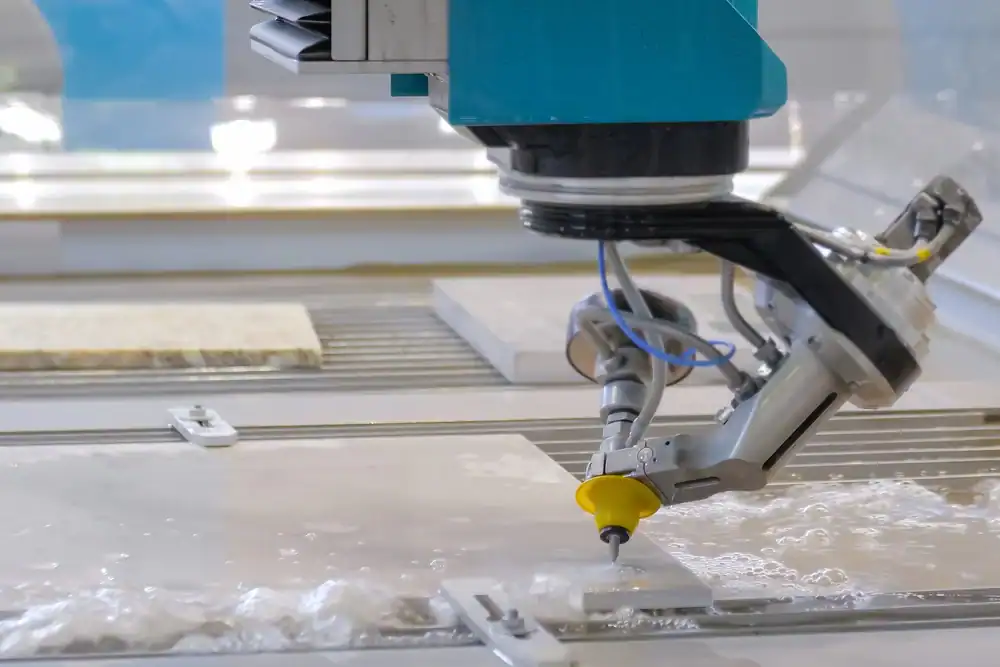
Waterjet cuts virtually anything—metals, composites, glass, ceramics, rubber, plastics, and stone. The advantage shows up with materials that don’t respond well to heat.
Titanium and tool steel, for example, work-harden when you cut them with plasma or laser. That creates a hardened edge layer that’s difficult to machine and can lead to cracking under stress. Waterjet avoids that entirely because it’s a cold cutting process.
Composites like carbon fiber and fiberglass delaminate when exposed to high temperatures. Laser cutting burns the resin matrix, weakening the material around the cut edge. Waterjet slices through layered materials without separating the layers or damaging the binding agents. That’s critical for aerospace components and high-performance automotive parts where structural integrity can’t be compromised.
Laser cutting loses effectiveness as material thickness increases. Most laser systems struggle with anything over half an inch in steel, and cut quality degrades significantly on thicker materials—you get wider kerfs, rougher edges, and more dross buildup.
Waterjet handles up to 12 inches thick without losing accuracy. The cut quality stays consistent whether you’re cutting eighth-inch aluminum or six-inch stainless plate. Feed rates slow down on thicker materials, but edge finish remains smooth and burr-free.
The other factor is heat-affected zones. Laser cutting creates a HAZ that extends into the material around the cut, altering its microstructure and potentially affecting mechanical properties. For parts that undergo welding, heat treatment, or operate under high stress, that HAZ becomes a weak point. Waterjet eliminates that variable entirely, which is why it’s preferred for aerospace and defense applications where material certification matters.
Most projects turn around in three to five business days from file approval to finished parts. That timeline assumes standard materials and straightforward geometries.
Rush jobs can often be accommodated within 24 to 48 hours if the material is in stock and the cutting schedule allows. Complex parts with intricate details or very thick materials may take longer—not because of cutting time, but because of the precision required in programming and setup.
The advantage of waterjet over processes that require dedicated tooling is the setup time. There’s no need to fabricate dies, create fixtures, or program complex tool paths for multiple operations. You send a CAD file, we verify it, and cutting starts. That makes waterjet particularly efficient for prototyping, small production runs, or projects where design changes are still happening. If you need to revise a part, we can cut the updated version without the delays and costs associated with retooling.
Waterjet cutting produces smooth, burr-free edges in most materials. The edge finish depends on material type, thickness, and cutting speed, but it’s generally clean enough to use as-is for many applications.
Metals like aluminum and stainless steel come off the waterjet with edges that are smooth to the touch. There’s no slag like you get with plasma, and no heat-discolored zone like laser cutting leaves. For parts going into assemblies or applications where edge quality affects fit and function, waterjet often eliminates the need for grinding, filing, or deburring.
Thicker materials or faster cutting speeds can produce a slightly striated edge finish on the bottom portion of the cut. If your application requires a perfectly smooth edge on all sides, a quick pass with a sanding belt or tumbling process cleans it up. But for most industrial applications—brackets, panels, gaskets, machine components—the edge quality straight off the waterjet meets requirements without additional work.
CNC waterjet systems hold tolerances to ±0.005 inches on most materials and geometries. That level of accuracy works for aerospace components, automotive parts, and precision machine elements where fit and function depend on dimensional consistency.
The tolerance capability depends on several factors—material thickness, hardness, and the complexity of the geometry. Thinner materials and simpler shapes hold tighter tolerances. Intricate curves, sharp internal corners, or very thick materials may require slightly wider tolerance windows.
For parts requiring even tighter tolerances, waterjet cutting can serve as the primary cutting operation, leaving a small amount of material for finish machining. This approach is common in aerospace manufacturing where you need the speed and material versatility of waterjet combined with the ultra-tight tolerances of CNC milling. The waterjet does the heavy cutting without heat damage, and a final machining pass brings dimensions to final spec.
Waterjet cutting makes sense economically for small runs because there’s no tooling cost. Processes like stamping or punching require dies that can cost thousands of dollars to fabricate. That expense gets spread across production volume, so it only pencils out for large runs.
With waterjet, setup cost is minimal—just programming time. Whether you need one part or one hundred, the per-part cost stays relatively consistent. That makes it viable for prototyping, custom fabrication, or production runs where volume doesn’t justify dedicated tooling.
Material waste is also lower with waterjet. The narrow kerf width (typically 0.030 to 0.040 inches) means you can nest parts closer together on the material sheet, maximizing yield. For expensive materials like titanium or specialty alloys, that material savings adds up quickly. And because parts come off the machine ready to use without secondary operations, you’re not paying for additional labor or processing time.
Useful Links
Other Services we provide in Long Beach