Hear from Our Customers
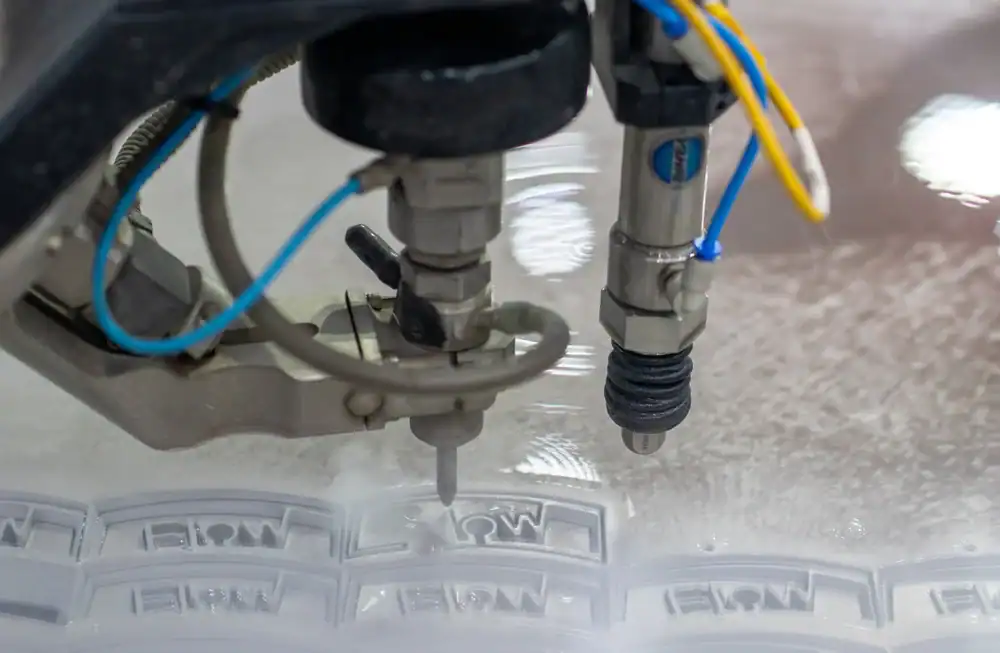
You’re not dealing with warped edges that need grinding. You’re not explaining to your client why the tolerances are off or why secondary finishing is adding days to the schedule.
With abrasive waterjet cutting in Massapequa, NY, you get parts that fit right the first time. The edge quality is clean enough that most jobs skip secondary processing entirely. That’s less time, less waste, and fewer conversations about why something didn’t go as planned.
Whether you’re cutting 10-inch stainless steel or intricate granite inlays, the process stays cold. No heat-affected zones. No material property changes. No thermal distortion that throws off your specs. Just a supersonic stream of water and abrasive that cuts through aluminum, armor plate, tile, laminates, and glass with the same precision you’d expect from a machine shop—but without the limitations.
We serve architects, contractors, designers, and fabricators across Massapequa, NY and Long Island, NY with custom waterjet cutting services that prioritize accuracy and turnaround time.
We’re not a massive production facility where your job sits in a queue for weeks. You’re working with a team that understands the pace of Long Island, NY projects—where delays cost money and reputation. Over 80% of supply chain companies here are local businesses, and we’ve built our process around that reality.
From material consultation to final cut, you’re getting guidance that’s rooted in what actually works for the projects happening in this area. Stone countertops for residential builds. Custom metal components for commercial construction. Intricate architectural details that require both precision and speed.
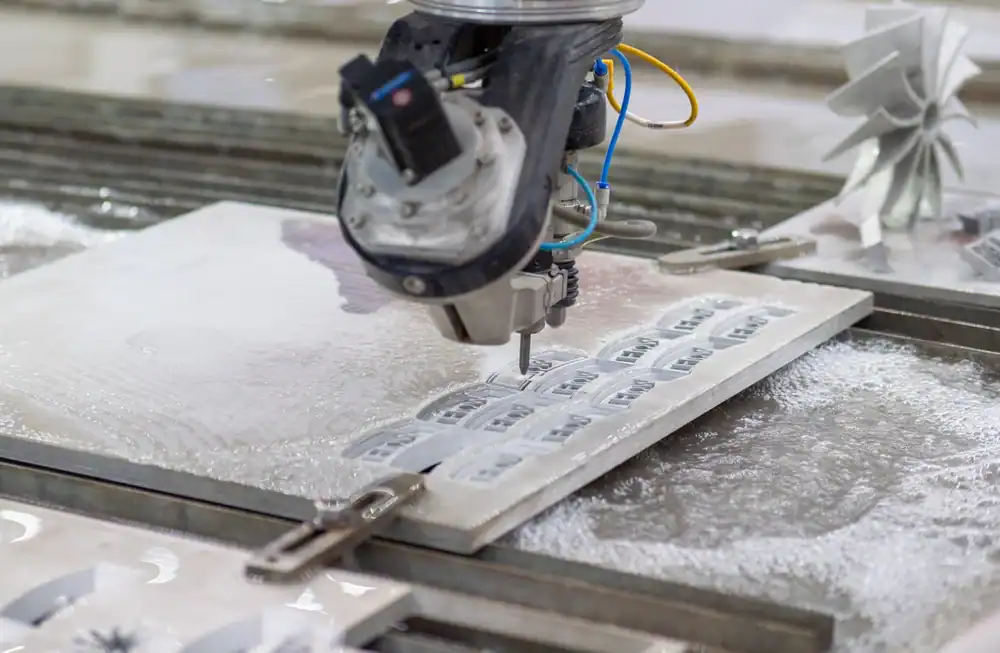
You start with a design—CAD file, sketch, or even just dimensions and material specs. We review it with you to confirm tolerances, material choice, and any edge finish requirements. If there’s a more efficient way to cut your part or a material better suited for your application, that’s the conversation we’re having upfront.
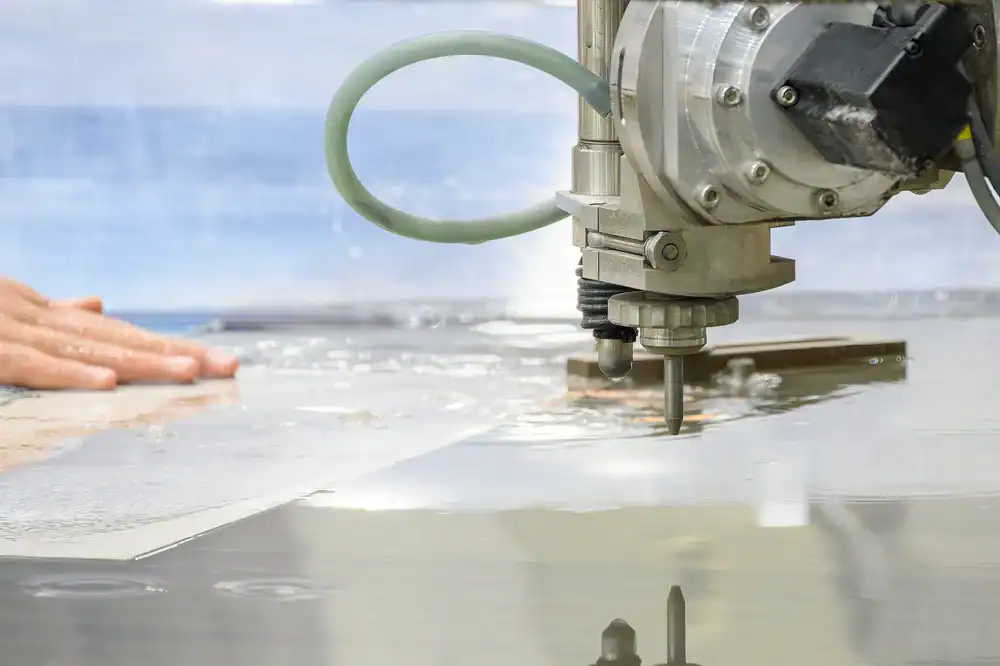
Once the file is loaded, the waterjet system uses a high-pressure stream—up to 60,000 PSI—mixed with fine abrasive particles to cut through your material. The stream is thinner than a credit card but powerful enough to slice through 10 inches of steel. Because there’s no heat involved, the material doesn’t warp, harden, or develop a heat-affected zone that compromises welds or finishes later.
The cutting head follows your design with accuracy down to ±0.003 to 0.005 inches. Complex curves, tight inside corners, intricate patterns—it handles geometry that would require multiple setups on traditional equipment. You get your parts with clean edges, minimal burrs, and no need for grinding or deburring unless your application demands it.
Ready to get started?
You’re getting more than just a cut. Material consultation is part of the process—if you’re unsure whether granite, stainless, or composite is the right call for your project, we’ll walk through the pros and cons based on your application and budget.
Design support is available if your CAD file needs adjustments for manufacturability. Sometimes a small tweak to a radius or kerf width makes the difference between a part that fits perfectly and one that requires rework. We’d rather catch that before the cut.
Massapequa, NY projects often involve tight timelines, especially in the construction and design sectors where delays ripple through the entire schedule. Our turnaround reflects that. You’re not waiting weeks for a simple cut, and rush jobs don’t automatically mean compromised quality. The waterjet process is fast by nature—material setup and cutting happen in a fraction of the time compared to traditional machining.
Edge quality comes standard. Most materials come off the table ready to install or assemble. If your project requires a specific finish or post-processing, we’ll let you know upfront what’s realistic and what’s not.
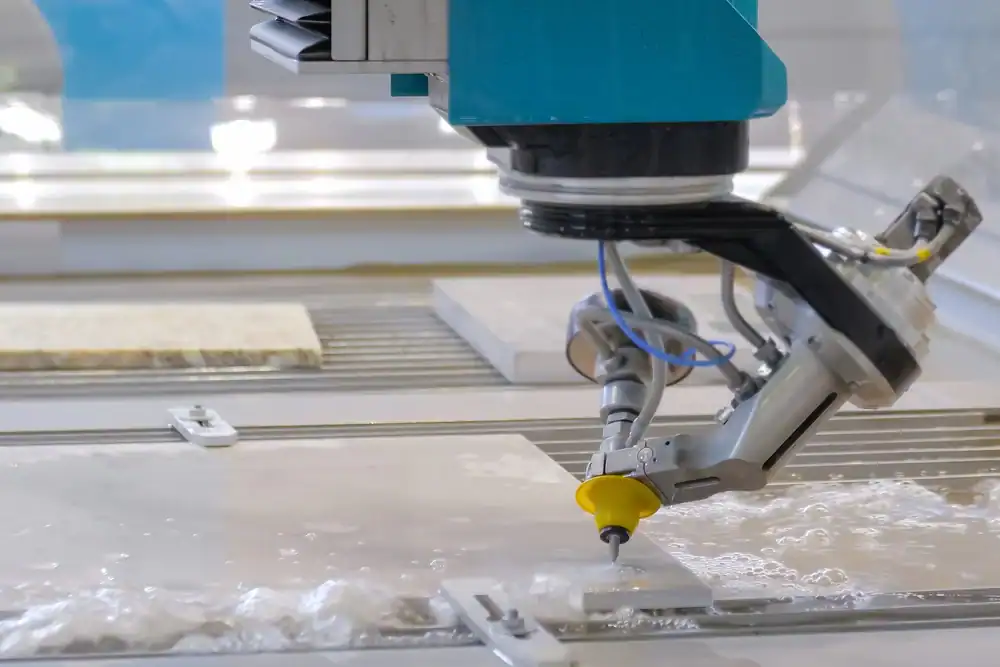
Waterjet handles just about anything you’d use in construction, fabrication, or design work. Metals like aluminum, stainless steel, carbon steel, brass, and copper cut cleanly without heat distortion. Stone materials—granite, marble, slate, limestone, engineered stone—are where waterjet really outperforms saws, especially for intricate patterns or inlays that would crack or chip with traditional methods.
Composites, laminates, glass, tile, rubber, and plastics all cut without melting, burning, or creating toxic fumes. If you’re working with armor plate or thick steel—up to 10 inches—waterjet handles it without the edge quality issues you’d see with plasma or oxy-fuel cutting.
The versatility means you’re not bouncing between multiple shops for different materials. One setup, one process, and you’re getting consistent results whether it’s a 1/4-inch aluminum panel or a 6-inch granite slab.
When the cut speed is dialed in for your specific material and thickness, you’re looking at tolerances around ±0.003 to 0.005 inches. That’s tight enough for most architectural, mechanical, and fabrication applications where parts need to fit without excessive gap or interference.
The key is consistent feed rate and proper abrasive flow. Too fast and the kerf widens. Too slow and you’re wasting time without gaining accuracy. The CNC control keeps the stream path exact, so complex curves and angles hold the same tolerance as straight cuts.
If your project requires even tighter specs, secondary machining is an option—but most jobs don’t need it. The edge quality and dimensional accuracy coming off the waterjet table are usually within spec for assembly, welding, or installation. You’re not dealing with the variance you’d see from plasma or the heat expansion issues that throw off laser cuts on thicker materials.
Heat is the main issue with plasma and laser. Both processes melt material to make the cut, which creates a heat-affected zone that can warp thin materials, change hardness, and leave edges that need grinding before welding or finishing. If you’ve ever had a plasma-cut flange that wouldn’t sit flat or required surface prep before welding, that’s the heat-affected zone causing problems.
Waterjet cuts cold. No heat means no warping, no hardened edges, and no change to the material’s properties. The edge comes off clean, often soft enough to handle without gloves, and free of the slag or dross you’d need to remove with thermal cutting methods.
Material versatility is the other factor. Plasma works on conductive metals. Laser struggles with reflective materials and thick stock. Waterjet doesn’t care—it cuts stone, glass, composites, and metals up to 10 inches thick with the same setup. If your project involves multiple materials or you’re not sure what you’ll need down the line, waterjet gives you flexibility without investing in multiple cutting systems.
Turnaround depends on material availability, complexity, and current queue—but most straightforward cuts are done within a few days. Simple parts with standard materials can often be completed faster, especially if you’re local and can drop off material or pick up finished parts.
Complex jobs with intricate geometry or thick materials take longer, but not because the cutting is slow. Setup and programming take time when you’re dealing with tight tolerances and multiple features. Rush jobs are possible if the schedule allows, and we’ll let you know upfront if your timeline is realistic or if you need to adjust expectations.
Long Island, NY projects move fast, and we’ve structured our process to match that pace. You’re not waiting weeks for a quote or days for a callback. If your project is time-sensitive, that’s part of the conversation from the start—not something you find out about after the fact.
Most materials come off the table with minimal to no burrs. The constant, controlled flow of the waterjet stream creates an edge that’s typically smooth and ready for assembly or installation. Softer materials like aluminum, copper, and plastics usually have the cleanest edges. Harder materials like stainless steel or stone might have slight texture, but it’s rarely sharp or problematic.
Secondary finishing depends on your application. If you’re welding, painting, or powder coating, the edge quality is usually fine as-is. If you need a polished or deburred edge for aesthetic reasons or specific assembly requirements, that’s a quick process—but it’s not automatically necessary like it is with plasma or laser cutting.
The lack of heat-affected zone also means you’re not dealing with hardened edges that are difficult to machine or finish later. If you do need to drill, tap, or modify the part after cutting, the material behaves normally. You’re not burning through bits or dealing with brittle edges that crack under stress.
Thickness up to 10 inches is manageable on most materials, including stainless steel and carbon steel. The cutting speed slows down as thickness increases, but the edge quality and accuracy stay consistent. You’re not limited to thin sheet stock like you would be with laser or plasma on thicker materials.
Complex shapes are where waterjet really stands out. The CNC control allows for intricate curves, sharp inside corners, and detailed patterns that would require multiple setups or specialized tooling with traditional machining. Part designers use waterjet specifically because it opens up geometries that are difficult or impossible to produce otherwise.
If your design includes tight radiuses, nested parts, or complex contours, waterjet handles it in a single setup. That means fewer operations, less handling, and lower risk of dimensional drift from multiple setups. You’re getting parts that match your design file without the compromises you’d face trying to cut the same geometry with a saw, router, or conventional machine tool.
Useful Links
Other Services we provide in Massapequa