
Hear from Our Customers
You’re not just cutting material. You’re trying to maintain tolerances, avoid scrapping expensive stock, and keep your project moving without delays from warped edges or heat-affected zones.
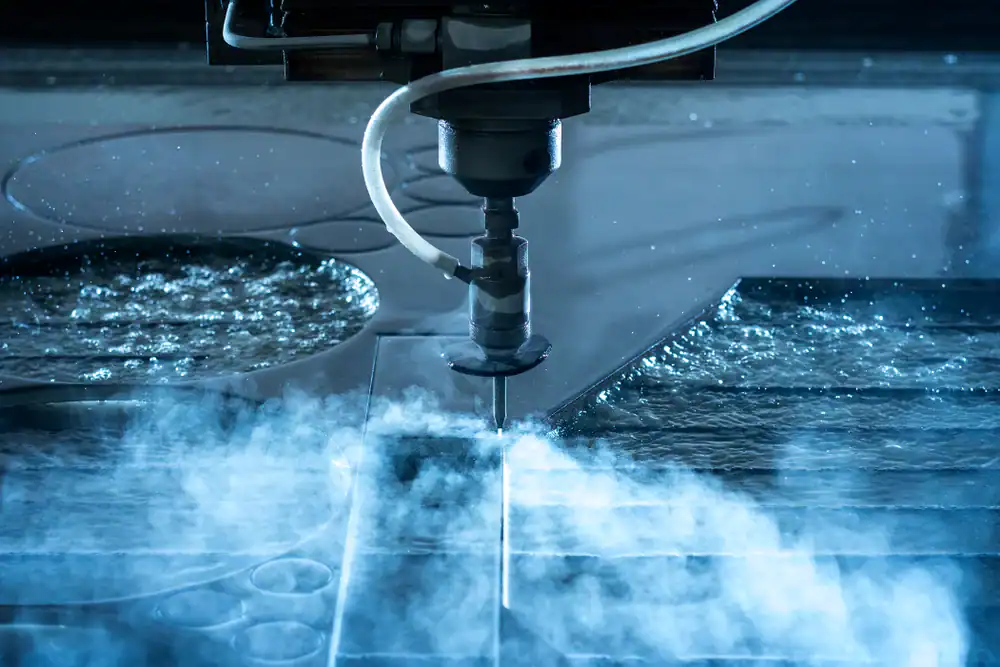
That’s where waterjet cutting makes sense. The process uses high-pressure water mixed with abrasive to cut through metals, composites, stone, glass, and plastics without generating heat. No thermal distortion means the material properties stay intact, and you get clean edges that rarely need additional finishing.
If you’re working with aluminum, stainless steel, titanium, or composite materials that can’t handle the heat from plasma or laser cutting, this process keeps everything dimensionally stable. You can nest parts tightly to reduce waste, and the narrow kerf means you’re not losing material to wide cuts. For manufacturers, fabricators, and builders in Miller Place, NY who need accuracy down to 0.005 inches, this is how you get parts that fit right without the rework.
We’ve been running waterjet cutting services in the Miller Place area for over two decades. We operate three OMAX machines onsite—two that handle up to 4′ x 8′ and one that cuts up to 5′ x 10′. All equipment is made in the USA, and all work is done in-house.
We work with manufacturers, aerospace suppliers, automotive shops, and construction teams across Long Island, NY who need precision cuts without the heat. If you’re sourcing parts for prototypes, production runs, or custom architectural elements, you’re dealing with the same shop that’s been handling complex jobs since 2001. No outsourcing, no surprises.
You send us your design file—DXF, DWG, or similar CAD formats work. We review it for any potential issues with tolerances, material thickness, or nesting efficiency. If something looks off, we’ll flag it before we start cutting.
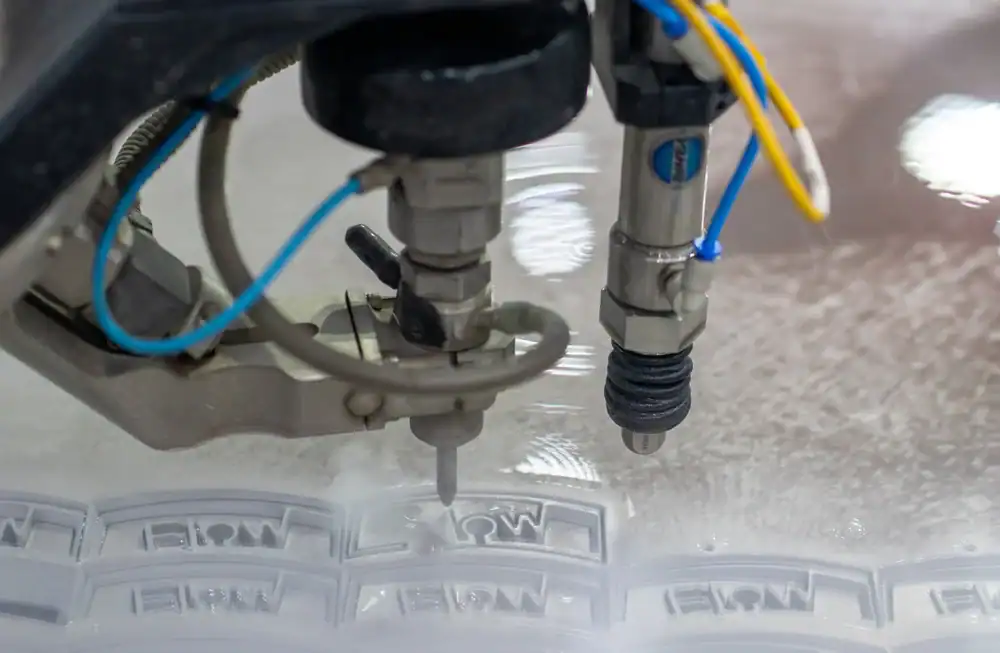
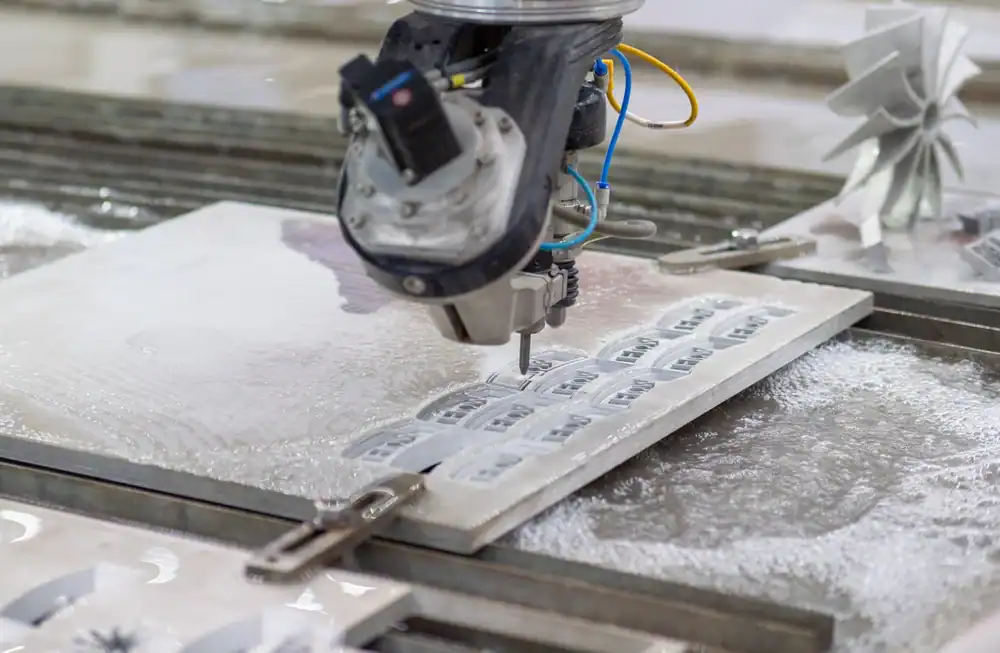
Once the file is dialed in, we load your material onto the cutting bed and program the machine. The waterjet uses a stream of water pressurized up to 60,000 PSI, mixed with garnet abrasive, to erode through the material. The cutting head follows the programmed path with CNC precision, handling inside corners, tight radii, and complex contours without tool changes or repositioning.
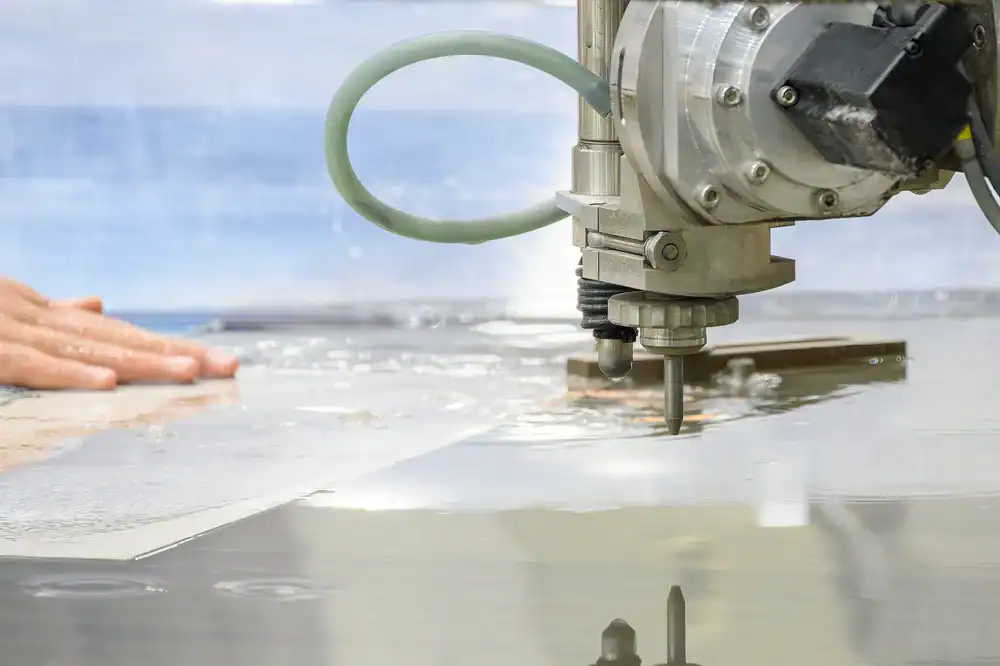
After cutting, parts come off the table with clean edges and minimal burrs. Depending on your specs, they may be ready to use as-is, or we can discuss any secondary operations if needed. Turnaround depends on material type, thickness, and complexity, but we keep things moving to meet your schedule.
Ready to get started?
Abrasive waterjet cutting in Miller Place, NY gives you the ability to cut materials from 0.010″ acrylic up to 10″ thick stainless steel. You’re not limited to metals—this process handles composites, ceramics, rubber, foam, glass, stone, and plastics without changing tooling or setup.
Because there’s no heat-affected zone, you avoid the hardening, warping, and discoloration that comes with thermal cutting methods. That’s critical if you’re working with aerospace-grade alloys, heat-sensitive electronics components, or composite layups that can delaminate under heat. The edge quality is clean enough that many parts skip secondary deburring or finishing, which saves time and cost.
For manufacturers in Miller Place dealing with tight tolerances, this process delivers repeatability within 0.001 inches. You can cut complex geometries, nested parts, and prototypes in a single setup. If you’re running low-volume custom work or high-mix production, waterjet cutting adapts without the lead time of custom tooling or dies.
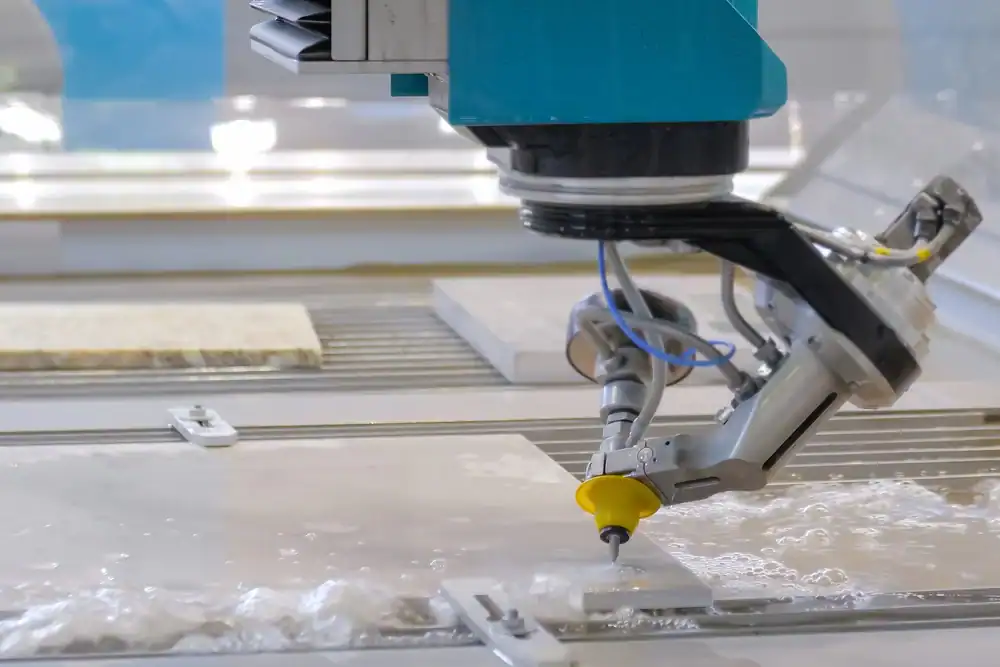
We cut metals like aluminum, stainless steel, titanium, tool steel, and brass. We also handle composites including carbon fiber and fiberglass, plus stone, glass, ceramics, rubber, foam, and most plastics.
The process works on anything that can handle high-pressure water and abrasive erosion. If you’re not sure whether your material is a fit, send us the specs and we’ll let you know. Some materials like tempered glass or certain laminates have limitations, but most industrial materials cut without issue.
Thickness ranges from thin foils up to 10 inches depending on the material. Harder materials take longer to cut at greater thicknesses, but the process handles it without heat damage or material property changes.
Our waterjet cutting services in Miller Place, NY deliver accuracy down to ±0.005 inches, with repeatability within 0.001 inches. That’s tight enough for most machined parts, brackets, fixtures, and components that need to fit without adjustment.
The CNC-controlled cutting head follows your CAD file exactly, so if your design is accurate, the cut will be too. We can hold tolerances on inside corners, radii, and complex contours without the tool deflection or heat distortion you’d see with other methods.
If you need even tighter tolerances, we can discuss secondary operations or adjust cutting parameters. But for the majority of manufacturing, aerospace, and automotive applications, waterjet accuracy is more than sufficient right off the machine.
Turnaround depends on material type, thickness, and part complexity. Thinner materials like aluminum sheet or acrylic cut faster than thick stainless or tool steel. Simple shapes with straight lines process quicker than intricate contours with tight radii.
For most jobs in Miller Place, we’re looking at a few days from file approval to finished parts. Rush jobs can often be accommodated depending on our schedule and machine availability. If you’re running production quantities, we can give you a more specific timeline once we see the design and material specs.
Waterjet cutting is slower than laser or plasma for thin metals, but you’re gaining edge quality and zero heat damage. For many applications, that trade-off eliminates secondary finishing time, so the overall project timeline stays competitive.
Most parts come off the waterjet with minimal to no burrs. The constant, controlled flow of water and abrasive creates a smooth edge that’s often ready to use as-is. You’ll typically see a slight texture from the abrasive, but it’s not sharp or rough like you’d get from plasma or torch cutting.
Thicker materials or slower cutting speeds produce the cleanest edges. If you’re cutting at higher speeds to reduce cost, you might see a slight taper or texture on the bottom edge, but it’s usually not enough to require additional work.
If your application demands a polished or deburred edge, we can discuss secondary operations. But for brackets, panels, gaskets, and most structural or functional parts, the waterjet edge quality is sufficient without extra finishing.
Waterjet cutting in Miller Place, NY makes sense when you can’t afford heat damage. Laser and plasma both generate significant heat, which can warp thin materials, create hardened edges, and alter material properties. If you’re cutting aluminum, composites, or heat-sensitive alloys, that’s a problem.
Waterjet is a cold cutting process, so there’s no heat-affected zone. Your material stays dimensionally stable, and you don’t get the discoloration or hardening that requires annealing or secondary treatment. That’s why aerospace, electronics, and precision manufacturing operations use waterjet for critical components.
You also get more material versatility. Laser struggles with reflective metals and thicker stock. Plasma leaves a rough edge and significant dross. Waterjet handles everything from soft foam to 10-inch steel plate with the same setup, and the edge quality is cleaner across the board.
Cost depends on material type, thickness, cutting time, and part complexity. Thicker or harder materials take longer to cut, which increases machine time. Intricate shapes with tight tolerances also add time compared to simple geometric cuts.
We provide free estimates based on your CAD file and material specs, so you’ll know the cost before we start. Operating cost for waterjet cutting runs around $14 per hour for the machine, which is competitive compared to other precision cutting methods when you factor in the lack of secondary finishing.
If you’re trying to reduce cost, we can discuss nesting strategies to minimize material waste, or adjusting tolerances where it won’t affect fit or function. For production runs, per-part cost typically decreases as quantity increases. Send us your file and we’ll give you a straight number.
Useful Links
Other Services we provide in Miller Place