
Hear from Our Customers
You’re dealing with tight deadlines and tighter tolerances. Your parts need to fit perfectly when they arrive, not after you’ve spent hours fixing someone else’s sloppy work.
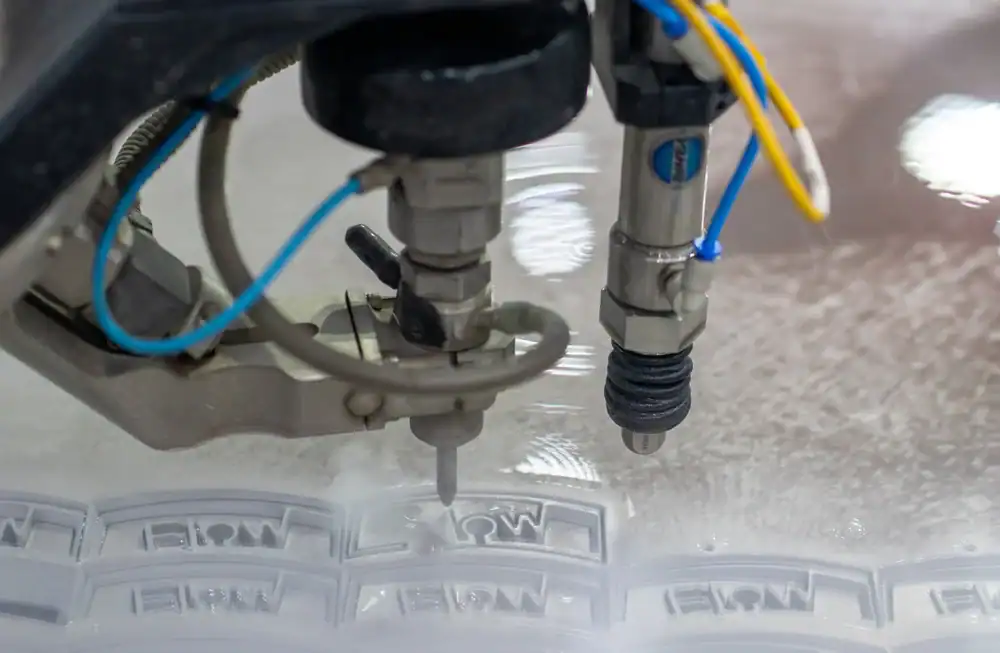
Our custom waterjet cutting services in Mount Sinai, NY hit ±0.003″ to ±0.005″ linear accuracy consistently. That’s not marketing talk—that’s what Flow™ Dynamic Waterjet® technology delivers on every cut. No heat-affected zones that warp your material. No secondary machining to clean up rough edges. No wondering if the next batch will match the first.
Whether you’re cutting architectural panels that need to align perfectly, aerospace components that demand exact specifications, or automotive parts for performance builds, you get clean edges and dimensional accuracy you can verify before installation. The result is fewer headaches, faster assembly, and parts that actually do what you designed them to do.
We serve manufacturers, architects, and fabricators throughout Mount Sinai and Long Island, NY with high-precision cutting that meets the demands of New York’s manufacturing sector. With over 12,000 manufacturers across the state employing more than 600,000 workers, the need for reliable, accurate cutting services isn’t going away.
We’ve invested in Flow™ systems because they’re built for consistency, not just capability. Every component gets inspected for dimension, edge finish, and squareness before it leaves our shop. You’re not getting parts from a shop that treats their waterjet like an unpredictable beast—you’re working with operators who understand what the equipment can do and how to get it there every time.
Mount Sinai businesses need local suppliers who can turn around precision work without shipping delays or communication gaps. That’s what we’re here for.
You send us your CAD file and material specifications. We review the design to confirm tolerances, edge finish requirements, and any special considerations for your material—whether that’s aluminum, stainless steel, titanium, composites, stone, glass, or plastics.
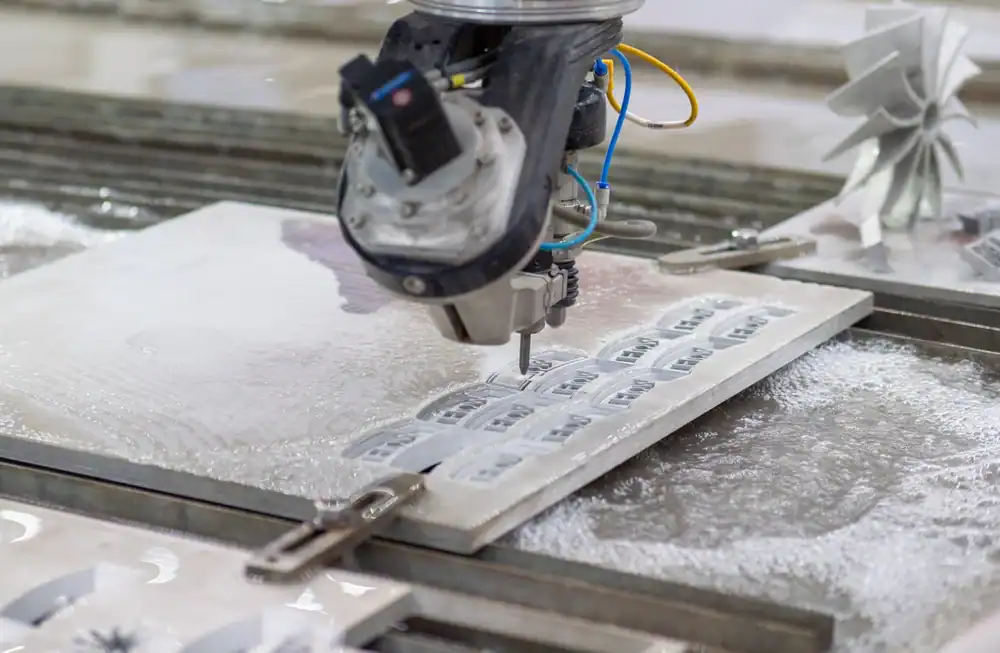
Next, we program the tool paths and set up fixturing to keep your material stable throughout the cut. Our high pressure water cutting systems in Mount Sinai, NY use ultra-high-pressure streams mixed with abrasive garnet to cut through materials up to 12 inches thick. The process is non-thermal, which means no heat distortion, no hardened edges, and no material property changes.
During cutting, we monitor dimensional accuracy and adjust as needed to maintain those tight tolerances. After cutting, each part gets inspected against your specifications. You receive parts that are ready to install or assemble—no deburring, no additional machining, no surprises. If it’s a prototype, we can adjust quickly. If it’s a production run, you get the same quality on part 500 as you did on part one.
Ready to get started?
Our abrasive waterjet cutting in Mount Sinai, NY handles virtually any material your project requires. Metals like aluminum, steel, stainless, and titanium cut clean with no burrs. Stone, tile, and glass for architectural applications come out with smooth edges ready for installation. Composites, carbon fiber, and plastics for aerospace or automotive work maintain their structural integrity without delamination or melting.
You get Q3-Q4 edge quality for architectural and decorative work, or Q4-Q5 for mechanical and ballistic applications where precision matters most. Thickness capacity goes up to 12 inches with full-depth accuracy. Complex geometries, tight inside corners, and intricate patterns are all on the table—if you can draw it, we can cut it.
Long Island, NY’s manufacturing landscape includes everything from custom architectural firms to precision aerospace suppliers. Our waterjet cutting services in Mount Sinai, NY support that range. Whether you need one prototype bracket or 500 custom panels, you get the same attention to tolerance and finish quality. Turnaround times stay realistic because we’re local, and our equipment is maintained to run consistently, not just occasionally.
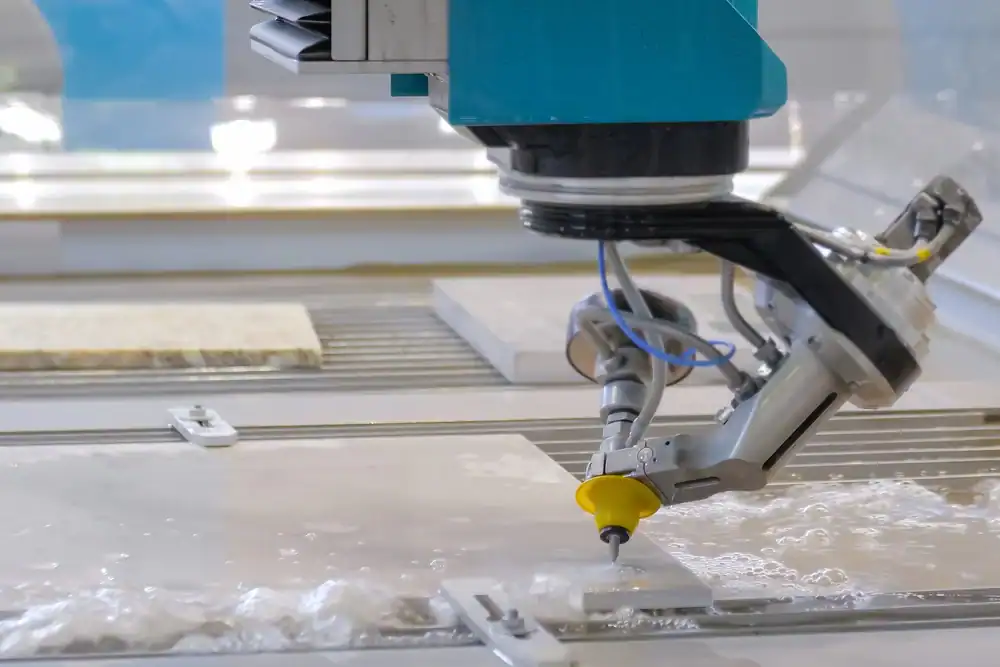
Our Flow™ Dynamic Waterjet® systems consistently achieve linear cutting accuracy between ±0.003″ and ±0.005″. That’s tighter than most laser or plasma systems, and it’s repeatable across production runs.
Here’s what affects tolerance in real-world cutting: material thickness, material type, cutting speed, and nozzle wear. Thicker materials and harder alloys require slower feed rates to maintain precision. We adjust parameters based on your specific requirements—if you need ±0.005″ on a 2-inch aluminum plate, we’ll program for that. If you’re working with thinner material and can accept ±0.010″, we can cut faster and reduce cost.
The key difference is that we actually verify tolerances before parts leave the shop. You’re not guessing whether your parts will fit—you’re getting dimensional inspection results that confirm they meet your specifications. For critical applications like aerospace brackets or ballistic laminates, that verification process is non-negotiable.
Yes. Our systems cut materials up to 12 inches thick while maintaining full-depth precision. The non-thermal nature of waterjet cutting means there’s no heat buildup that could cause warping or dimensional shift as you go deeper into the material.
Thick material cutting requires proper nozzle selection, correct abrasive flow rates, and slower traverse speeds. A 6-inch steel plate takes longer to cut than a quarter-inch sheet, but the edge quality and dimensional accuracy stay consistent through the entire depth. You won’t see taper or rough bottom edges that need secondary finishing.
This capability matters for architectural projects using thick stone or glass, industrial applications requiring heavy plate fabrication, or aerospace work with thick aluminum or titanium billets. The alternative—machining or sawing thick materials—introduces heat, tool wear, and often requires multiple setups. Waterjet does it in one pass with a finished edge.
Waterjet cuts without heat, which is the main advantage. Laser and plasma both use thermal energy that creates heat-affected zones, potentially warping thin materials, hardening edges, and changing material properties. If you’re cutting stainless steel, titanium, or aluminum and you need the material to behave the same after cutting as before, waterjet is the right choice.
Waterjet also handles materials that laser and plasma can’t touch—stone, glass, composites, rubber, foam, and reflective metals. There’s no material limitation beyond thickness. Edge quality is another factor. Laser gives you a clean cut on thin metals but struggles with thick plate. Plasma is fast but rough. Waterjet delivers smooth, finished edges across the thickness range.
The trade-off is speed. Laser cuts thin sheet metal faster than waterjet. But if you’re dealing with materials over half an inch thick, tight tolerances, or non-metals, waterjet outperforms both in quality and versatility. For Mount Sinai manufacturers working with mixed materials or precision applications, that versatility eliminates the need for multiple cutting processes.
Turnaround depends on material availability, complexity, and current queue, but most custom projects run between 3-7 business days from approved CAD file to finished parts. Simple cuts on common materials can turn faster. Complex multi-part nests or specialty materials may take longer.
Being local to Mount Sinai means you’re not waiting on cross-country shipping or dealing with communication delays. You can drop off material if you’re supplying it, or we can source it locally through Long Island, NY suppliers. Rush jobs are possible when the schedule allows—we’ve turned around critical aerospace components in 24 hours when the project demanded it.
The key to fast turnaround is clear communication upfront. If you send a complete CAD file with material specs and tolerance requirements, we can quote and schedule immediately. Vague requests or incomplete drawings add time. We’ll always give you a realistic timeline based on current workload, not an optimistic guess that leaves you waiting.
In most cases, no. Waterjet produces a finished edge that’s ready for assembly or installation. The edge quality ranges from Q3 (smooth satin finish) to Q5 (near-machined finish) depending on your requirements and how we program the cut.
For architectural work like decorative panels, stone inlays, or glass features, the Q3-Q4 edge is visually clean and doesn’t need additional polishing unless you’re going for a specific aesthetic. For mechanical applications like brackets, fixtures, or machine components, the Q4-Q5 edge is dimensionally accurate and burr-free, ready to bolt up or weld without prep work.
The only time you might need secondary operations is if you’re adding threaded holes, chamfers, or other features that weren’t part of the original cut. But the cutting itself doesn’t create burrs, heat discoloration, or rough edges that need cleanup. That’s the advantage of a non-thermal process—what comes off the table is what you use.
We work with standard CAD formats: DXF and DWG are the most common and easiest to program directly. We can also handle STEP, IGES, and STL files if that’s what your design software outputs. PDF or image files work for simple shapes, but vector formats are always better for accuracy.
The file should include all cut paths, dimensions, and any notes about tolerances or edge finish requirements. If you have multiple parts, label them clearly. If certain edges need higher quality finish than others, mark those in the file or in your project notes. The more detail you provide upfront, the less back-and-forth we need before cutting starts.
If you’re not sure whether your file will work, send it over. We’ll review it and let you know if we need anything adjusted. Most design software exports to DXF without issues, and that’s all we need to get your parts into production. No proprietary formats, no complicated conversion process—just clean geometry and clear specifications.
Useful Links
Other Services we provide in Mount Sinai