Hear from Our Customers
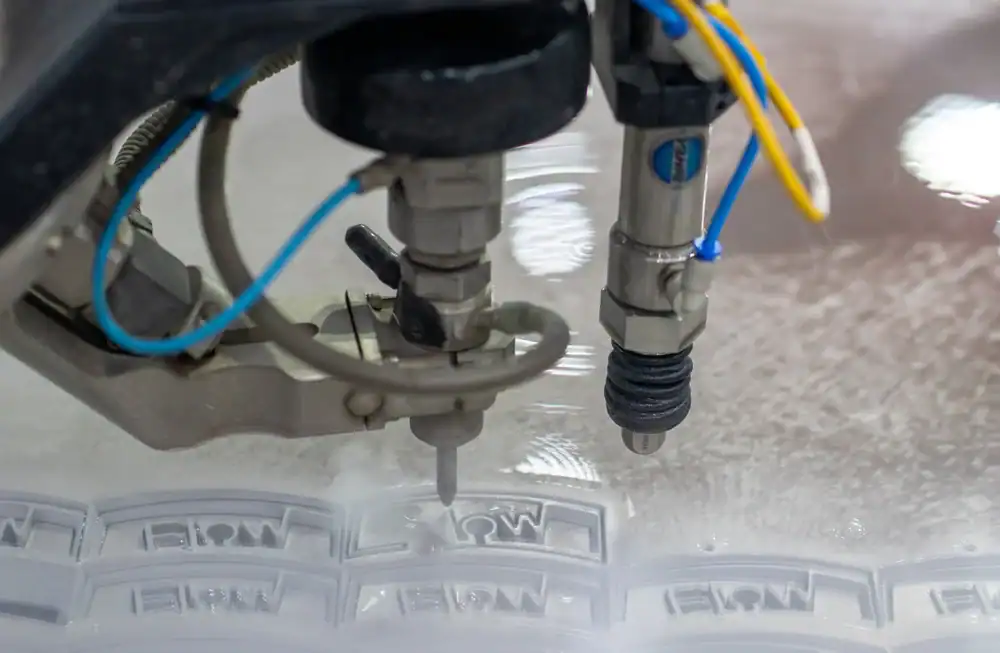
You’re not looking for someone to just cut material. You need dimensional accuracy that holds across production runs, edge quality that eliminates secondary finishing, and turnaround times that don’t kill your schedule.
Waterjet cutting in Nesconset, NY gives you all three. No heat-affected zones means no warping, no hardening, and no material stress. You get complex geometries in a single setup, tolerances down to +/- 0.005″ in thinner materials, and cuts that work across metals, composites, stone, glass, and ceramics.
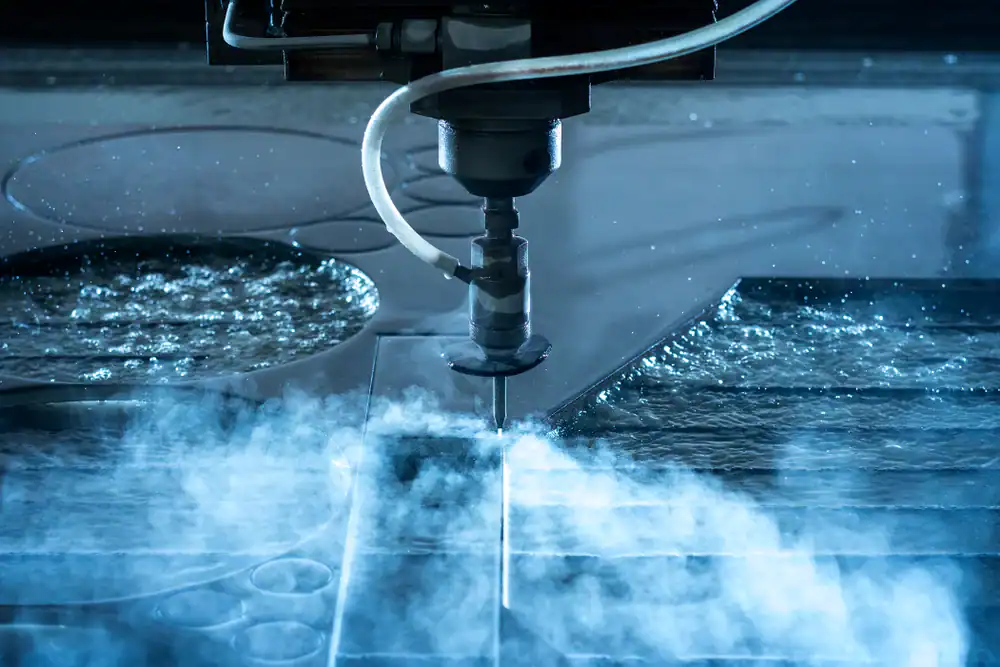
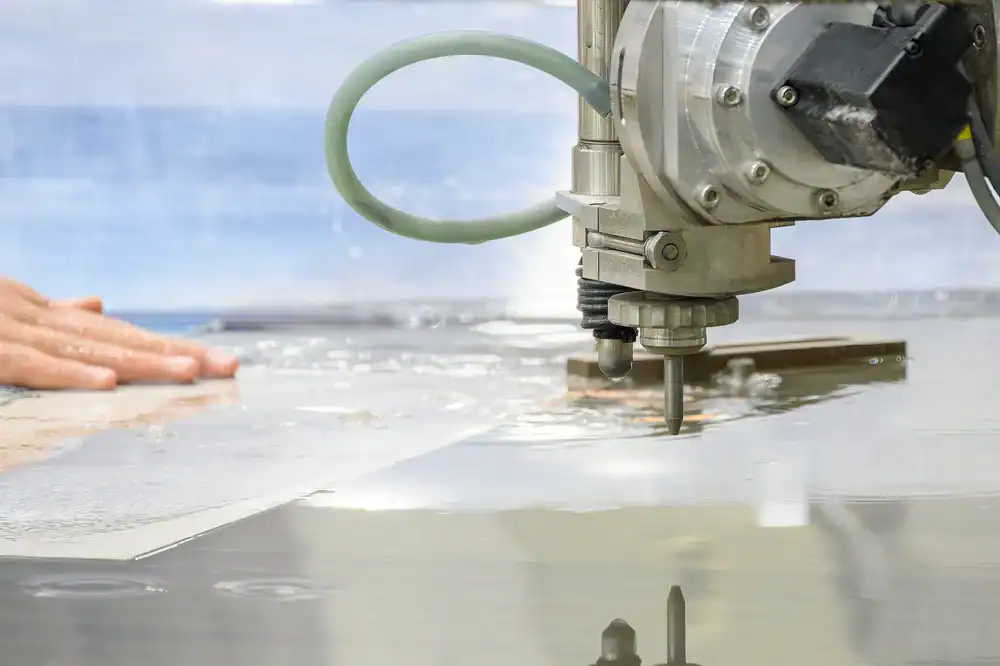
The process uses high pressure water cutting—sometimes with abrasive media, sometimes without—to slice through your material with a kerf width that’s a fraction of what you’d see with plasma or laser. Less waste. Better nesting. Lower material costs per part.
If you’re running prototypes or full production, you’re getting parts in days instead of weeks. That’s what matters when your own customers are waiting.
We operate out of West Islip, serving manufacturers, fabricators, architects, and contractors across Long Island, NY—including Nesconset, NY. We’ve been running precision waterjet cutting for years, and our background in traditional machining means we understand tolerances, material behavior, and what actually matters when you hand off a drawing.
We’re ISO9001 and AS9100d certified, ITAR compliant, and equipped with four Flow Waterjets including the Mach500. That’s not marketing talk—it’s the infrastructure that lets us handle aerospace components, automotive parts, architectural panels, and custom fabrication without farming anything out.
Nesconset sits in the Town of Smithtown, home to a mix of advanced manufacturing, commercial contractors, and design firms. You’re not shipping parts across the country and waiting two weeks. You’re working with a shop that’s twenty minutes away and answers the phone.
You send us a file—DXF, DWG, or even a sketch if it’s early stage. We review it for material type, thickness, tolerance requirements, and any edge finish specs you need. If something won’t work as drawn, we tell you before we cut.
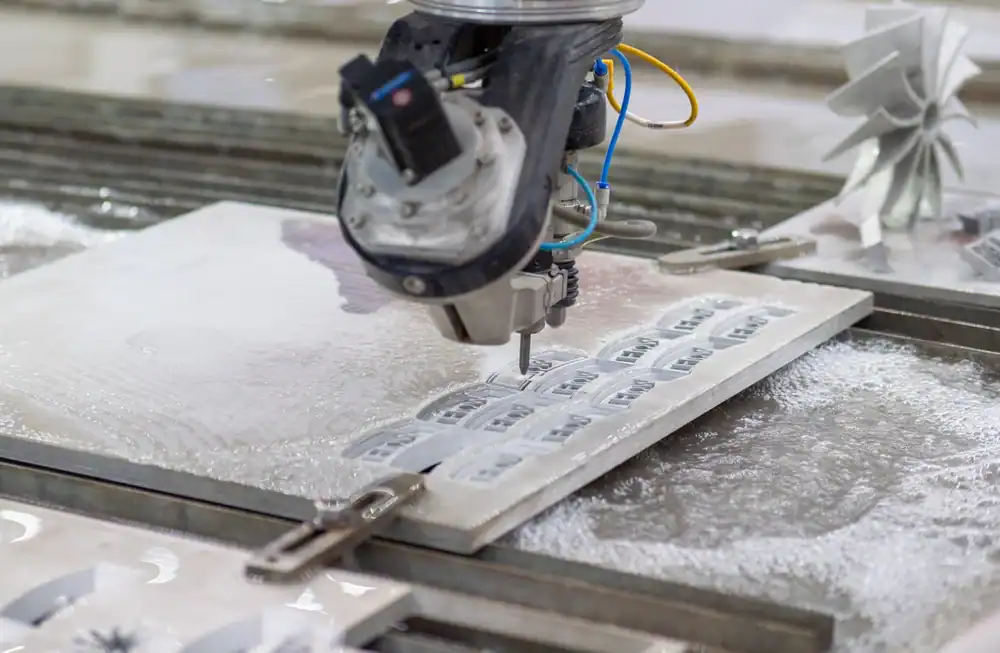
Once the file is dialed in, we program the toolpath and secure your material on the cutting bed. The waterjet nozzle moves across the surface at speeds and pressures calibrated to your material and thickness. For softer materials, pure waterjet cutting works. For metals, stone, or composites, we add abrasive media to the stream.
The cut happens in one pass. No secondary operations unless you’re asking for something specific like drilling or countersinking. You get parts with clean edges, no burrs, and dimensions that match your print. If it’s a prototype, you’ll have it in hand within days. Production runs get scheduled based on volume, but turnaround stays tight.
We handle materials from 1/16″ up to several inches thick. Aluminum, stainless steel, titanium, Inconel, carbon fiber, stone, glass, rubber, foam—it all cuts. You’re not limited by what a laser can’t handle or what plasma will burn.
Ready to get started?
Every waterjet cutting project in Nesconset, NY includes material consultation before we start. You’re not guessing whether your material will cut clean or whether your tolerances are realistic. We’ve cut thousands of parts across dozens of material types, and we know what works.
You also get design support if your geometry is complex or if you’re trying to maximize material yield. Tight nesting saves you money on raw stock, and we’ll adjust toolpaths to minimize scrap without compromising edge quality.
Long Island, NY’s manufacturing sector leans heavily on precision work—aerospace subcontractors in Ronkonkoma, metal fabricators in Hauppauge, architectural firms in Huntington. Nesconset sits right in the middle of that ecosystem, and the demand for non-thermal cutting has grown as more shops move toward composites, hardened alloys, and mixed-material assemblies that don’t respond well to heat.
Turnaround matters here. You’re not waiting three weeks for a prototype when your client needs a mockup by Friday. We run jobs in days, and if it’s an emergency, we’ll prioritize it. You get parts that fit, edges that finish clean, and a local contact who understands what’s riding on the timeline.
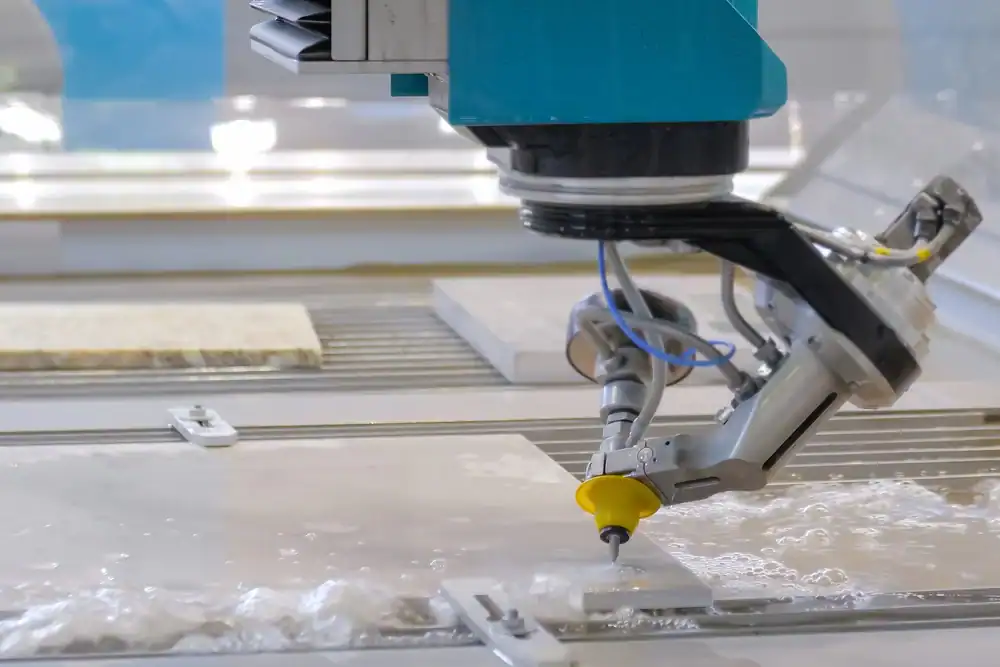
We cut metals (aluminum, steel, stainless, titanium, Inconel), composites (carbon fiber, fiberglass), stone, glass, ceramics, rubber, foam, and plastics. If it’s a material that doesn’t respond well to heat or needs intricate geometry, waterjet handles it.
The process works across a huge range of hardness and thickness. Soft materials like rubber or foam cut with pure water. Harder materials like metal or stone require abrasive waterjet cutting, where we introduce garnet media into the stream to increase cutting power.
Thickness ranges from thin sheets up to several inches, depending on material type. Thicker cuts take longer and may have slightly wider tolerances, but we’ll tell you upfront what’s achievable for your specific application.
In thinner materials—under half an inch—we regularly hold tolerances of +/- 0.005″. As material thickness increases, tolerances open slightly due to stream dynamics, but we’re still tighter than most thermal cutting methods.
If your print calls for tolerances we can’t hit with waterjet alone, we’ll tell you during the review phase. Sometimes a secondary operation makes sense. Other times, adjusting the design slightly gets you where you need to be without added cost.
We also account for taper. Waterjet streams aren’t perfectly parallel—they taper slightly as they pass through thicker material. On precision parts, we adjust toolpaths or use multi-pass cutting to minimize taper and keep edges square.
Prototypes and small-batch jobs typically ship within a few days of file approval. Production runs depend on volume and material availability, but we keep lead times short compared to shops that batch jobs weekly.
If it’s an emergency—a line-down situation or a client deadline you can’t miss—we’ll prioritize it. That’s one advantage of working with a local waterjet cutting shop in Nesconset, NY instead of a national supplier with a two-week queue.
Turnaround also depends on material. If you’re supplying the stock, we cut as soon as it arrives. If we’re sourcing it, add a day or two for material delivery. Either way, you’re getting parts faster than you would with traditional machining or outsourced laser cutting.
A CAD file makes programming faster and more accurate, but it’s not required. We work with DXF, DWG, and most vector formats. If you’ve got a sketch, a PDF with dimensions, or even a physical sample, we can generate a file from that.
For complex parts or tight-tolerance work, a clean CAD file eliminates ambiguity. If your file has issues—overlapping lines, open paths, or geometry that won’t nest efficiently—we’ll catch it during review and fix it before cutting.
We also offer design consultation if you’re early in development. Sometimes a small tweak to your geometry improves manufacturability, reduces cost, or speeds up production. We’d rather have that conversation upfront than deliver parts that don’t work for your application.
Pure waterjet uses only high pressure water and works well for soft materials like foam, rubber, gaskets, and some plastics. It’s fast, clean, and doesn’t introduce abrasive particles into the cut.
Abrasive waterjet cutting adds garnet media to the water stream, which increases cutting power enough to slice through metals, stone, glass, composites, and ceramics. The abrasive does get embedded slightly in softer materials, so we choose the method based on what you’re cutting and how the part will be used.
Both methods are cold processes—no heat-affected zones, no material hardening, no warping. That’s the main reason waterjet beats laser or plasma for heat-sensitive alloys, layered composites, or materials that would distort under thermal stress.
Waterjet doesn’t introduce heat, so you avoid warping, hardened edges, and heat-affected zones that change material properties. If you’re cutting hardened tool steel, titanium, or composites with resin matrices, heat is a problem. Waterjet eliminates it.
You also get better material versatility. Laser struggles with reflective metals and can’t touch stone or glass. Plasma works on conductive metals but leaves rough edges and wide kerfs. Waterjet cuts anything, and the edge quality is clean enough that many parts skip secondary finishing entirely.
For complex geometries, waterjet handles tight radii, intricate patterns, and nested parts without tool changes or multiple setups. You’re not limited by what a punch can form or what a router bit can reach. If you can draw it, we can cut it.
Useful Links
Other Services we provide in Nesconset