Hear from Our Customers
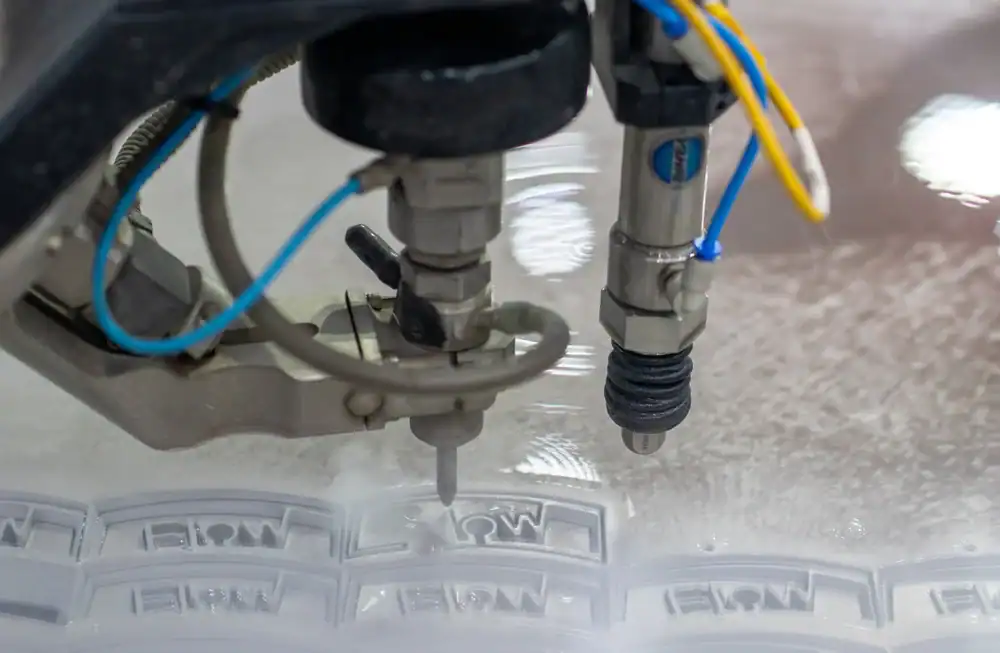
You get parts that fit the first time. No heat-affected zones that warp your material. No burrs that need grinding off. No tooling costs eating into your budget every time you need a different shape.
Waterjet cutting services handle metals, composites, stone, glass, and plastics with the same machine. That means you’re not bouncing between multiple shops trying to source different materials for one project. You send the file, specify the material, and get back parts with edges clean enough to use immediately.
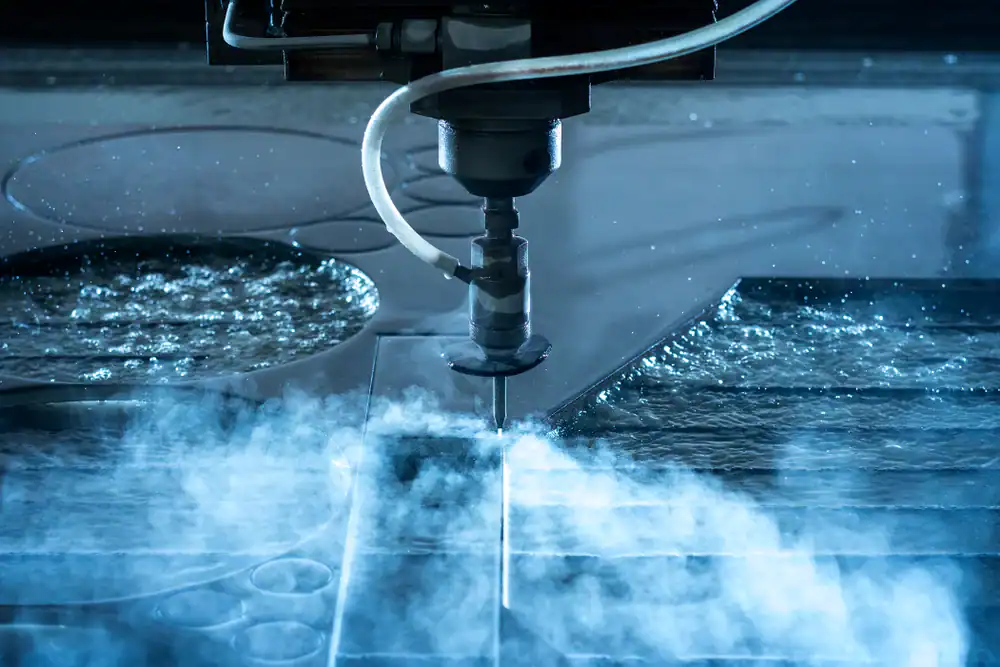
The process uses high pressure water cutting—sometimes pure water for softer materials, sometimes with abrasive for harder ones. Either way, there’s no heat, so your material properties stay intact. Stainless steel doesn’t harden at the cut line. Aluminum doesn’t distort. Plastics don’t melt. You’re working with the material you specified, not a compromised version of it.
We operate in New Hyde Park, NY, serving architects, contractors, fabricators, and manufacturers across Long Island, NY and the surrounding region. We handle everything from single prototypes to production runs, with turnaround times that reflect an understanding of how construction and manufacturing schedules actually work.
Being local matters when you need to discuss material selection in person, when a rush order comes through, or when shipping costs from distant suppliers start adding up. Our New Hyde Park location puts precision abrasive waterjet cutting within reach of the dense manufacturing and construction market across Nassau County and beyond.
Our focus stays on what you’re trying to build, not on upselling services you don’t need.
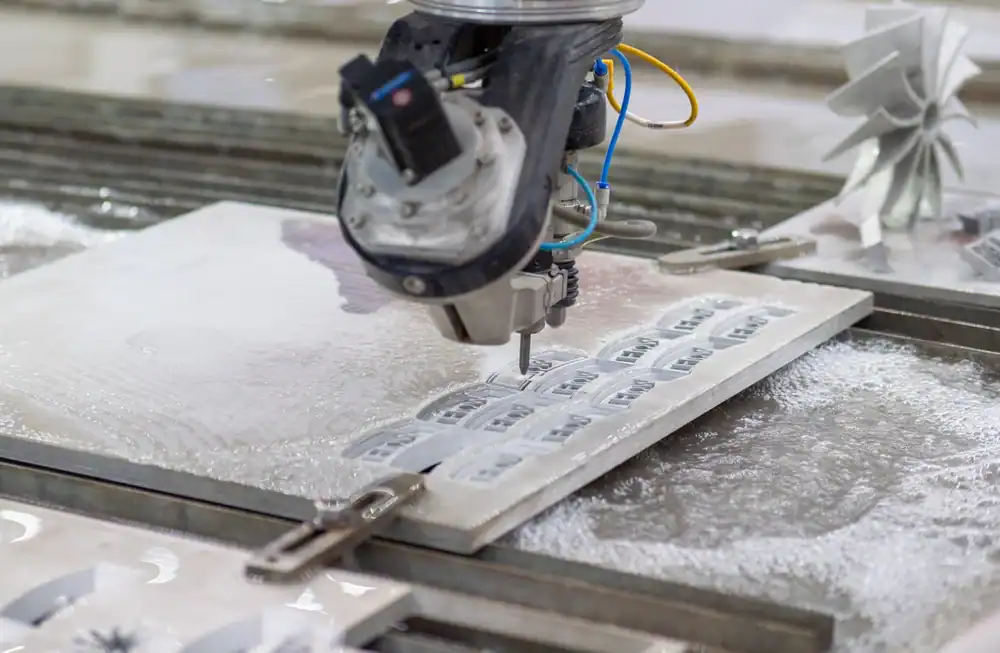
You start with a CAD file or a drawing. If you’re working from a concept, we can help translate that into a cuttable design. Once the file is set, you choose your material—or get recommendations based on what the part needs to do.
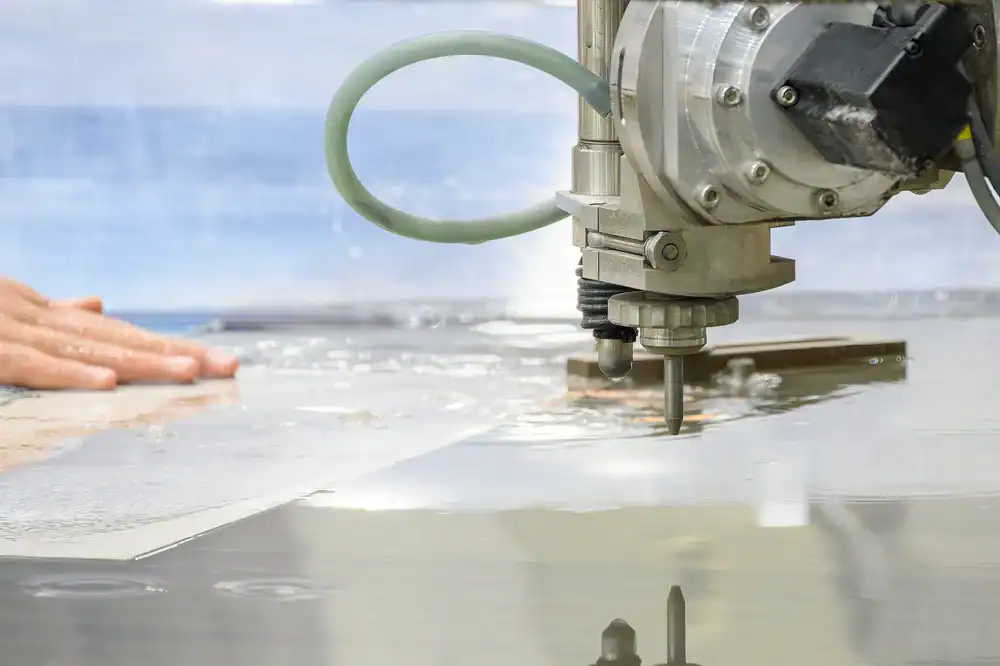
The waterjet system reads the file and follows the path with a stream of water pressurized up to 60,000 PSI. For softer materials, pure water does the job. For metals, stone, or composites, garnet abrasive gets added to the stream. The cutting head moves in precise increments, carving out your shape without ever touching the material with a blade or heat source.
What comes off the table is your finished part. The edges are smooth and square. The dimensions match your file within tight tolerances. There’s no secondary deburring or grinding unless you’re chasing tolerances tighter than ±0.005″. Most projects don’t need it.
You’re not waiting weeks. Quotes come back fast. Simple jobs can turn around in days. Complex or large-volume orders get scheduled with realistic timelines, not optimistic promises that fall apart halfway through.
Ready to get started?
Custom waterjet cutting in New Hyde Park, NY covers design consultation, material sourcing, precision cutting, and quality inspection before parts leave the shop. You’re not paying for services you don’t need, but the support is there when your project requires it.
We handle a range of materials common to the Long Island, NY manufacturing and construction markets: stainless steel, aluminum, brass, copper, titanium, tool steel, granite, marble, glass, acrylic, rubber, foam, and composites. If you’re unsure whether a material can be cut, ask. The answer is usually yes.
New Hyde Park sits in the middle of a dense industrial corridor. That means access to material suppliers, short transit times for delivery, and familiarity with the standards that local contractors and architects expect. When you’re coordinating multiple trades on a job site or managing a production schedule, proximity matters.
We accommodate both one-off custom pieces and repeat production orders. Prototype a part, test it, then scale up without changing suppliers or requalifying a new process. The same machine that cuts your first piece cuts your thousandth.
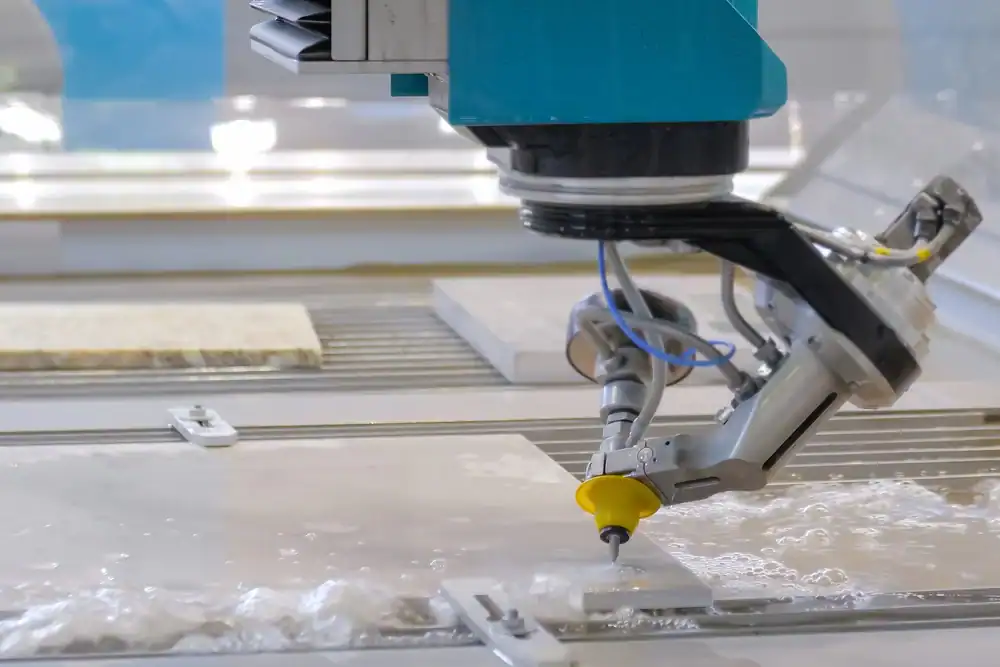
Waterjet cuts materials that would crack under a saw, melt under a laser, or dull a blade too fast to be cost-effective. That includes tempered glass, which shatters if you introduce heat or mechanical stress. It includes thick rubber and foam, which compress under blades and produce ragged edges. It includes stone and ceramic tile, where traditional cutting creates chips and requires diamond tooling that wears out.
The process also handles stacked or laminated materials without delaminating them. If you’re cutting a composite panel with a metal skin over a plastic core, waterjet keeps the layers bonded. Laser cutting would melt the plastic. Mechanical cutting might separate the layers.
For metals, waterjet works on hardened tool steel, titanium, and high-strength alloys that are expensive to machine and hard on cutting tools. You’re not limited by material hardness or worrying about how many parts you can cut before tooling costs spike.
Laser cutting is faster on thin sheet metal—under a quarter inch, it’s hard to beat for speed. But it introduces heat, which means warping on thin materials and a heat-affected zone that hardens the edge. If you’re welding or machining that edge later, you’re dealing with harder material that dulls tools and doesn’t behave like the rest of the part.
Waterjet doesn’t add heat. The material properties stay consistent from edge to center. That matters for parts that need to be bent, welded, or machined after cutting. It also matters for materials that lose temper or strength when heated, like certain aluminum alloys or spring steel.
Thicker materials favor waterjet. Laser struggles above an inch on steel and can’t touch many non-metals. Waterjet handles six inches of steel or eight inches of aluminum without issue. If your project involves mixed materials—say, a metal frame with acrylic panels—you’re not switching between processes or shops.
Standard waterjet cutting holds ±0.005″ on most materials. That’s tight enough for parts that need to fit together without slop, brackets that mount to existing holes, or panels that align flush. If you’re cutting something that doesn’t require precision fit—decorative elements, rough blanks for further machining—the tolerance is looser, but you’re still getting clean, consistent cuts.
For tighter work, the process can be dialed in further. Some shops run ±0.002″ on smaller parts with controlled conditions. But most projects don’t need that. The question is whether the part does what you need it to do, not whether it hits an arbitrary number.
The kerf width—the amount of material removed by the cut—runs about 0.030″ to 0.040″. That’s narrower than most mechanical cutting methods, which means better material utilization and the ability to cut smaller inside radii. You can nest parts closer together on a sheet and pull more pieces from the same material.
Quotes typically come back within 24 hours, often faster for straightforward jobs. You send a file, specify material and quantity, and get a price. If the design has issues—features too small to cut, dimensions that don’t match the material thickness you specified—you’ll hear about it upfront, not after you’ve paid.
Turnaround depends on complexity and queue, but simple parts often ship within a few days. A dozen brackets cut from half-inch aluminum? That’s a fast job. A large decorative panel with intricate detail cut from stone? That takes longer, but you’ll get a realistic timeline before committing.
Rush orders are possible when the schedule allows. Being located in New Hyde Park, NY means you’re not adding cross-country shipping time to every job. If you need something fast and can pick it up, that’s an option. If you’re coordinating delivery to a job site in Nassau County or nearby, transit time is measured in hours, not days.
Most waterjet-cut parts come off the machine ready to use. The top edge is clean and square. The bottom edge may have a slight bevel or roughness depending on material and thickness, but it’s typically minor—nothing like the slag from plasma cutting or the burrs from mechanical shearing.
If your application requires perfectly smooth edges on all sides, a quick pass with a file or sandpaper handles it. For parts that will be powder coated, anodized, or painted, the edge quality is more than adequate as-is. The coating process will cover any minor texture.
Compare that to laser cutting, which leaves a hardened, discolored edge that often needs grinding. Or plasma cutting, which produces heavy dross that requires significant cleanup. Or stamping and shearing, which leave burrs sharp enough to cut skin. Waterjet eliminates most of that post-processing, which saves time and labor on your end.
Yes. You can order a single prototype to test fit and function, then scale up to hundreds or thousands of parts without changing the process or requalifying a supplier. The same CNC file that cuts your first piece cuts the rest, so consistency stays tight across the entire run.
For prototyping, waterjet is cost-effective because there’s no tooling to amortize. You’re not paying for a die, a mold, or a custom fixture that only makes sense at high volume. You pay for machine time and material, which makes low quantities viable.
For production, the process is repeatable and fast enough to handle most manufacturing schedules. Parts nest efficiently on sheets to minimize waste. The machine runs unattended for much of the cycle, which keeps labor costs reasonable. And because there’s no tool wear, part number 1,000 comes out the same as part number one.
Useful Links
Other Services we provide in New Hyde Park