Hear from Our Customers
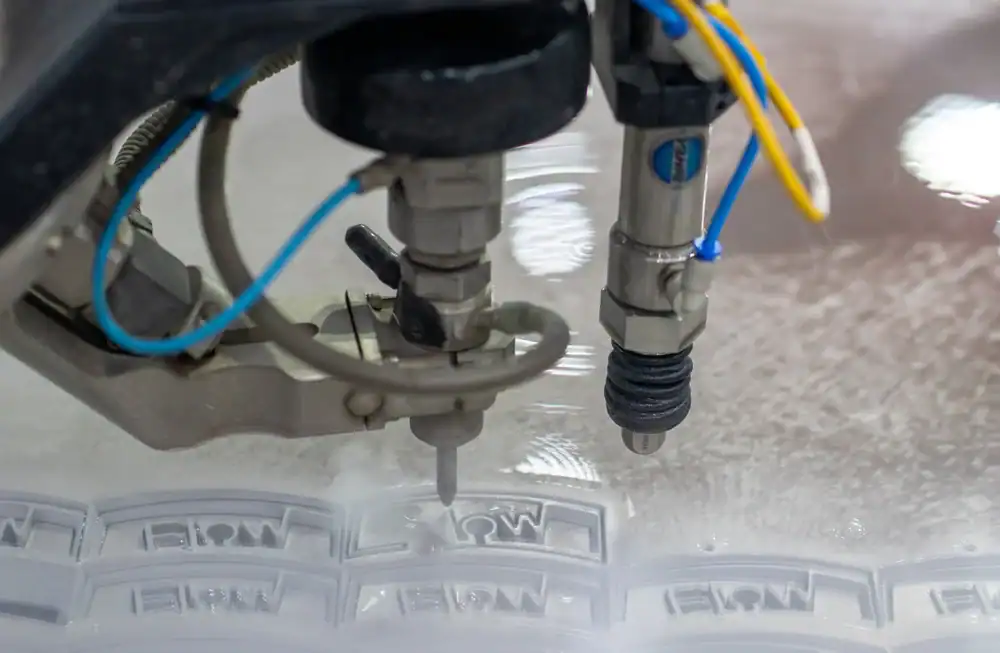
You’re not cutting materials for fun. You’re delivering components to clients who expect perfection, meeting specs that leave zero room for error, or fabricating parts that need to fit the first time.
Waterjet cutting in Oyster Bay, NY gives you tolerances down to ±0.003 inches without heat-affected zones, warping, or the need for secondary finishing. That means your aerospace components, architectural panels, and custom fabrication projects come out right—with smooth, burr-free edges that don’t need cleanup.
The process uses abrasive waterjet cutting technology that handles steel, titanium, aluminum, glass, stone, composites, and rubber without switching tools or setups. You save time on changeovers, reduce material waste by up to 30%, and avoid the cost of rejected parts that don’t meet spec.
We operate in a region where over 3,600 manufacturing companies depend on precision fabrication to stay competitive. We’re positioned in Oyster Bay, NY to serve the aerospace, automotive, construction, and custom fabrication industries that make Long Island, NY’s manufacturing sector what it is.
When you work with us, you’re not dealing with long lead times or communication gaps. You’re getting direct access to the equipment and expertise that turns your digital designs into physical components—whether that’s architectural screens, industrial parts, or prototype pieces that need to be exact.
We understand what’s at stake when you’re supplying aerospace companies that require parts tolerances as tight as ±0.005 inches, or when you’re fabricating custom architectural elements that need to match design specs perfectly.
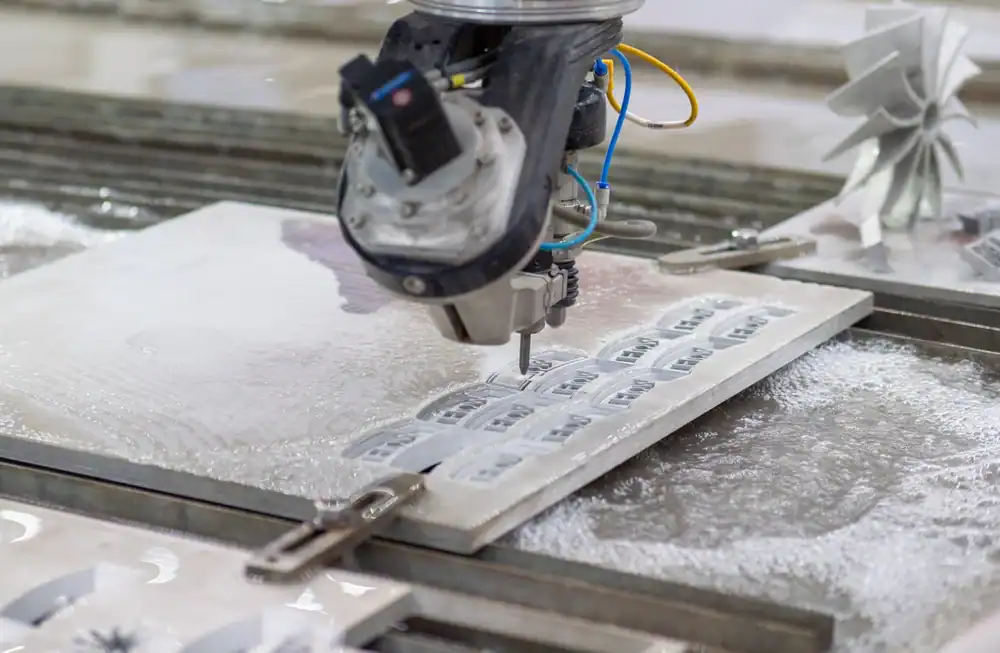
You start by sending over your design file—CAD drawings, DXF files, or whatever format your project lives in. We review the specs, material requirements, and tolerances you need to hit.
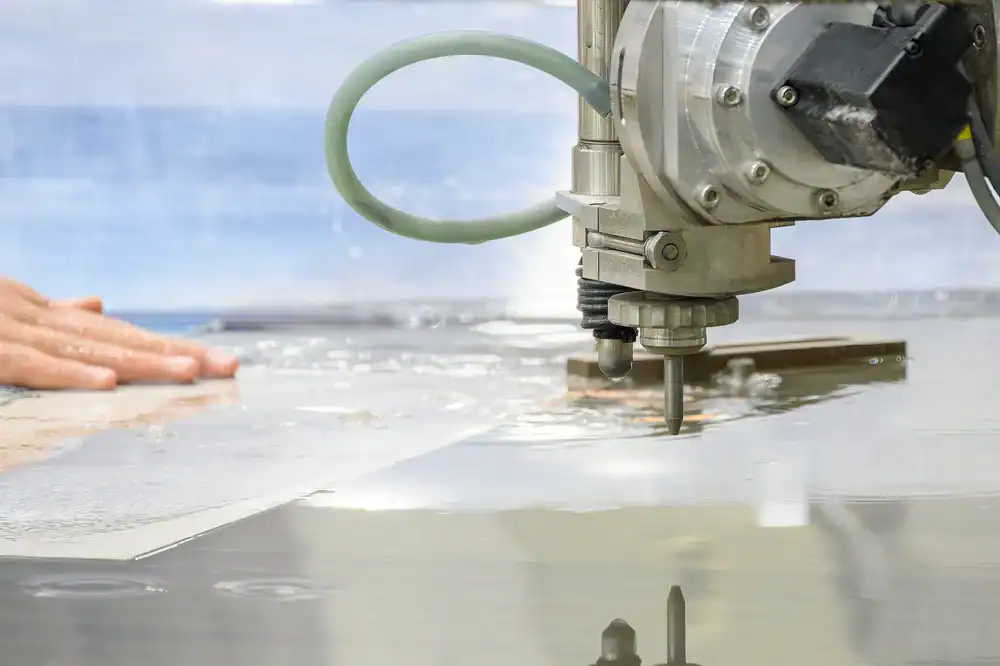
From there, the file gets loaded into our CNC waterjet cutting systems that translate your design into precise tool paths. The cutting head uses a stream of water pressurized up to 60,000 PSI, mixed with fine abrasive particles, to cut through your material with a kerf width of just 0.030 to 0.040 inches.
Because it’s a cold cutting process, there’s no heat distortion, no hardened edges, and no material stress. The machine handles contouring, drilling, and even bevel cuts without stopping to change tools. What you get is a finished part with clean edges, accurate dimensions, and no secondary operations needed—unless your project specifically calls for additional finishing.
Ready to get started?
Custom waterjet cutting in Oyster Bay, NY handles the full range of materials your projects demand. Metals like steel, stainless steel, aluminum, titanium, and brass. Non-metals including glass, ceramics, stone, plastics, and composites. Even thick materials—some systems cut steel up to 200mm thick without issue.
Long Island, NY’s manufacturing landscape relies heavily on local supply chains, with over 80% of major manufacturers sourcing from businesses right here on the Island. That local network matters when you need fast turnarounds, direct communication, and the ability to adjust specs without shipping delays.
The waterjet cutting services we offer include prototype development, production runs, architectural component fabrication, and custom industrial parts. Whether you’re an architect specifying decorative metal screens, a designer working on interior installations, or a manufacturer producing components for aerospace applications, the process adapts to what you’re building without compromising on precision or material integrity.
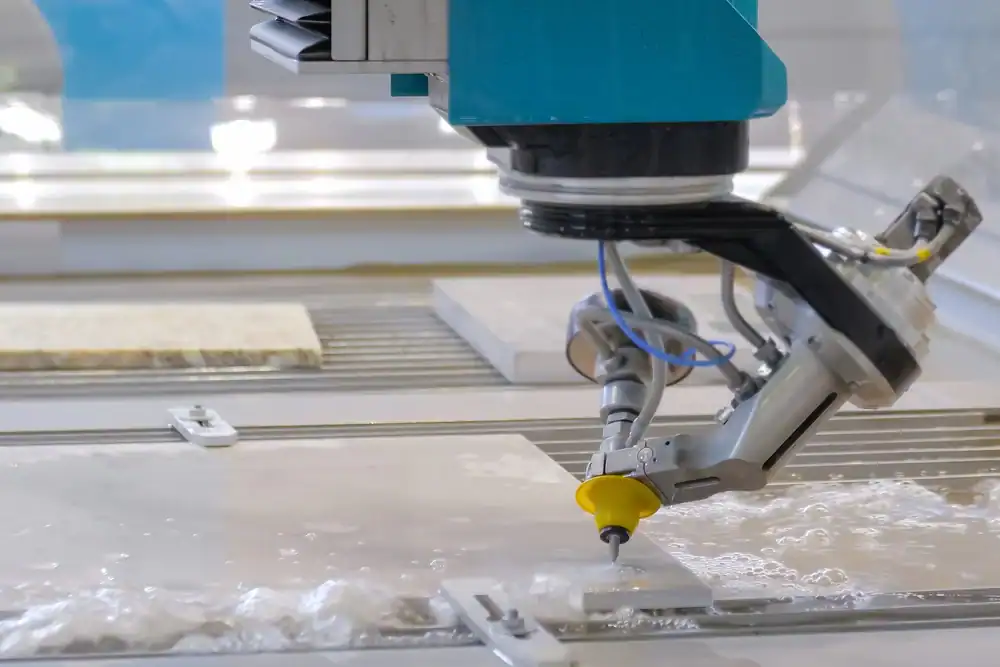
Modern waterjet cutting systems hold tolerances between ±0.003 inches and ±0.005 inches consistently across production runs. That level of precision matters when you’re manufacturing aerospace components, where even minor deviations can result in rejected parts and damaged client relationships.
The accuracy comes from CNC-controlled cutting heads that follow programmed tool paths without the variables that affect manual or heat-based cutting methods. There’s no thermal expansion, no tool wear between cuts, and no material distortion from heat-affected zones.
If your project requires tighter tolerances than ±0.003 inches, that’s worth discussing upfront. Some applications need post-cutting precision grinding or finishing to hit extremely tight specs, but for the vast majority of industrial and architectural work, waterjet cutting in Oyster Bay, NY delivers the accuracy you need straight off the machine.
The main difference is heat. Laser and plasma cutting use thermal energy that creates heat-affected zones, which can warp thin materials, harden edges, and change material properties near the cut line. Waterjet cutting uses high pressure water and abrasive particles—no heat, no distortion, no secondary cleanup in most cases.
That makes waterjet cutting the better choice when you’re working with materials sensitive to heat, when you need to maintain material integrity throughout the part, or when you’re cutting materials that don’t respond well to thermal processes—like glass, stone, composites, or certain plastics.
Laser cutting can be faster on thin metals, and plasma works well for thick steel plate when edge quality isn’t critical. But when your project demands clean edges, no HAZ, and the ability to cut virtually any material without changing equipment, abrasive waterjet cutting handles what the others can’t.
Waterjet systems cut steel up to 200mm thick, though practical cutting thickness depends on the material, the level of detail required, and production speed considerations. For most industrial and architectural applications, you’re looking at materials ranging from thin gauge sheet metal up to several inches thick.
Thicker materials take longer to cut because the waterjet stream needs more time to penetrate and maintain cutting quality through the entire depth. But unlike mechanical cutting methods, there’s no upper limit where the process simply stops working—it’s more about balancing cut quality, speed, and cost effectiveness for your specific project.
If you’re working with particularly thick materials or need to understand how thickness affects turnaround time and pricing for your custom waterjet cutting project in Oyster Bay, NY, that’s a conversation worth having before finalizing your design specs.
Waterjet cutting produces smooth, burr-free edges in most materials, which eliminates the deburring and secondary finishing that other cutting methods require. That’s a real cost and time savings when you’re running production parts or fabricating components that need to go directly into assembly.
The edge quality depends partly on cutting speed—slower cuts produce smoother edges, faster cuts may show slight striations on thicker materials. For most applications, the edge comes off the machine ready to use.
If your project has specific surface finish requirements or needs edges prepared for welding, coating, or aesthetic purposes, those specs should be discussed upfront. But compared to plasma, torch, or even laser cutting, waterjet cutting services deliver superior edge quality right out of the gate, with minimal or no finishing work needed.
Waterjet cutting reduces material waste by up to 30% compared to traditional cutting methods, primarily because of the narrow kerf width—just 0.030 to 0.040 inches. That tight kerf allows parts to be nested closely together on sheet material, maximizing how many pieces you get from each sheet.
For manufacturers and fabricators buying expensive materials like titanium, stainless steel, or specialty alloys, that waste reduction translates directly to cost savings. Less scrap means lower material costs per part, which improves your margins or makes your bids more competitive.
The precision of CNC waterjet cutting also means fewer rejected parts due to dimensional errors, which is another form of waste reduction. When parts come out within tolerance the first time, you’re not scrapping pieces that don’t meet spec or running extra material to account for expected failures.
Waterjet cutting handles complex geometries, intricate patterns, and detailed shapes that would be difficult or impossible with conventional cutting methods. The cutting stream is thin enough to navigate tight curves and produce fine details in both metal and non-metal materials.
Inside corners have a small radius determined by the width of the cutting stream—typically around 0.015 to 0.020 inches. True sharp 90-degree inside corners aren’t possible because the stream itself has diameter, but for most design applications, that minimal radius doesn’t affect fit or function.
If your architectural panels, decorative screens, or custom components include complex cutouts, overlapping shapes, or detailed patterns, waterjet cutting in Oyster Bay, NY executes those designs accurately without multiple setups or tool changes. The process cuts your entire part profile in one operation, maintaining dimensional accuracy across even the most intricate designs.
Useful Links
Other Services we provide in Oyster Bay