Hear from Our Customers
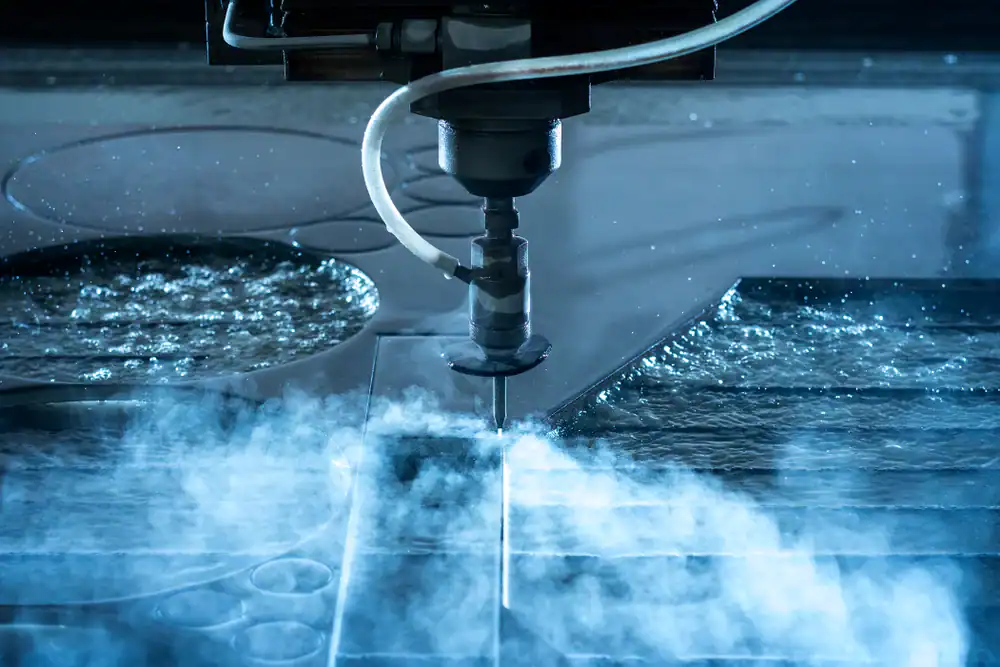
When you’re working with materials that can’t handle heat—or when laser and plasma cutting leave you with warped edges and extra finishing work—waterjet cutting changes everything. High pressure water cutting uses pure water or water mixed with abrasive garnet to cut through metal, stone, glass, composites, and more without generating heat.
That means no warping. No hardening. No melting. Just clean, burr-free edges that often eliminate secondary finishing entirely.
Whether you’re an architect specifying custom metalwork, a contractor managing a tight timeline, or a manufacturer producing precision components, you get parts that fit correctly the first time. Tolerances as tight as 0.001 inches are achievable with the right setup. For most jobs, you’re looking at 0.003 to 0.005 inches—more than enough for demanding applications in aerospace, medical devices, and industrial equipment.
We serve architects, designers, contractors, and manufacturers across Patchogue and the broader Long Island, NY area. We’re positioned to support the region’s strong manufacturing base—including the businesses operating in and around Hauppauge Innovation Park, one of the largest industrial centers outside Silicon Valley.
You’re not dealing with a national chain that treats every job the same. You’re working with a team that understands Long Island, NY’s manufacturing landscape and the specific demands of local projects. From initial design consultation through final cutting, we handle custom work that requires both precision and flexibility.
If you need someone who can translate your CAD file into a finished part—or help you figure out the best material and approach before you even get to that stage—that’s what we do.
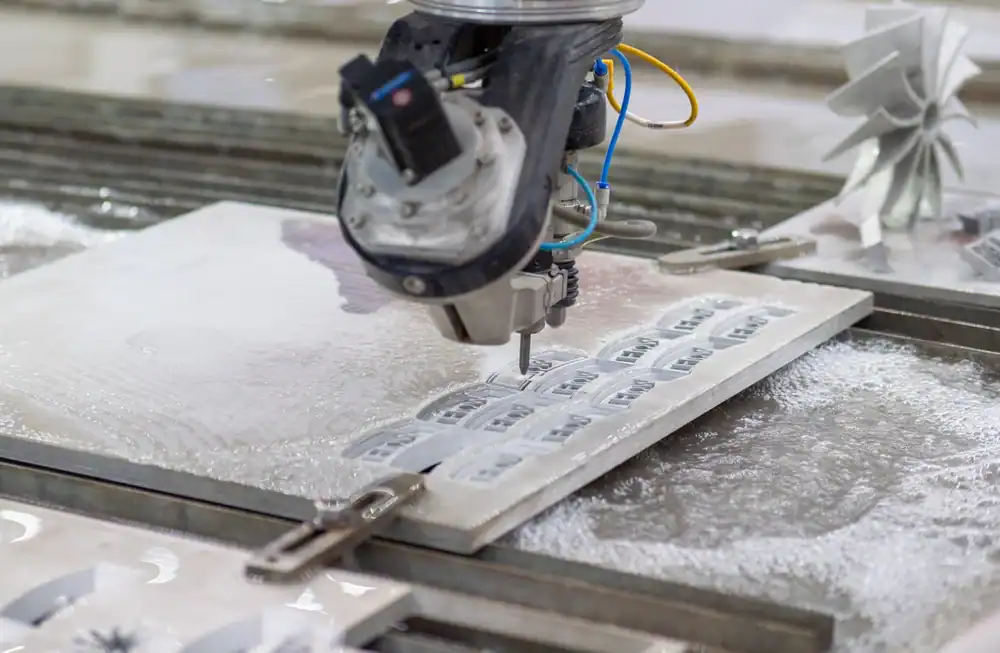
The process starts with your design. If you have a CAD file, we can work directly from that. If you’re still figuring out materials or dimensions, we’ll consult with you to make sure what you’re specifying will actually work for your application.
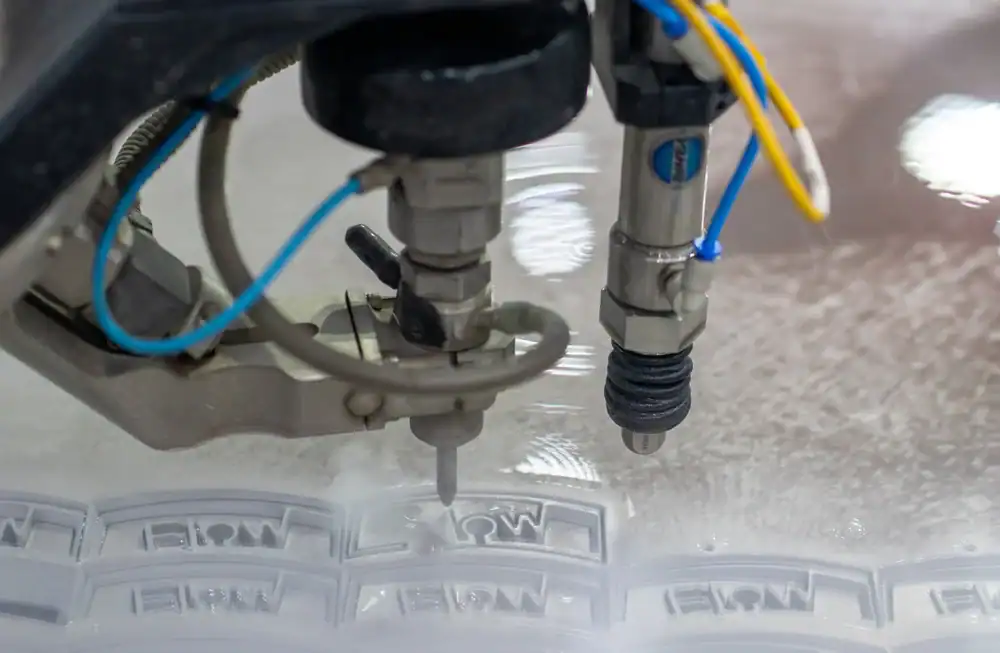
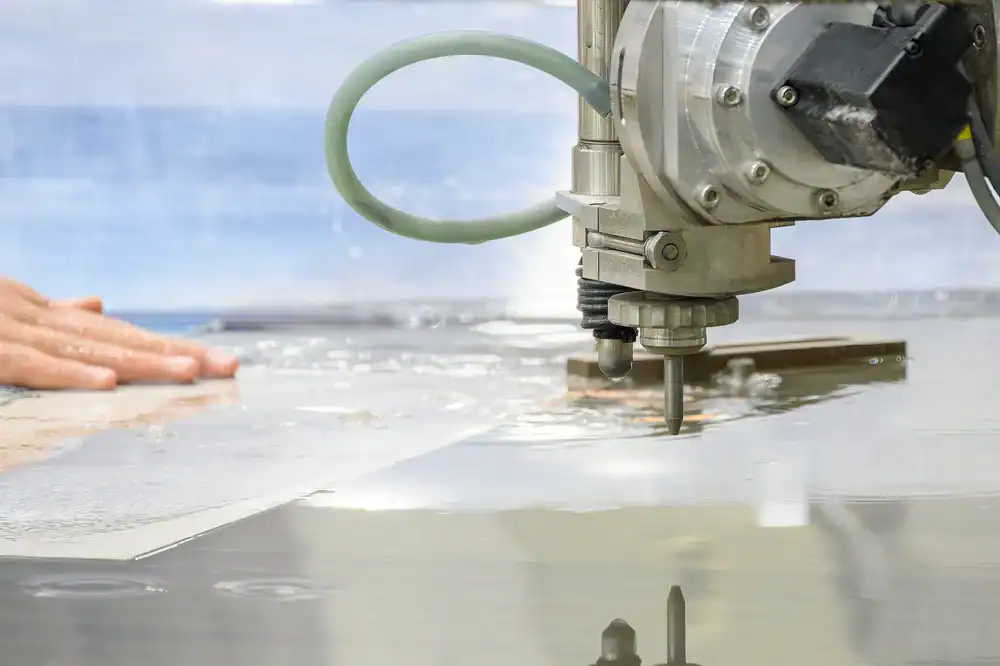
Once the design is locked in, we program the waterjet system using CNC controls. The cutting head moves along your specified path while a high-pressure stream—up to 60,000 PSI—erodes the material. For softer materials like foam, rubber, or gaskets, pure waterjet cutting works. For harder materials like metal, stone, or composites, we add abrasive garnet to the stream.
Because the process is cold, there’s no heat-affected zone. The water instantly cools any minimal heat generated by erosion, so your material properties stay intact. You don’t get the hardening or brittleness that comes with thermal cutting methods.
Setup is fast. Transition from one job to another happens quickly because there’s no tooling to swap out. That’s why custom waterjet cutting works well for both prototypes and production runs.
Ready to get started?
You get versatility that other cutting methods can’t match. Waterjet handles materials from 0.010-inch acrylic up to 10-inch stainless steel. It cuts intricate shapes, tight inside corners, and complex geometries without leaving burrs or requiring secondary deburring.
For architects and designers in Patchogue and across Suffolk County, that means custom panels, artistic installations, and architectural elements cut exactly to spec. For manufacturers, it means components that meet tight tolerances without the risk of thermal distortion affecting fit and function.
The process is also environmentally sound. No toxic fumes. No hazardous waste beyond the spent garnet and material remnants, which are inert. Operators aren’t exposed to harmful chemicals or heat, and neither are you when the parts arrive.
Long Island, NY’s manufacturing sector continues to grow, with nearly 58% of industrial facilities relying on precision cutting technologies to maintain production accuracy. As more manufacturers adopt waterjet systems, the technology keeps improving—better automation, smarter controls, real-time monitoring that reduces downtime and waste.
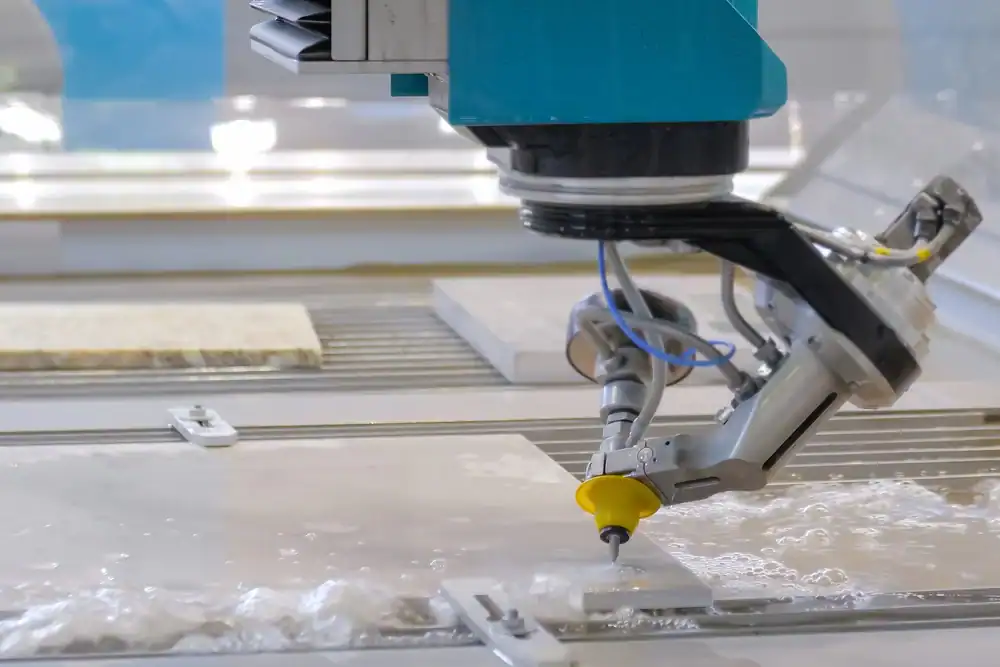
Waterjet cuts nearly anything. Metals like stainless steel, aluminum, titanium, and copper. Stone including granite, marble, and quartz. Glass, ceramics, and composites like carbon fiber. Plastics, rubber, foam, and gaskets.
The reason it works across such a wide range is simple: it’s a cold erosion process. There’s no heat to melt plastics, no flame to burn composites, no risk of cracking brittle materials like glass or stone. The water stream—with or without abrasive—simply wears away the material along your cut path.
If you’re not sure whether your material will work, just ask. We’ve cut everything from medical-grade stainless for surgical equipment to custom stone inlays for architectural projects. The versatility is one of the biggest reasons designers and manufacturers choose waterjet over laser or plasma cutting.
Waterjet systems can hold tolerances as tight as 0.001 inches under ideal conditions. For most production work, you’re looking at 0.003 to 0.005 inches, which is more than adequate for aerospace components, medical devices, and industrial machinery parts.
The key is that there’s no heat distortion pulling your material out of tolerance as it cools. With laser or plasma cutting, you often see warping, especially on thinner materials. That throws off your dimensions and creates headaches during assembly.
Waterjet eliminates that. The cut stays true to your programmed path, and the edges come out smooth and square. If your project requires tight fits, complex assemblies, or parts that need to mate precisely with other components, waterjet gives you the consistency you need without the guesswork.
In most cases, no. The edges come off the machine smooth and burr-free, ready to use. That’s a major time and cost saver compared to methods that leave rough edges, slag, or heat-affected zones that need grinding, deburring, or additional machining.
There are situations where you might want a specific edge finish for aesthetic reasons—a polished edge on glass, for example, or a chamfer on a metal part. But those are design choices, not requirements to fix a poor-quality cut.
For production environments, eliminating secondary finishing means faster turnaround and lower labor costs. You’re not paying someone to clean up every part after it’s cut. For custom projects, it means the part you receive is the part you can install or assemble immediately. That’s especially valuable when you’re managing tight deadlines or coordinating multiple trades on a job site.
Waterjet cuts materials from 0.010 inches up to 10 inches thick, depending on the material. Thicker materials take longer to cut because the stream needs more time to erode through the depth, but it’s absolutely doable.
For most projects, you’re working with materials in the half-inch to two-inch range—metal plates, stone slabs, thick composites. But if you need something thicker cut, waterjet is often the only practical option. Laser cutting maxes out around one inch on steel, and plasma struggles with precision on thick materials.
The thickness capability makes waterjet ideal for heavy industrial components, structural elements, and custom fabrication where you need the strength of thick material but also need precise cuts and complex shapes. You’re not limited to simple straight cuts, either. Full 2D complexity is available regardless of thickness.
It depends on the complexity and size of your project, but waterjet cutting is generally faster than you’d expect. Simple parts can often be cut the same day or next day. More complex projects with multiple parts or intricate geometries might take a few days.
The setup time is minimal compared to traditional machining. There’s no tooling to fabricate, no fixtures to build. We program directly from your CAD file, load the material, and start cutting. That fast transition time is why waterjet works well for both one-off prototypes and production runs.
If you’re on a tight deadline, let us know upfront. We’ll tell you honestly what’s possible and work with you to meet your schedule. For contractors coordinating trades or manufacturers managing production schedules, knowing exactly when your parts will be ready matters. We get that.
Waterjet doesn’t generate heat, so you avoid warping, hardening, and heat-affected zones that compromise material properties. That’s critical for precision work where dimensional accuracy matters or when you’re cutting materials that can’t handle thermal stress.
Waterjet also cuts a much wider range of materials. Laser works great on metals and some plastics, but it struggles with reflective materials, stone, glass, and thick composites. Plasma is fast on conductive metals but leaves rough edges and can’t handle non-conductive materials at all.
If your project involves multiple materials, complex shapes, or tight tolerances, waterjet gives you one process that handles everything. You’re not farming out different cuts to different shops or dealing with multiple setups. For architects specifying mixed-material installations or manufacturers producing multi-material assemblies, that simplicity saves time and reduces coordination headaches.
Useful Links
Other Services we provide in Patchogue