Hear from Our Customers
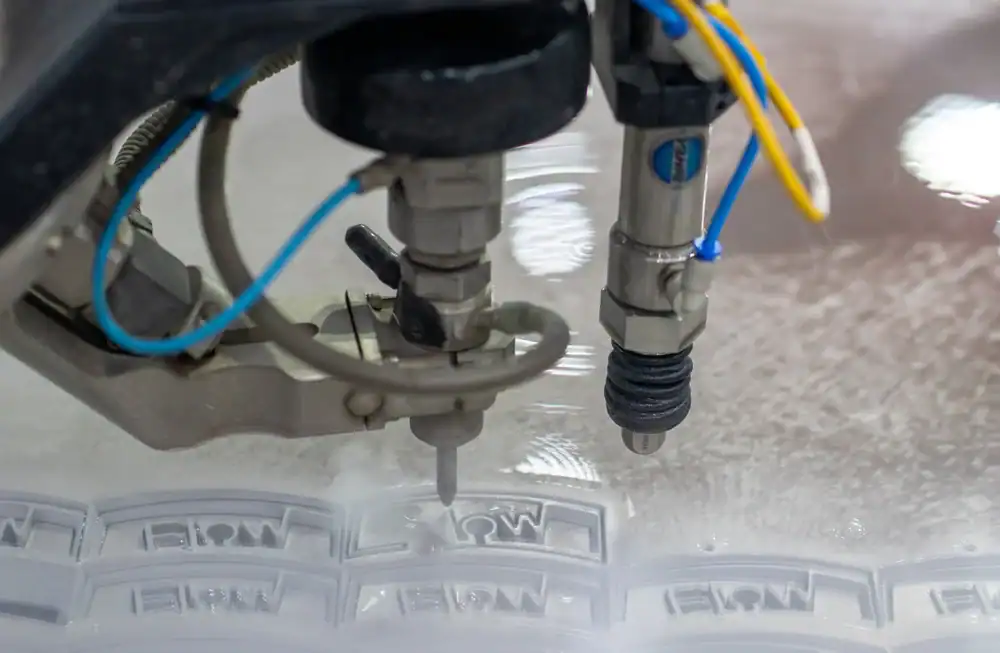
You’re not looking for a cutting service that creates more work. You need parts that fit the first time, edges that don’t need grinding down, and materials that aren’t warped from heat.
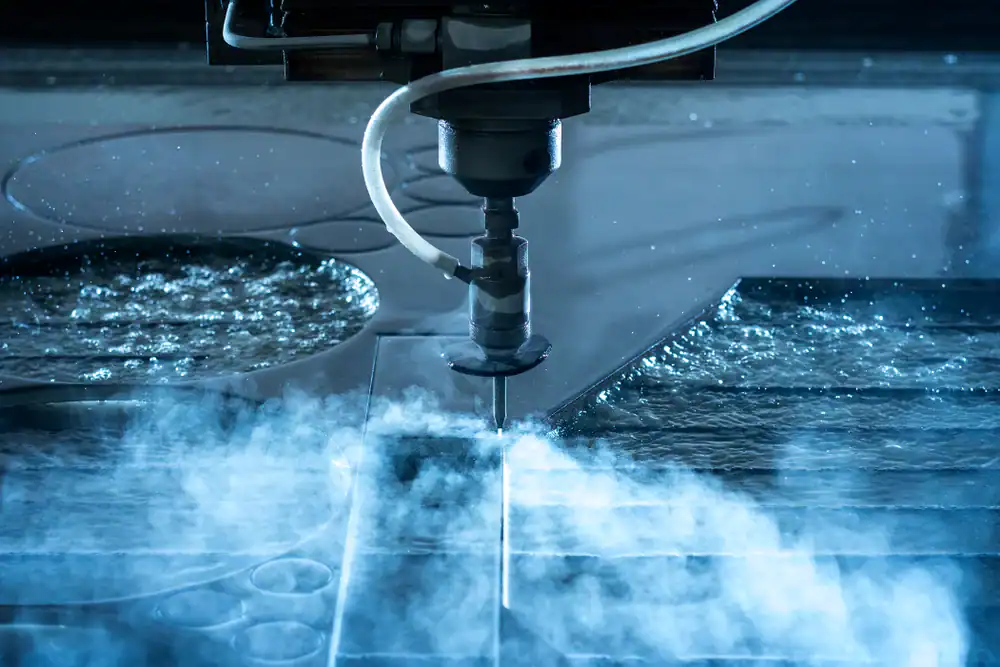
That’s what abrasive waterjet cutting delivers. The process uses high-pressure water mixed with fine abrasive particles to cut through thick metal, stone, glass, plastics, and composites without generating heat. No burn marks. No distorted edges. No secondary operations eating into your timeline.
Whether you’re fabricating marine components for Long Island, NY’s boating industry, architectural elements for a commercial build, or prototype parts that need to match your CAD file exactly, waterjet cutting in Riverhead, NY gives you finished edges straight off the machine. You get parts that drop into place, assemblies that align correctly, and projects that stay on schedule because you’re not fixing mistakes or waiting for rework.
We serve architects, contractors, fabricators, and manufacturers across Riverhead, NY and throughout Long Island, NY. We’re not the cheapest option—and that’s intentional. You’re paying for tolerances within 0.01 mm, operators who understand material behavior, and equipment that doesn’t compromise on accuracy.
Long Island, NY’s manufacturing sector depends on precision cutting for aerospace components, marine fabrication, custom architectural work, and industrial production. We’ve built our reputation on delivering that precision consistently, whether you need one prototype or a full production run.
You send us your CAD files or bring us your concept. We handle material consultation, cutting, and quality control so your parts arrive ready for installation or assembly.
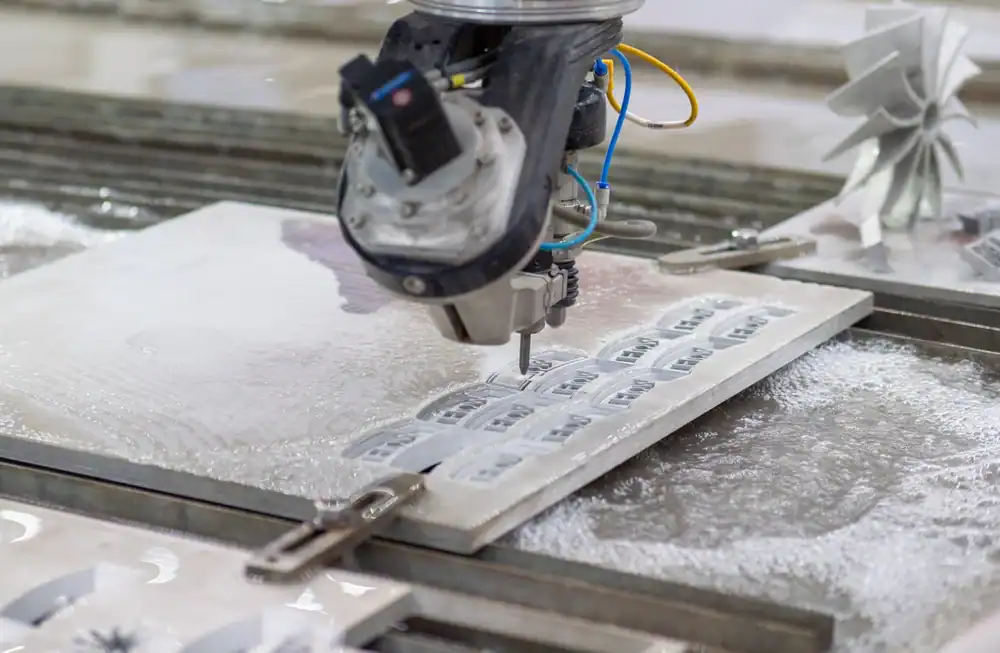
You start by sending your design files or specifications. If you’re working from a concept rather than finished CAD drawings, we can consult on design feasibility and material selection based on your project requirements.
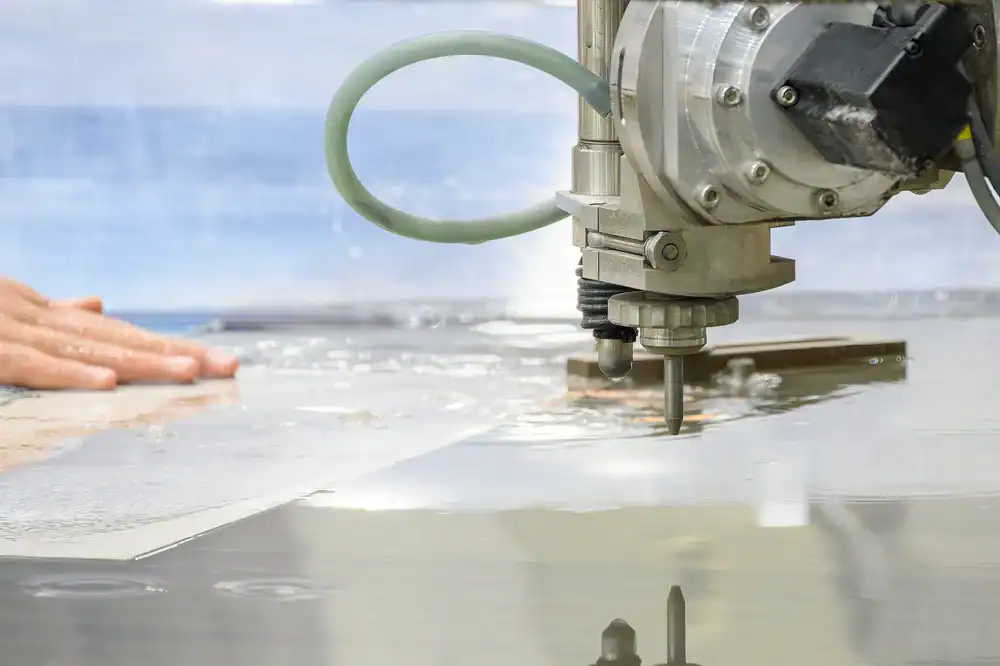
Once we have your specs, we program the waterjet system to follow your exact dimensions. The cutting head moves along your programmed path while pressurized water mixed with abrasive garnet particles cuts through your material. The stream reaches up to 60,000 PSI, which is enough to slice through 100mm of steel, stone, or composite material without generating any heat.
During cutting, the waterjet produces a finished edge. There’s no slag to remove, no heat-affected zones to grind down, and no warping to correct. Complex geometries, tight inside corners, and intricate patterns come out clean. After cutting, we inspect dimensions against your specifications, and your parts ship ready for use.
The entire process—from file to finished part—typically runs faster than traditional cutting methods because you’re eliminating secondary finishing operations.
Ready to get started?
You get material versatility that other cutting methods can’t match. Stainless steel, aluminum, titanium, copper, brass, stone, glass, ceramics, plastics, rubber, composites, foam—waterjet cutting handles them all without changing tooling or adjusting for material hardness. That matters when you’re working on projects that combine multiple materials or when you need to test different options before committing to production.
You get waste reduction of up to 30% compared to traditional cutting. The narrow kerf width (the material removed during cutting) means tighter nesting of parts and more usable pieces per sheet. For Riverhead contractors and fabricators managing material costs, that difference shows up directly in your project budgets.
You get scalability from prototype to production. The same setup that cuts your first test piece cuts your hundredth production part with identical accuracy. There’s no tooling wear affecting quality over time, no blade dulling that changes cut characteristics, and no variation between the first part and the last part in your run.
You also get environmental compliance without extra effort. Waterjet cutting produces no hazardous fumes, no toxic dust, and minimal waste. The abrasive material is inert garnet that can be filtered and disposed of safely. For Long Island, NY manufacturers facing increasingly strict environmental regulations, that’s one less compliance headache.
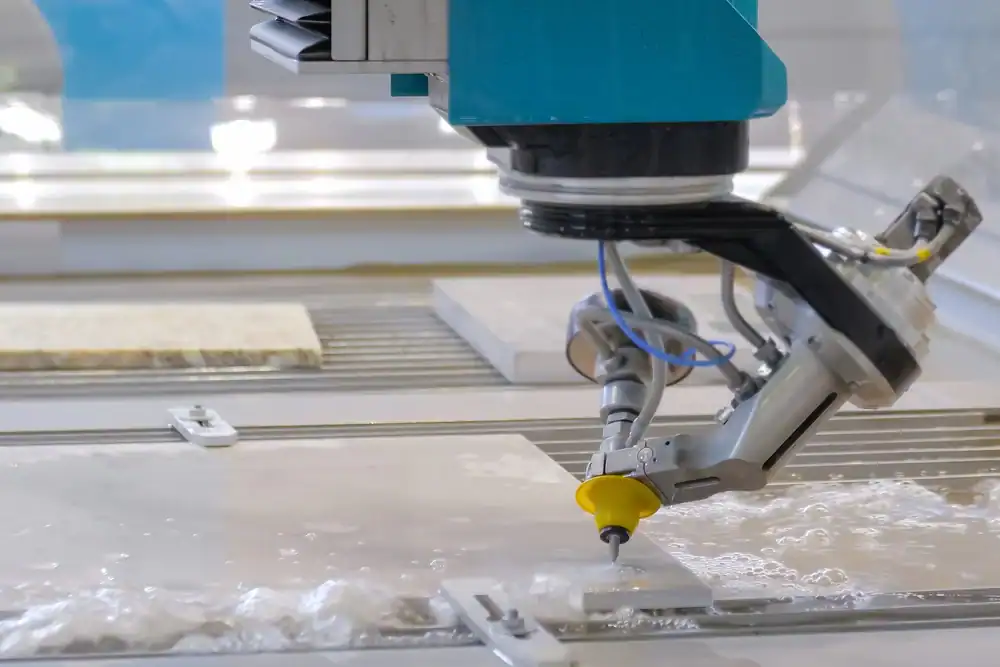
Waterjet cutting works on materials that would crack, melt, or deform under traditional cutting methods. Tempered glass comes out without shattering. Plastics and composites cut cleanly without melting edges. Titanium and hardened steel slice through without work-hardening the cut edge.
The reason is simple: no heat. Laser cutting burns through material, which limits what you can cut and often creates heat-affected zones that change material properties. Plasma cutting generates extreme temperatures that warp thin materials. Mechanical cutting creates stress and vibration that can crack brittle materials.
Waterjet cutting uses mechanical erosion from high-pressure water and abrasive particles. The water also acts as a coolant, keeping the material at ambient temperature throughout the cut. That means you can cut heat-sensitive materials like acrylic without melted edges, laminated materials without delamination, and hardened metals without affecting their temper. If you’re working with exotic alloys, stone inlays, or composite panels for architectural projects in Riverhead, NY, waterjet cutting often becomes the only viable option.
Modern waterjet systems hold tolerances within 0.01 mm, which matches or exceeds laser cutting accuracy for most applications. The difference shows up in edge quality and material limitations rather than dimensional precision.
Laser cutting can be slightly faster on thin metals and produces a smooth edge on steel. But it struggles with reflective materials like aluminum and copper, creates heat-affected zones that can measure several millimeters wide, and can’t cut non-conductive materials. Plasma cutting works well for thick steel but leaves a rougher edge and significant heat distortion.
Waterjet cutting maintains consistent accuracy across all material types and thicknesses. You get the same precision cutting 3mm aluminum as you do cutting 100mm steel. The edge quality comes out smooth enough that most applications don’t require secondary finishing. For parts that need to fit together precisely—like architectural panels, machine components, or custom fabrication work—that consistency matters more than shaving a few seconds off cut time.
Simple cuts on standard materials usually ship within 2-3 business days. Complex geometries, thick materials, or large production runs take longer, but you’re still looking at days rather than weeks in most cases.
The speed comes from eliminating secondary operations. Traditional cutting methods often require deburring, grinding, or finishing work after the initial cut. Those extra steps add handling time, quality control checkpoints, and potential rework if something goes wrong. Waterjet cutting produces a finished edge, so parts go straight from cutting to inspection to shipping.
For Riverhead contractors working against construction deadlines or manufacturers managing just-in-time inventory, that compressed timeline makes a real difference. You’re not waiting for parts to move through multiple departments or dealing with delays when finishing work reveals problems with the initial cut. Rush services are available when project schedules get tight, but most customers find that standard turnaround times work fine because the overall process runs faster than they’re used to with other cutting methods.
Yes, and that’s one of the main advantages. You can test a design with a single prototype cut, make revisions based on how it fits or functions, and then run production quantities using the exact same setup.
There’s no expensive tooling to create, no minimum quantities to justify setup costs, and no quality variation between your prototype and your production parts. The waterjet system follows your CAD file with the same precision whether it’s cutting one piece or one thousand pieces. That matters when you’re developing custom architectural elements, testing component designs, or managing projects where specifications might evolve.
For Long Island, NY manufacturers and fabricators, this flexibility means you can offer custom work without the overhead that usually comes with one-off projects. You can test material options without committing to large quantities. You can refine designs iteratively without waiting for new tooling. And when you’re ready to scale up, you’re not starting over with a different process that might produce slightly different results.
Waterjet cutting typically reduces material waste by 25-30% compared to traditional cutting methods. The kerf width (the material removed during cutting) measures only 0.03 to 0.04 inches, which is significantly narrower than plasma or laser cutting.
That narrow kerf allows tighter nesting of parts on your material sheets. Parts can sit closer together without risking overlap or leaving unusable strips between cuts. For expensive materials like stainless steel, titanium, or specialty alloys, those few extra parts per sheet add up quickly across a project.
The precision also eliminates waste from mistakes. When parts come out to exact specifications the first time, you’re not scrapping pieces that don’t fit or meet tolerance requirements. When edges don’t need secondary finishing, you’re not removing additional material during grinding or deburring. For contractors and fabricators in Riverhead, NY managing material costs on commercial projects, that waste reduction often covers the difference in cutting costs compared to cheaper methods that waste more material.
We can work from finished CAD files, rough sketches, or even just a conversation about what you’re trying to accomplish. If you have DXF, DWG, or other standard CAD formats, we can import those directly into our cutting system.
If you’re working from a concept or hand sketch, we can consult on design feasibility and help translate your idea into a cutting file. Sometimes that involves suggesting small design modifications that make the part easier to manufacture without changing its function. Sometimes it means recommending a different material that better suits your application. Sometimes it’s just confirming that what you’ve drawn will work exactly as specified.
For architects and designers working on custom projects in Riverhead, NY, this flexibility means you can explore options early in the design process rather than waiting until every detail is finalized. For contractors dealing with field modifications or custom fits, it means you can get parts cut based on field measurements without hiring a CAD designer. We handle the technical translation from concept to cutting file so you can focus on your project rather than learning CAD software.
Useful Links
Other Services we provide in Riverhead