Hear from Our Customers
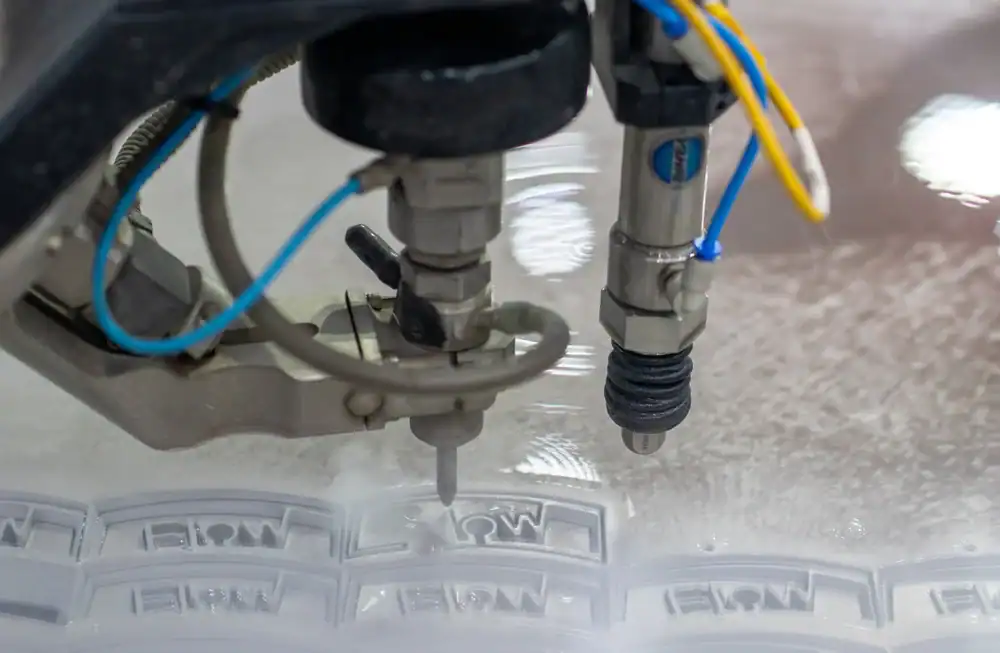
You get parts that fit right the first time. No burn marks, no warped edges, no secondary grinding to clean up what heat-based cutting destroys.
Waterjet cutting services in Saint James give you the ability to work with materials that would crack, melt, or distort under a torch or laser. Titanium, hardened steel, glass, stone, composites—all cut cold, all cut clean. That means your structural integrity stays intact and your tolerances stay tight.
If you’re an architect specifying custom metal panels, a contractor working with stone inlays, or a manufacturer prototyping aerospace components, you need cuts that don’t create more problems. High pressure water cutting delivers that without the headaches of heat-affected zones, tool wear, or material limitations that slow you down and drive up costs.
We operate out of West Islip, serving Saint James and the broader Long Island, NY market with precision waterjet cutting, custom design services, and material consultation. We work directly with architects, designers, contractors, and manufacturers who need accuracy and fast turnaround.
Saint James projects often involve custom architectural elements, marine components, and specialized manufacturing—all industries where precision isn’t negotiable. We’ve built our operation around understanding those demands and delivering results that meet them without the back-and-forth of rework or delays.
You’re not working with a distant shop that doesn’t understand Long Island, NY project timelines or material availability. You’re working with a local team that knows what you’re up against.
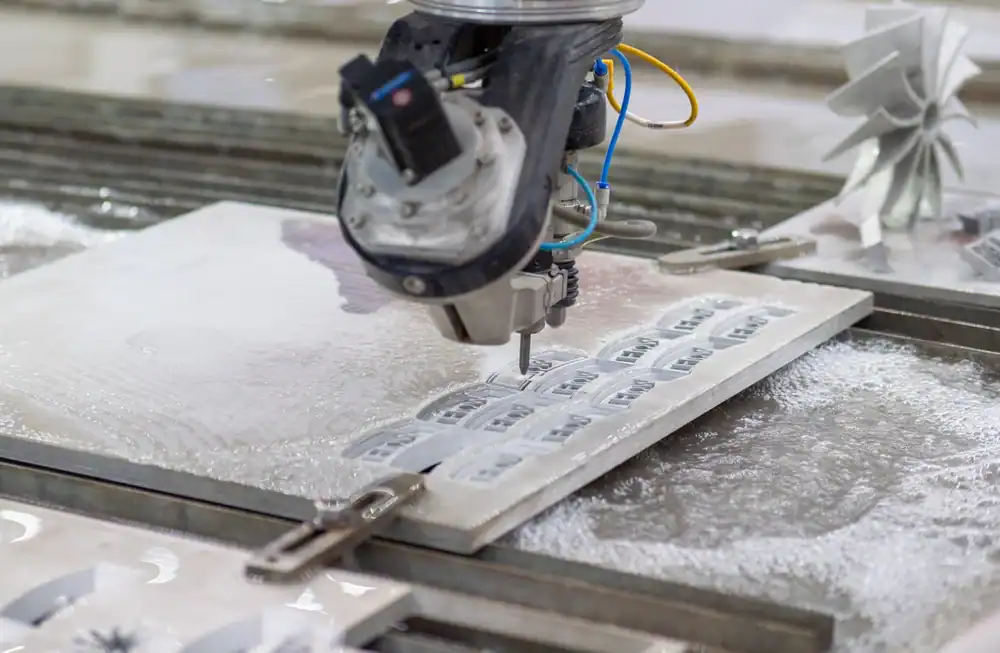
You send us your CAD file or design specs. We review the material, thickness, and tolerances you need, then program the waterjet system to match those exact requirements.
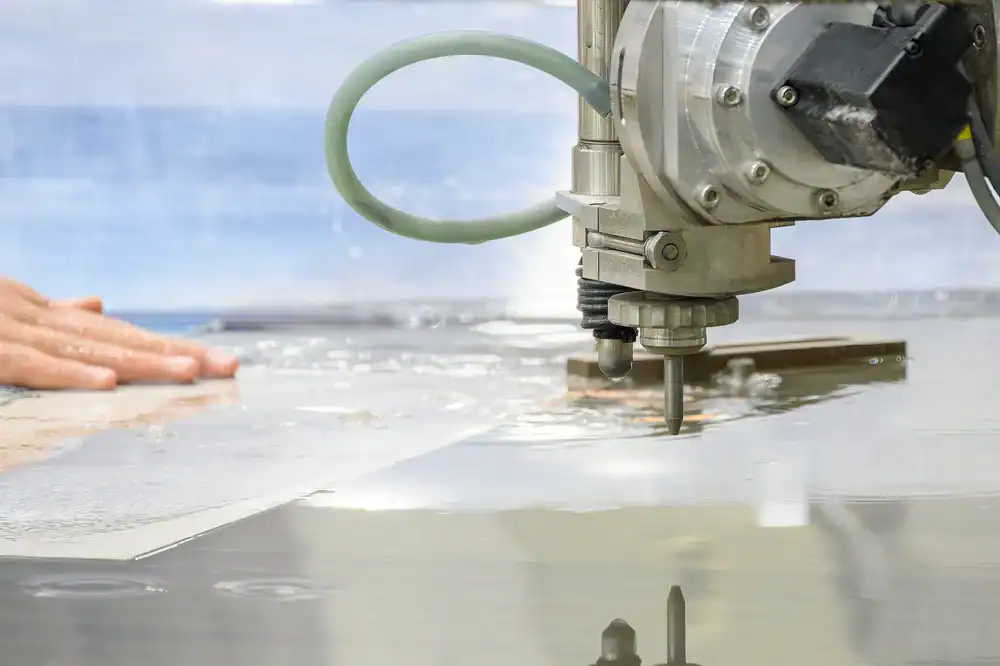
The cutting process uses a high-pressure water stream—up to 60,000 PSI—mixed with abrasive garnet particles. This stream cuts through your material without generating heat, which means no melting, no hardening, and no distortion. The nozzle follows your programmed path with CNC precision, creating clean edges and tight tolerances across metals, stone, glass, plastics, and composites.
Once the cut is complete, parts come off the table ready to use. No grinding, no deburring, no secondary processing to fix heat damage. You get what you specified, when you need it, without the extra steps that eat into your schedule and budget.
Ready to get started?
Custom waterjet cutting in Saint James means you get material consultation before the cut even happens. We help you choose the right thickness, grade, and type based on your application—not just what’s easiest to cut.
You get CNC programming that translates your design into precise tool paths, whether you’re cutting intricate architectural patterns or simple geometric shapes. The process handles complex curves, sharp angles, and detailed work that other cutting methods can’t touch without compromising quality.
Saint James sits in a market where marine fabrication, high-end residential construction, and specialized manufacturing all demand materials that perform. Our waterjet cutting services handle the stainless steel and aluminum for marine applications, the stone and tile for custom architectural projects, and the hardened metals for industrial components. All cut locally, all cut to spec, all delivered without the delays of outsourcing to distant shops that don’t understand Long Island, NY logistics.
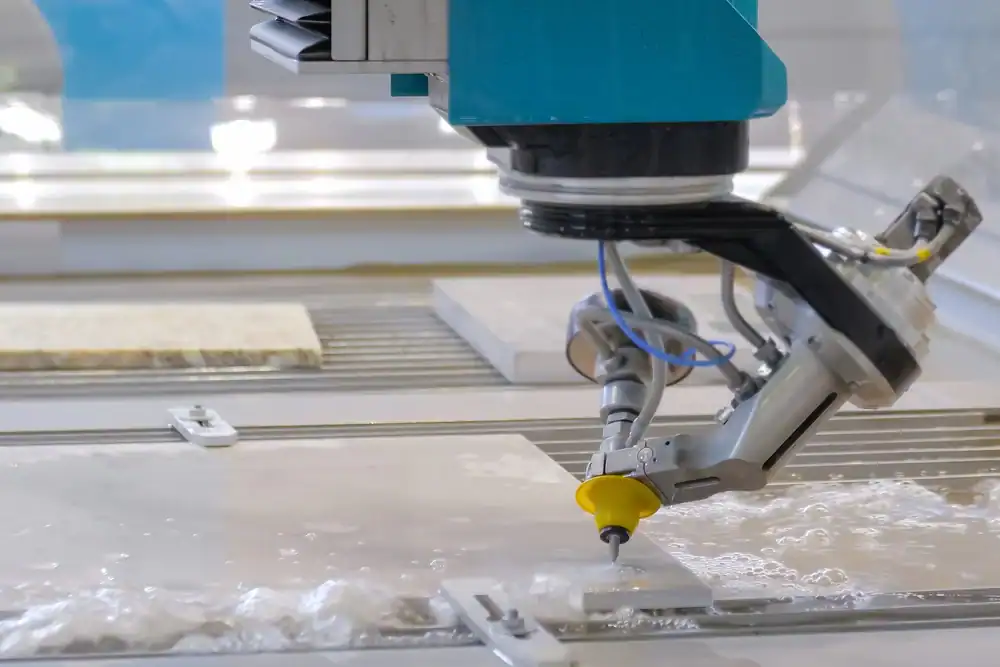
Waterjet cuts anything that would crack, melt, or warp under heat. That includes tempered glass, which shatters under thermal stress. It includes titanium and hardened tool steel, which dulls blades and resists traditional machining. It includes composites like carbon fiber, which delaminate when exposed to heat or mechanical cutting forces.
The cold cutting process means you’re not changing the material properties. No heat-affected zones, no case hardening, no micro-fractures that compromise strength. If you’re working with exotic metals for aerospace, stone for architectural elements, or layered materials for marine applications, waterjet gives you clean cuts without the material science problems that come with torches, lasers, or saws.
You also avoid the tool wear issues that plague other methods. There’s no blade to dull, no bit to replace mid-job. The abrasive stream does the work, which means consistent quality from the first cut to the last, even on materials that would destroy conventional cutting tools.
Laser and plasma both use heat, which creates problems you then have to fix. Lasers leave heat-affected zones that harden the edge and create micro-cracks in metals. Plasma creates dross and slag that require grinding and secondary finishing. Both methods warp thin materials and can’t handle anything heat-sensitive like plastics, glass, or composites.
Waterjet cuts cold. You get smooth edges without burn marks, no hardened zones that resist machining, and no warping that throws off your tolerances. The edge quality is clean enough that most parts go straight into assembly without secondary processing.
Waterjet also cuts thicker materials than laser can handle. While lasers struggle past one inch on most metals, waterjet pushes through six inches or more of steel, stone, or composites without losing accuracy. If you’re cutting architectural stone, thick marine-grade aluminum, or layered composite materials, waterjet is often the only method that delivers the precision you need without destroying the material in the process.
Standard waterjet cutting holds tolerances around ±0.005 inches on most materials. That’s tight enough for functional parts, custom fabrication, and architectural elements that need to fit precisely. If you need tighter tolerances for aerospace or medical components, advanced systems can hit ±0.001 inches with the right setup and material.
The consistency matters as much as the tolerance. Because there’s no tool wear and no heat distortion, the hundredth part cuts the same as the first. You’re not dealing with drift or degradation that forces you to stop and recalibrate mid-run.
Edge quality also affects how your parts perform. Waterjet produces smooth, square edges without the taper or roughness that comes from heat-based cutting. If you’re assembling parts that need to mate cleanly or welding components that can’t have contaminated edges, waterjet gives you the surface finish that makes the next step easier instead of harder.
Cutting speed depends on material type, thickness, and complexity. Thin metals and soft materials like aluminum or plastics cut faster—sometimes several inches per minute. Thick, hard materials like stainless steel or stone cut slower, but you’re still looking at reasonable production times without the setup delays of traditional machining.
Programming time is minimal. CAD files translate directly into tool paths, so there’s no manual setup or fixturing like you’d need for milling or routing. That means faster turnaround on custom one-offs and prototypes. For production runs, the lack of tool changes or recalibration keeps the process moving without interruptions.
Saint James projects often have tight deadlines driven by construction schedules or client commitments. Local waterjet cutting means you’re not waiting on shipping from distant fabricators or dealing with communication delays. You get realistic timelines upfront and parts delivered when you actually need them, not when a backlogged shop finally gets around to your job.
Waterjet makes sense for small runs because there’s no expensive tooling or setup costs. You’re not paying for dies, molds, or custom fixtures that only make sense at high volume. The CNC programming handles the complexity, so cutting one part costs roughly the same per piece as cutting ten.
Operating costs run between twelve and thirty dollars per hour depending on material and abrasive usage. Both the water and the garnet abrasive can be recycled, which keeps costs down compared to methods that generate expensive waste disposal fees. You’re also avoiding secondary processing costs—no grinding, no deburring, no heat treatment to reverse damage from thermal cutting.
For prototypes, waterjet lets you test designs in actual production materials without committing to expensive tooling. If the part needs changes, you adjust the CAD file and recut without scrapping custom dies or fixtures. That flexibility saves money on development and gets you to a final design faster than methods that lock you into expensive setup costs before you’ve proven the concept.
Send a CAD file in DXF, DWG, or similar vector format. That gives us the exact dimensions and geometry without guesswork. If you don’t have a CAD file, a detailed drawing with dimensions works—we can program from that, though it adds a bit of time to the setup.
Specify your material type, grade, and thickness. “Stainless steel” isn’t enough—304 cuts differently than 316, and thickness dramatically affects cutting time and cost. If you’re not sure what material grade you need for your application, we can consult on that before quoting.
Let us know your quantity and timeline. A single prototype has different pricing than a hundred production parts, and rush jobs require schedule adjustments. The more detail you provide upfront, the faster we can give you an accurate quote and realistic delivery date for your Saint James project.
Useful Links
Other Services we provide in Saint James