
Hear from Our Customers
You’re not dealing with warped edges or heat-affected zones that compromise your material. High pressure water cutting gives you clean cuts on the first pass, whether you’re working with half-inch steel or delicate composites that can’t handle thermal stress.
The process keeps your material cold. That means no metallurgical changes, no hardened edges that dull your tools later, and no secondary grinding to clean up what a torch or laser would distort. You get parts that fit right, the first time.
Most shops using traditional cutting methods build in extra time for cleanup and rework. With abrasive waterjet cutting, those steps disappear. The kerf width stays narrow, material waste drops by up to 30%, and you’re not paying for finishing work that shouldn’t be necessary in the first place. Your project moves faster because the cut quality doesn’t create downstream problems.
We serve architects, contractors, and manufacturers across Seaford and Nassau County who need cutting work done right. We’re not the cheapest option, and that’s intentional. You’re paying for tolerances within 0.01mm, material expertise that prevents costly mistakes, and turnaround times that keep your project on schedule.
Seaford’s manufacturing sector represents 5% of local employment, and those facilities understand that precision cutting isn’t where you cut corners. When a part needs to fit without modification or a design requires complex geometry that traditional methods can’t handle, waterjet cutting services in Seaford, NY become the practical choice, not the premium one.
We’ve built our operation around the reality that your timeline matters and your material costs add up. That’s why we focus on first-pass accuracy and consultation that helps you avoid the expensive do-overs that come from using the wrong cutting method.
You send us your design file or bring in your material with specifications. We review the tolerances you need, the material thickness, and any edge quality requirements that matter for your application. If there’s a more efficient way to nest your parts or a material consideration you haven’t accounted for, we’ll tell you before we start cutting.
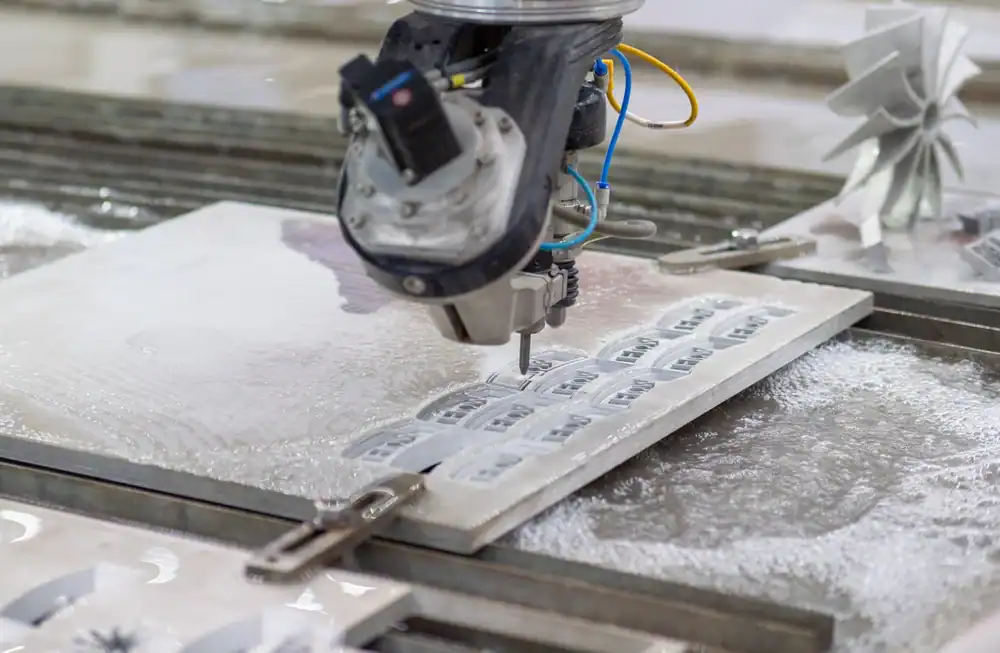
The actual cutting uses CNC-controlled high pressure water mixed with garnet abrasive. The stream moves through your material at pressures up to 60,000 PSI, following your programmed path with precision that stays consistent whether we’re cutting the first part or the hundredth. There’s no tool wear changing your dimensions mid-run, and no heat building up that would warp thin sections or alter material properties.
After cutting, your parts come off the table ready to use. The edges are smooth enough for most applications without additional finishing. If you’re tapping holes or welding joints, you’re working with clean material that hasn’t been hardened or stressed by the cutting process. Most customers take delivery and move straight to assembly or installation without touching the cut edges.
Ready to get started?
We cut metals, stone, glass, composites, and plastics up to 100mm thick. That covers most architectural metalwork, custom fabrication for Long Island, NY contractors, and prototype work for local manufacturers who need quick turnaround on complex parts. The same machine handles stainless steel, aluminum, titanium, granite, and carbon fiber without changing tooling or setup.
For Seaford’s construction and manufacturing sectors, that versatility means one cutting source instead of three. You’re not coordinating between a metal shop, a stone fabricator, and a plastics specialist. The waterjet handles all of it, which simplifies your scheduling and reduces the coordination headaches that delay projects.
The technology also handles geometry that stops other methods cold. Sharp internal corners, small holes in thick material, and intricate patterns that would require multiple setups on traditional equipment all happen in one pass. We’ve cut parts for aerospace applications requiring tight tolerances and architectural pieces where aesthetics matter as much as accuracy. The process adapts to what you need without compromise.
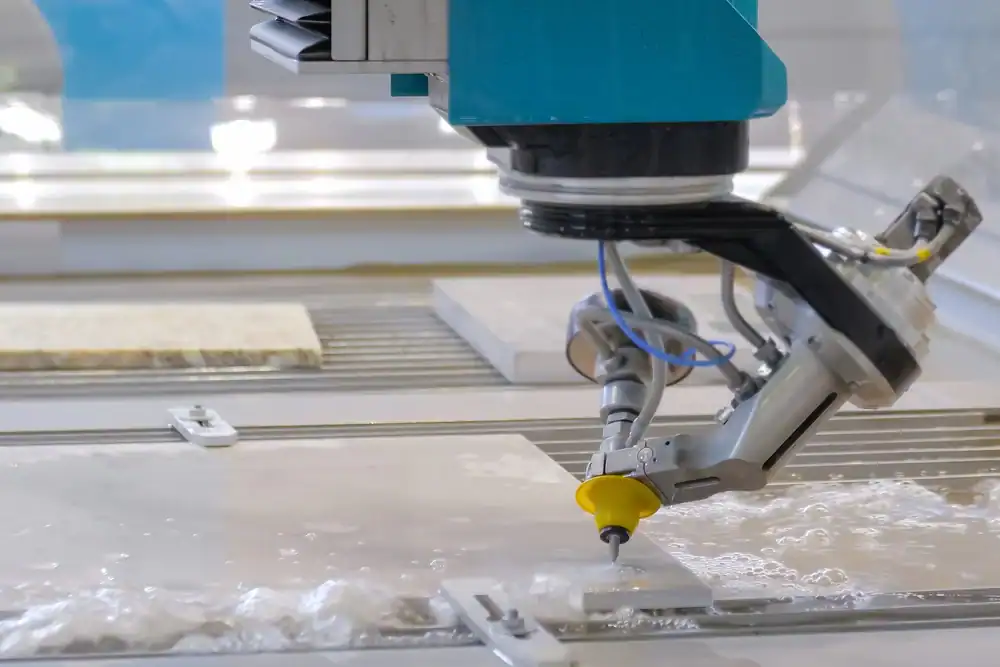
Waterjet doesn’t create a heat-affected zone. When you cut metal with laser or plasma, you’re melting through the material, which changes the metallurgy at the cut edge. That creates hardness variations, potential for hot cracking, and often requires grinding to remove slag or oxide buildup.
With waterjet cutting services, the material stays cold throughout the process. You can cut right up to a bend line without worrying about heat distortion affecting your forming operations later. If you’re welding near the cut edge, you’re not dealing with hardened material that makes your welder’s job harder or creates brittle zones in the heat-affected area.
The practical difference shows up in your labor costs. Parts that would need deburring, grinding, or secondary machining after thermal cutting typically go straight to the next operation after waterjet. For production runs, that time savings adds up quickly. For one-off custom work, it means you’re not building in extra hours for cleanup that shouldn’t be necessary.
Standard waterjet cutting holds ±0.005″ on most materials under 2″ thick. For parts requiring tighter specs, we can achieve ±0.001″ with dynamic waterjet technology that compensates for stream lag during direction changes. That’s tight enough for most mechanical assemblies, tooling applications, and precision fabrication work.
The tolerance you need depends on your application. If you’re cutting architectural panels where aesthetics matter more than mechanical fit, standard tolerances work fine and cost less. If you’re making parts that mate with existing components or require specific clearances, we’ll discuss your actual requirements and recommend the appropriate cutting approach.
Material thickness, hardness, and edge quality requirements all factor into achievable tolerances. Thicker materials and harder alloys require slower cutting speeds to maintain accuracy. We’ll walk through your specific application and give you realistic expectations based on what the technology can actually deliver for your material and thickness, not theoretical maximums that don’t account for real-world conditions.
If it’s not diamond, we can probably cut it. Waterjet handles metals from soft aluminum to hardened tool steel, stone from marble to granite, glass, ceramics, composites, rubber, plastics, and foam. The process doesn’t care about material hardness the way mechanical cutting does, and it doesn’t create the thermal stress that limits what you can cut with laser or plasma.
For custom waterjet cutting in Seaford, NY, that material flexibility matters because local projects vary widely. One week we’re cutting stainless steel for a commercial kitchen installation, the next we’re handling stone inlays for a residential renovation, then switching to titanium components for an aerospace prototype. You’re not limited by what our equipment can handle.
The only real limitation is material thickness versus cutting speed. We can cut 6″ thick steel, but it’s slow. For most applications under 4″ thick, cutting speeds stay practical and cost-effective. If you’re working with exotic materials, brittle substrates that would crack under mechanical stress, or composites that delaminate with heat, waterjet often becomes the only viable cutting method rather than just a preferred one.
Simple cuts on standard materials typically ship within 2-3 business days. Complex parts, thick materials, or large production runs take longer, but we’ll give you a realistic timeline upfront based on your specific job requirements and our current queue.
Waterjet cutting runs significantly faster than wire EDM for profile cuts—often 10 times faster for the same part. That speed advantage matters when you’re on a tight deadline. The lack of required secondary operations also compresses your total timeline. Parts that would need deburring, grinding, or finishing after other cutting methods go straight to your next operation.
For Seaford contractors and manufacturers working on time-sensitive projects, we prioritize clear communication about lead times. If your timeline is tight, we’ll tell you immediately whether we can hit it or not. Rush services are available when you’re genuinely up against a deadline, but we don’t artificially inflate normal lead times just to make rush fees look attractive. You get honest scheduling based on the actual work required.
Waterjet cutting typically runs $30-35 per hour for machine time, plus material and abrasive costs. For simple parts in thin material, that might be more expensive than plasma or laser. For complex parts, thick materials, or applications where heat distortion would create problems, waterjet often costs less overall because you’re eliminating secondary operations.
The real cost comparison includes what happens after cutting. If a laser-cut part needs grinding to remove heat-affected zones, deburring to clean up slag, or stress-relieving to prevent warping, those operations add labor and time. Waterjet parts typically skip those steps entirely, which changes the total cost equation significantly.
For production runs, we can provide detailed quotes that break down material usage, cutting time, and any finishing requirements. For custom one-off work, we’ll estimate based on your design complexity and material. The narrow kerf width of waterjet cutting also reduces material waste, which matters when you’re working with expensive alloys or trying to maximize yield from sheet stock. You’re paying for precision, but you’re also avoiding the hidden costs that come with cutting methods that create problems downstream.
Yes, and it’s often the most valuable part of the service. Many customers come in with a design that would work but isn’t optimized for waterjet cutting. Small changes to hole placement, corner radii, or part nesting can significantly reduce cutting time and material waste without affecting the part’s function.
We’ll review your design files and flag potential issues before cutting starts. If your tolerances are tighter than necessary for the application, we’ll discuss where you can open them up to reduce costs. If your part geometry would benefit from design modifications that make fabrication easier, we’ll suggest those changes. The goal is getting you functional parts at the lowest reasonable cost, not maximizing our cutting time.
For architects and contractors in Seaford working on custom installations, this consultation often prevents expensive mistakes. We’ve seen designs that would have created assembly problems, material selections that wouldn’t perform as expected, and tolerance specifications that would have driven costs up without improving the final result. A 15-minute conversation before cutting starts saves hours of rework and frustration later. That’s just practical business, not premium service.
Useful Links
Other Services we provide in Seaford