Hear from Our Customers
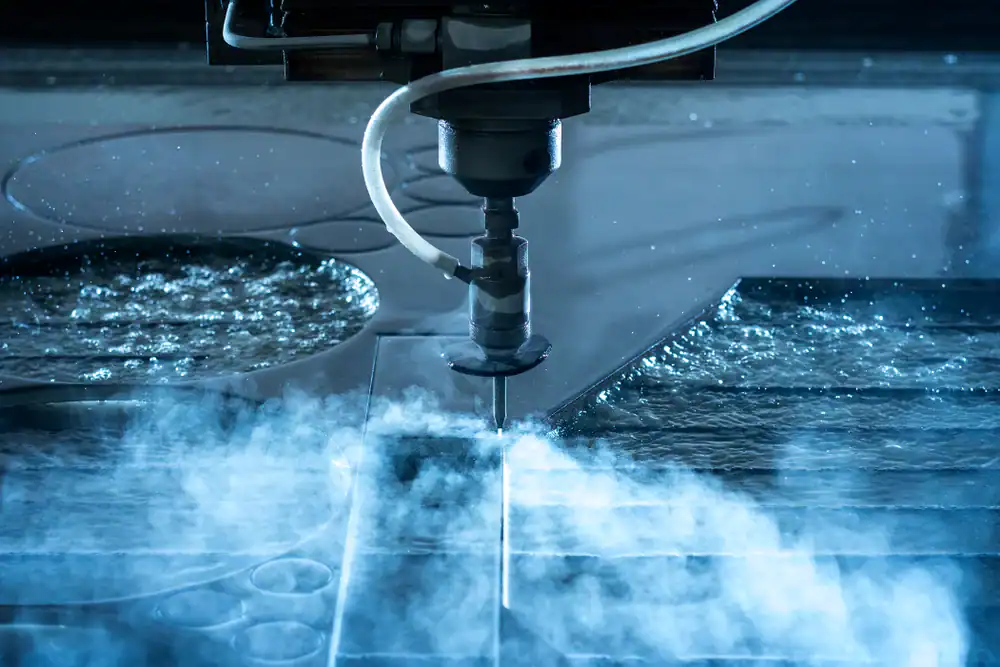
You’re looking at cuts that hold tolerances most shops can’t touch. Abrasive waterjet cutting in Selden, NY means materials up to 12 inches thick get shaped exactly how you need them—whether that’s aluminum for aerospace components, carbon fiber for performance parts, or stainless steel for architectural elements.
The process uses pressurized water mixed with abrasive garnet, reaching up to 87,000 psi. That stream cuts through your material without generating heat, which means zero thermal distortion and no hardened edges that need secondary finishing. You skip the deburring. You skip the stress relieving. You get parts ready to use.
For manufacturers and fabricators in Suffolk County dealing with complex geometries or expensive materials, this matters. Less waste means your material costs stay predictable. Faster turnaround means your production schedule doesn’t slip when you need custom parts. And when you’re working with composites or layered materials that other cutting methods would delaminate, waterjet keeps everything intact.
We operate four Flow waterjet systems in Selden, NY, including the Mach500—the most advanced waterjet platform currently available. We’re ISO9001 and AS9100d certified, ITAR compliant, and we’ve been cutting parts for manufacturers across Long Island, NY and the tri-state area for years.
Unlike shops that run waterjet as a side operation when their main equipment isn’t busy, this is what we do. Every day. That focus shows up in how quickly we turn quotes around and how consistently parts come out right the first time.
You’ll work directly with people who understand both traditional machining and waterjet technology. That background matters when you’re trying to figure out if waterjet is the right process for your application, or when you need recommendations on material selection for a new design. We’ve cut parts for companies ranging from knife manufacturers to fashion brands to Port Authority projects—different industries, same expectation for precision.
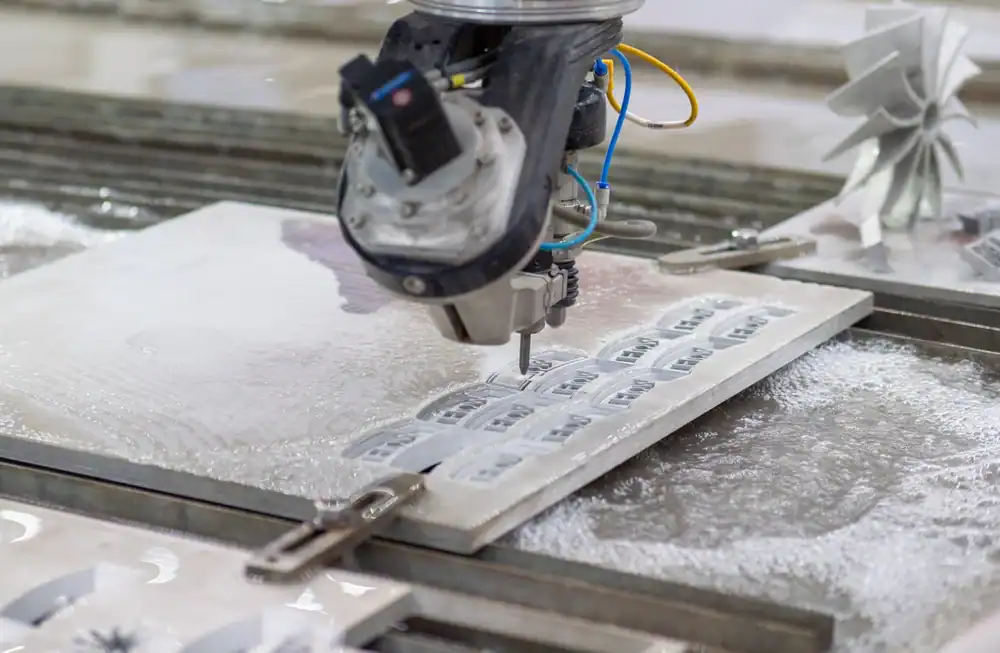
You send us your design file—DXF, DWG, or most CAD formats work. If you don’t have a finished design yet, we can help with that part too. We’ll review what you’re trying to accomplish, discuss material options if you’re undecided, and give you a clear quote with realistic timing.
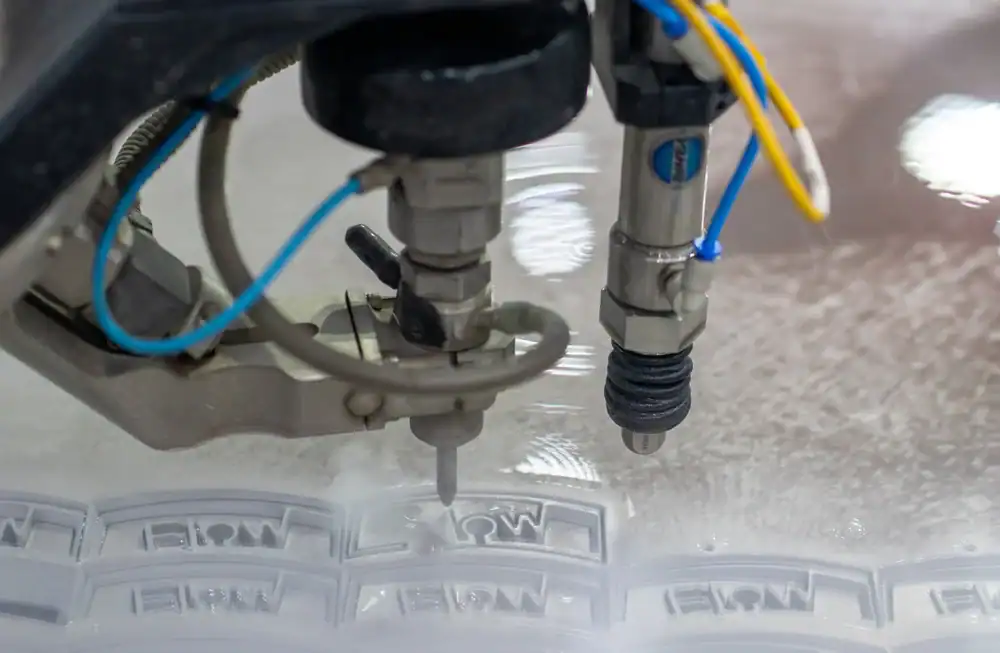
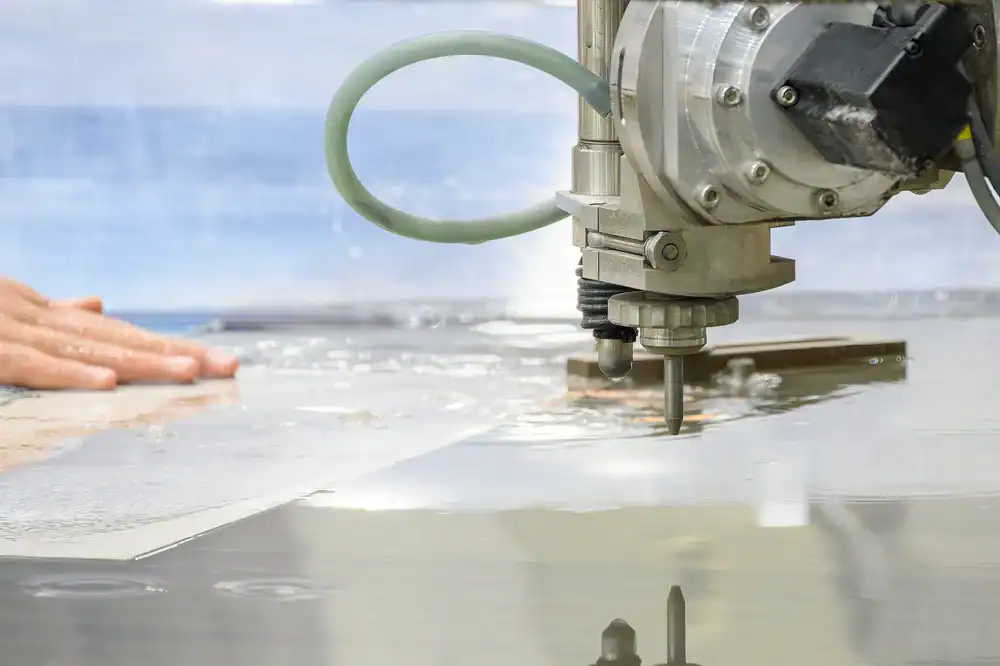
Once you approve, your job gets programmed into our CNC waterjet systems. The machine positions your material, and the cutting head follows the programmed path while water and garnet abrasive do the actual cutting. For intricate shapes or tight inside corners, the stream diameter is roughly the width of a human hair. For faster cutting on simpler shapes, we adjust pressure and speed to optimize your cost.
Most projects in Selden, NY ship within days, not weeks. If you’re dealing with an emergency breakdown or unexpected production need, we can prioritize rush work. You’ll get parts that are ready to install or assemble—clean edges, accurate dimensions, no heat-affected zones that compromise material properties. If secondary operations like drilling or countersinking make sense, we can handle that too before parts leave our shop.
Ready to get started?
Custom waterjet cutting services in Selden, NY cover materials most other processes struggle with. Metals like aluminum, stainless steel, titanium, and tool steel. Composites including carbon fiber and G-10. Plastics, glass, ceramics, stone, rubber, foam, and wood. If you’re not sure whether waterjet works for your specific material, ask—we’ve probably cut it before.
Thickness capacity goes up to 12 inches, though optimal cutting speed and edge quality vary based on material hardness and your tolerance requirements. For Long Island, NY manufacturers working on prototypes, we can cut single pieces economically. For production runs, our four-machine capacity means we’re not creating bottlenecks in your supply chain.
The Suffolk County manufacturing sector includes everything from aerospace suppliers to custom fabricators to architectural metalwork shops. That diversity means projects here demand different capabilities—sometimes it’s about speed, sometimes it’s about holding ±0.005″ tolerances on hardened steel, sometimes it’s about cutting patterns in materials that would crack under traditional methods. Waterjet handles that range because the process is fundamentally flexible. Pressure adjusts. Cutting speed adjusts. Abrasive flow adjusts. You get what your application actually needs instead of compromising around equipment limitations.
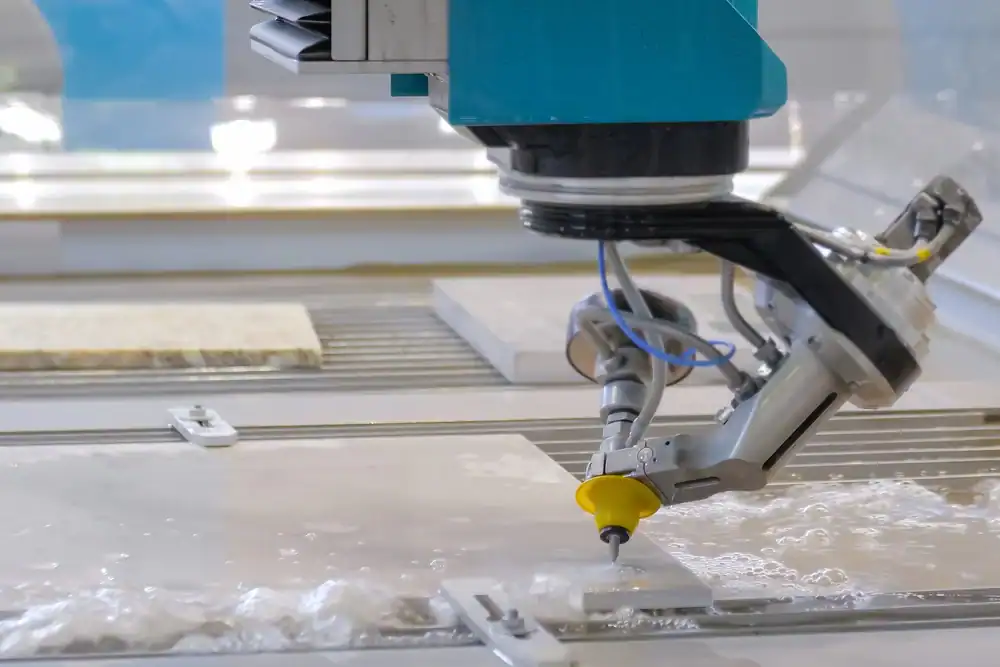
Waterjet excels with materials that react poorly to heat or mechanical stress. Tempered glass cuts cleanly without shattering. Composites like carbon fiber stay intact without delamination between layers. Titanium and hardened tool steels get shaped without work hardening the edges.
The cold cutting process also works for materials with wildly different hardness levels in the same part. If you’re cutting a component that combines metal and plastic, or stone with metal inlays, waterjet handles both materials in one setup. Traditional methods would require multiple operations and fixtures.
Thick materials are another area where waterjet outperforms alternatives. Cutting 6-inch aluminum plate with a laser creates heat problems and dross. Plasma leaves rough edges that need extensive finishing. Waterjet cuts straight through with minimal taper and edges that often need no secondary work. For Selden, NY manufacturers working with heavy plate or structural components, that capability saves time and preserves material properties.
Laser cutting is faster on thin materials—under a quarter inch, laser typically wins on speed. But laser generates significant heat, which creates a heat-affected zone along every cut edge. That zone changes the material’s metallurgical properties, potentially causing warping on thin sheets or brittleness on hardened metals.
Waterjet produces no heat-affected zone. Your material’s properties stay consistent right up to the cut edge. For precision parts where dimensional stability matters, or for materials that are already heat-treated, that’s critical. Laser also struggles with reflective materials like aluminum and copper, where the beam can reflect unpredictably. Waterjet cuts them without issue.
Thickness is the other major difference. Most laser systems top out around one inch on steel, and edge quality degrades as thickness increases. Waterjet in Selden, NY cuts up to 12 inches with consistent quality. If your project involves plate thicker than half an inch, or if you’re working with materials that can’t tolerate heat, waterjet is usually the better process.
Standard waterjet cutting holds ±0.005″ on most materials, which covers the majority of mechanical component tolerances. For applications requiring tighter precision, dynamic waterjet technology compensates for stream lag and taper in real-time, achieving ±0.001″ on suitable materials and thicknesses.
Accuracy depends on several factors: material thickness, material hardness, cutting speed, and whether you’re measuring at the top surface or bottom of the cut. Thicker materials naturally have more taper—the cut edge isn’t perfectly perpendicular, though the angle is typically under 1 degree. For parts where that matters, we can program taper compensation or recommend cutting orientation that puts the tighter tolerance on the critical surface.
The CNC control on our Flow systems in Selden, NY maintains consistent positioning throughout the cut. Unlike manual processes or older equipment, there’s no accumulated error as the cut progresses. For manufacturers producing parts that mate with other components or require specific fit tolerances, that repeatability means every part in a production run matches the first one.
Most projects ship within 3-5 business days from approval. Simple cuts on common materials can often turn around faster. Complex parts with intricate geometries, very thick materials, or large production quantities take longer—we’ll give you realistic timing upfront so you can plan accordingly.
Rush service is available when you’re dealing with equipment breakdowns or unexpected production needs. We’ve handled emergency jobs that shipped same-day or next-day for Suffolk County manufacturers who couldn’t afford downtime. That flexibility comes from having four waterjet systems and focusing exclusively on cutting services rather than juggling waterjet around other operations.
Lead time also depends on material availability. If you’re supplying the material, we can start as soon as it arrives and we’ve programmed your job. If we’re sourcing material, add time for procurement—though we stock common metals and can often source specialty materials locally on Long Island, NY. For production runs or repeat orders, we can schedule your jobs in advance to guarantee delivery dates that align with your assembly or shipping schedule.
Waterjet produces minimal waste compared to other cutting methods. The cutting stream is thin—typically 0.030″ to 0.040″ wide—so the kerf (material removed during cutting) is small. For expensive materials like titanium or specialty composites, that narrow kerf directly reduces your material cost per part.
Nesting software optimizes how parts are arranged on your material sheet or plate, fitting pieces together efficiently to maximize yield. On a typical job, you’re looking at 80-90% material utilization depending on part geometry. The scrap that does come off is clean—no oil contamination, no burned edges, no hazardous residues. Metal scrap is fully recyclable.
The process itself is environmentally clean. No toxic fumes, no smoke, no hazardous dust. The water is recycled through filtration systems, and the garnet abrasive is inert. For manufacturers in Selden, NY dealing with environmental compliance or workplace safety requirements, waterjet cutting doesn’t add regulatory complications. You’re not managing fume extraction systems or disposing of contaminated cutting fluids.
Yes, and that’s one of the process’s major advantages. There are no hard tooling costs—no dies to build, no custom fixtures required for basic cutting. That makes waterjet economical even for single prototype parts. You can test a design, make revisions, and cut updated versions without the financial penalty that comes with retooling for stamping or other processes.
For production runs, our four-machine capacity in Selden, NY means we can handle volume without creating bottlenecks. Setup time between parts is minimal since it’s just a program change, not a physical tool change. If you need 500 parts, we can run them efficiently. If you need 5,000, we’ll discuss scheduling that keeps your production line supplied without requiring you to take delivery of the entire order at once.
The flexibility extends to design changes mid-production. If you discover an improvement or need to accommodate a specification change, updating the cutting program is straightforward. For Long Island, NY manufacturers working in industries where designs evolve or where you’re producing custom variations of a base part, that adaptability prevents the rigidity that comes with traditional manufacturing processes locked into fixed tooling.
Useful Links
Other Services we provide in Selden