
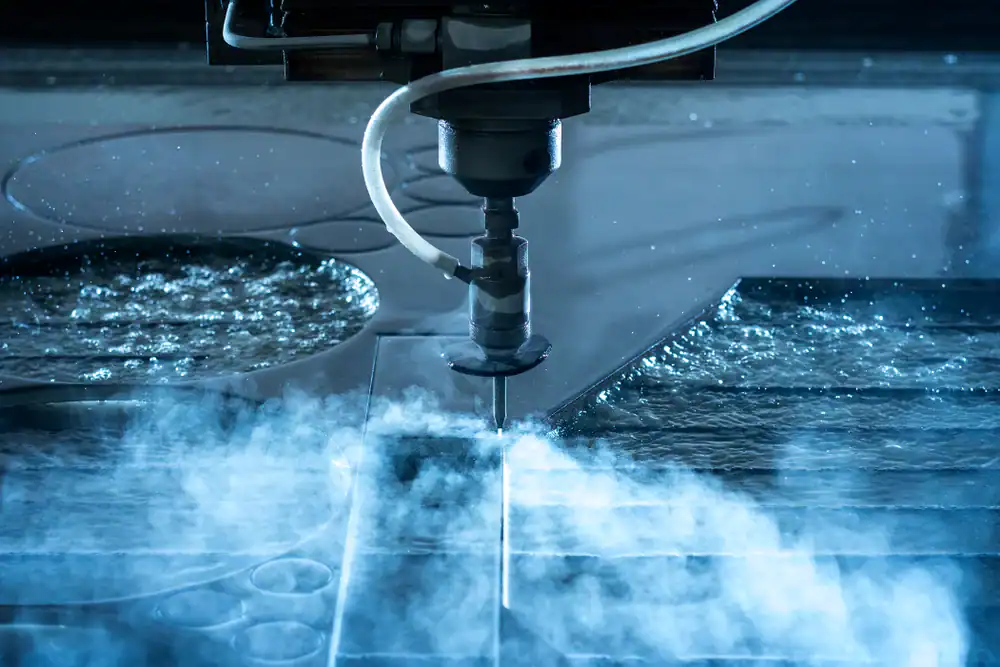
Hear from Our Customers
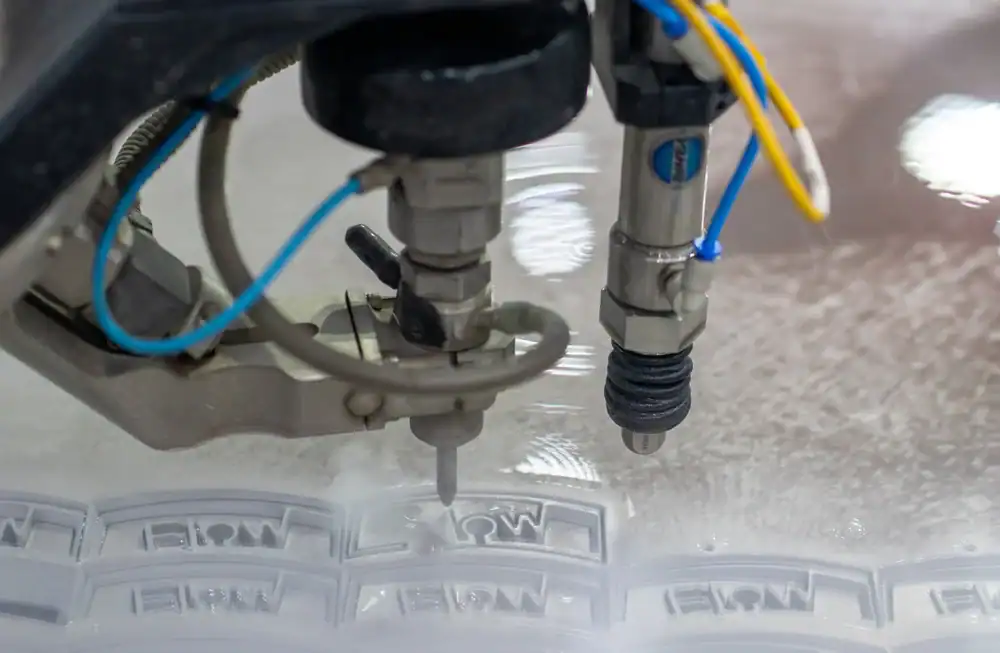
When your design calls for intricate geometry or tight tolerances, traditional cutting methods create problems. Heat warps metal. Blades leave rough edges. Tools break on hard materials like titanium or stone.
Waterjet cutting in Southampton, NY solves that. High pressure water cutting uses abrasive particles to slice through materials without generating heat. Your parts maintain their hardness, structure, and dimensional accuracy.
You get smooth edges on stainless steel, clean cuts through 10-inch thick materials, and the ability to create shapes that would be impossible with saws or lasers. From architectural medallions to aerospace components, the cut quality stays consistent whether you’re running one prototype or a full production batch.
No heat-affected zones. No material stress. No secondary finishing operations eating into your timeline.
Southampton’s manufacturing landscape demands precision. With aerospace facilities like GE Aviation nearby and fabrication shops throughout the area, you need a waterjet cutting shop that understands tight tolerances and fast turnarounds.
We serve Southampton, NY with in-house design review and CAD integration. We catch file issues before they become costly mistakes. Our team reviews your DXF, DWG, STEP, or IGES files to verify dimensions, check for programming conflicts, and ensure your parts fit right the first time.
You’re not sending files into a black box. You’re working with people who understand what happens when a part is off by a few thousandths—and how to prevent it.
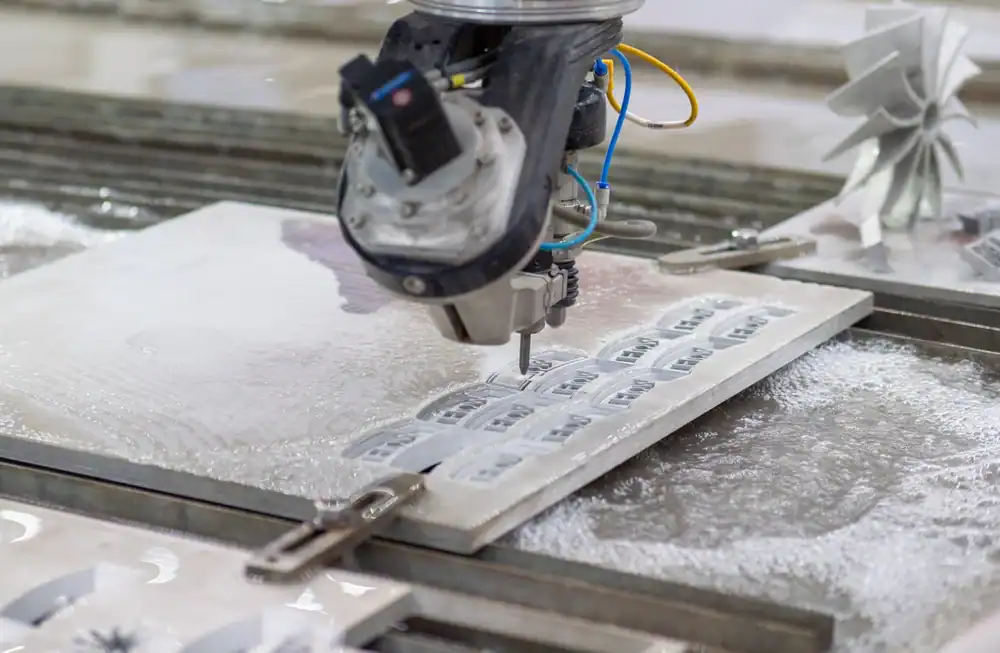
You send us your CAD file. Our design team reviews it for any issues—missing dimensions, incompatible formats, or geometry that could cause problems during cutting. If we spot something, we reach out before programming begins.
Once your file is verified, we program the waterjet system. The cutting head follows your exact specifications, using high pressure water mixed with abrasive garnet to slice through your material. We can adjust cutting speed mid-job to achieve different edge qualities on the same part.
For thicker materials or tighter tolerances, we use multiple passes. For faster production runs, we optimize the path to reduce cycle time. You get parts that match your specs, whether that’s a Q5 finish with tolerances under +/- 0.005″ or a faster cut for less critical applications.
After cutting, we inspect dimensions and edges. If you need secondary operations like deburring or finishing, we handle that too. Otherwise, your parts are ready to ship.
Ready to get started?
Our waterjet cutting services in Southampton, NY handle aluminum, stainless steel, titanium, Inconel, brass, bronze, and cast iron. We also cut glass, stone, ceramics, and composites—materials that would crack, melt, or chip with other methods.
Thickness capacity ranges from 0.010″ acrylic to 10″ stainless steel. If your design includes multiple materials or varying thicknesses, we can program different cutting parameters for each section of the same job.
Southampton’s proximity to aerospace and marine industries means you often need materials that resist corrosion or handle extreme conditions. Waterjet cutting doesn’t alter material properties. Duplex steel maintains its corrosion resistance. Titanium keeps its strength-to-weight ratio. Inconel retains its heat resistance.
You also avoid the waste that comes with traditional cutting. Waterjet cutting in Southampton, NY reduces material waste by up to 30% compared to mechanical methods. Tighter nesting, narrower kerf width, and the ability to cut closer to edges mean you get more parts from each sheet.
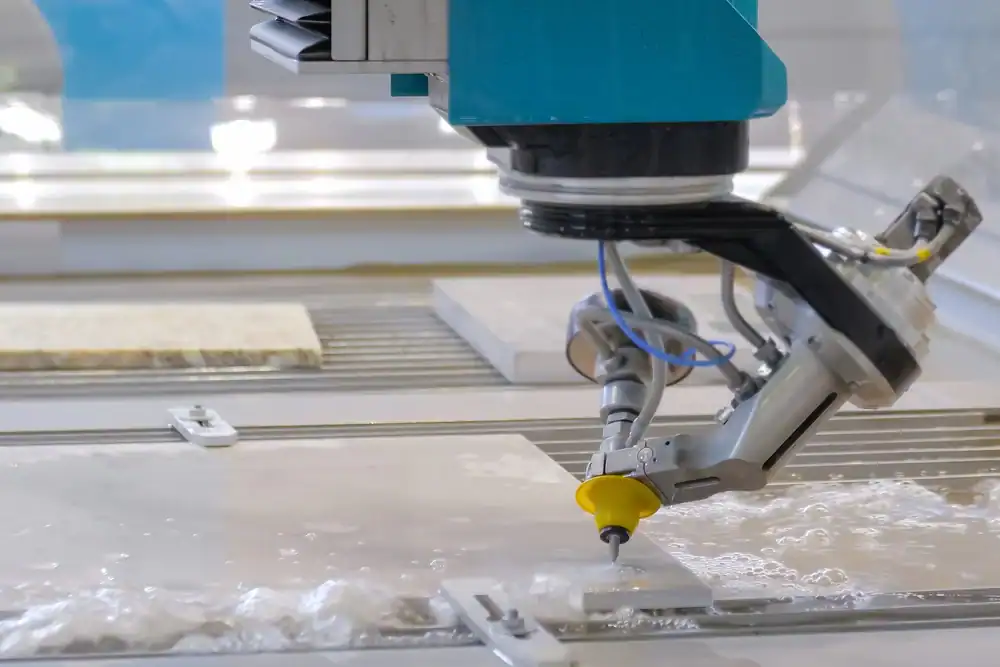
We cut metals, glass, stone, ceramics, and composites. That includes aluminum, stainless steel, titanium, Inconel, brass, bronze, copper, cast iron, and duplex steel on the metal side.
For non-metals, we handle glass, granite, marble, quartz, porcelain tile, carbon fiber, fiberglass, and various plastics. If you’re working with a material that’s too hard for traditional cutting, too brittle for machining, or too heat-sensitive for lasers, waterjet cutting usually works.
The process doesn’t generate heat, so materials that would warp, melt, or lose their temper stay structurally sound. That matters when you’re cutting aerospace alloys, hardened tool steel, or composite laminates where delamination is a concern.
Standard waterjet cutting achieves tolerances around +/- 0.005″. With our Q5 finish and optimized cutting parameters, we can hold even tighter specs on critical dimensions.
Accuracy depends on material thickness, hardness, and edge quality requirements. Thinner materials and slower cutting speeds produce tighter tolerances. Thicker materials or faster production cuts trade some precision for speed, but we’re still talking about tolerances that beat most mechanical cutting methods.
Before we cut, our design team reviews your file to identify dimensions that need special attention. We adjust feed rates, abrasive flow, and water pressure to hit your specs. If a tolerance is critical to fit or function, tell us upfront—we’ll program accordingly and verify with post-cut inspection.
Turnaround depends on material availability, job complexity, and current queue. Simple cuts on common materials often ship within a few days. Complex jobs with multiple materials or tight tolerances take longer.
We prioritize file review and programming to catch issues early. If there’s a problem with your CAD file, you’ll know within 24 hours—not after we’ve already started cutting. That prevents delays caused by rework or scrapped parts.
For urgent jobs, tell us your deadline upfront. We can often accommodate rush requests by adjusting our schedule or running jobs outside normal hours. Southampton’s location makes us accessible for quick pickups if you need parts immediately.
Send us DXF, DWG, STEP, or IGES files. We prefer vector files with clean geometry—no overlapping lines, duplicate entities, or unclosed shapes.
Include dimensions for critical features and note any tolerance requirements. If certain edges need a specific finish quality, mark those in your file or mention them when you submit the job. That helps us program the right cutting parameters from the start.
Our design team reviews every file before programming. We check for issues like tiny gaps that could cause the cutting head to jump, geometry that’s too complex for efficient pathing, or features that are too small to cut cleanly. If we find something, we’ll contact you with suggestions. Most file issues take minutes to fix, but catching them early saves hours of production time.
Waterjet cutting doesn’t generate heat. Laser cutting melts material, which creates a heat-affected zone that can warp thin metals, alter hardness, or discolor edges. If you’re cutting stainless steel, titanium, or materials where heat distortion ruins dimensional accuracy, waterjet is the better choice.
Waterjet also cuts thicker materials. Most lasers top out around 1″ on steel. Waterjet handles up to 10″ thick stainless without issue. For stone, glass, or composites, lasers either don’t work at all or produce poor edge quality.
The tradeoff is speed. Lasers cut thin metals faster than waterjet. If you’re running high-volume production on sheet metal under 1/4″ thick and heat distortion isn’t a concern, laser might be more cost-effective. But for thicker materials, tight tolerances, or heat-sensitive applications, waterjet cutting in Southampton, NY delivers results that lasers can’t match.
Waterjet cutting typically runs $12-35 per hour depending on material, thickness, and edge quality requirements. That’s competitive with CNC machining and often cheaper than EDM for complex shapes.
The real cost comparison includes secondary operations. Waterjet produces clean edges that often don’t need deburring, grinding, or finishing. Mechanical cutting leaves rough edges. Laser cutting creates dross that needs removal. Those extra steps add labor and time.
Material waste also factors in. Waterjet’s narrow kerf width and efficient nesting reduce scrap by up to 30% compared to saws or punches. On expensive materials like titanium or Inconel, that waste reduction can offset the per-hour cutting cost. You’re also avoiding tool wear—no blades to replace, no bits to sharpen, no consumables beyond abrasive and water.
Useful Links
Other Services we provide in Southampton