Hear from Our Customers
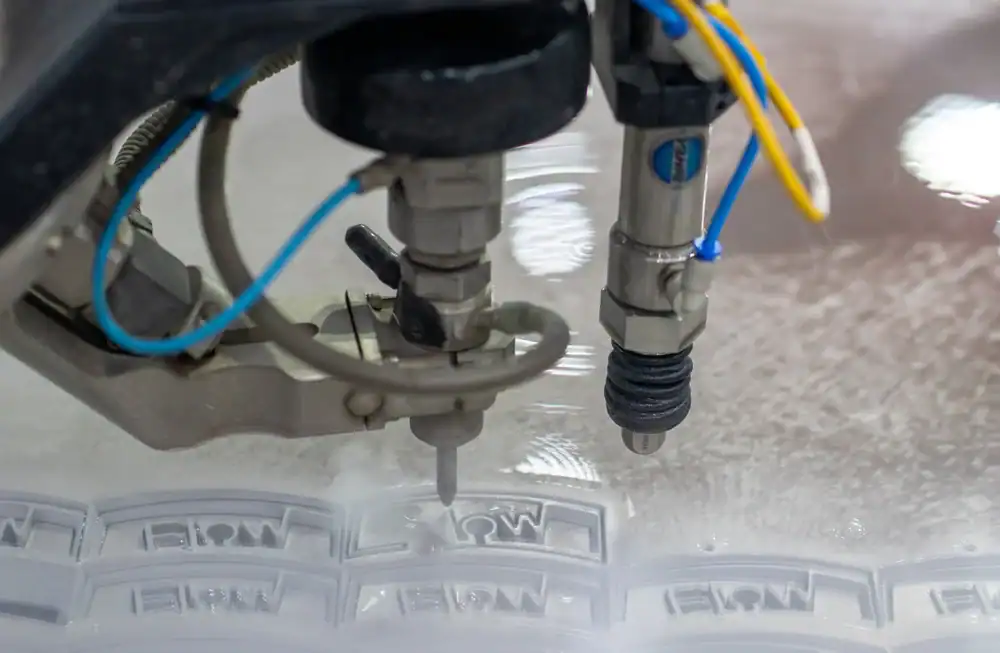
You don’t have time for do-overs. When you’re working with expensive materials or tight deadlines, every cut matters.
High pressure water cutting eliminates the problems that come with traditional methods. No heat means no warping in your steel or aluminum. No blade contact means no cracking in glass or stone. No toxic fumes means no ventilation headaches or environmental concerns.
What you get is a part that matches your specs down to ±0.003 inches. Clean edges that often don’t need deburring or finishing. Complex shapes that would be impossible or prohibitively expensive with other methods. And because the process is cold, your material properties stay intact—no hardening, no softening, no stress points that’ll fail later.
Whether you’re an architect specifying decorative metal panels, a contractor who needs custom brackets yesterday, or a manufacturer prototyping a new component, the outcome is the same: parts that fit, perform, and look exactly how you drew them.
We serve Syosset and the surrounding Long Island, NY area with the kind of precision cutting that doesn’t require you to become an expert first. You bring the design, we handle the execution.
Our background spans traditional machining and modern CNC waterjet technology. That combination matters when you’re trying to figure out if your design is even feasible, or which material will actually work for your application. We’ve completed projects for everyone from high-end fashion brands to industrial fabricators throughout Nassau County.
Being local to Syosset means faster turnaround when you’re in a bind. It means you can stop by to discuss material options before committing to a full run. And it means we understand the specific demands of Long Island, NY contractors, architects, and manufacturers who can’t afford to wait three weeks for parts.
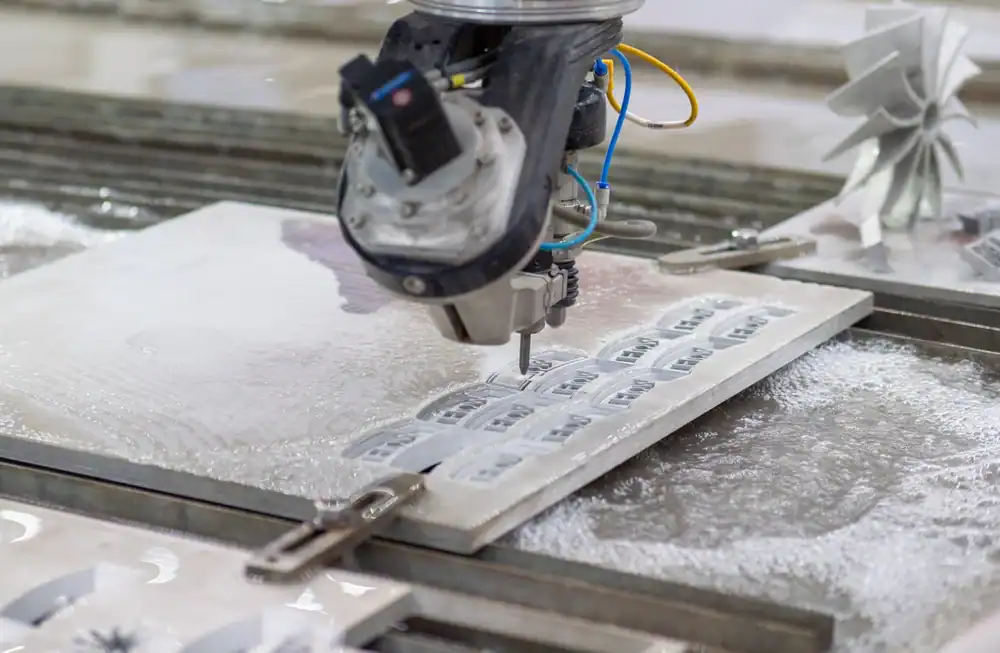
The process starts with your design. Send us a CAD file, a sketch, or even just dimensions and material specs. If you’re not sure what’s possible, that’s fine—we’ll walk through what works and what doesn’t before any cutting happens.
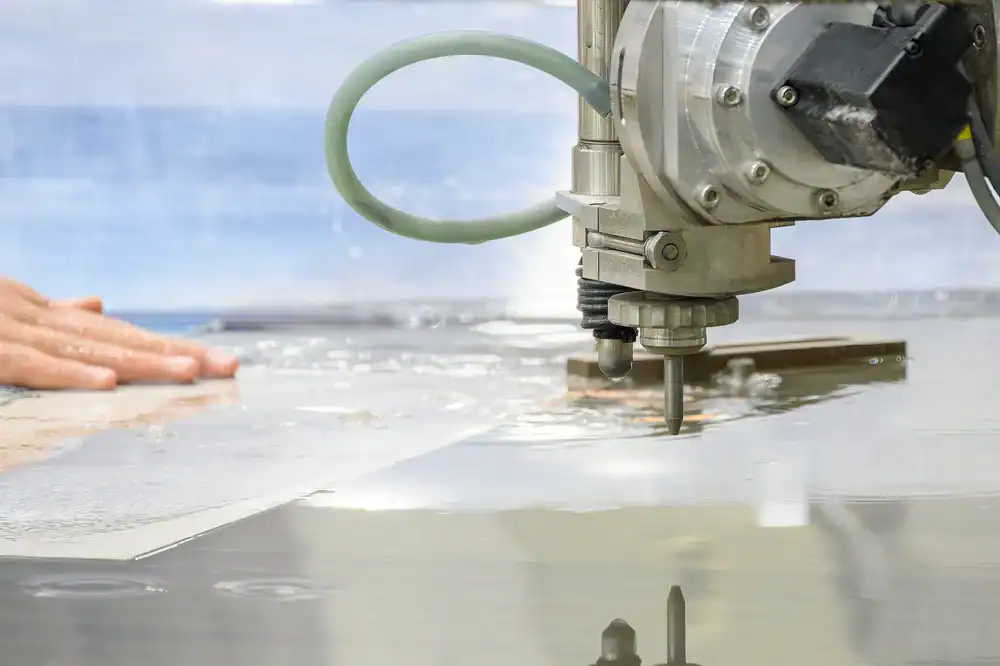
Once the design is locked in, we program the CNC waterjet system. For softer materials like rubber, foam, or plastics, pure water under extreme pressure does the job. For harder materials—steel, aluminum, titanium, glass, stone, ceramics—we add an abrasive garnet to the water stream. That’s what gives us the ability to cut through six inches of steel or create intricate patterns in granite.
The actual cutting is precise and fast. The waterjet follows your design exactly, making cuts that would take hours with traditional methods. Because there’s no heat, there’s no warped material to flatten afterward. Because the stream is thin, there’s minimal material waste.
After cutting, most parts are ready to use immediately. Edges are clean and burr-free. If your application requires it, we can discuss secondary finishing, but in many cases, the waterjet cut is the final step. You get your parts, they fit, and you move forward with your project.
Ready to get started?
Custom waterjet cutting in Syosset means more than just running your part through a machine. You get material consultation upfront—what thickness will work, what won’t, and why. You get design review to catch issues before they become expensive mistakes.
The cutting itself handles virtually any material you can source. Metals like steel, stainless, aluminum, copper, brass, and titanium. Stone and tile for architectural applications. Glass and ceramics for decorative work. Plastics, composites, rubber, and foam for industrial components. If you can get it to our shop, we can probably cut it.
Long Island, NY’s construction and design industries have specific needs that differ from other regions. Coastal projects require corrosion-resistant materials. Historic renovation work demands precision cuts that match existing architecture. High-end residential and commercial projects need flawless finishes because the work is visible. Our waterjet cutting services in Syosset address these local demands with the precision and material versatility that keeps projects moving.
Turnaround depends on complexity and queue, but we handle both one-off prototypes and production runs. You’re not locked into minimum quantities, and you’re not waiting weeks for a simple part.
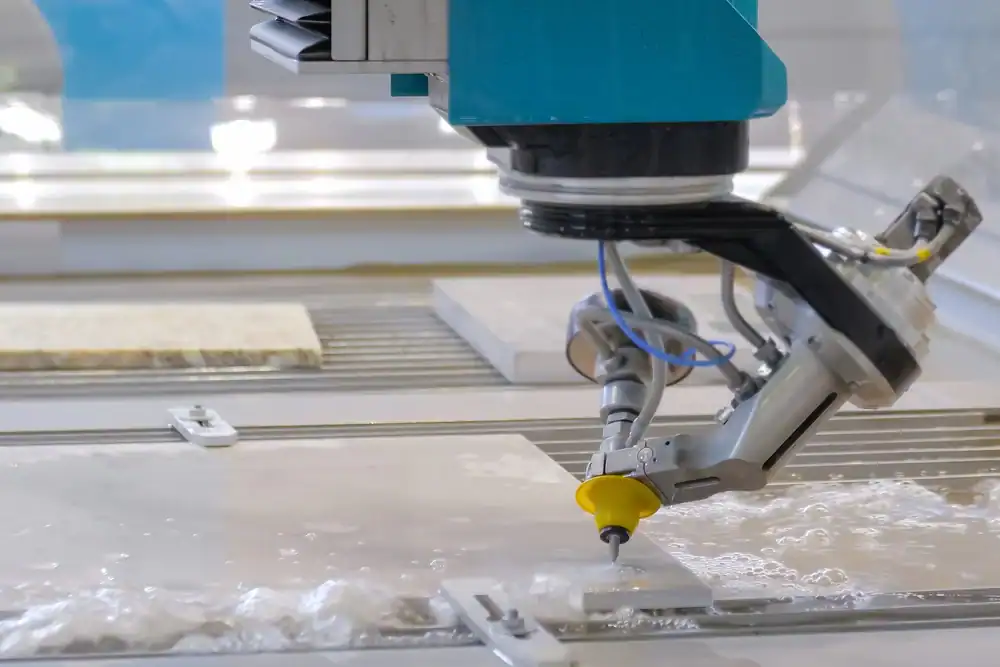
Waterjet cutting works on materials that would crack, melt, or warp with laser or plasma cutting. Glass and stone are perfect examples—try cutting intricate patterns in granite with a saw and you’ll spend hours on edge finishing. Waterjet gives you clean cuts without fracturing.
Heat-sensitive plastics and composites are another area where waterjet excels. Laser cutting can melt edges or create toxic fumes with certain plastics. Waterjet keeps everything cold, so you get clean edges without melting, discoloration, or hazardous smoke.
Thick materials are where waterjet really separates itself. Cutting through six inches of steel plate with a laser isn’t practical. With abrasive waterjet cutting in Syosset, it’s routine. Softer materials like thick rubber or foam can be cut up to 12 inches or more, which is nearly impossible with blade-based methods that compress and distort the material.
Waterjet cutting achieves tolerances down to ±0.003 inches, which puts it in the same range as many traditional machining operations. For most applications—brackets, panels, gaskets, architectural elements—that level of precision is more than sufficient.
The difference is in what you can cut and how quickly. Traditional machining requires tool changes, multiple setups, and often several passes to achieve complex shapes. Waterjet handles the same complexity in a single operation because the stream can follow any path your design requires.
Where waterjet really shines is in maintaining precision across different materials without retooling. Switching from aluminum to glass doesn’t require new cutting heads or recalibration. The same system that cuts your metal components can cut your stone inlays or plastic gaskets with the same accuracy. That consistency matters when you’re managing multi-material projects and can’t afford dimensional mismatches between components.
In most cases, no. The waterjet stream creates smooth, burr-free edges that are ready to use immediately. You’re not dealing with the rough edges that come from plasma cutting or the heat-affected zones from laser cutting that sometimes need grinding.
The edge quality depends partly on cutting speed. Slower cuts produce smoother edges. Faster cuts may have slight texture but still eliminate the sharp burrs that require hand finishing. For decorative or visible applications, we adjust the cutting parameters to deliver the edge quality your project demands.
There are applications where secondary finishing makes sense—if you need a polished edge on glass or stone for aesthetic reasons, or if you’re preparing surfaces for welding. But those are project-specific requirements, not limitations of the waterjet process itself. The baseline is that parts come off the machine ready for assembly or installation, which saves you time and labor costs compared to methods that require mandatory finishing steps.
Turnaround depends on project complexity, material availability, and current queue. Simple parts with standard materials can often be completed within a few days. More complex projects with intricate designs or specialty materials may take a week or two.
Being located in Syosset gives you an advantage if you’re working on Long Island, NY projects. You’re not waiting for parts to ship from across the country. If you need to adjust a design or add components mid-project, that conversation happens quickly because we’re local.
For time-sensitive projects, communication upfront makes the difference. If you’re clear about your deadline and flexible on scheduling—like dropping materials off early or picking up outside standard hours—we can usually accommodate tight timelines. Rush services are available when your project absolutely can’t wait. The key is reaching out as soon as you know you need custom cutting, not the day before you need the parts installed.
Yes. Waterjet cutting doesn’t require expensive tooling or setup costs like stamping or molding, which makes it economical for single prototypes. You can test a design, make revisions, and recut without the financial hit that comes with retooling traditional manufacturing processes.
For production runs, the CNC programming means repeatability. Once your design is dialed in, every subsequent part matches exactly. You’re not dealing with tool wear that gradually changes dimensions over a production run. The waterjet stream doesn’t dull or degrade, so part number one and part number one hundred are identical.
The flexibility extends to order quantities. You’re not locked into minimum runs to justify setup costs. If you need five parts now and fifty more next month, that works. If your production needs change and you need to adjust quantities or modify the design between runs, the programming updates quickly. That adaptability is particularly valuable for Long Island, NY manufacturers and contractors who deal with custom projects where quantities aren’t always predictable upfront.
Waterjet cutting costs more per hour than some traditional methods, but that’s not the full picture. You have to factor in what you’re not paying for—no secondary finishing labor, no scrapped parts from heat distortion, no expensive tooling for complex shapes.
For low-volume or custom work, waterjet is often more economical than alternatives. Laser cutting requires significant investment in equipment and has material limitations. Traditional machining involves tool costs, setup time, and often multiple operations to achieve what waterjet does in one pass. Stamping or punching requires custom dies that only make financial sense at high volumes.
The real cost comparison comes down to your specific project. If you’re cutting 10,000 identical simple shapes from thin sheet metal, stamping might be cheaper. If you’re cutting 50 complex parts from mixed materials with tight tolerances, waterjet likely saves you money overall. The material versatility alone eliminates the need to maintain relationships with multiple specialty cutting vendors. You’re getting architectural stone cuts, metal fabrication, and plastic components from one source, which simplifies your supply chain and reduces the administrative overhead of managing multiple suppliers.
Useful Links
Other Services we provide in Syosset