Hear from Our Customers
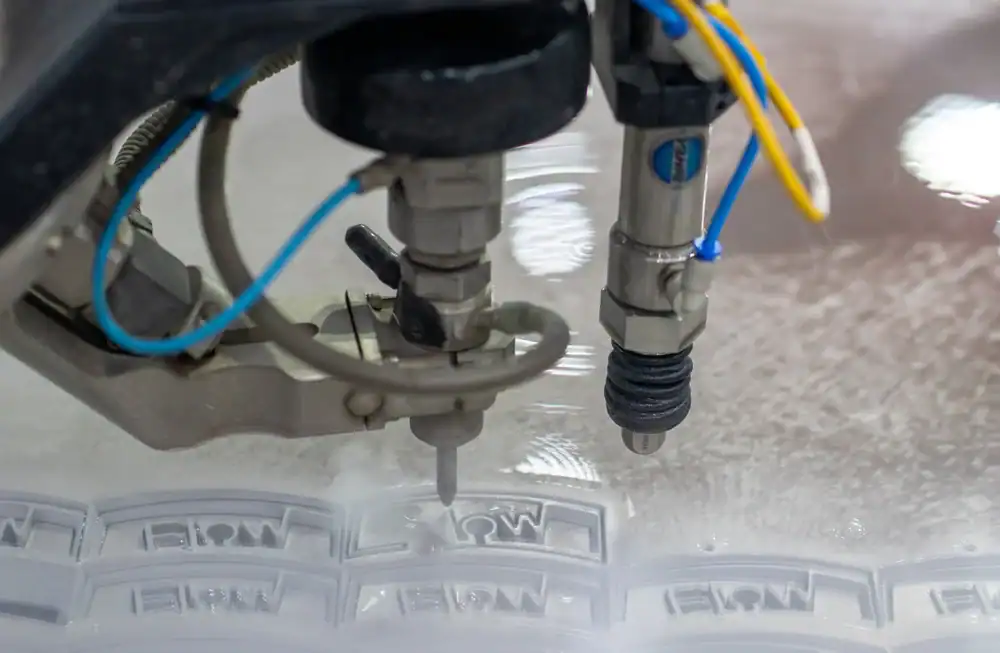
When you’re working with materials that can’t handle heat, traditional cutting methods create problems you didn’t have before. Warped edges. Hardened zones. Extra grinding and finishing work that eats into your timeline and budget.
Waterjet cutting in Valley Stream, NY eliminates those issues entirely. No heat means no material distortion, no hardened edges, and no secondary cleanup in most cases. You get parts that are ready to use, with tolerances down to +/- .005″ on metals like aluminum, stainless steel, copper, and brass.
The process works on an extreme range of materials. Ceramic, rubber as thin as 1/32″, acrylic, carbon fiber, wood, and steel up to six inches thick. One cutting method handles what would normally require multiple vendors and processes. That’s fewer delays, less coordination, and parts that actually fit the first time.
We operate out of West Islip, serving manufacturers, fabricators, contractors, architects, and designers across Valley Stream and the surrounding area. We’re not a national chain running automated quotes. We’re a local waterjet cutting shop that understands what you’re building and why precision matters.
Valley Stream’s industrial landscape includes nearly 30,000 square feet of manufacturing and warehouse space, with a business environment that the U.S. Conference of Mayors has recognized for supporting small manufacturers. You’re working in a competitive market where quality and turnaround time directly impact your reputation.
We provide custom waterjet cutting services with material consultation, so you’re not guessing whether your design will work. From concept through completion, you get straight answers about what’s possible, what’s practical, and how long it’ll actually take.
You send us your design specs and material requirements. We review the file, confirm tolerances, and let you know if there are any issues before we start cutting. If you’re still in the design phase, we can consult on material selection and cutting feasibility.
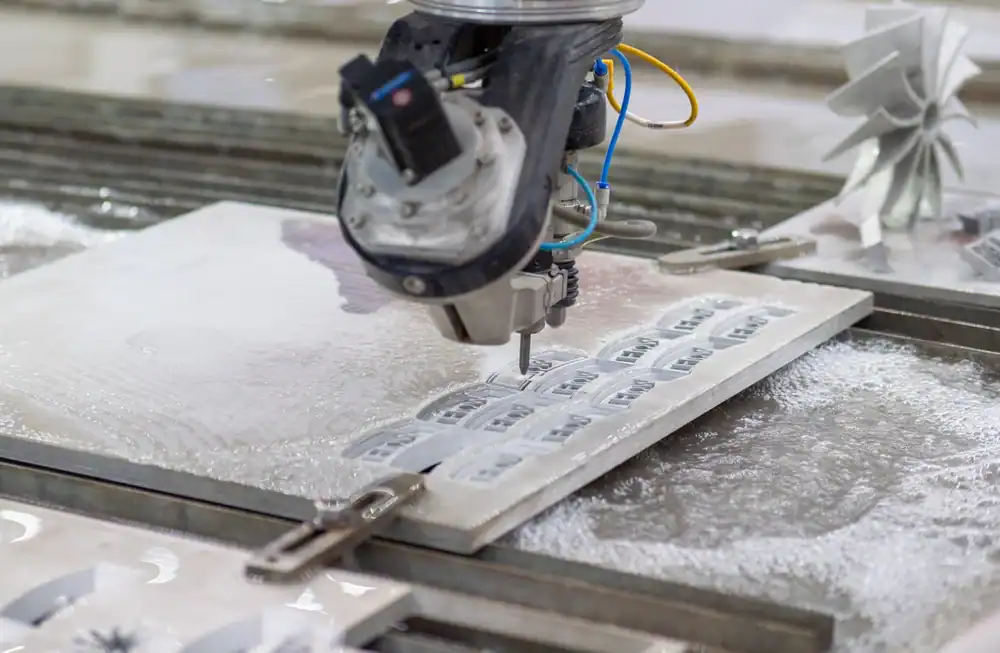
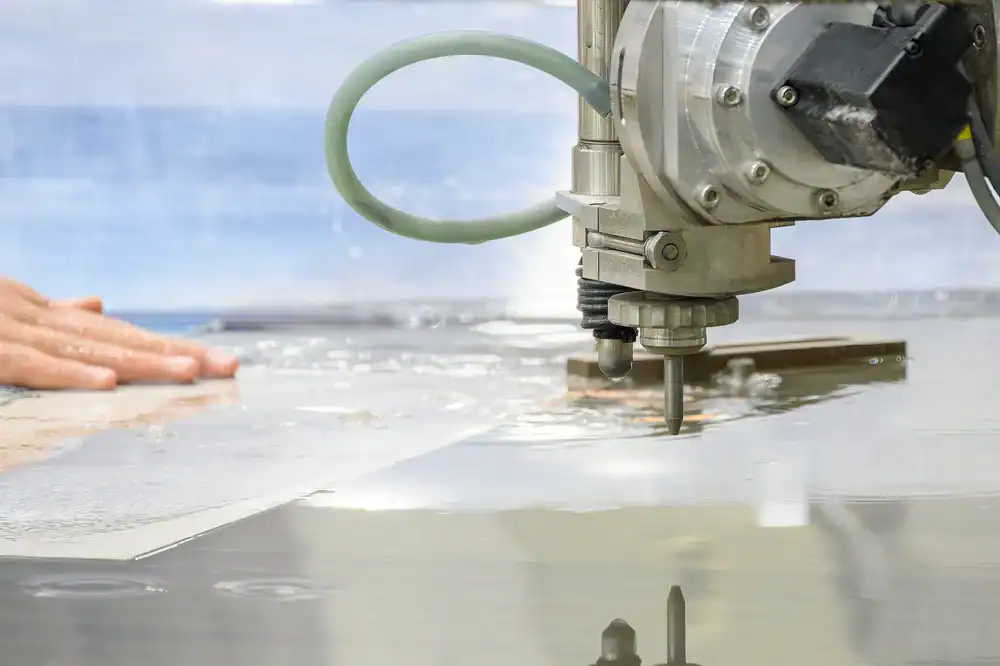
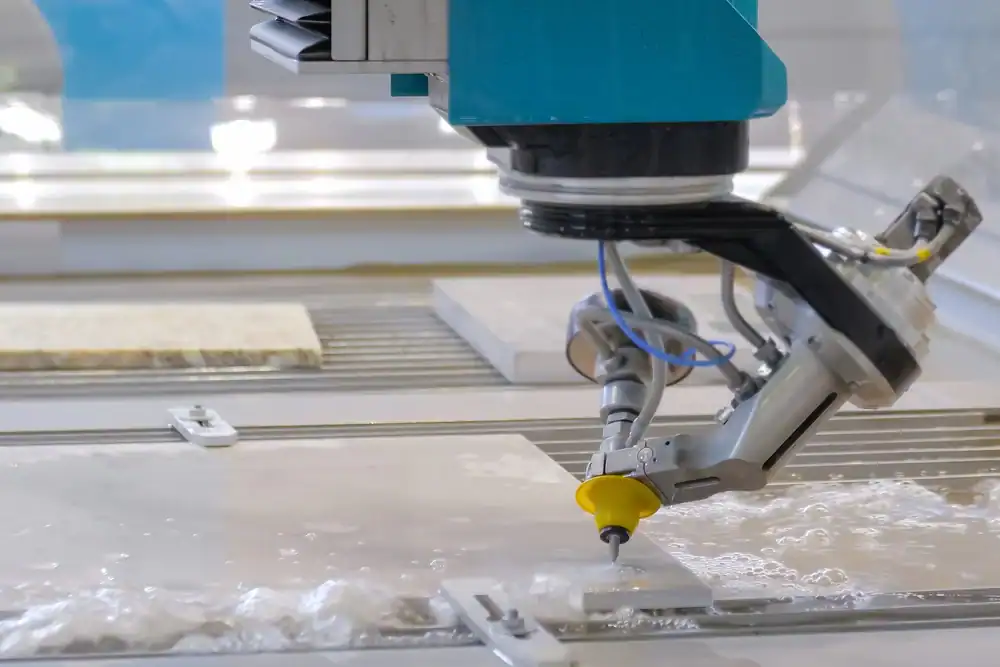
Once we have your approved design, we program the cut path into our CNC waterjet system. The machine uses 60,000 PSI water mixed with abrasive garnet to cut through your material. The stream is thinner than a credit card but cuts faster than wire EDM—often ten times faster for profile cuts.
Because there’s no heat involved, your material doesn’t warp, harden, or develop a heat-affected zone. The edges come out clean, often eliminating deburring or grinding. For most projects in Valley Stream, turnaround is two to three business days. You get parts that meet spec without the extra finishing work that slows down other cutting methods.
Ready to get started?
You get precision abrasive waterjet cutting with tolerances that meet or exceed most machining standards. We handle both simple profiles and complex geometries, including tight inside corners and intricate patterns that would be difficult or impossible with laser or plasma cutting.
Material consultation is part of the process. If you’re an architect or designer working on a project in Valley Stream, we’ll walk through whether your specified material will perform the way you need it to. We’ve worked with contractors who needed custom metal panels, fabricators running short production batches, and machine shops that needed backup capacity during peak periods.
The tri-state area’s manufacturing sector increasingly relies on precision cutting to reduce waste and maintain quality standards. Nearly 58% of industrial facilities now use advanced cutting technologies to keep production accurate. Our waterjet system fits into that standard while offering more material versatility than most alternatives.
You also get environmentally responsible processing. Waterjet cutting doesn’t produce toxic fumes, hazardous dust, or require chemical coolants. It’s considered the most ecologically sound cutting process available, which matters if you’re working on LEED projects or need to meet environmental compliance standards in Valley Stream’s industrial zones.
Waterjet cutting typically runs between $30 and $35 per hour for operation costs. That’s your baseline, but your actual project cost depends on material thickness, complexity of the cut, and how much edge quality matters for your application.
Here’s where it gets more favorable: you’re often eliminating secondary operations. If laser cutting leaves you with a heat-affected zone that needs grinding, or plasma cutting gives you rough edges that need finishing, those extra steps add labor and time. Waterjet frequently delivers parts that are ready to use immediately.
For production runs, the speed advantage matters. Waterjet cuts profiles up to ten times faster than wire EDM. If you’re comparing quotes, factor in the total cost—not just the cutting rate, but whether you’ll need additional finishing, how quickly you get your parts, and whether you’ll have scrap from warped cuts that didn’t meet tolerance.
We cut metals including aluminum, stainless steel, copper, brass, and steel up to six inches thick. Non-metals include ceramic, rubber (down to 1/32″ thickness), acrylic, carbon fiber, wood, stone, glass, and composites.
The versatility comes from the cold-cutting process. Materials that would melt, warp, or burn with laser or plasma cutting work fine with waterjet. If you’re working with laminates or composites, you won’t get delamination or resin melt. Fiber-reinforced materials don’t experience fiber pullout.
If you’re unsure whether your material will work, that’s a quick conversation. Some materials are too brittle or too soft for waterjet, but those are exceptions. Most of what gets used in Valley Stream’s manufacturing and fabrication shops cuts cleanly. We’ll tell you upfront if there’s a better method for your specific application.
We hold tolerances of +/- .005″ or better on most metals and rigid materials. That’s tight enough for parts that need to fit together precisely, whether you’re doing architectural metalwork, custom machinery components, or prototype development.
The accuracy stays consistent because there’s no tool wear in the same way you’d see with mechanical cutting. The waterjet stream doesn’t dull or deflect like a blade or bit would. The CNC programming controls the path, and the 60,000 PSI pressure maintains consistent cutting force.
Where you might see variation is in very thick materials or extremely hard substances, where the stream can develop a slight taper. For most applications in the two-inch thickness range and below, the cuts are essentially perpendicular. If your project requires specific edge angles or tolerances tighter than .005″, let us know during the quoting phase so we can confirm feasibility.
Most waterjet work in Valley Stream gets completed in two to three business days from approved design files. That’s for standard projects without unusual material sourcing requirements or extremely complex cuts.
Rush work is possible depending on our current queue. If you’re a contractor with a deadline or a fabricator who just lost a day to an equipment breakdown, call us directly. We’ll tell you what’s realistic rather than promise something we can’t deliver.
The speed advantage of waterjet cutting helps keep turnaround short. Because we’re cutting up to ten times faster than wire EDM and because most parts don’t need secondary finishing, your job moves through faster than it would with methods that require multiple steps. You’re not waiting for parts to cool down, waiting for a second operation to deburr edges, or waiting for someone to grind out heat-affected zones.
Waterjet cutting typically produces clean edges that don’t require additional finishing for most applications. You won’t see the heat-affected zones, slag, or rough oxidized surfaces that come from thermal cutting methods.
The edge quality depends partly on your material and partly on cutting speed. For applications where appearance matters—architectural panels, visible components, decorative metalwork—the waterjet edge is usually acceptable as-is. For functional parts where you just need dimensional accuracy, the edge quality exceeds what you’d get from plasma or torch cutting.
Some materials may have minor burrs where the waterjet exits, especially softer metals. Those are typically small enough that a quick pass with a file handles it, not a full deburring operation. If your application requires a specific edge finish or radius, mention that when you’re getting a quote. We’ll let you know whether the waterjet edge meets your needs or if you should plan for a light finishing step.
Waterjet works for both prototypes and production runs. There’s no tooling cost to absorb, so small batches are economically viable. If you need five custom brackets or fifty, the per-part cost doesn’t carry the setup penalty you’d see with stamping or traditional machining.
For production work, the speed and consistency matter more. Our CNC waterjet system repeats the same cut path accurately across multiple parts. You’re not dealing with tool wear that gradually degrades quality over a run. Part one and part fifty come out the same.
Valley Stream’s manufacturing environment includes a lot of custom fabrication and short-run production. You’re not always making thousands of identical parts. Waterjet fits that reality. Whether you’re testing a design before committing to hard tooling, filling a custom order, or running a small production batch, the process scales to what you actually need without forcing you into minimum quantities that don’t make sense for your business.
Useful Links
Other Services we provide in Valley Stream