Hear from Our Customers
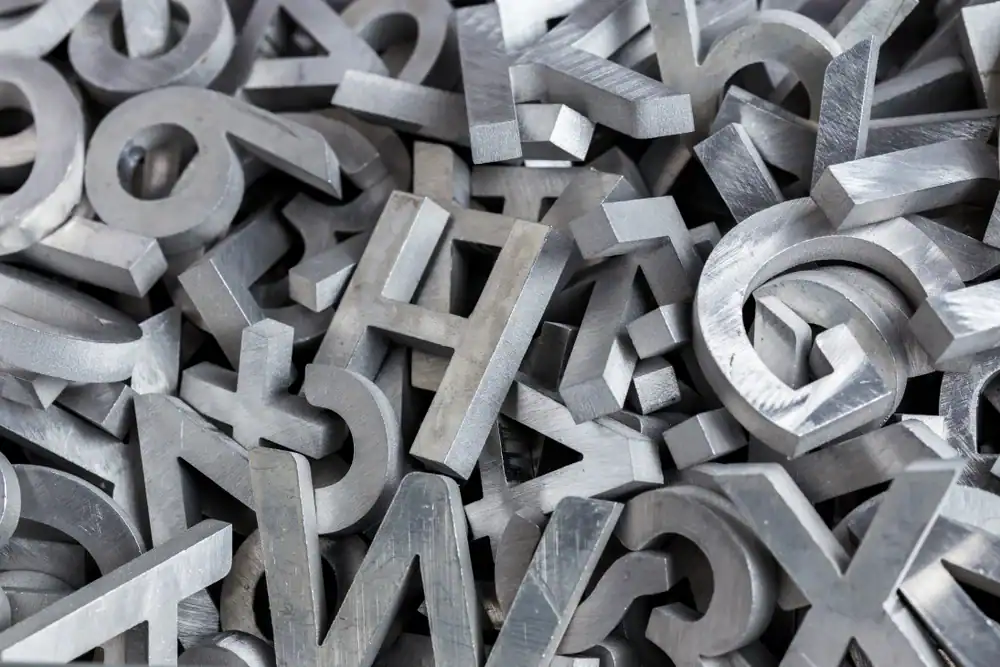
You’re not looking for close enough. You need parts that meet spec, hold their tolerances, and don’t warp or distort when you weld them or put them under load.
High precision waterjet cutting in Central Islip, NY gives you that. No heat-affected zones that compromise material strength. No burrs that need grinding down. No secondary operations eating into your schedule or budget.
The edge quality is clean and consistent. The dimensions stay true. And when you’re working with materials that are expensive, brittle, or heat-sensitive, that cold-cutting process means you’re not throwing away material because plasma torched through it or a drill bit cracked it.
You get parts ready to install, assemble, or ship. That’s what matters when your customers are waiting and your reputation depends on what you deliver.
We operate right here in Central Islip, NY, serving manufacturers, fabricators, and builders across Long Island, NY who need precision water jet cutting services they can count on.
We run Flow Dynamic Waterjet systems with taper compensation and precision motion control. That’s not marketing speak—it’s the difference between parts that need rework and parts that go straight into production.
Long Island, NY’s manufacturing sector—from aerospace components in Bethpage to marine fabrication along the coast—requires cutting that doesn’t compromise material integrity. We handle stainless steel, aluminum, titanium, composites, stone, and specialty alloys without the limitations that come with thermal cutting methods. You bring us your specs, we deliver parts that meet them.
You send us your CAD file or drawing with specifications. We review it for any potential issues—tight inside corners, material thickness concerns, tolerance requirements—and flag anything before we start cutting.
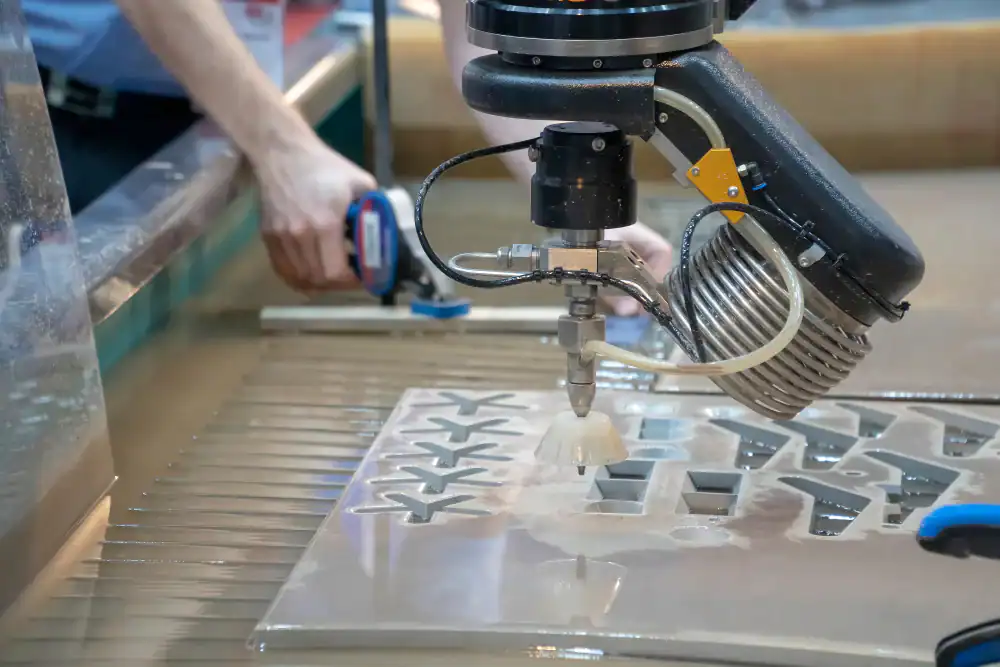
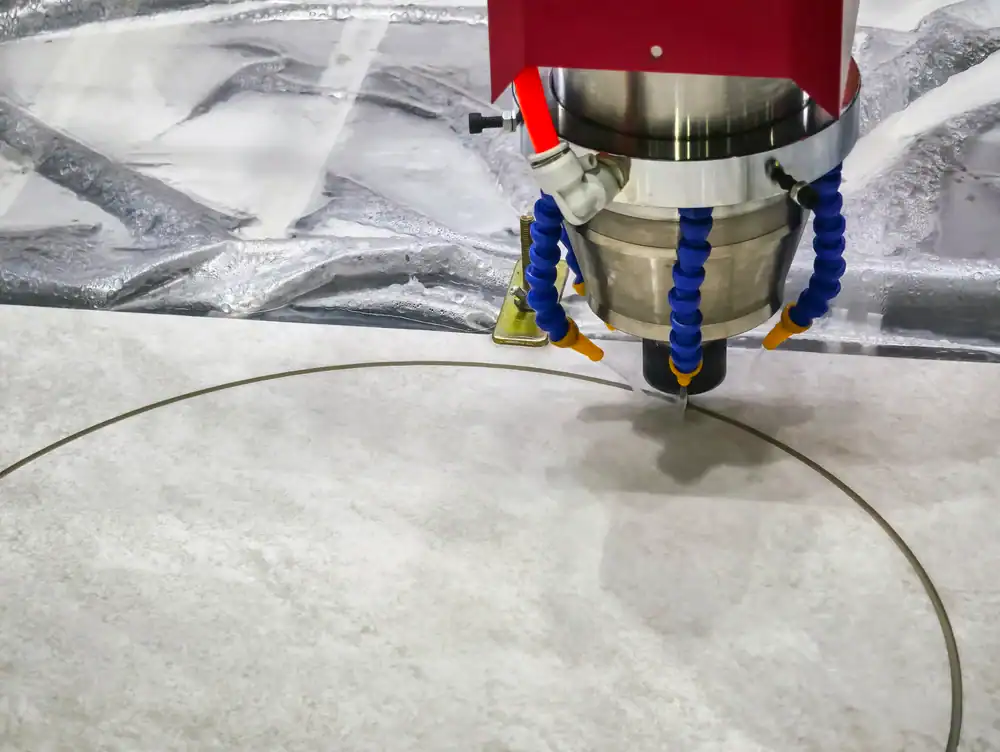
Once the file is programmed into our CNC system, we load your material onto our vibration-dampened cutting table. The waterjet stream, mixed with garnet abrasive, cuts through your material at high pressure without generating heat. Our dynamic taper compensation adjusts the cut angle in real-time so edges stay square and dimensions stay accurate.
For precision waterjet cutting for tight tolerances in Central Islip, NY, that control matters. We’re holding ±0.003″ to ±0.005″ on parts that might be going into aerospace assemblies, architectural installations, or industrial equipment where fit isn’t negotiable.
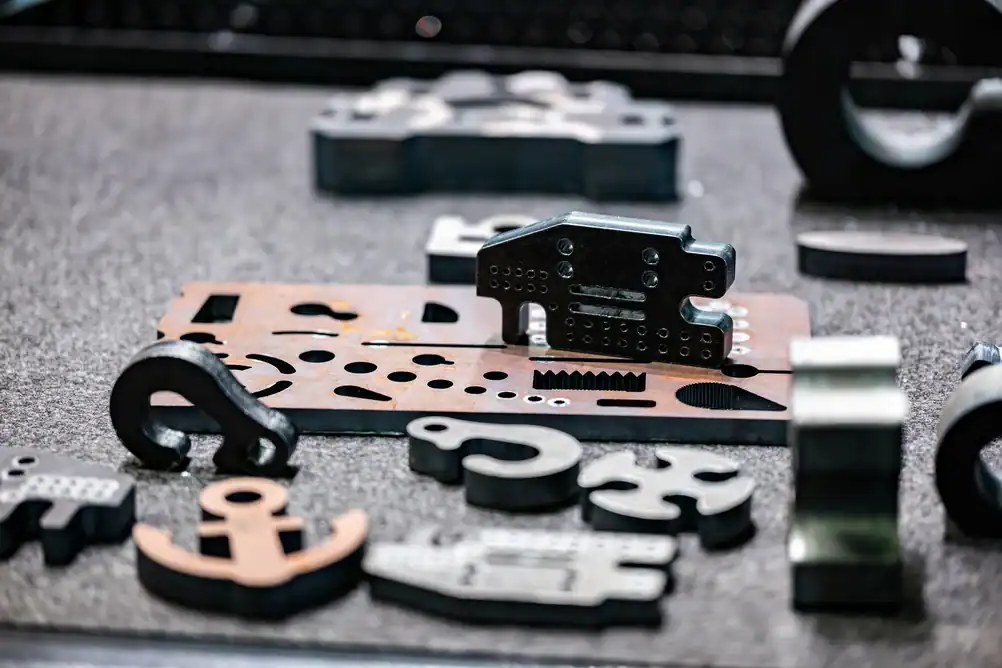
After cutting, most parts come off the table ready to use. No grinding, no deburring, no heat straightening. If you need additional finishing or fabrication, we can discuss that, but the waterjet process typically eliminates those extra steps.
Ready to get started?
You get parts cut to your exact specifications with linear accuracy within thousandths of an inch. Materials up to 12 inches thick. Metals, composites, stone, glass, plastics—pretty much anything that doesn’t compress under the waterjet stream.
Because there’s no heat involved, your materials keep their original properties. Stainless steel doesn’t get discolored edges. Aluminum doesn’t warp. Titanium doesn’t develop a heat-affected zone that changes its strength characteristics. That matters in Central Islip’s industrial and aerospace sectors where material certifications and performance specs aren’t optional.
The edge finish is smooth enough that welding, bonding, or assembly can happen without prep work. Complex geometries—tight radiuses, intricate patterns, nested parts—get cut with the same precision as simple rectangles.
For architectural projects around Long Island, NY, that means decorative metal panels, custom stone inlays, and structural components that fit together exactly as designed. For manufacturing, it means brackets, fixtures, and machine components that don’t need expensive secondary machining to meet tolerance.
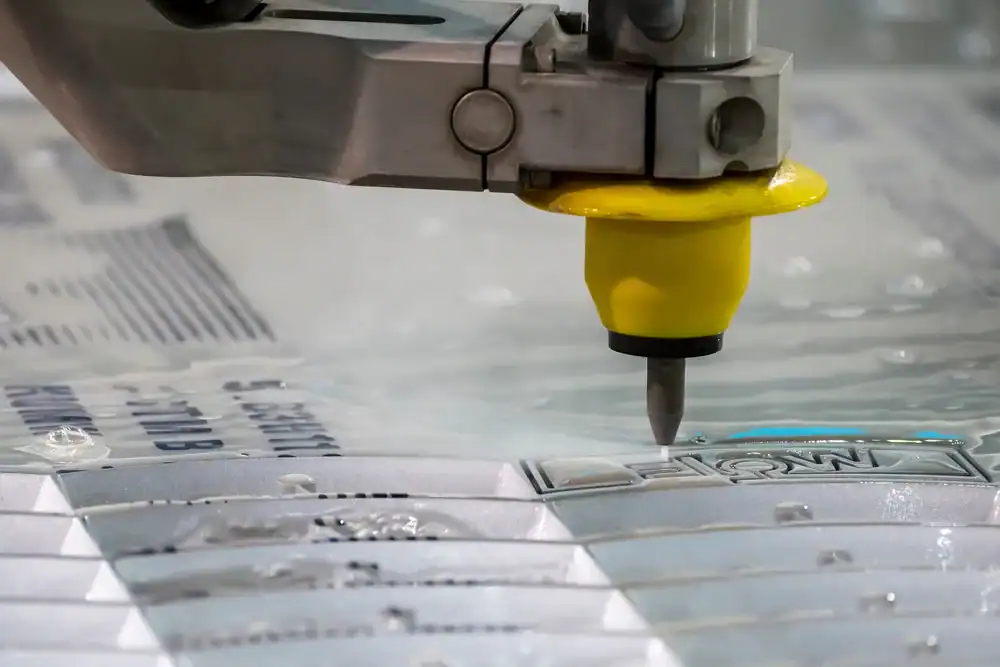
Linear cutting accuracy typically runs ±0.003″ to ±0.005″ depending on material type, thickness, and part geometry. That’s tighter than most plasma or laser cutting, and comparable to many machining operations.
The key difference is that waterjet holds those tolerances without creating heat distortion. So a part that’s dimensionally accurate when it comes off the table stays accurate when you weld it, bolt it, or put it under thermal stress later.
Thicker materials and harder alloys can push toward the wider end of that tolerance range. Thinner materials and softer metals often come in tighter. If your application requires tolerances beyond ±0.003″, that’s worth discussing upfront so we can determine if waterjet is the right process or if you need additional machining.
Our equipment handles materials up to 12 inches thick with full-depth precision cutting. Most production work falls between 0.25″ and 4″, but we regularly cut thicker plate and structural material when projects require it.
The advantage with waterjet is that thickness doesn’t compromise edge quality the way it does with plasma or oxy-fuel cutting. You’re not getting a beveled edge or a rough finish on the bottom side of thick plate.
Cutting speed does slow down as material gets thicker—physics doesn’t change. But if you’re working with 6-inch aluminum plate or 8-inch stainless, waterjet is often the only process that gives you clean edges and tight tolerances without multiple setups or extensive secondary work.
No burrs. The edge comes off the table smooth with a satin finish that’s ready for welding, powder coating, or assembly without grinding or deburring.
That’s one of the main reasons manufacturers switch to precision water jet cutting services in Central Islip, NY. Plasma leaves slag and oxidation. Laser can leave a heat-affected zone with micro-hardness changes. Mechanical cutting leaves tool marks and burrs.
Waterjet is a cold process that erodes material rather than melting or shearing it. The result is an edge that’s clean, square, and consistent from top to bottom. For parts going into painted or powder-coated assemblies, that surface quality means better coating adhesion and fewer finish defects.
Anything heat-sensitive, brittle, or abrasive. Titanium and high-temp alloys that work-harden under traditional cutting. Composites and laminates that delaminate with heat or vibration. Hardened tool steels that destroy cutting tools. Glass, stone, and ceramics that crack under mechanical stress.
We also cut stacked materials and nested parts that would shift or distort with thermal cutting methods. For marine fabricators along Long Island, NY’s coast, that means cutting corrosion-resistant alloys without compromising their protective properties.
The limitation is materials that absorb water or compress under pressure—certain foams, fabrics, or soft rubbers. Everything else is fair game. If you’re not sure whether your material is a good fit for waterjet, send us the specs and we’ll tell you straight whether it’ll work or if you need a different process.
Plasma is faster and cheaper for rough cutting thick steel plate. Waterjet is more accurate and leaves better edge quality for precision work.
If you need parts within ±0.020″ and don’t care about heat-affected zones or secondary grinding, plasma works fine. If you need tighter tolerances, no distortion, and edges ready for welding or assembly, waterjet is the better choice.
The heat-affected zone from plasma can be a real problem when you’re welding parts into assemblies. That zone changes the material’s microstructure and can lead to cracking or warping under stress. Waterjet doesn’t create that issue because there’s no heat. For precision waterjet cutting for tight tolerances in Central Islip, NY, that difference shows up in fewer rejected parts and less rework downstream.
It depends on material availability, queue, and complexity. Simple parts from stock material can often turn around in a few days. Custom projects with special materials or high quantities take longer.
The advantage of waterjet is that there’s no tooling to build or cutting heads to swap between materials. Programming happens quickly, and we can run multiple part types in the same session without setup delays.
If you’re on a tight deadline, let us know upfront. We can often prioritize rush work or adjust the cutting schedule to meet your project timeline. For ongoing production runs, we can establish a regular schedule so you’re not waiting each time you need parts. The key is communication—tell us what you need and when, and we’ll tell you whether it’s realistic.
Useful Links
Other Services we provide in Central Islip