Hear from Our Customers
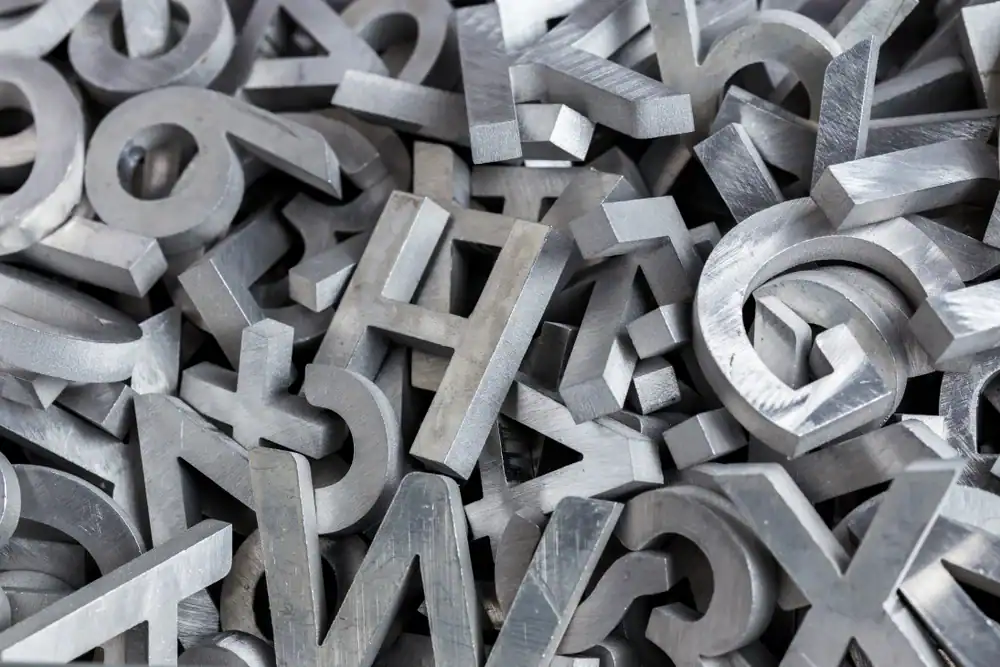
You’re not dealing with warped edges from heat. You’re not paying for secondary machining to clean up rough cuts. You’re not scrapping expensive material because the tolerance was off.
With precision CNC waterjet cutting in East Northport, NY, you get parts that fit right the first time. The cut edge is clean enough that most jobs don’t need finishing work. That means faster turnaround, less waste, and fewer headaches when you’re assembling or installing.
Think about what that does for your timeline. No waiting on rework. No explaining to your customer why the delivery is delayed. Just parts that match your CAD file, ready to use.
This matters whether you’re prototyping a single piece or running a batch of 500. The setup is fast, the cut is precise, and the material stays cool throughout the entire process.
We serve manufacturers, fabricators, and contractors across East Northport, NY and Long Island, NY’s industrial corridor. We work with the shops that can’t afford to redo a job because the cut was sloppy or the material warped under heat.
East Northport has a strong manufacturing presence, from precision machining operations to custom metal fabrication. That means the standards here are high, and the timelines are tight. We built our operation around that reality.
You send us a DXF file, a print, or even a sample part. We program the cut, run it on our CNC waterjet system, and get it back to you without the back-and-forth that eats up your schedule.
You start by sending us your design. CAD files work best, but we can work from prints or physical samples if that’s what you have. We’ll review the specs and material requirements to make sure waterjet is the right process for what you need.
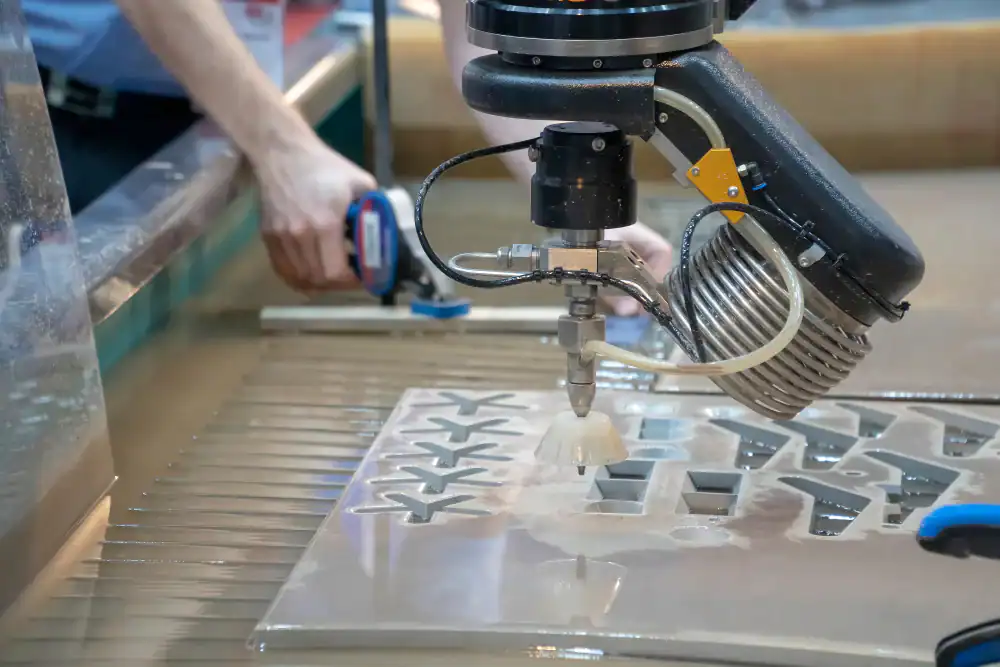
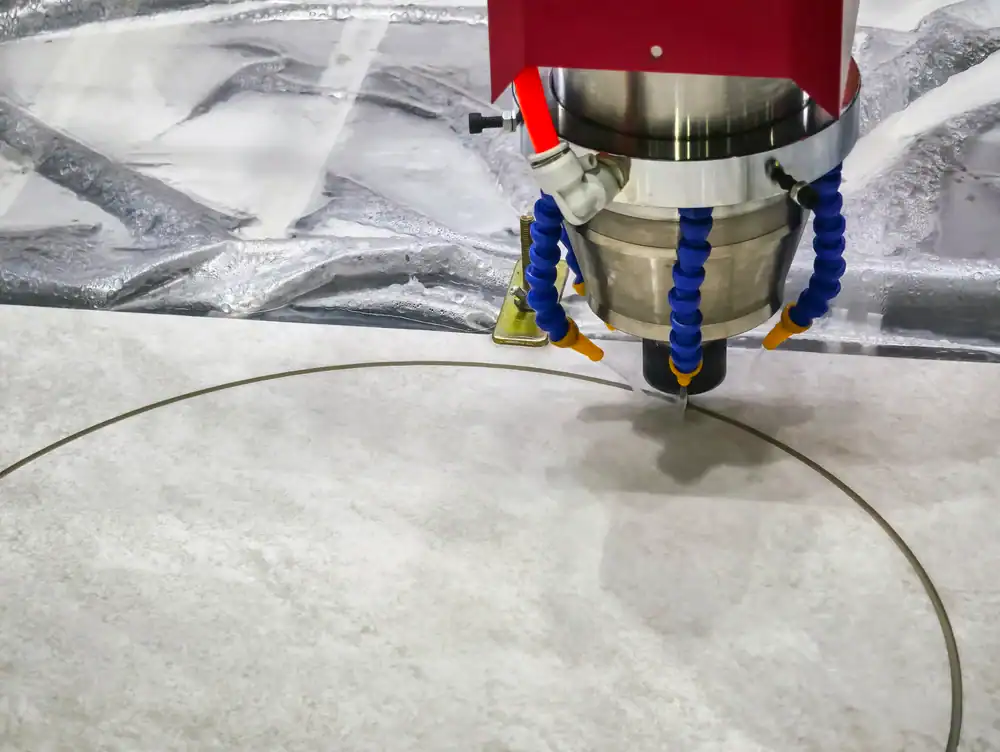
Once we confirm the details, we program the cut path into our CNC system. The waterjet uses a high-pressure stream mixed with abrasive garnet to cut through your material. There’s no heat, no blade wear, and no mechanical stress on the part.
The stream is thin—about the width of a human hair in some cases—so the kerf is minimal and the edge quality is excellent. For most jobs, you’re looking at tolerances within ±0.005 inches. If your design has tight inside corners, small holes, or complex curves, the waterjet handles it without special tooling.
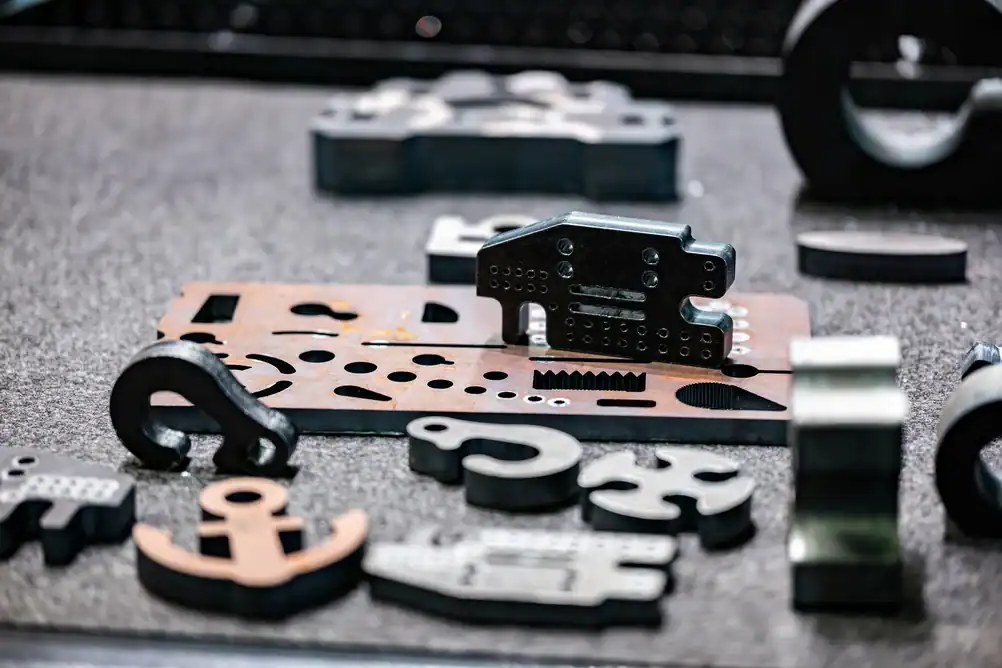
After the cut, we inspect the parts and package them for pickup or delivery. If you need secondary services like deburring or finishing, we can discuss that during the quoting process. But in many cases, the part comes off the table ready to use.
Ready to get started?
You can cut metals like aluminum, stainless steel, titanium, and Inconel without worrying about heat-affected zones. Plastics, composites, rubber, glass, and stone are all fair game too. Thickness up to 6 inches isn’t a problem.
Because there’s no die or custom tooling involved, short runs and one-offs are cost-effective. That’s a big deal if you’re prototyping or doing custom work where traditional stamping or laser cutting doesn’t make sense. You’re not paying thousands upfront just to cut a handful of parts.
In East Northport, NY, where manufacturers are balancing quality with speed, precision waterjet cutting for tight tolerances gives you both. The process is fast to set up, and because the first cut is often the final cut, you’re not waiting on secondary operations to finish the job.
If your design changes mid-project, we can reprogram and cut the updated version without retooling. That flexibility matters when you’re working with clients who revise specs or when you’re iterating on a prototype.
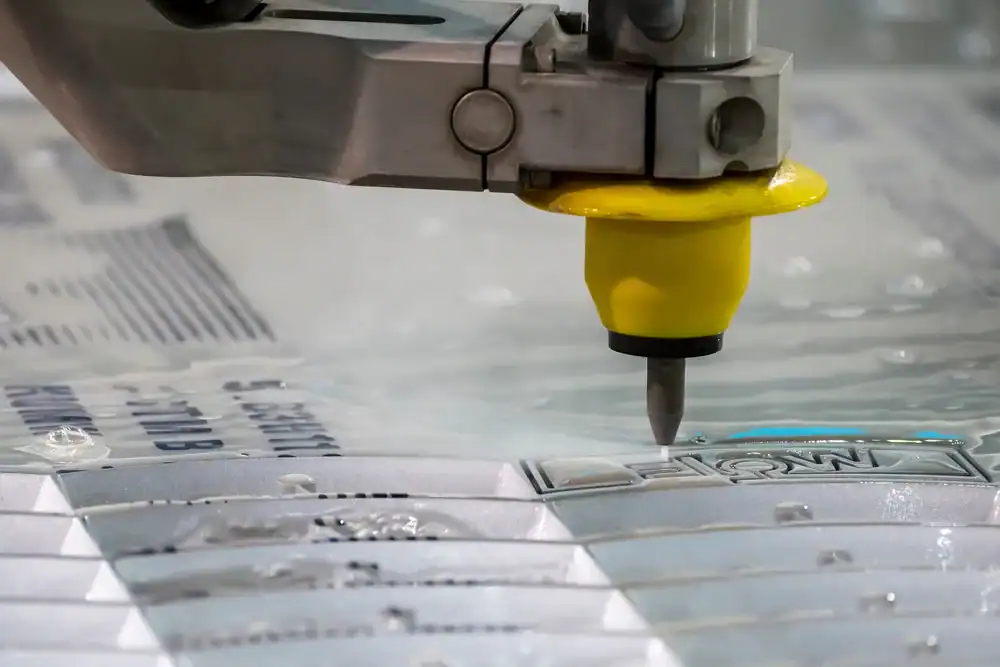
Waterjet cutting typically holds tolerances within ±0.005 inches, and on some systems, you can get down to ±0.001 inches. That’s tighter than most plasma setups and comparable to laser cutting, but without the heat.
Laser and plasma both generate significant heat, which can warp thinner materials or create a heat-affected zone that changes the material properties near the cut edge. If you’re working with metals that need to maintain their temper or composites that can delaminate under heat, waterjet is the better choice.
The edge quality is also different. Waterjet produces a smooth, clean edge with minimal striations, especially on thicker materials. Laser can leave a slight bevel or dross on the bottom edge depending on the material and thickness. Plasma is faster for thick steel, but the edge is rougher and almost always needs secondary grinding or machining.
Metals are the most common: aluminum, stainless steel, carbon steel, titanium, brass, copper, and high-temp alloys like Inconel. Waterjet handles all of them without changing the material’s properties.
Beyond metals, you can cut stone, glass, ceramics, rubber, foam, plastics, and composites like carbon fiber or fiberglass. If you’re working with layered materials or laminates, waterjet won’t delaminate them the way a heat-based process might.
The only materials that don’t work well are tempered glass (it shatters) and certain very brittle ceramics. But for the vast majority of industrial and architectural materials, waterjet is one of the most versatile cutting methods available. There’s no need to switch processes or send parts to multiple shops depending on what you’re cutting.
Yes. Waterjet is one of the few processes where a single prototype and a batch of 500 parts use the same setup. There’s no tooling to build, so the upfront cost is the same whether you’re cutting one part or a hundred.
For prototypes, that means you can test a design, make revisions, and recut without eating into your budget on new dies or molds. Turnaround is fast because we’re just reprogramming the CNC path, not fabricating new tooling.
For production runs, waterjet is cost-effective up to a certain volume. If you’re looking at thousands of identical parts, stamping or laser might make more sense. But for short to mid-volume runs, especially with complex shapes or thick materials, waterjet gives you speed and accuracy without the setup costs of traditional manufacturing.
We can cut material up to 6 inches thick, depending on the type. Softer materials like aluminum or plastic cut faster and cleaner at greater thicknesses. Harder materials like stainless steel or titanium take longer but are still very manageable.
Thickness is one area where waterjet really outperforms laser and plasma. Laser cutting starts to struggle above 1 inch on most metals, and the edge quality degrades as you go thicker. Plasma can cut thicker steel, but the kerf is wide and the edge is rough.
Waterjet maintains a narrow kerf and good edge quality even on thick material. That means less waste, tighter nesting of parts, and fewer secondary operations to clean up the cut. If you’re working with plate stock or structural components that are several inches thick, waterjet is often the only practical option that doesn’t require sawing or heavy machining.
In most cases, no. The edge quality coming off the waterjet is smooth enough to use as-is for the majority of applications. You’re not dealing with slag, dross, or a heat-affected zone that needs grinding.
There are some situations where you might want light deburring, especially if the part has very sharp edges that need to be softened for safety or assembly reasons. But that’s a quick process compared to the heavy grinding or machining required after plasma or torch cutting.
If your application has extremely tight cosmetic requirements—like a visible architectural panel or a part that needs a polished edge—you can request additional finishing. But for functional parts, structural components, and most fabrication work, the waterjet edge is clean enough that you’re saving time and money by skipping secondary operations entirely.
It depends on the complexity of the part and our current queue, but most jobs are done within a few days. Simple cuts on common materials can often be turned around in 24 to 48 hours if you need them fast.
More complex parts with intricate details, tight tolerances, or thicker materials take longer to cut, but we’re still talking days, not weeks. Because there’s no tooling to fabricate, the setup time is minimal compared to stamping or traditional machining.
If you have a rush job, let us know upfront. We can often prioritize urgent work, especially for local customers in East Northport and the surrounding Long Island, NY area. The key is communication—if we know your deadline, we can tell you right away whether it’s realistic and what it will take to meet it.
Useful Links
Other Services we provide in East Northport