Hear from Our Customers
You’re dealing with tight tolerances because your customers expect parts that fit right the first time. A few thousandths off means rework, delays, and explaining why the job costs more than quoted.
High precision waterjet cutting in Lake Ronkonkoma, NY gives you accuracy within +/- .001″ without the heat-affected zones that warp metal or create microscopic cracks. The cold cutting process means your material properties stay intact—no hardening, no softening, no stress points that show up later.
You get burr-free edges that typically don’t need secondary finishing. That’s fewer steps, less waste, and faster turnaround when your production schedule is already tight. Whether you’re cutting aluminum brackets for aerospace assemblies or custom gaskets for automotive builds, the part that comes off the table matches your specifications.
We serve the Lake Ronkonkoma, NY manufacturing community from our West Islip facility. We’re close enough to understand what Long Island, NY shops face—tight deadlines, demanding specs, and customers who won’t accept “close enough.”
Our precision water jet cutting services handle everything from one-off prototypes to full production runs. You’re working with a team that knows the difference between a print that says +/- .005″ and one that needs +/- .001″—and why that matters for your application.
Lake Ronkonkoma’s manufacturing sector keeps growing, and shops here need cutting services that keep pace. We’ve built our operation around the materials and tolerances that matter most to aerospace, automotive, and custom fabrication work happening right here on Long Island, NY.
You send us your drawings or CAD files, and we review them for any potential issues before cutting starts. If something looks off—a tolerance that’s too tight for the material thickness, or a detail that might not hold up in your application—we’ll tell you before we make the first cut.
Once the file is programmed into our CNC waterjet system, we select the right abrasive and cutting speed for your material. Thicker materials need different approaches than thin sheet stock, and brittle materials like glass or stone require adjustments that softer metals don’t.
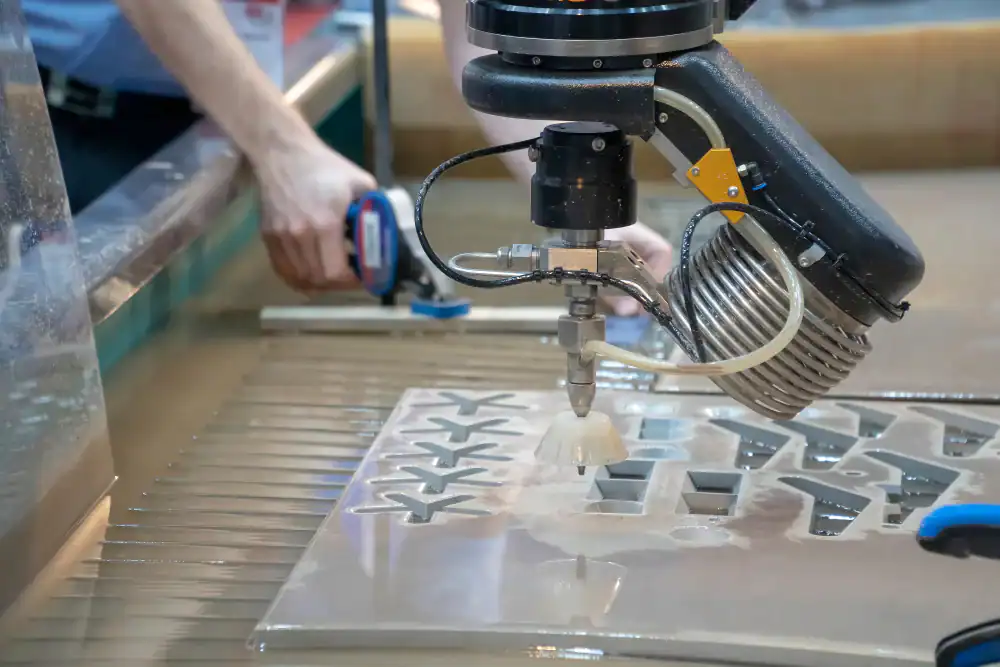
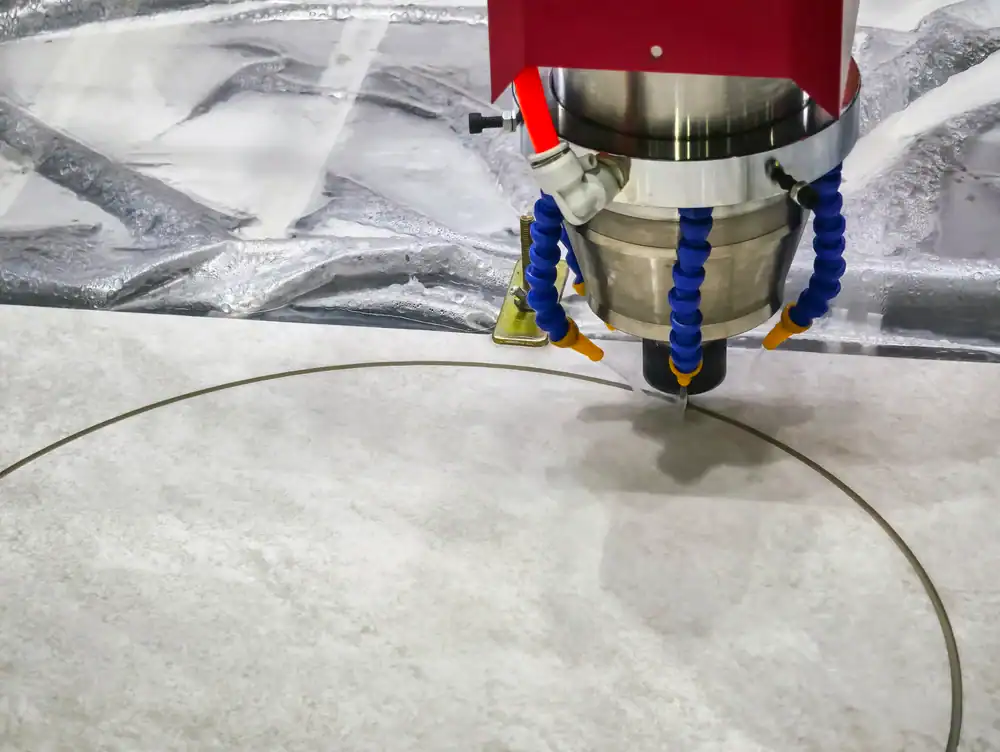
The waterjet stream cuts through your material without touching it with any tool, so there’s no mechanical stress and no heat buildup. For precision waterjet cutting for tight tolerances in Lake Ronkonkoma, NY, that means you get complex shapes and fine details without worrying about warping or edge quality. After cutting, we inspect dimensions and clean up any residual abrasive before your parts ship out.
Ready to get started?
You can cut virtually any material—metals like aluminum, stainless steel, titanium, and tool steel; composites and carbon fiber; plastics and acrylics; stone, glass, and ceramics. Thickness ranges from 1/16″ up to over 10 inches depending on material type. That versatility means you don’t need multiple vendors for different materials.
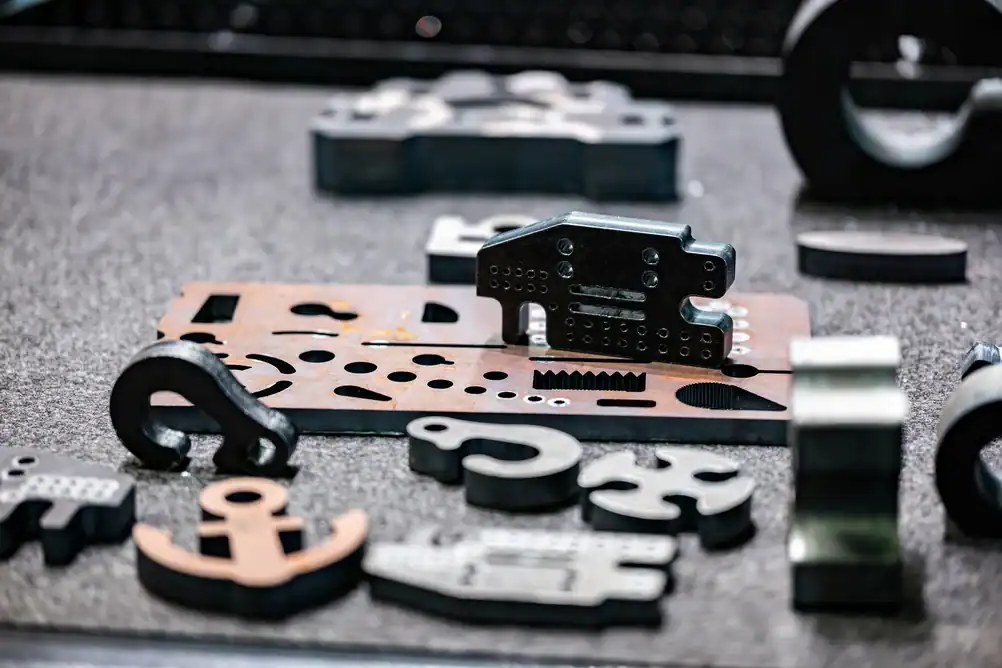
The process handles complex geometries that would be difficult or impossible with traditional machining. Tight inside corners, intricate patterns, and parts with minimal clearance between features all come out clean. You’re not limited by tool access or heat constraints.
For Lake Ronkonkoma manufacturers working on aerospace components or custom automotive parts, precision waterjet cutting eliminates the heat-affected zone that can compromise material integrity. Long Island, NY’s manufacturing facilities increasingly need automated cutting technologies that maintain consistency across production runs—waterjet cutting delivers that repeatability without the tool wear issues that throw off tolerances over time.
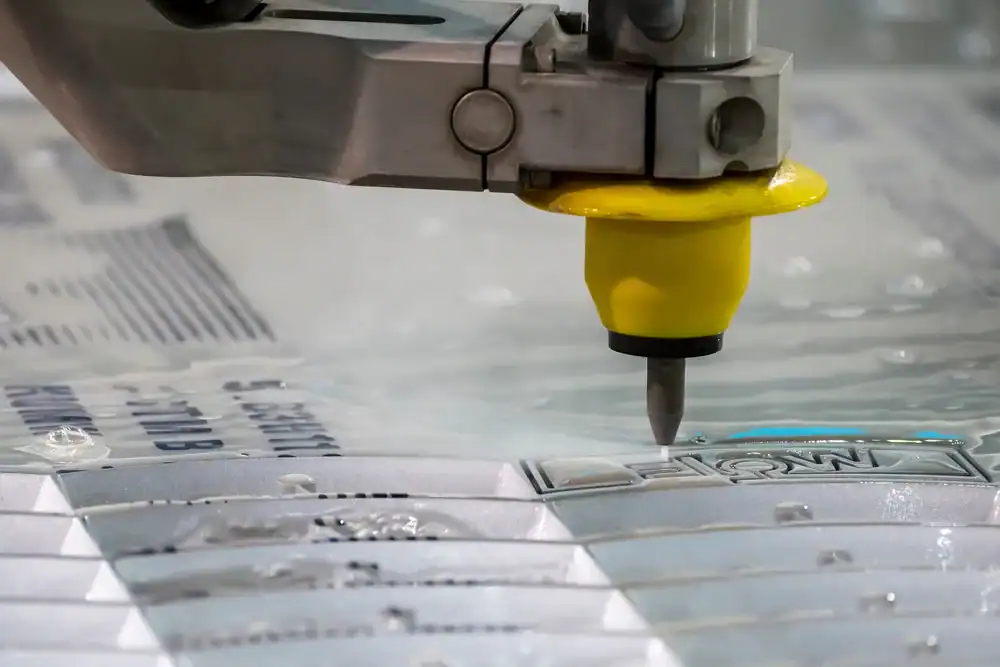
Standard precision waterjet cutting holds tolerances around +/- .005″ consistently across most materials and thicknesses. That’s tight enough for the majority of brackets, gaskets, mounting plates, and structural components used in manufacturing and fabrication.
If your application demands tighter specs, precision CNC waterjet cutting in Lake Ronkonkoma, NY can achieve tolerances as close as +/- .001″ with the right setup and material conditions. Thinner materials generally hold tighter tolerances than thick plate, and harder materials tend to cut more precisely than softer ones.
The key factor is that waterjet cutting maintains those tolerances without creating heat distortion. Traditional cutting methods might hit the number on the first pass, but thermal expansion and contraction can throw off dimensions once the part cools. Cold cutting eliminates that variable entirely.
If you can physically hold it on the cutting table, waterjet can cut it. Metals are straightforward—aluminum, stainless steel, titanium, tool steel, brass, copper, and exotic alloys all cut cleanly without work hardening or heat-affected zones.
Composites and layered materials that would delaminate under heat or mechanical stress stay intact with waterjet cutting. Carbon fiber, fiberglass, and laminated plastics cut without fraying or separating layers. Stone, glass, ceramic, and other brittle materials that crack under traditional machining cut smoothly.
The abrasive waterjet stream doesn’t care about material hardness the way cutting tools do. You’re not wearing down expensive tooling or dealing with different setups for different materials. One process handles everything from soft gasket material to hardened tool steel, which matters when you’re running mixed production jobs.
The cutting stream never exceeds ambient temperature at the cut point. Water absorbs and carries away any friction heat before it can transfer into your material. That’s fundamentally different from plasma, laser, or torch cutting where you’re literally melting through the material.
Heat-affected zones create real problems you might not see immediately. Microscopic cracks form in the crystalline structure of metals. Hardness changes near the cut edge. Residual stresses build up that cause warping later when you machine or assemble the part.
For precision waterjet cutting in Lake Ronkonkoma, NY, eliminating heat means your material properties stay consistent all the way to the edge. Aerospace components that need specific hardness ratings don’t get compromised. Tight-tolerance parts don’t warp after cutting. You can cut parts and move straight to assembly without stress-relief processes.
Most parts come off the table with smooth, burr-free edges that don’t need secondary finishing. The edge quality depends on material type, thickness, and cutting speed, but you typically get a finish that’s ready for welding, assembly, or coating without additional work.
Thinner materials and slower cutting speeds produce the smoothest edges—almost polished in some cases. Thicker materials or faster production speeds might show slight striations on the cut face, but even those are usually acceptable for functional parts. If your application demands a specific surface finish, adjusting cutting parameters can get you there.
The practical benefit is fewer process steps. You’re not deburring, grinding, or finishing edges before parts move to the next operation. For production runs, that time savings adds up quickly. For prototype work, it means you can test fit and function immediately without cleanup work.
Simple parts from standard materials can often ship within a few days of receiving your files. Complex jobs with thick materials or tight tolerances take longer because cutting speed has to slow down to maintain accuracy.
The programming and setup time is minimal compared to traditional machining. We’re not building custom fixtures or changing out tooling for different operations. Your CAD file translates directly to cutting paths, which speeds up the front end of the job considerably.
For Lake Ronkonkoma manufacturers dealing with tight production schedules, the real advantage is predictability. Waterjet cutting doesn’t have the variables that slow down other processes—no tool wear throwing off dimensions halfway through a run, no heat distortion requiring rework, no secondary operations adding days to the timeline. You get accurate parts on a timeline you can actually plan around.
Laser and plasma both use heat to cut, which limits what materials you can process and creates heat-affected zones that change material properties. Waterjet cuts cold, so you can handle heat-sensitive materials like plastics and composites without melting or burning. You also avoid the hardened edges and micro-cracking that heat cutting creates in metals.
Waterjet handles thicker materials more effectively than laser cutting. Once you get past about an inch thick in steel, laser cutting slows down significantly and edge quality suffers. Waterjet maintains consistent cutting quality through 10+ inches of material depending on type.
For precision waterjet cutting shop services in Lake Ronkonkoma, NY, the material versatility matters when you’re running different jobs through the same facility. You don’t need separate equipment for metals, plastics, composites, and stone. One process handles everything, which means faster turnaround and lower costs when you’re working with mixed materials.
Useful Links
Other Services we provide in Lake Ronkonkoma