Hear from Our Customers
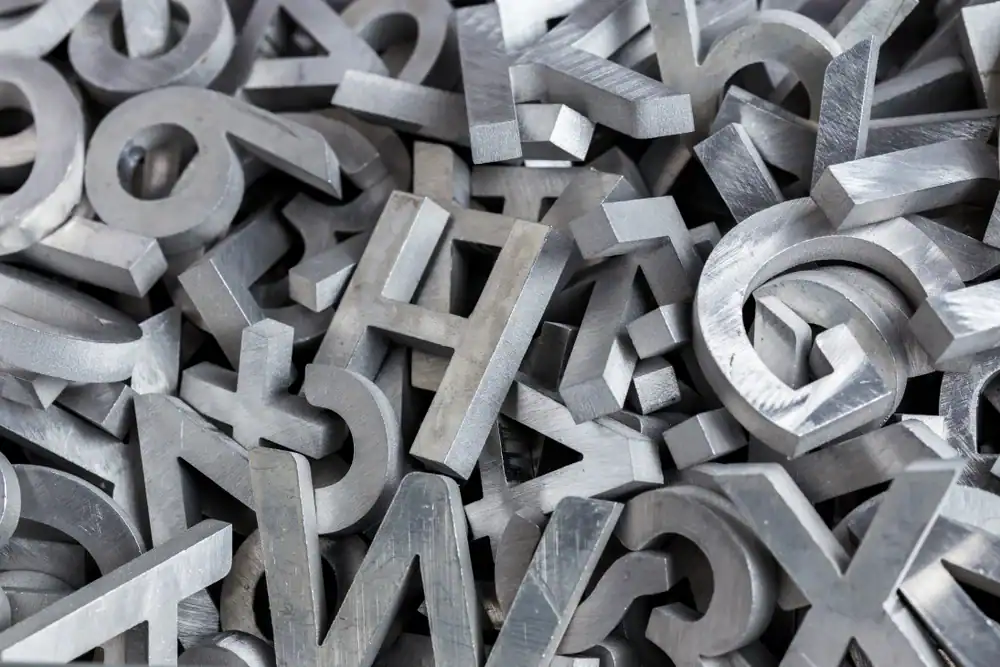
You’re not guessing whether parts will fit during assembly. You’re not dealing with warped edges or spending extra on secondary finishing. You’re getting components cut to tolerances within ±0.002 inches, with clean edges that don’t need additional work.
High precision waterjet cutting in New Cassel, NY means your materials stay intact. No heat-affected zones. No structural changes to metals or composites. The cold-cutting process keeps your material properties exactly as they should be, whether you’re working with aluminum, stainless steel, titanium, or specialty alloys.
Complex geometries that other methods struggle with become straightforward. Intricate curves, tight inside corners, detailed patterns—waterjet handles them without tool changes or multiple setups. Your design stays your design, executed with the accuracy your project requires.
We operate from West Islip, serving New Cassel, NY and the surrounding Long Island, NY area with precision water jet cutting services. You’re working with a local precision waterjet cutting shop that understands the pace and demands of projects in this region.
New Cassel sits in Nassau County, where manufacturing, architectural fabrication, and custom design work require fast turnarounds and reliable quality. You need a shop that answers the phone, understands your timeline, and delivers when promised. That’s what matters when you’re coordinating with contractors, managing client expectations, or keeping production schedules on track.
We’ve built our operation around the reality that most projects have tight deadlines and tighter budgets. You get straightforward communication, accurate quotes, and parts that show up when you need them.
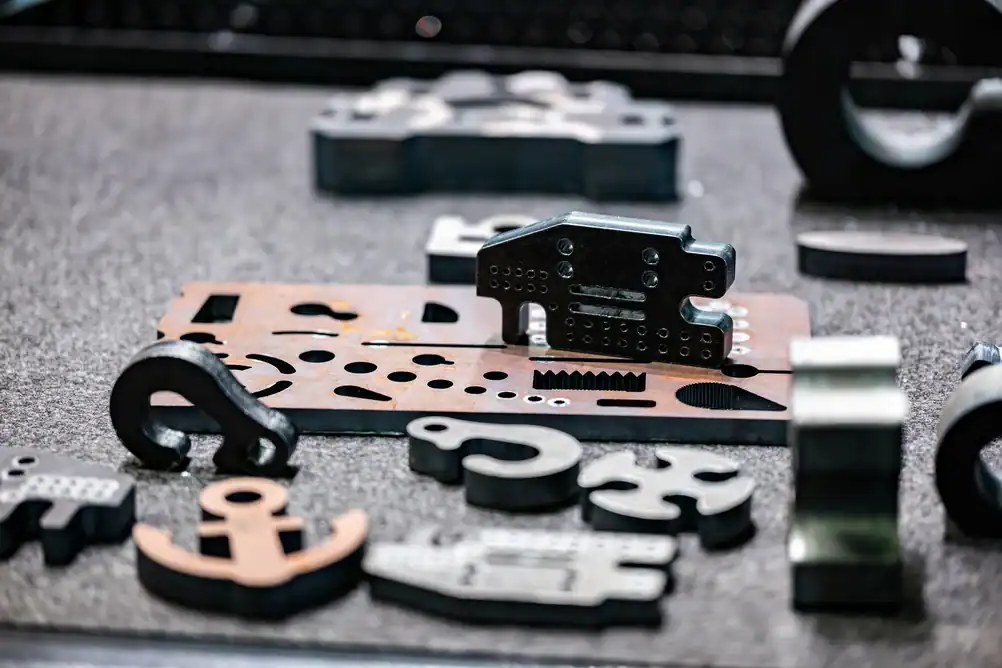
You send us your design files—DXF, DWG, or whatever format you’re working in. We review them for any potential issues with tolerances, material choice, or cut paths. If something won’t work as drawn, you hear about it before we start cutting, not after.
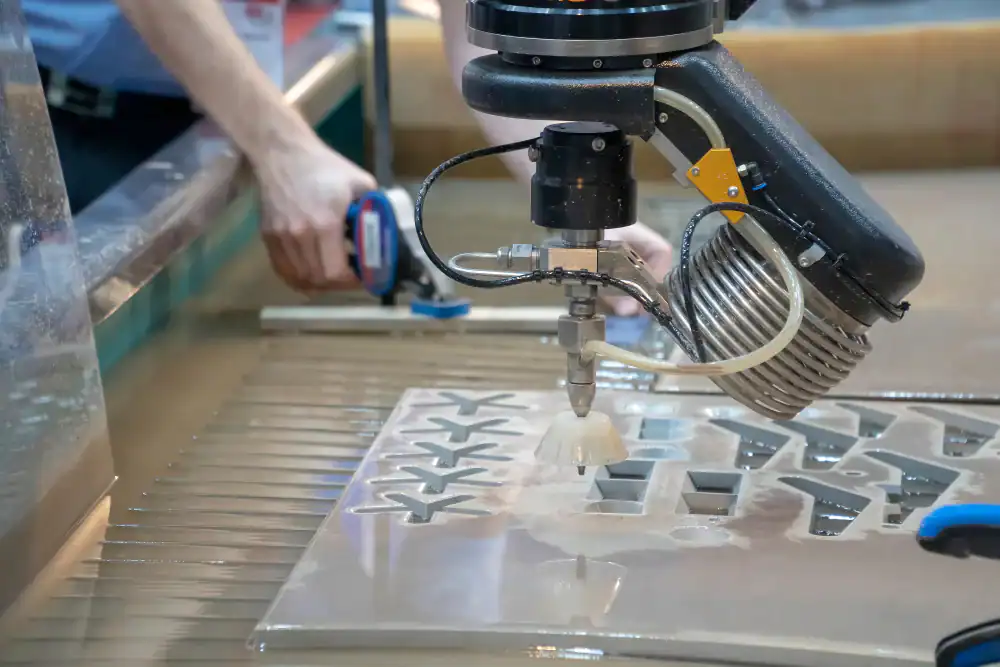
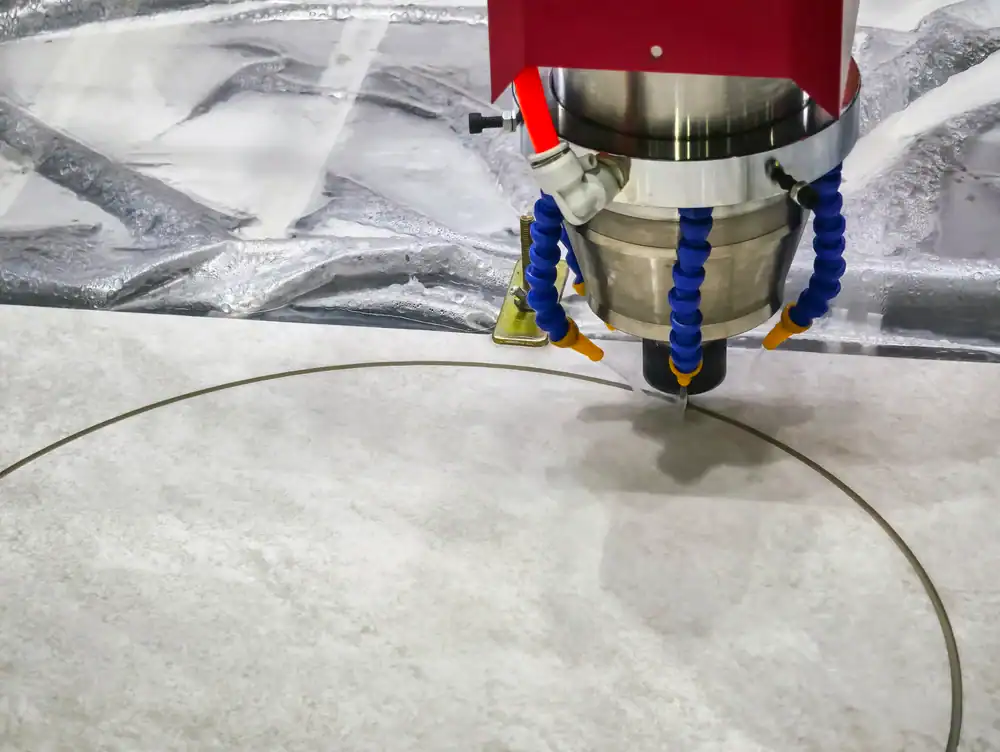
Once the file is dialed in, it goes to our CNC waterjet system. The machine positions a high-pressure stream of water mixed with abrasive garnet to cut your material. CNC servo motors control positioning down to thousandths of an inch, following your design exactly. The cutting head never touches your material, so there’s no tool wear affecting accuracy and no heat buildup changing material properties.
After cutting, every part gets inspected. We check dimensions against your specs, verify edge finish, and confirm squareness. If it doesn’t meet the tolerances you specified, it doesn’t leave the shop. You receive parts ready to use, not components that need additional machining or finishing work.
Ready to get started?
Precision waterjet cutting for tight tolerances in New Cassel, NY covers a range of applications. Architectural projects get decorative panels, custom railings, and structural components with clean edges and exact dimensions. Manufacturing operations receive prototype parts and production runs with consistent quality across every piece.
Materials up to 12 inches thick cut cleanly without edge distortion. Metals, composites, stone, glass, plastics—the process works across nearly any material you’re specifying. The kerf width stays narrow, typically 0.1 to 0.3 millimeters, which means less material waste and more parts per sheet.
New Cassel’s proximity to major manufacturing centers and architectural firms throughout Nassau County means fast delivery. You’re not waiting for parts to ship across the country. Local service means you can coordinate timing around your project schedule, adjust orders when plans change, and get answers without navigating time zones. When you’re managing contractors, coordinating installations, or keeping production lines moving, that accessibility matters.
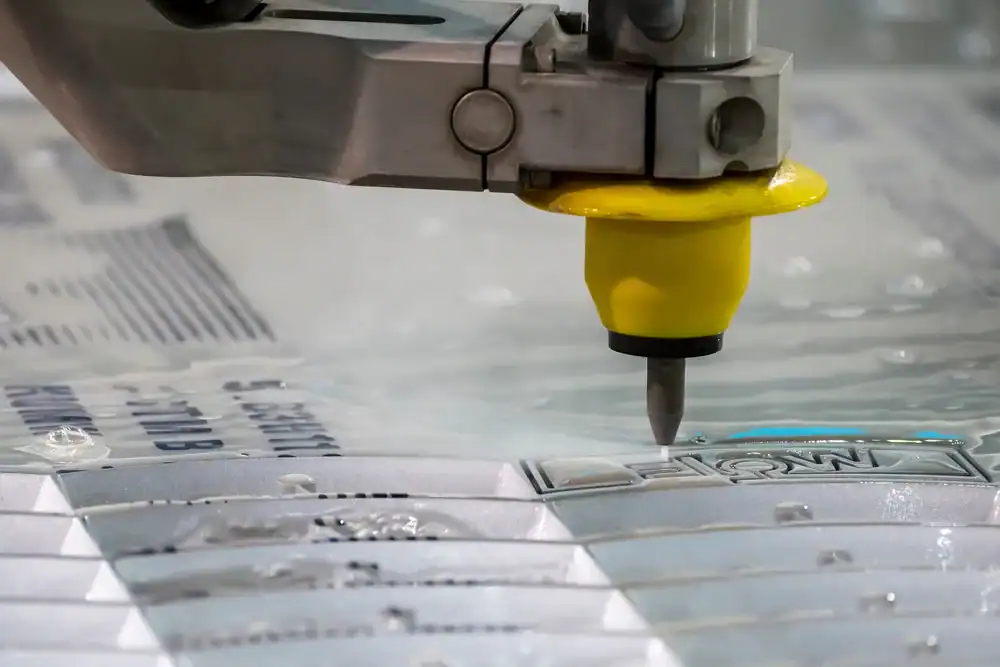
Standard abrasive waterjet cutting holds tolerances around ±0.002 inches consistently. That’s the realistic expectation for most jobs. Advanced systems with taper compensation can tighten that to ±0.001 inches on specific applications.
Here’s what affects those numbers in practice. Material thickness plays a role—thinner materials generally hold tighter tolerances than thick stock. The cutting speed matters too. Slower passes produce more accurate edges than rushing through at maximum feed rates.
Your part geometry also factors in. Long, straight cuts typically hold tighter tolerances than complex curves or very small inside radii. A skilled operator knows how to adjust parameters based on what you’re cutting and what accuracy you actually need. If your project requires specific tolerances, that conversation happens upfront so you know exactly what to expect before cutting starts.
Waterjet cuts without heat, which is the fundamental difference. Laser cutting melts material, creating a heat-affected zone that can warp thin metals or change material properties near the cut edge. Waterjet keeps everything cold, so your material stays dimensionally stable.
For thicker materials, waterjet has a clear advantage. Laser cutting loses accuracy as material thickness increases, and many materials over an inch thick become impractical. Waterjet maintains full-depth precision through materials up to 12 inches thick.
Material versatility is another factor. Laser struggles with reflective metals like copper or brass and can’t cut stone, glass, or certain composites. Waterjet handles all of those without issue. The tradeoff is speed on thin materials—laser cuts thin sheet metal faster than waterjet. But if you need no heat distortion, thick material capability, or you’re working with materials laser can’t handle, waterjet is the right process.
Most waterjet-cut parts come off the machine ready to use. The edge finish is smooth, typically comparable to a fine-grit sanding, without burrs or sharp edges. There’s no heat discoloration to remove and no hardened edge from thermal cutting processes.
Whether you need additional finishing depends on your application. If you’re welding, assembling, or painting, the waterjet edge works as-is. If you need a polished or mirror finish for aesthetic reasons, you’d add that step, but you’re starting from a clean baseline instead of dealing with rough or damaged edges.
The lack of heat-affected zones means you’re not dealing with hardened edges that are difficult to machine or deburr. For most manufacturing and fabrication applications, waterjet-cut parts go directly into the next operation without intermediate finishing. That saves time and reduces your overall cost per part compared to processes that require secondary operations to achieve usable edges.
Turnaround depends on your project complexity, material availability, and our current queue. Simple cuts in common materials often complete within a few days. More complex jobs or specialty materials may take longer.
Being local to New Cassel, NY makes a difference. You’re not adding cross-country shipping time to your lead time. We can coordinate delivery around your schedule, and if you need to pick up parts directly, that’s an option.
Rush jobs happen—we understand that project timelines change and deadlines move up. When you need faster turnaround, that conversation happens upfront so you know what’s possible and what it costs. The key is communication. If you’ve got a hard deadline, we need to know that when you’re requesting a quote, not after the job is already in progress. Clear expectations on both sides mean you get your parts when you need them.
DXF and DWG files work best because they contain the vector paths our CNC system needs. These CAD formats translate directly to cutting paths without conversion issues. If you’re working in SolidWorks, AutoCAD, or similar programs, exporting to DXF gives us clean geometry to work with.
We can also work with other vector formats like AI or EPS if that’s what your design software produces. The critical factor is that the file contains actual vector paths, not just images or rasterized representations of your design.
If you’re not sure whether your file will work, send it over before finalizing your design. We’ll review it and let you know if there are any issues with scale, units, or geometry that need adjustment. It’s better to catch those problems during the quoting phase than after you’ve approved the job. We can also provide guidance on design considerations specific to waterjet cutting—things like minimum inside radii or appropriate lead-in locations—that help your parts cut more accurately and cost-effectively.
Abrasive waterjet cuts virtually any material. Metals are straightforward—aluminum, stainless steel, mild steel, titanium, copper, brass, tool steels. Thickness up to 12 inches isn’t a problem. Composites like carbon fiber or fiberglass cut cleanly without delamination.
Stone, glass, and ceramics work well with waterjet because there’s no thermal shock to cause cracking. Plastics from thin acrylics to thick polycarbonate or UHMW cut without melting or heat distortion. Rubber, foam, gasket materials—all handle the cold-cutting process without issue.
The few materials that don’t work well are tempered glass, which can shatter from the water pressure, and certain very brittle ceramics. For everything else, waterjet is likely your most versatile cutting option. If you’re unsure whether your specific material or thickness will work, that’s a quick conversation. We’ve cut enough different materials to give you a straight answer about what’s practical and what results to expect.
Useful Links
Other Services we provide in New Cassel