Hear from Our Customers
You’re not looking for “close enough.” You need parts that meet spec, pass quality control, and don’t come back with rejection tags.
Precision water jet cutting services in Syosset, NY give you repeatability you can count on. We’re talking tolerances as tight as 0.001″ on complex geometries, with edge quality clean enough to skip secondary finishing. No heat-affected zones means your material properties stay intact—no warping, no hardening, no metallurgical changes that throw off your downstream processes.
That matters when you’re running production batches or building prototypes that need to perform. You get parts off the table ready to use, not ready for more machining. Less rework means faster timelines and tighter budgets, which is exactly what your project needs.
We operate out of West Islip, NY, serving manufacturers, contractors, architects, and designers across Nassau County and Long Island, NY. We’ve built our reputation on delivering precision CNC waterjet cutting that meets the demands of aerospace, automotive, medical device, and custom fabrication industries.
Syosset’s industrial sector includes nearly 190,000 square feet of active manufacturing and fabrication space. That means you’re working in a market where precision matters and timelines are tight. We understand that because we work with companies just like yours every day—shops that can’t afford to wait weeks for parts or deal with inconsistent quality from distant suppliers.
You’re not getting a sales pitch here. You’re getting access to equipment that holds tolerances, operators who know how to program complex cuts, and turnaround times that keep your projects moving.
You send us your CAD file or design specs. We review it for manufacturability and flag anything that might cause issues before we start cutting. That conversation happens up front, not after you’ve already paid for a batch of scrap.
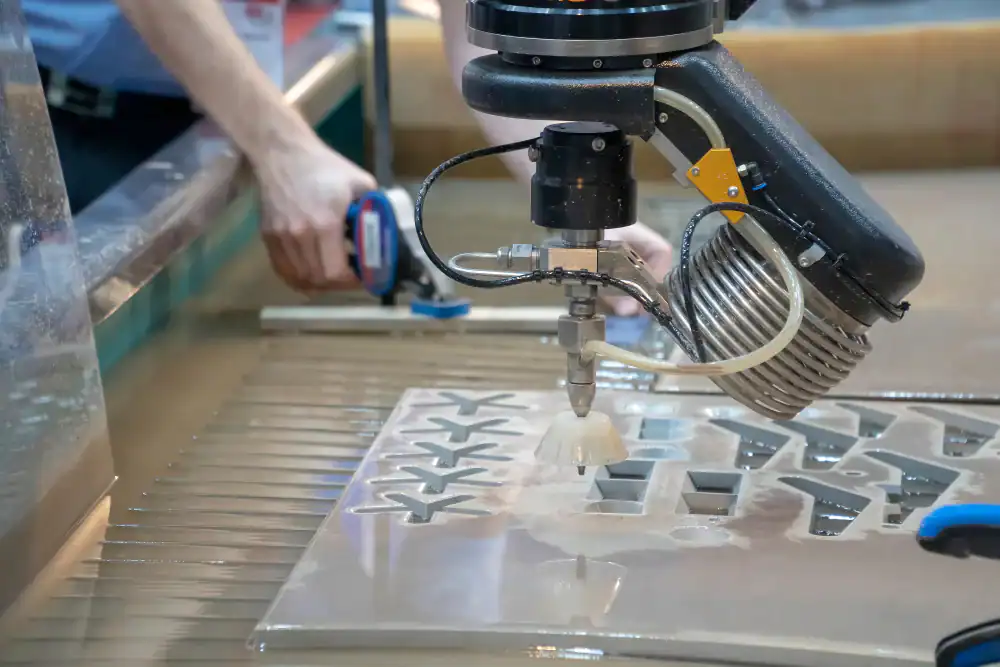
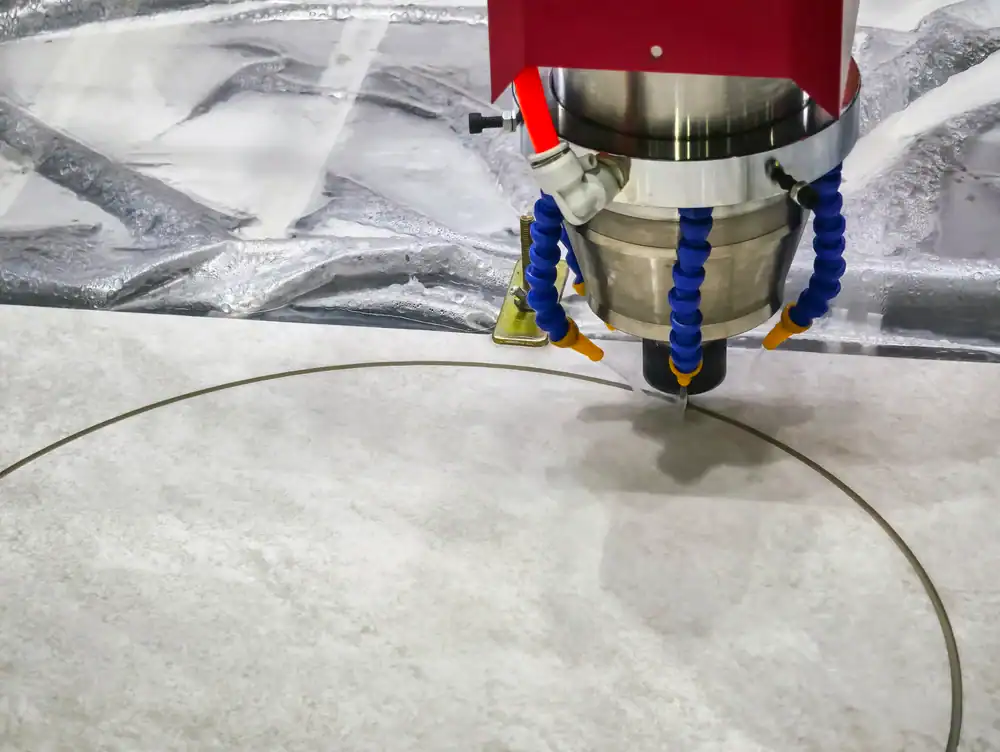
Once the file is dialed in, we program the CNC waterjet with your exact dimensions and tolerances. The cutting head uses a high-pressure stream of water mixed with abrasive garnet to cut through your material—whether that’s aluminum, stainless steel, titanium, composites, glass, stone, or rubber. There’s no tool contact, no heat buildup, and no mechanical stress on the part.
After cutting, we inspect dimensions to confirm they match your specs. If you need multiple parts, we run them with the same program to ensure consistency across the entire batch. You get parts that fit together correctly because they were all cut to the same standard.
Most jobs turn around in days, not weeks. Rush work and prototypes can often go even faster, depending on material availability and machine schedule.
Ready to get started?
Precision waterjet cutting for tight tolerances in Syosset, NY means you’re working with a process designed for accuracy. We handle materials from 0.020″ thin foils up to 10+ inches thick, cutting complex shapes that would be difficult or impossible with traditional machining.
You’re not limited by material hardness or thickness. Waterjet doesn’t care if you’re cutting soft foam or hardened tool steel—it cuts them both without changing tooling or worrying about dulling blades. That versatility matters when your projects involve mixed materials or when you’re prototyping and haven’t locked in final specs yet.
Nassau County’s manufacturing sector increasingly demands faster turnaround on custom parts, especially as more companies move toward just-in-time production models. Waterjet cutting supports that because programming is fast and setup doesn’t require custom dies or lengthy machine prep. You can get one part or one thousand, and the per-unit setup cost stays reasonable.
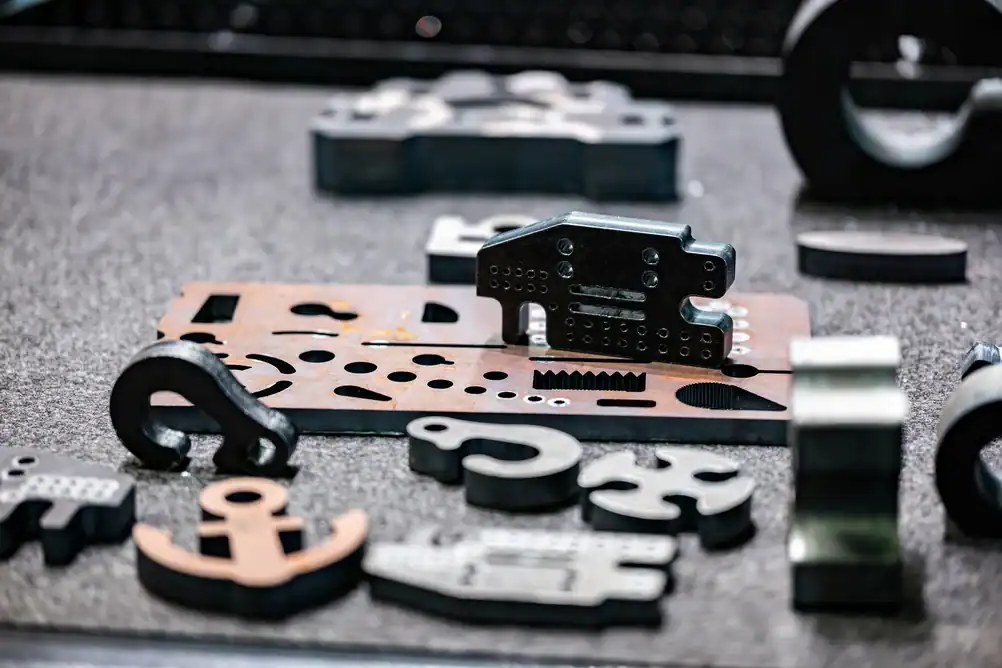
Edge quality comes out smooth enough for most applications to use as-is. When you do need secondary operations, you’re starting with a clean, burr-free edge that’s easier to finish. That saves time in your shop and reduces the total cost of the finished component.
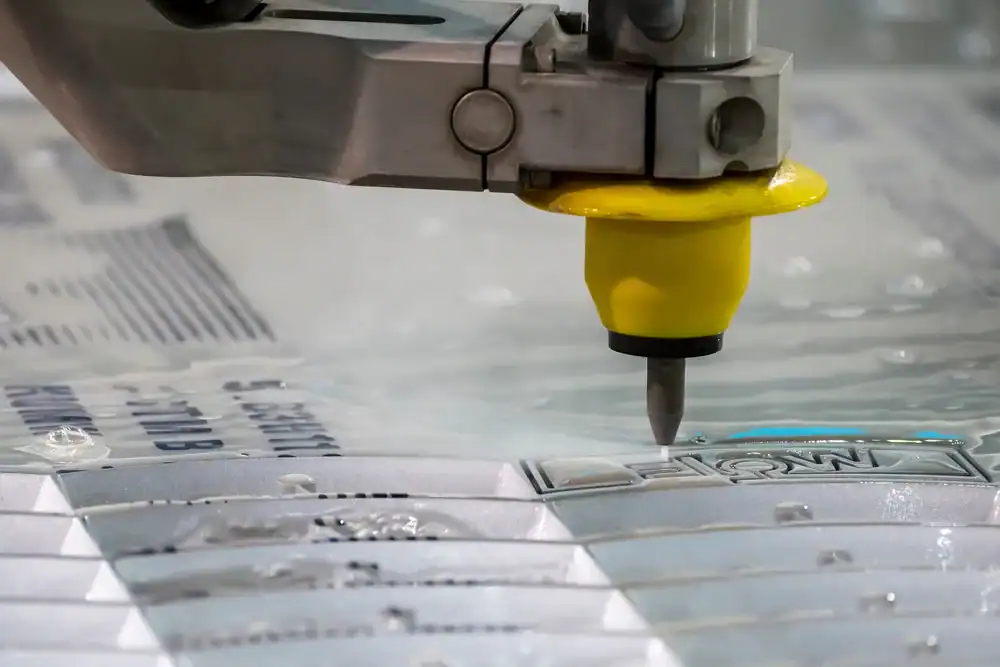
Most precision waterjet cutting systems hold tolerances between 0.003″ and 0.005″ consistently across production runs. With proper calibration and skilled programming, some systems achieve tolerances as tight as 0.001″ on specific geometries.
The key word is “consistently.” You’re not just hitting that tolerance on one part—you’re holding it across an entire batch. That repeatability comes from CNC control and the fact that waterjet doesn’t introduce heat or mechanical force that can cause dimensional drift.
Tolerances also depend on material type, thickness, and part geometry. Thicker materials or intricate curves may require slightly wider tolerances, but we’ll tell you that before cutting starts. You’ll know what to expect, and we’ll program the machine to deliver it.
Waterjet cutting uses a cold cutting process—there’s no heat transferred into your material. The abrasive waterjet stream removes material through erosion, not melting or burning, so there’s no heat-affected zone around the cut edge.
Laser cutting, by contrast, melts material as it cuts. That creates a heat-affected zone that can extend well beyond the cut line, potentially changing the material’s hardness, strength, or dimensional stability. If you’re working with metals that are heat-sensitive or already heat-treated, that’s a problem.
With waterjet, your material properties stay unchanged. That matters for parts going into assemblies with tight fits, or components that will undergo additional machining or welding. You’re not introducing stresses or metallurgical changes that could cause issues later in your process.
Yes. Waterjet doesn’t rely on tool hardness or cutting edges that wear differently depending on material. The abrasive stream cuts through soft and hard materials equally well, so you can nest different materials on the same table and cut them in sequence without stopping to change tooling.
That flexibility is useful when you’re running mixed production batches or prototyping with multiple material options. You can cut aluminum, stainless steel, and plastic in the same session without downtime for tool changes or machine reconfiguration.
It also means you’re not limited by material hardness when designing parts. If your design calls for hardened steel or exotic alloys, waterjet handles them the same way it handles softer metals. You don’t need to redesign around tool limitations or worry about excessive tool wear driving up costs.
Most projects turn around within a few days, depending on material availability and current machine schedule. Simple parts with standard materials can often be completed faster. Prototypes and rush jobs can sometimes go next-day if the material is in stock and the machine schedule allows.
Programming and setup for waterjet is significantly faster than traditional machining because there’s no custom tooling to create. We load your CAD file, verify dimensions, and start cutting. That speed matters when you’re working against tight deadlines or need to iterate quickly on a design.
For production runs, we’ll give you a clear timeline up front based on part complexity and quantity. Waterjet machines can run 24/7 if needed, which helps with larger batches or high-priority projects. You’ll know when to expect your parts, and we’ll communicate if anything changes.
Most waterjet-cut parts come off the table with a smooth, satin-finish edge that’s ready to use without secondary finishing. The edge quality is clean enough for many applications to skip deburring entirely, especially compared to plasma or flame-cut edges that leave heavy slag and rough surfaces.
If your application requires a polished or machined edge, waterjet gives you a much better starting point than other cutting methods. You’re removing less material during finishing, which saves time and reduces the risk of dimensional changes during secondary operations.
Thicker materials or certain cutting speeds may produce a slight taper or texture variation along the cut depth, but that’s controllable through programming adjustments. We’ll discuss edge requirements during the quoting process so you know exactly what to expect when the parts arrive.
Waterjet is one of the most cost-effective methods for short runs and prototypes because there’s no expensive tooling or die creation required. You’re paying for machine time and material, not for custom setups that only make sense at high volumes.
That makes waterjet ideal when you’re testing designs, producing limited quantities, or running custom one-off parts. You can make design changes between runs without scrapping tooling investments, which keeps development costs manageable and timelines flexible.
For Syosset-area manufacturers working on custom projects or low-volume production, waterjet offers the precision of CNC machining without the setup costs. You get accurate parts fast, whether you need one prototype or fifty production pieces.
Useful Links
Other Services we provide in Syosset