Hear from Our Customers
You’re working with tight deadlines and tighter tolerances. A part that’s off by even a few thousandths can mean rework, delays, or worse—scrapped material and missed commitments to your own customers.
Waterjet cutting metal in Babylon, NY gives you clean, burr-free edges without thermal distortion. No heat-affected zones means your aluminum, stainless steel, or titanium maintains its structural properties. Whether you’re prototyping a new aerospace component or running production parts for medical devices, the cut quality stays consistent.
You also avoid the secondary finishing that eats up time and labor. The edge comes off the table ready to use in most applications. That’s fewer steps between raw material and finished product, which means faster turnaround and lower cost per part.
We operate out of West Islip and serve manufacturers, fabricators, and contractors across Long Island, NY—including Babylon. We’ve built our reputation on precision waterjet cutting, custom design support, and material consultation that actually helps you make better decisions before the first cut.
Babylon’s manufacturing landscape includes established metal fabrication shops and contractors working on everything from hospital builds to industrial parks. You need a cutting partner who understands the pace and the standards. We handle everything from one-off prototypes to production runs, and we’re close enough that communication doesn’t turn into a logistics problem.
You send us your CAD file or design specs. We review it for manufacturability and flag anything that might cause issues—nesting efficiency, tolerance feasibility, material selection. If you’re still in the design phase, we can consult on what works best for waterjet.
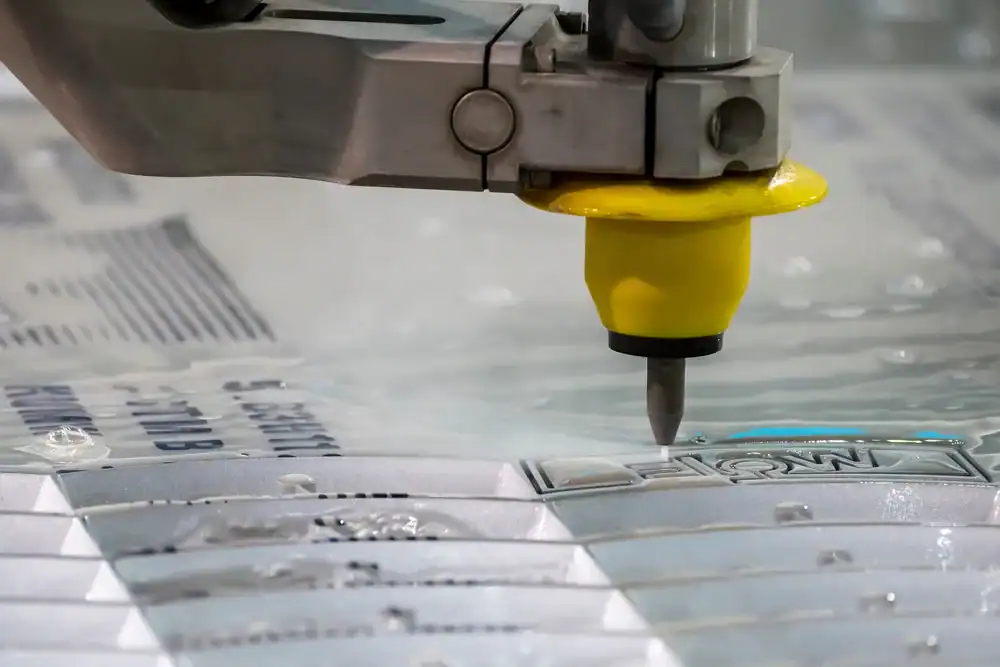
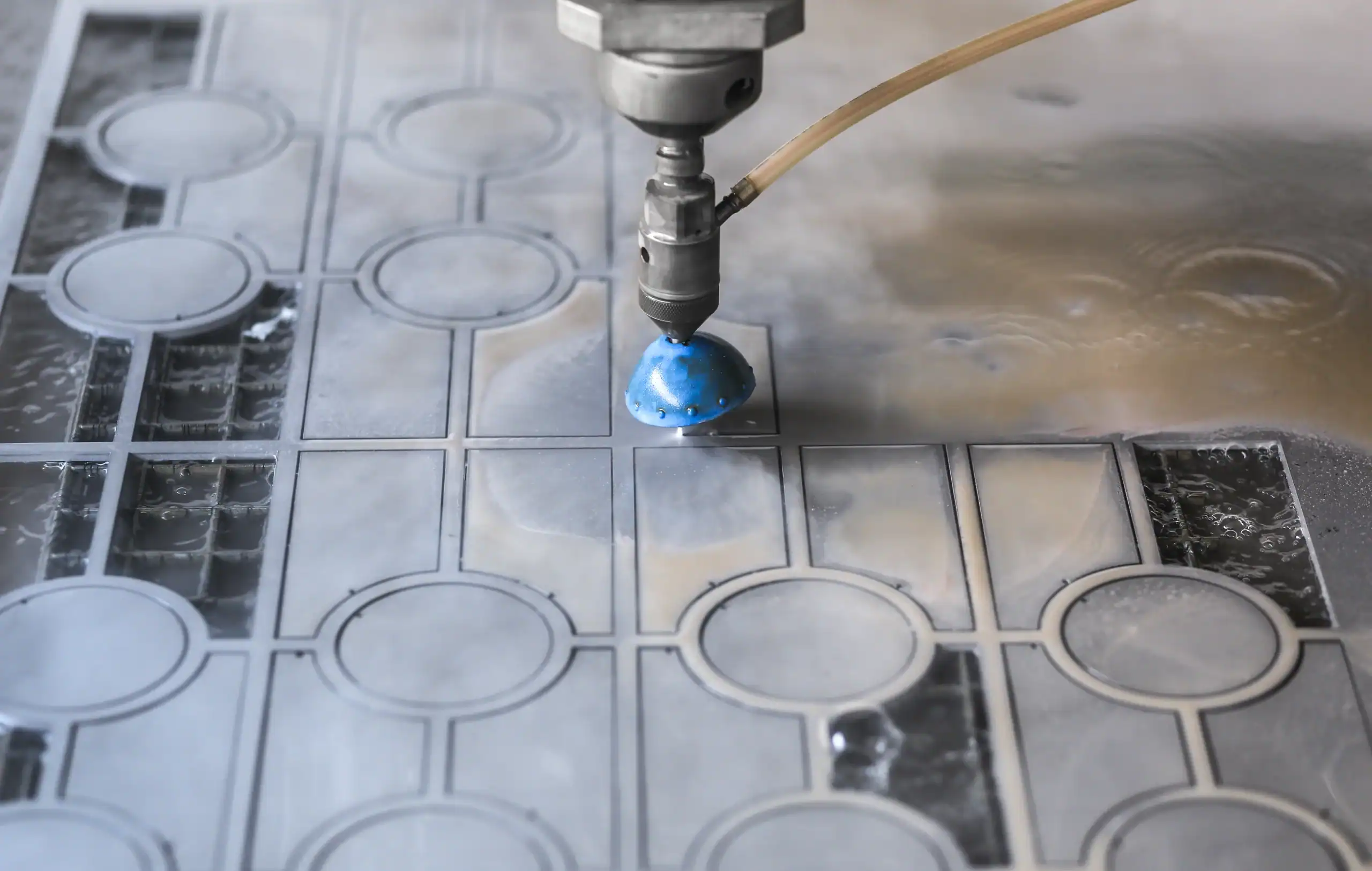
Once the file is dialed in, we program the CNC waterjet system. The machine uses a high-pressure stream of water mixed with abrasive garnet to cut through your material. No heat, no mechanical stress, no tool wear that affects accuracy part to part.
Setup is fast because there’s no custom tooling to fabricate. We can stack materials when it makes sense to reduce run time. Parts come off the table with a finished edge in most cases, so you’re not waiting on deburring or additional machining unless your application demands it. You get what you need, when you need it, without the usual compromises.
Ready to get started?
You’re not just getting a cut. You’re getting material consultation upfront so you’re using the right alloy or thickness for your application. That matters in Babylon’s competitive manufacturing environment, where aerospace, medical, and industrial projects demand material traceability and performance.
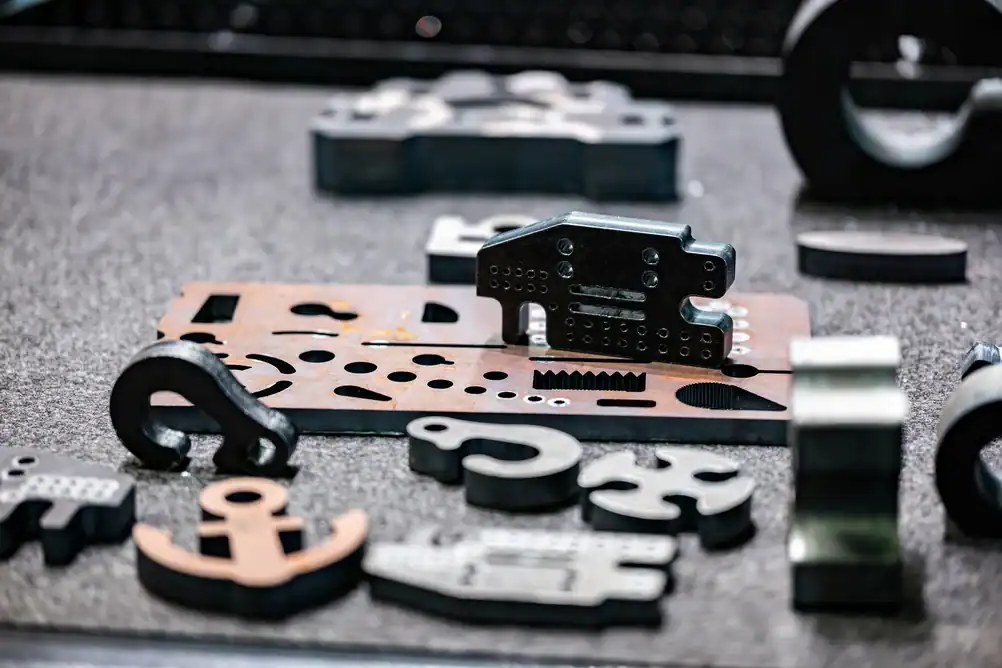
We handle complex geometries that would be difficult or impossible with traditional machining. Intricate patterns, tight inside corners, small radii—waterjet handles it without tool limitations. If you’re working on custom architectural metalwork for one of Long Island, NY’s office buildings or hospitals, the design flexibility is there.
Turnaround is faster than you’d expect for custom work. Because setup time is minimal and we’re not dealing with tool changes or thermal cooldown, parts move through production quickly. You also get the benefit of reduced material waste thanks to precision nesting, which keeps your costs down when steel and aluminum prices are climbing.
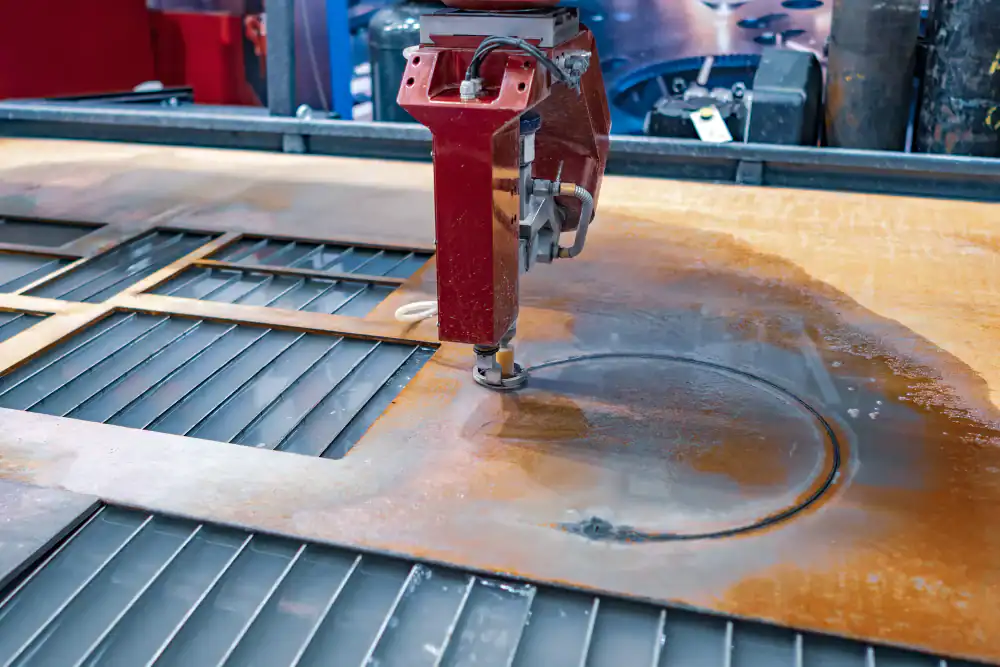
We cut virtually any metal: stainless steel, aluminum, titanium, tool steel, brass, copper, and specialty alloys used in aerospace and medical applications. Thickness ranges from thin gauge sheet up to several inches, depending on the material.
Waterjet also handles non-metals like composites, plastics, glass, and stone—so if your project mixes materials, we can often handle multiple components in one setup. The process doesn’t create heat, which means temperature-sensitive materials won’t warp, harden, or develop stress fractures.
If you’re unsure whether your material is a good fit, send us the specs. We’ll tell you what’s possible and what tolerances we can hold.
Standard tolerances are typically ±0.005 inches, but we can hold tighter depending on material, thickness, and geometry. For critical aerospace or medical components where you need ±0.001 inches or better, we’ll walk through what’s achievable and whether secondary operations make sense.
Tolerances stay consistent across production runs because there’s no tool wear. A laser or plasma cutter degrades over time, affecting accuracy. Waterjet doesn’t have that issue—the stream doesn’t dull, so part 100 matches part 1.
If your application has specific tolerance requirements, share them upfront. We’ll program accordingly and verify with inspection before parts leave the shop.
Waterjet doesn’t introduce heat, which means no warping, no hardened edges, and no heat-affected zones that compromise material properties. That’s critical when you’re working with hardened tool steels, aerospace-grade titanium, or anything that needs to maintain specific mechanical characteristics.
Laser and plasma are fast for straight cuts and thinner materials, but they struggle with thicker stock and create edge hardness that requires secondary grinding. Waterjet cuts through several inches of steel without changing the material structure, and the edge quality is often good enough to use as-is.
You also avoid hazardous fumes. Waterjet is a cold cutting process, so there’s no combustion, no toxic smoke, and no need for ventilation systems that laser and plasma require when cutting coated or exotic metals.
Turnaround depends on complexity, material availability, and current queue, but most projects move faster than traditional machining because setup is minimal. Simple parts can often be cut same-day or next-day. More complex jobs with tight tolerances or large quantities typically take a few days.
We don’t need to fabricate custom tooling or wait for drill bits and end mills to arrive. The waterjet system is ready to go once the file is programmed. If you’re in a time crunch, let us know—we’ll tell you what’s realistic and whether expediting makes sense.
Being local to Babylon and Long Island, NY also helps. You’re not waiting on cross-country shipping or dealing with time zone delays when you have questions.
Yes. We cut one-off prototypes for product development and scale up to production quantities when your design is finalized. The process is the same whether you need one part or a thousand, so there’s no quality drop when you move from prototype to production.
That’s valuable when you’re iterating on a design. You can test a prototype, make adjustments, and order another revision without worrying about minimum quantities or setup fees that make small runs prohibitively expensive. Once the design is locked in, we can run larger batches with the same tolerances and edge quality.
Stacking materials also helps with efficiency on production runs, reducing both time and cost per part without sacrificing accuracy.
Waterjet is often more cost-effective than you’d expect, especially for thicker materials, complex shapes, or jobs where secondary finishing would otherwise be required. You’re paying for precision and versatility, but you’re also avoiding costs associated with tooling, heat distortion rework, and material waste.
For simple cuts on thin sheet metal, laser or plasma might be cheaper. But once you factor in edge quality, lack of heat damage, and the ability to cut virtually any material without changing setups, waterjet often delivers better cost per finished part.
We can provide a quote based on your specific project. Material type, thickness, complexity, and quantity all affect pricing, so the more detail you share upfront, the more accurate the estimate.
Useful Links
Other Services we provide in Babylon