Hear from Our Customers
You need parts cut accurately the first time. Not close enough. Not “we’ll fix it later.” Exact.
Waterjet cutting metal in Brookhaven, NY means your steel, aluminum, or titanium gets shaped without a torch ever touching it. No heat-affected zones. No warped edges that throw off your assembly. No material properties changed because someone cranked up the temperature to get through thick stock.
The water stream cuts cold. That means a 2-inch steel plate comes off the table the same way it went on—just in the shape you specified. Tolerances hold to ±0.005 inches. Edges come out smooth, often ready to weld or assemble without grinding or deburring.
If you’re working on architectural metalwork, custom fabrication, or prototype parts where fit matters, this process saves you from the back-and-forth of trying to correct heat distortion after the fact. You get the part. It fits. You move on.
We operate right here in the Brookhaven area, serving Long Island, NY’s fabricators, contractors, and designers who need custom metal waterjet cutting without shipping delays or communication gaps.
We’re not a massive production facility running the same part for weeks. We handle one-offs, short runs, and custom jobs where the design changes or the material is unusual. If you’re working on a project in Brookhaven or across Suffolk County and need someone who can consult on material selection, review your CAD file, and turn around parts quickly, that’s what we do.
You’ll talk to people who understand waterjet metal cutting—not a call center. We know what works, what doesn’t, and how to keep your project moving without surprises.
You send us your design file—DXF, DWG, or whatever CAD format you’re working in. We review it to make sure the part is optimized for waterjet cutting. Sometimes that means adjusting a corner radius or repositioning a pierce point to improve edge quality. We’ll let you know if something won’t cut cleanly.
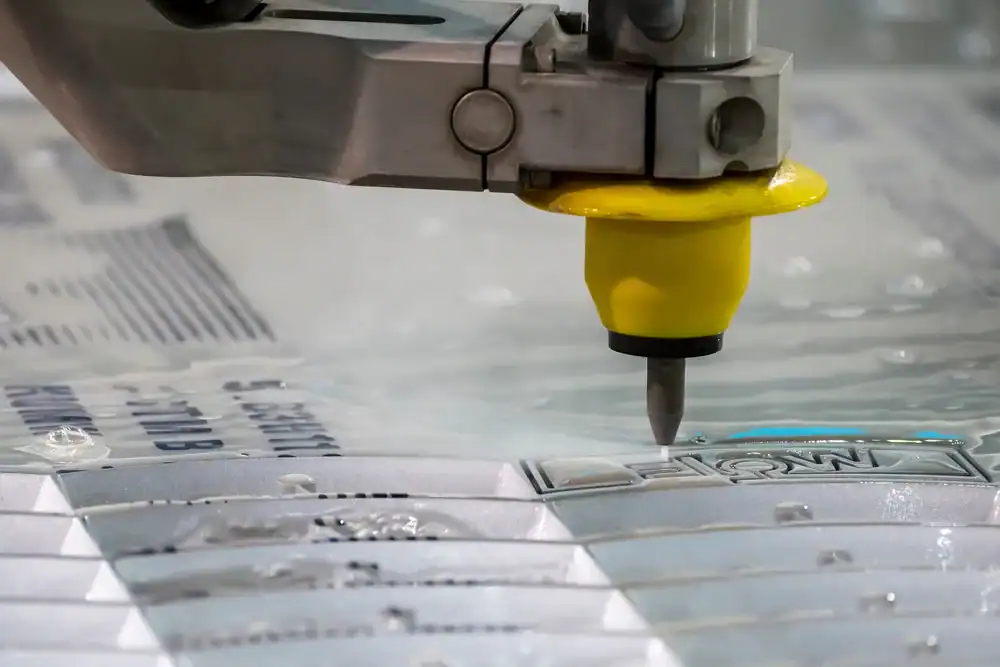
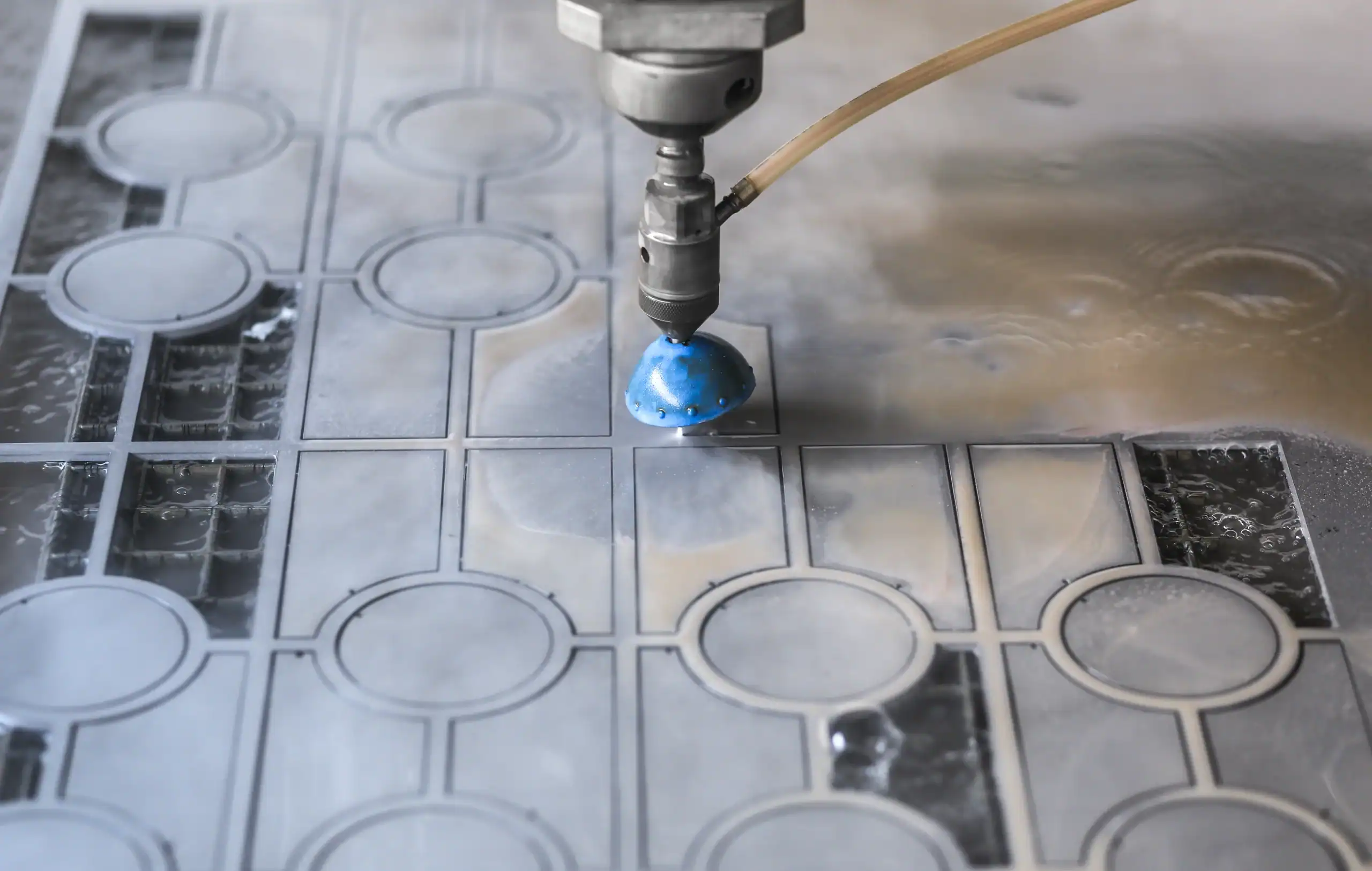
Once the file is dialed in, we load your material onto the CNC waterjet table. The cutting head follows the programmed path, using a high-pressure stream of water mixed with abrasive garnet to slice through metal. The stream is thin—about the width of a human hair—so there’s minimal material waste and tight nesting of parts.
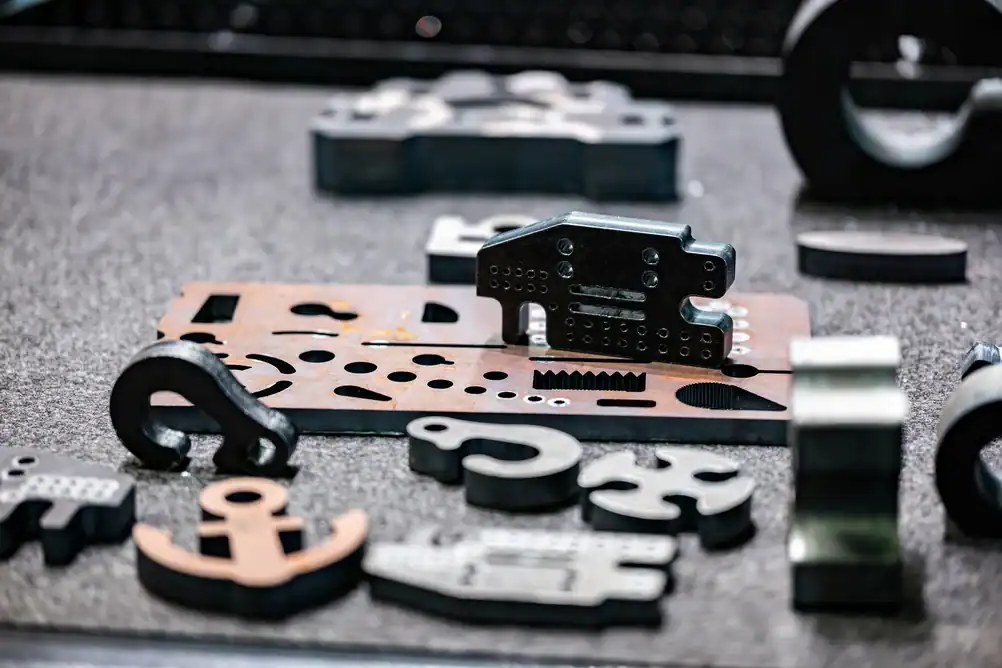
After cutting, parts come off the table ready for inspection. Most edges are smooth enough to use as-is. If you need secondary operations like drilling, bending, or welding, the cut quality makes that easier because there’s no slag, burrs, or heat-affected material to deal with first.
Turnaround depends on material thickness, complexity, and current queue, but custom metal waterjet cutting in Brookhaven typically moves faster than you’d expect. We’re set up for quick jobs, not just long production runs.
Ready to get started?
You get cuts through steel, stainless, aluminum, brass, copper, and titanium up to several inches thick. The machine doesn’t care if the material is hardened tool steel or soft aluminum—it cuts the same way.
Complex shapes aren’t a problem. Sharp internal corners, tight radii, intricate curves, and pierced holes all happen in one setup. You’re not moving the part between multiple machines or processes to get the final shape.
In Brookhaven and across Long Island, NY, a lot of metal fabrication shops are dealing with rising material costs and tighter project budgets. Waterjet cutting helps because the kerf width is so narrow that parts can nest closely together on the sheet. Less scrap means you’re buying less raw material to get the same number of finished parts.
Edge quality is another factor. The cut surface is smooth—usually between 125 and 250 Ra depending on material and thickness. That’s clean enough for most applications without additional finishing. If you’re building something where the edge will be visible or needs to mate precisely with another component, you’re not spending extra time or money grinding it down.
And because there’s no heat, there’s no hazardous fumes, no fire risk, and no thermal distortion to correct later. The process is cleaner and safer than plasma or laser cutting for thick metals.
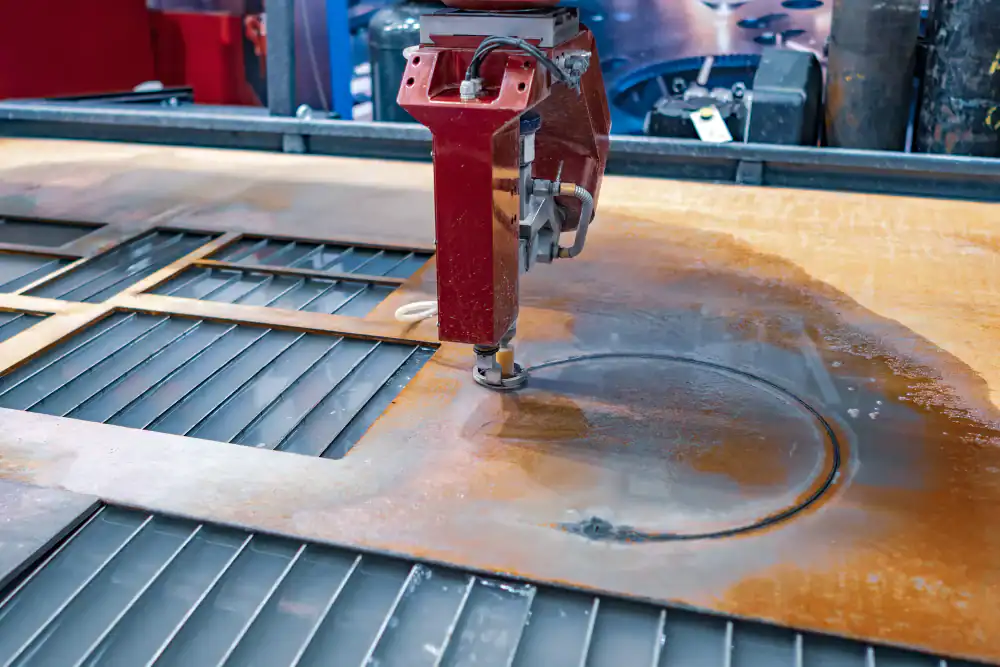
We cut all common metals: carbon steel, stainless steel, aluminum, tool steel, titanium, brass, copper, and bronze. Thickness ranges from thin gauge sheet up to 6 inches or more depending on the material.
Hardness doesn’t limit the process the way it does with mechanical cutting. If you’re working with hardened steel or exotic alloys, waterjet handles it without dulling tools or generating heat that changes the material properties.
If you’re not sure whether your material will work, send us the specs. We’ll tell you what to expect for edge quality, cut speed, and cost.
Standard waterjet cutting holds ±0.005 inches on most metals. That’s tight enough for parts that need to fit together precisely without secondary machining.
If you need even tighter tolerances, we can use dynamic waterjet technology that compensates for stream lag and taper. That gets you into the ±0.002-inch range, which is close to what you’d expect from CNC milling but without the tool wear or heat.
The key is that tolerances stay consistent across the entire part. You’re not dealing with drift or deflection like you might see with mechanical cutting on thin materials. The water stream doesn’t push the material around.
Turnaround depends on material thickness, part complexity, and how many pieces you need. Simple parts in thin material can often be cut same-day or next-day if we’re not backed up.
Thicker materials—say 2 inches or more—cut slower because the water stream takes longer to penetrate and maintain quality through the depth. Complex shapes with lots of detail also add time.
For custom jobs, we’ll give you a realistic timeline upfront. If you’re on a tight deadline, let us know when you send the file. We can often prioritize rush work or suggest ways to simplify the design slightly to speed things up without compromising function.
Most waterjet-cut edges come off the table smooth and burr-free. You’ll see a slight texture from the abrasive, but it’s not sharp or rough like you’d get from plasma or torch cutting.
For parts that need to be welded, the edge quality is usually good enough to tack and weld without grinding. For parts that will be powder coated or painted, same thing—no prep needed beyond normal cleaning.
If you’re building something where the cut edge is visible or needs to mate with another surface, you might want a quick pass with a file or sandpaper just to knock down the texture. But you’re talking about seconds of hand work, not extended grinding or machining to get a usable edge.
Yes. Waterjet cutting handles sharp internal corners and small radii better than most other processes because the stream width is so narrow—typically around 0.030 to 0.040 inches.
You can get inside corner radii down to about 0.020 inches depending on material thickness. That’s tight enough for most functional parts and decorative metalwork.
The process also handles pierce holes cleanly. When the stream first penetrates the material, it leaves a small entry mark, but we position those in areas that won’t affect the part’s function or appearance. If you have specific requirements for where pierce points can or can’t go, mark that on your drawing and we’ll program around it.
Waterjet works better when you’re cutting thick material, need zero heat input, or want to avoid edge hardening. Laser and plasma both generate intense heat, which can warp thin materials and create a hardened zone along the cut edge in steels.
For stainless steel and aluminum, waterjet also avoids the oxidized or discolored edge you sometimes get with thermal cutting. The edge comes out clean and ready to weld or finish without additional prep.
Waterjet is also more versatile across different metals. You don’t need to change gases, adjust power settings, or swap consumables when you switch from steel to aluminum to brass. Same setup, same process, same edge quality across all of them.
Useful Links
Other Services we provide in Brookhaven