Hear from Our Customers
When you’re cutting steel, aluminum, or titanium for a project that matters, you can’t afford warped edges or dimensional errors. Traditional cutting methods generate heat that changes your material’s properties and creates zones you’ll need to grind down or toss entirely.
Waterjet cutting metal in Dix Hills, NY eliminates that problem. The process uses high-pressure water mixed with abrasive garnet to cut through your material without generating heat. Your edges come out smooth and burr-free, your tolerances stay tight, and your material’s structural integrity remains unchanged.
You’re not paying for secondary finishing. You’re not scrapping parts that came out wrong. You’re getting components that fit your specs the first time, whether you’re working with half-inch aluminum sheet or six inches of hardened steel.
We serve fabricators, contractors, and manufacturers across Long Island, NY who need precision metal cutting without the limitations of laser or plasma. We’ve built our reputation on delivering accurate cuts for projects where dimensional tolerance isn’t negotiable.
Dix Hills sits in the heart of Long Island, NY’s manufacturing corridor, where metal fabrication shops, machine shops, and construction contractors need reliable cutting services that can handle complex geometries and thick materials. We understand the local market because we work in it every day.
When you bring us a project, you’re working with operators who know how to set up cuts for different metals, optimize material usage, and deliver parts on your timeline. No learning curve on your dime.
You send us your CAD file or drawings with your material specifications. We review your design to confirm it’s optimized for waterjet cutting and flag any potential issues before we start. If you’re working with multiple parts, we nest them to minimize material waste and reduce your costs.
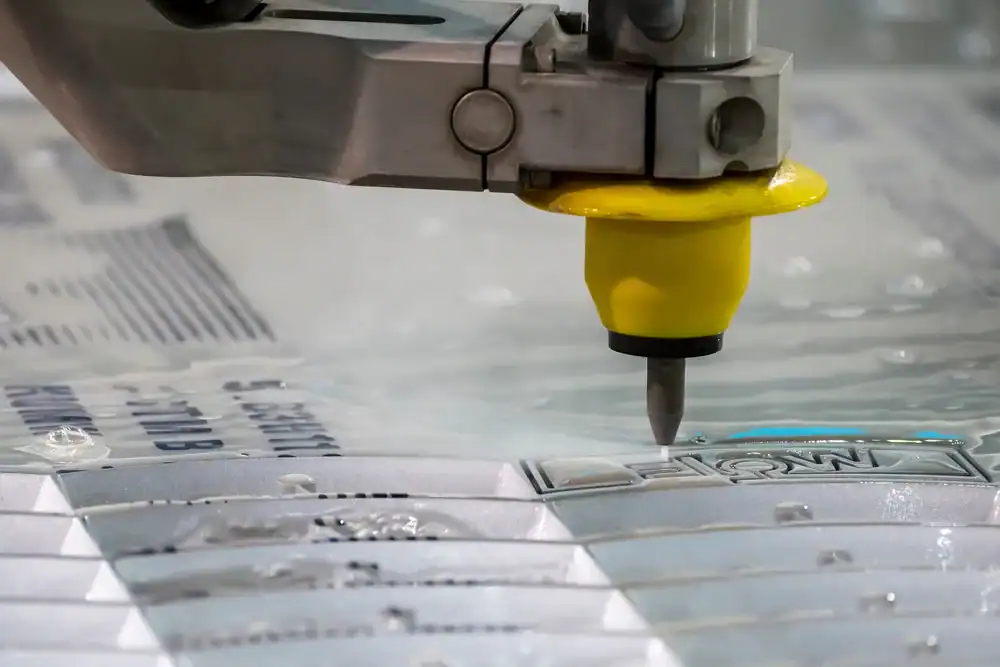
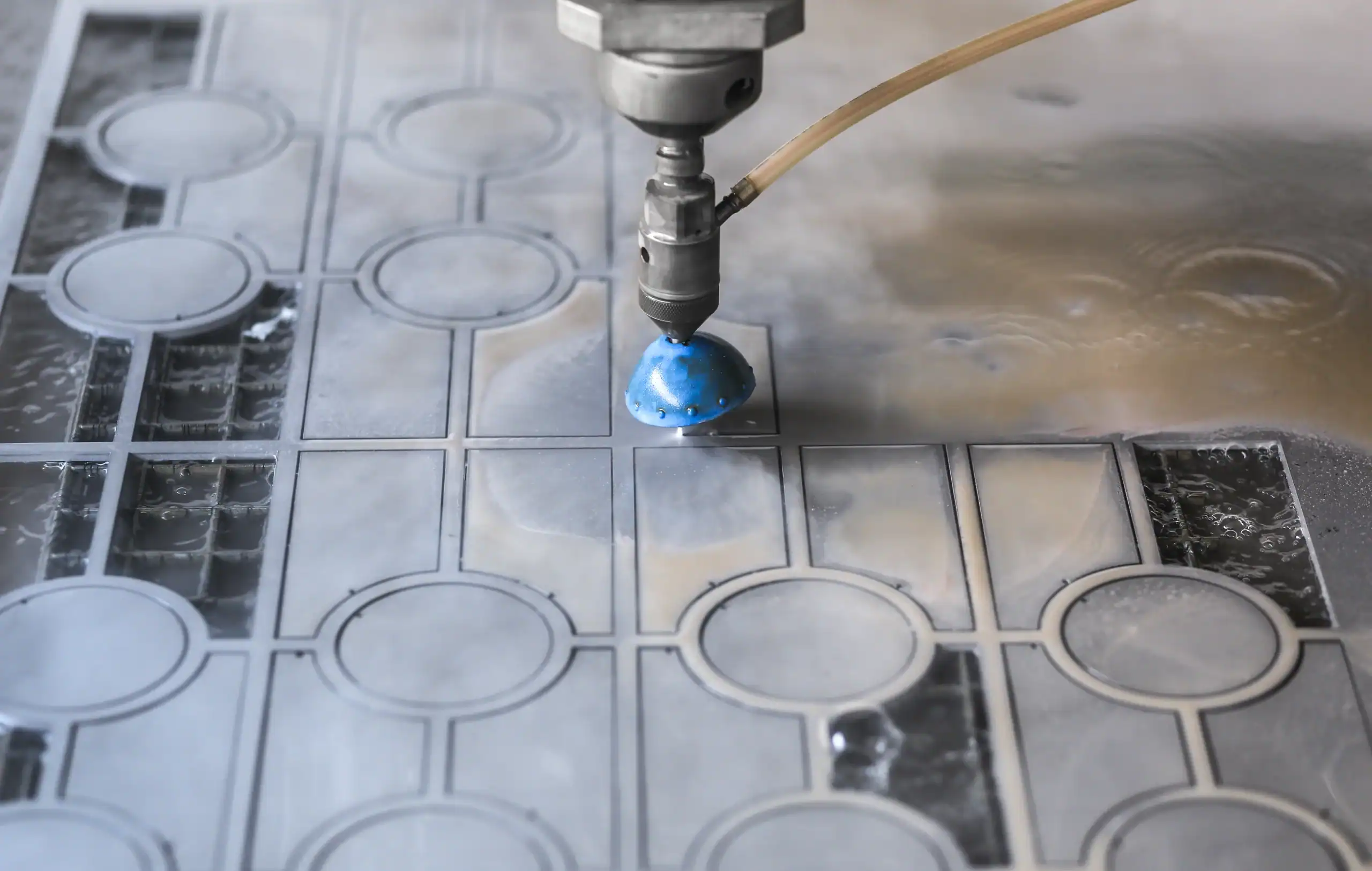
Once your file is programmed into our CNC metal waterjet cutting system, we load your material onto the cutting bed. The machine uses a stream of water pressurized to nearly 60,000 PSI, mixed with fine garnet abrasive, to cut through your metal following the exact path you specified. There’s no heat, no tool wear affecting accuracy, and no need to change setups between different materials.
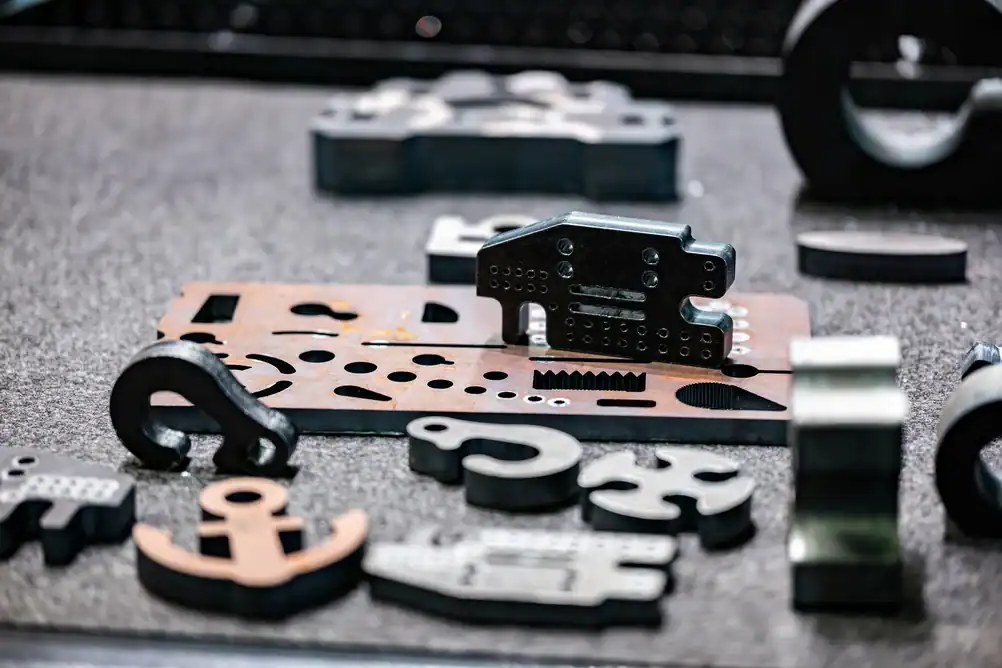
After cutting, your parts come off the table ready to use. The edges are smooth enough that most applications don’t require additional finishing. You get parts that meet your tolerances without the extra steps, extra time, or extra cost that come with thermal cutting methods.
Ready to get started?
Custom metal waterjet cutting in Dix Hills, NY gives you the ability to cut intricate shapes with sharp internal corners that would be impossible with other methods. You can cut materials up to six inches thick, compared to the half-inch maximum most laser cutters can handle. The process works on any metal, including reflective materials like copper and brass that cause problems for laser systems.
Long Island, NY’s manufacturing sector includes aerospace components, architectural metalwork, custom machinery parts, and specialized fabrication projects. These applications demand tight tolerances and clean edges. Waterjet delivers both without creating heat-affected zones that weaken your material or require additional machining to remove.
You also get faster turnaround on complex jobs because there’s minimal setup time. We can switch from cutting stainless steel to aluminum to titanium in minutes, not hours. Your parts are nested efficiently to maximize material usage, which means you’re paying for finished components, not scrap bins full of wasted metal.
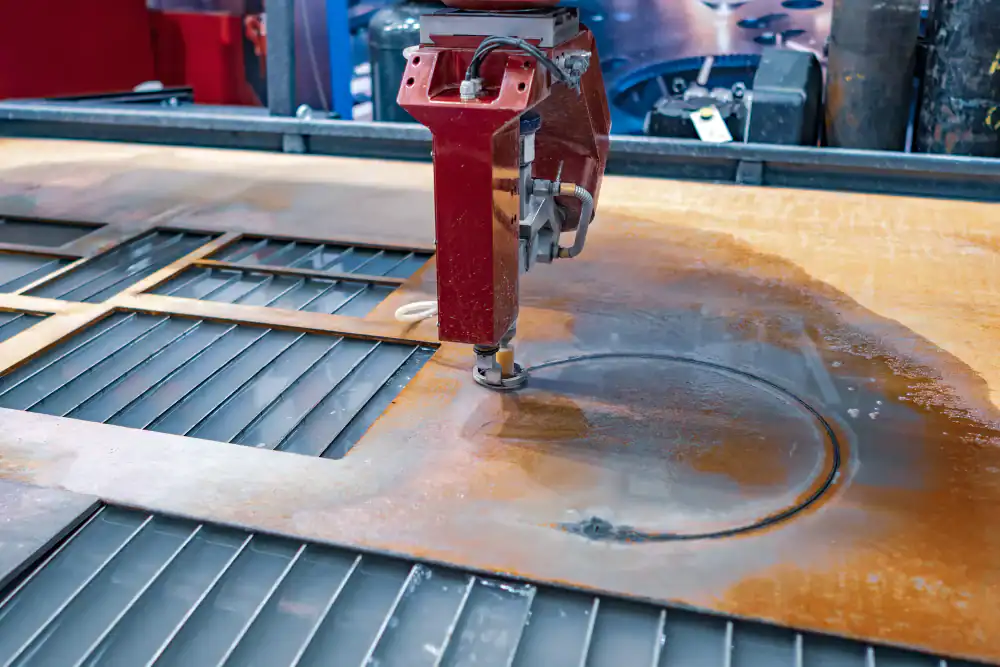
We cut all common metals including carbon steel, stainless steel, aluminum, titanium, tool steel, copper, brass, and bronze. The process works on hardened materials that would damage cutting tools and reflective metals that cause problems for laser systems.
Thickness isn’t a limiting factor the way it is with other cutting methods. We regularly cut steel up to six inches thick, while most laser cutters max out around half an inch. If you’re working with exotic alloys or specialized materials, waterjet handles those too because the cutting mechanism is purely mechanical, not thermal.
The same machine that cuts thin aluminum sheet for architectural panels can cut thick steel plate for structural components. You’re not limited by material hardness, reflectivity, or thermal conductivity.
CNC metal waterjet cutting in Dix Hills maintains tolerances within a few thousandths of an inch, comparable to laser cutting but without the heat-affected zone. The kerf width is narrow, typically around 0.03 to 0.04 inches, which allows for tight nesting and minimal material waste.
Unlike thermal cutting methods, waterjet doesn’t create warping or dimensional changes as the material cools. Your parts come out the same size they went in. There’s no secondary straightening or stress relief required. For applications where dimensional accuracy matters, that consistency is critical.
The CNC control means repeatability across production runs. If you need fifty identical parts, the fiftieth one matches the first one. You’re not dealing with tool wear or heat buildup affecting accuracy as the job progresses.
Waterjet produces smooth, clean edges that typically don’t require deburring or secondary finishing. The edge quality is superior to plasma, flame cutting, or even many laser applications. You get a uniform surface without the slag, dross, or heat discoloration that comes with thermal processes.
For most applications, parts come off the waterjet table ready to weld, assemble, or install. There’s no grinding, filing, or machining required to clean up the cut edge. That saves you labor time and keeps your project moving.
If you’re doing precision work where edge finish is critical, waterjet gives you a consistent surface that meets tight specifications. The lack of heat means no hardened edges or metallurgical changes that would require additional processing to remove.
Cutting time depends on material thickness, complexity of the design, and the type of metal. Thicker materials and harder metals take longer to cut, but there’s almost no setup time compared to traditional machining. We can go from CAD file to finished parts quickly because there’s no tooling to create or fixtures to build.
For straightforward cuts on common materials, turnaround is typically measured in days, not weeks. Complex parts with intricate details take longer to cut but still arrive faster than if you were using conventional methods that require multiple setups and tool changes.
The efficiency comes from the process itself. We’re not stopping to change tools, adjust for different materials, or wait for parts to cool. Your job runs continuously from start to finish, and you get parts that don’t need additional processing before you can use them.
Waterjet cutting metal in Dix Hills, NY makes sense when you’re working with thick materials, heat-sensitive metals, or designs that require no heat-affected zones. Laser excels at thin materials and high-speed production, but it creates thermal stress that can warp your parts or change material properties.
If you’re cutting aluminum for aerospace components, stainless for food processing equipment, or tool steel for dies and fixtures, you can’t afford heat damage. Waterjet keeps your material’s properties intact. There’s no hardened edge to machine off, no warping to straighten, and no oxidation to clean.
Waterjet also handles material thicknesses that lasers simply can’t cut. When your project calls for heavy plate or you’re working with reflective metals like copper, waterjet is often the only practical option. You get the precision without the limitations.
Waterjet cutting costs more per hour than plasma or flame cutting, but you’re comparing the wrong numbers. The real cost is the total price to get finished, usable parts. When you factor in the elimination of secondary finishing, reduced material waste from tighter nesting, and fewer scrapped parts from heat damage, waterjet often costs less overall.
You’re not paying for deburring labor. You’re not grinding off heat-affected zones. You’re not scrapping warped parts that came out of tolerance. The parts you get are ready to use, which means you’re saving time and labor costs downstream.
For production runs, the ability to nest parts tightly and cut multiple materials without setup changes adds up to real savings. You’re maximizing your material usage and minimizing the time your project spends waiting for parts.
Useful Links
Other Services we provide in Dix Hills