Hear from Our Customers
You’re not cutting metal just to cut it. You need parts that meet spec, fit assemblies without force, and don’t require hours of secondary finishing to clean up heat damage or rough edges.
Waterjet cutting metal in East Northport, NY means cold cutting—no heat-affected zones, no warping, no temper loss. The stream cuts through aluminum, stainless steel, titanium, and hardened tool steel without changing what makes those materials work in the first place.
You get clean edges, tight inside corners, and dimensional accuracy that holds across production runs. Whether it’s a single prototype or a batch of 500, the cut quality stays consistent because the process doesn’t rely on heat, which means it doesn’t introduce the variables that come with it.
We’ve been serving manufacturers, architects, and fabricators throughout East Northport, NY and Long Island, NY for years. We’re the shop that figures out how to cut the parts that make other shops nervous—thick plates, complex geometries, materials that don’t respond well to heat.
East Northport sits in the heart of Long Island, NY’s industrial corridor, surrounded by manufacturers in aerospace, architecture, and custom fabrication. That means the work coming through our doors isn’t simple. It requires equipment that can handle it and operators who know how to set it up right.
We run multi-axis CNC waterjet systems, review every file before it hits the table, and cut parts for companies that can’t afford to wait on a second attempt.
You send us your CAD file—DXF, DWG, or whatever format your design team works in. We review it before programming to catch tolerance issues, kerf concerns, or features that might not translate well to waterjet. If something looks off, we’ll reach out before we start cutting.
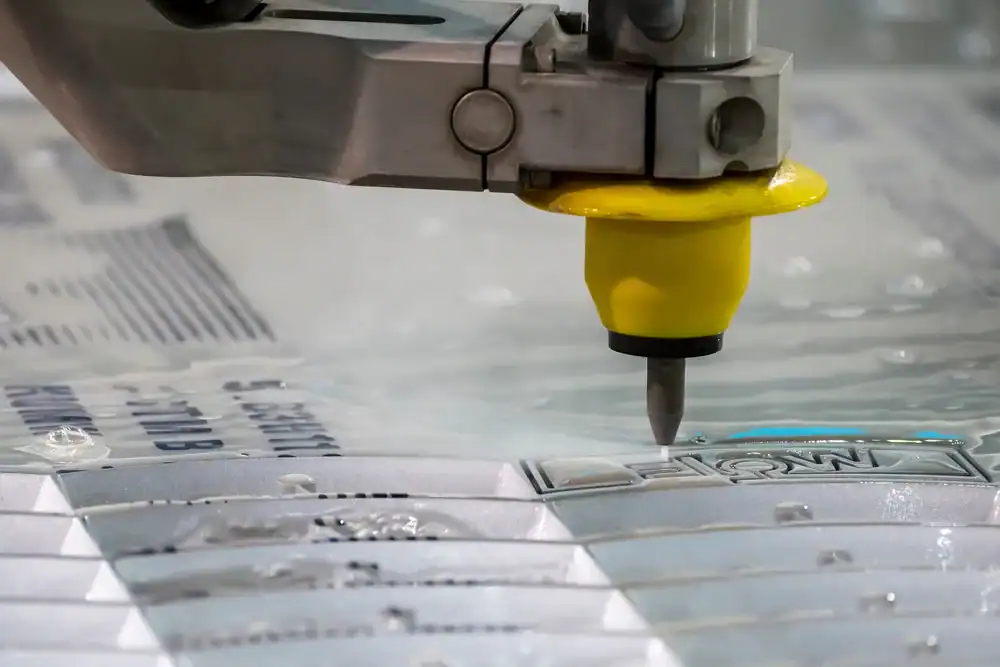
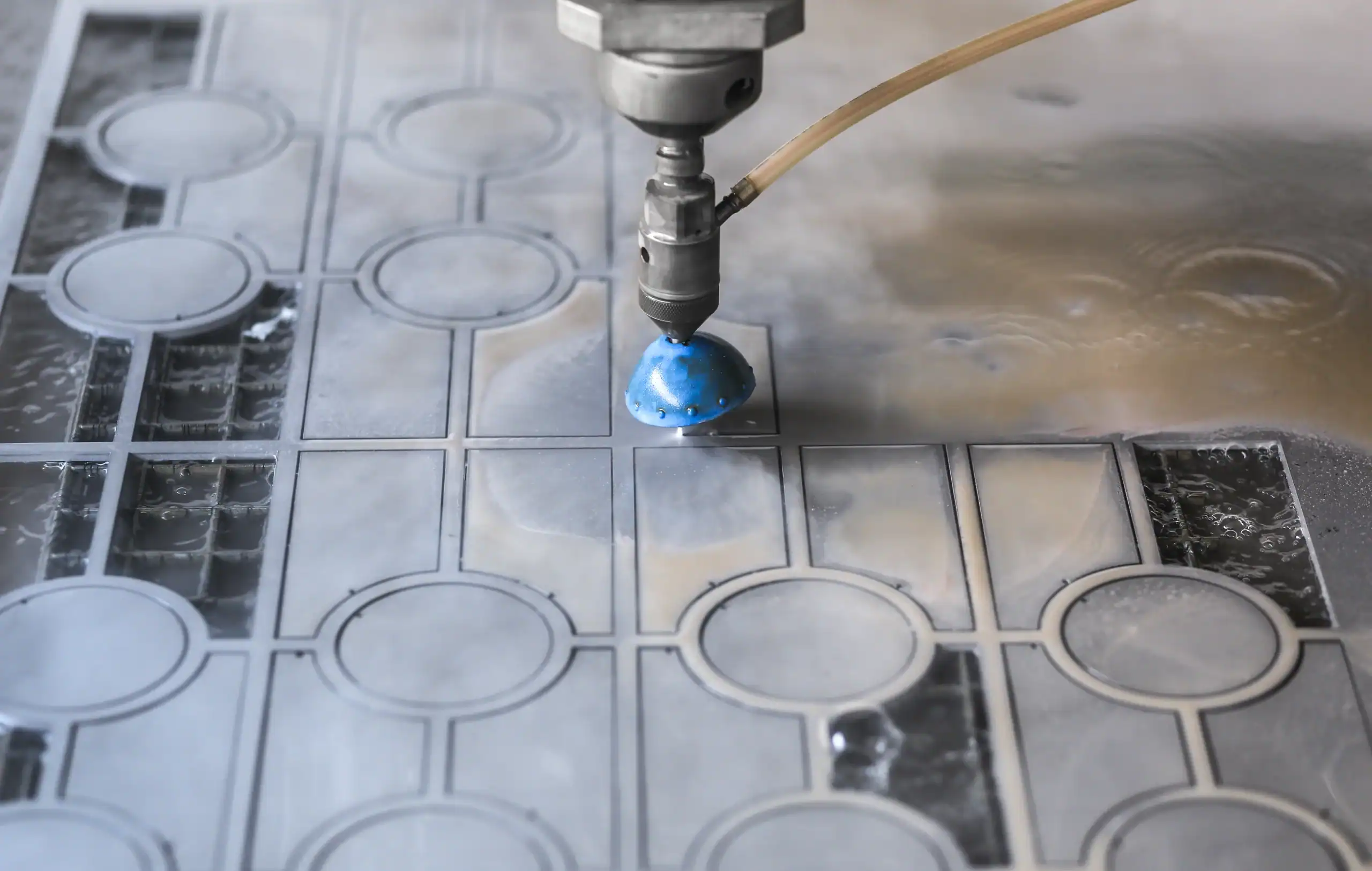
Once the file is clean, we program the toolpath and load your material onto the cutting table. The waterjet stream—a mix of ultra-high-pressure water and garnet abrasive—cuts through the metal without generating heat. No flames, no molten edges, no hardened zones that’ll chew up your tooling later.
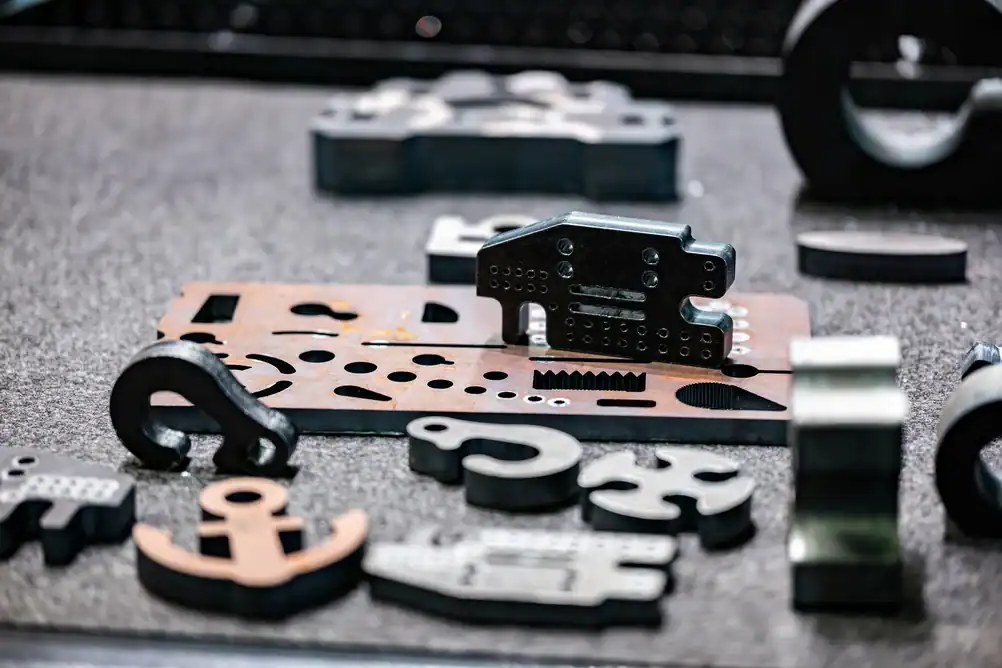
After cutting, parts come off the table ready to use in most cases. If you need deburring, additional machining, or finishing, we can handle that too. But in many applications, what comes off the waterjet is what goes into your assembly. That’s the advantage of a process that doesn’t leave behind thermal damage or rough, oxidized edges.
Ready to get started?
Waterjet cutting metal in East Northport, NY isn’t just about making a shape. It’s about delivering parts that work in your application without extra steps, rework, or compromise.
You get cuts with tolerances down to +/- 0.0005 inches on materials from 1/16-inch sheet to multi-inch plate. The process handles stainless steel, aluminum, titanium, tool steel, and exotic alloys without pre-heating, coolant, or tool changes. Internal corners stay sharp, curves stay smooth, and edges come out clean enough that many parts skip secondary finishing entirely.
Long Island, NY’s manufacturing sector—especially around East Northport and the surrounding industrial areas—runs on tight deadlines and tighter tolerances. Waterjet supports that by cutting materials that lasers struggle with, handling thicknesses that punches can’t reach, and doing it all without the HAZ (heat-affected zone) that creates problems downstream. Whether you’re prototyping architectural panels or running production components for aerospace assemblies, the process adapts without requiring new tooling or setup costs that eat into your budget.
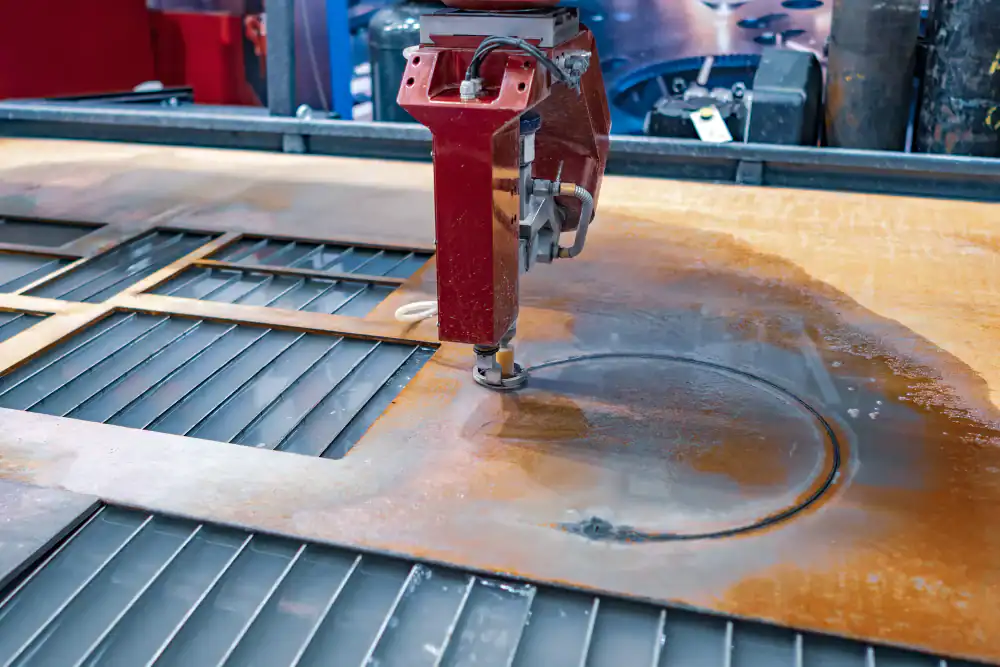
We cut virtually any metal you’re working with—aluminum, stainless steel, titanium, tool steel, brass, copper, Inconel, hardened alloys, and more. The process doesn’t rely on melting or burning, so it doesn’t matter how hard the material is or how much it costs per pound.
That’s a big advantage if you’re working with exotic metals or materials that lose their properties under heat. Stainless steel, for example, can harden along cut edges when you use thermal processes, making it harder to machine later. Waterjet avoids that entirely because there’s no heat involved.
Thickness isn’t usually a limiting factor either. We’ve cut stainless steel blocks over a foot thick and delicate sheet metal under 1/16 inch. The same process handles both without changing the setup or worrying about warping thin material.
The main difference is heat. Laser and plasma both cut by melting or burning through metal, which creates a heat-affected zone along the edge. That zone can harden the material, introduce stress, cause warping on thin sheets, and leave behind oxidation or dross that needs grinding off.
Waterjet cuts cold. The abrasive stream erodes material without changing its temperature, so you don’t get hardened edges, HAZ, or thermal distortion. That matters when you’re cutting parts that need to maintain specific material properties—like corrosion resistance in stainless steel or precise tolerances in aluminum.
Laser is faster on thin materials and works well for high-volume production of simple shapes. But if you’re cutting thick plate, working with reflective metals like aluminum or copper, or need parts that won’t warp, waterjet handles those situations better. It’s not about one being better across the board—it’s about matching the process to what the part actually needs.
Standard waterjet cutting holds tolerances around +/- 0.005 inches on most materials and thicknesses. With CNC control and proper setup, we can tighten that to +/- 0.0005 inches on critical dimensions, depending on material type and part geometry.
Tolerances tighten up on thinner materials and get a bit looser as you move into thicker plate, but that’s true of any cutting process. The difference with waterjet is that the tolerances stay consistent across the cut because there’s no heat distortion pulling the material around as it cools.
If your part has features that need tighter tolerances than waterjet can deliver—like precision holes or threads—we’ll tell you up front. In many cases, waterjet gets you close enough that a quick pass on a mill or lathe finishes the job, which still saves time compared to machining the entire part from solid stock.
In a lot of cases, no. Waterjet leaves a clean edge that’s ready to weld, assemble, or powder coat without additional grinding or deburring. The surface finish depends on cutting speed and abrasive flow—we can dial it in for smoother edges if your application requires it.
Some parts do need light deburring, especially if they’re going into assemblies where sharp edges could cause issues. But compared to plasma or laser, where you’re often grinding off dross, slag, or oxidation, waterjet requires far less cleanup.
If you need specific edge finishes—like a radius, chamfer, or polished surface—that’s a secondary operation. But for most functional parts, what comes off the waterjet table is what goes into service. That cuts down on labor, speeds up turnaround, and reduces the chance of damaging the part during finishing.
We can cut metal over a foot thick if the material and application call for it. We’ve handled stainless steel blocks 18 inches thick and aluminum plate well beyond what most other processes can touch. The limitation isn’t usually the waterjet itself—it’s whether cutting that thickness makes sense compared to other methods.
Thicker materials take longer to cut because the stream has to erode through more material. At a certain point, machining or sawing might be faster depending on part complexity. But if you need intricate shapes, tight nesting to reduce scrap, or you’re working with a material that’s difficult to machine, waterjet often ends up being the most efficient option even on thick plate.
On the other end, waterjet handles thin sheet metal down to 1/16 inch or less without warping or distorting it. That’s a problem with thermal cutting methods, where heat input can pull thin material out of flat. Cold cutting eliminates that issue entirely.
Turnaround depends on material availability, current shop load, and part complexity—but most jobs in East Northport, NY move through in days, not weeks. Simple parts with material in stock can often be cut within 24 to 48 hours. More complex jobs or specialty materials might take a bit longer.
We’re not going to promise same-day turnaround on every job because that’s not realistic, especially if your part requires thick plate, special nesting to minimize waste, or coordination with secondary operations. But we also understand that you’re not calling a waterjet shop because you have unlimited time—you need parts, and you need them to be right.
If you’re on a tight deadline, let us know up front. We’ll tell you whether we can hit it, and if we can’t, we’ll give you an honest timeline instead of overpromising and missing the date. That’s how shops stay in business in East Northport’s manufacturing community—by doing what we say we’ll do.
Useful Links
Other Services we provide in East Northport