Hear from Our Customers
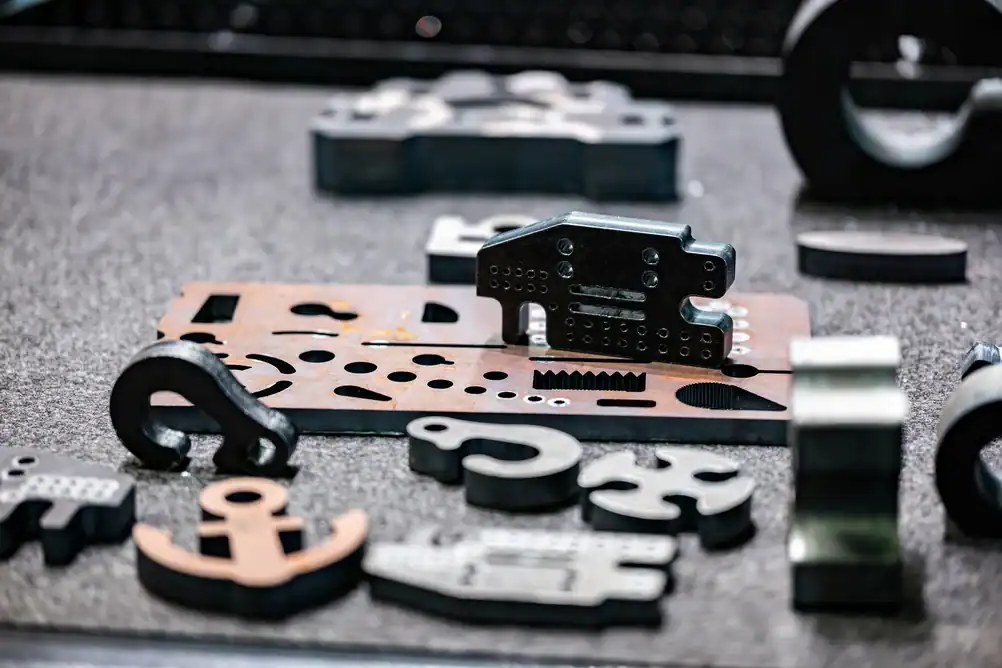
Your parts come out accurate. We’re talking ±0.002″ tolerances on critical applications where precision actually matters. No heat-affected zones means no warping, no distortion, and no mechanical stress that throws your specs off.
The edge quality is clean enough that you’ll skip most secondary finishing work. That saves you time and keeps your project moving. Whether you’re cutting stainless steel, aluminum, titanium, or brass, the process handles it without changing setups or tools.
Complex geometries that would normally require multiple operations get done in one pass. Intricate designs, tight inside corners, sharp angles – waterjet handles them without the limitations you’d hit with laser or plasma cutting. You get the part you designed, not a compromised version of it.
We operate right here in the New York metro area. We’ve worked with manufacturers across Long Island, NY who need precision metal cutting without the turnaround delays that come from shipping parts across the country.
Our shop uses CNC-controlled waterjet systems that let us handle everything from one-off prototypes to production runs. You work directly with our team – the same people who program the cuts and run the machines. No middlemen, no miscommunication about what you actually need.
Elmont sits in Nassau County, surrounded by fabrication shops, automotive suppliers, and manufacturers who understand that precision matters. We’ve cut parts for architectural metalwork, aerospace components, and custom fabrication projects where tolerances can’t slip. When you’re local, we can turn jobs around faster and handle rush work when your timeline gets tight.
You send us your CAD files or drawings. Our team reviews them to make sure the design works for waterjet cutting and flags any potential issues before we start. If you don’t have CAD files, we can create them from your specifications or samples.
We program the cut path into our CNC system. This includes nozzle compensation to account for the slight taper that happens with waterjet cutting, especially on thicker materials. Getting this right is what keeps your tolerances tight.
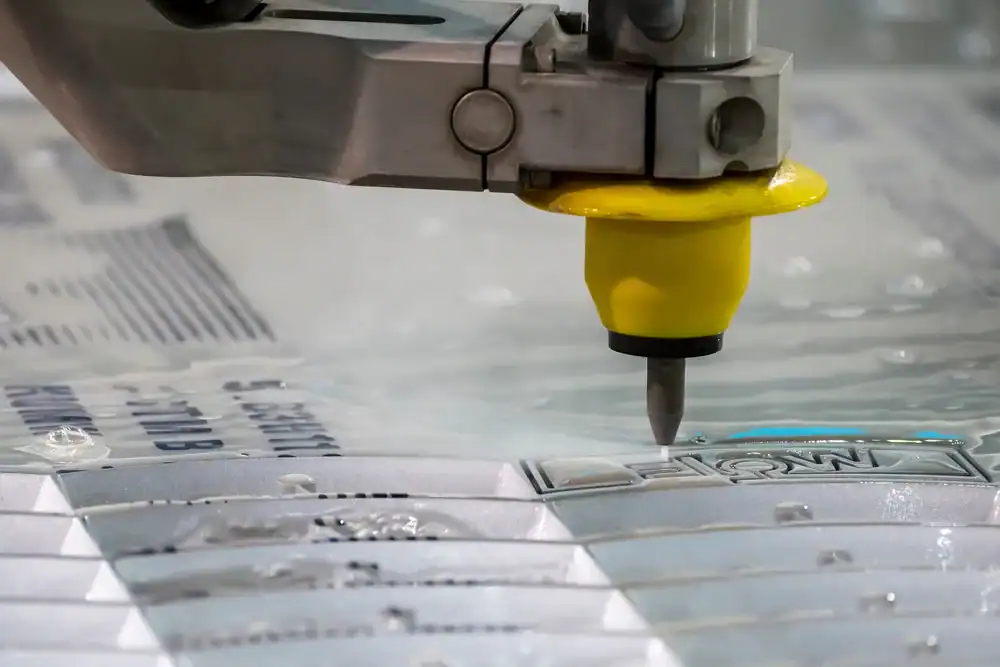
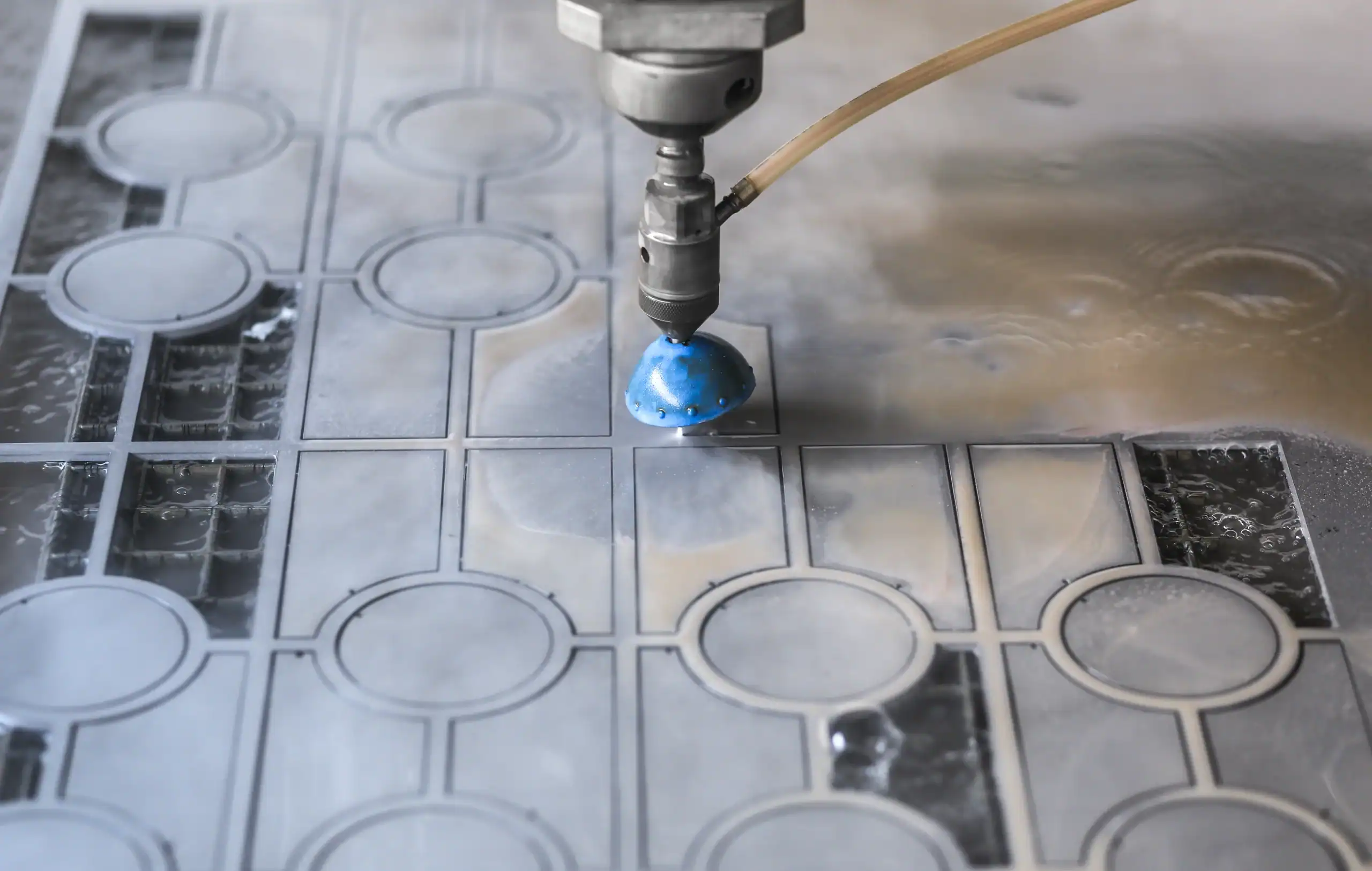
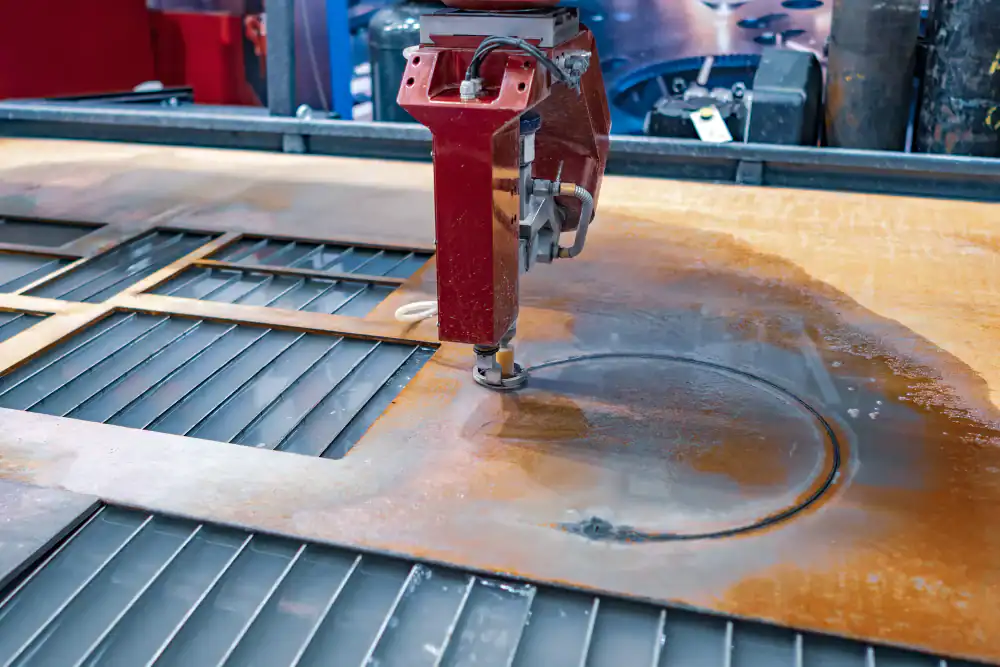
The cutting happens with high-pressure water mixed with garnet abrasive. Pressure runs around 60,000 PSI, which is enough to slice through metal without generating heat. The water stream is thinner than the kerf you’d get from plasma or laser, which means less material waste when you’re nesting multiple parts.
After cutting, we inspect dimensions to verify everything matches your specs. If you need additional services like deburring, drilling, or finishing work, we handle that before the parts leave our shop. You get parts ready to use, not parts that still need work.
Ready to get started?
Material capability covers most metals you’d use in fabrication or manufacturing. Aluminum cuts clean and fast. Stainless steel handles well even in thicker gauges. Titanium, Inconel, and other exotic alloys that are tough on traditional tooling cut without work hardening or tool wear issues.
Thickness range goes from thin sheet metal up to several inches thick. Thicker materials take longer to cut and may have slightly wider tolerances, but you’re still getting precision that beats mechanical cutting methods. We can cut 24-inch-thick materials when your application calls for it.
Long Island, NY’s manufacturing sector includes a lot of custom work – architectural metal panels, marine components, automotive prototypes. These projects need flexibility. Waterjet cutting in Elmont, NY gives you that because there’s no hard tooling to build. Design changes don’t cost you thousands in new dies or fixtures.
The local advantage matters more than you might think. Nassau County has a concentration of metal suppliers and finishing shops. When you need material sourced quickly or parts sent out for plating or powder coating, proximity cuts days off your timeline. We’re plugged into that network.
Standard precision work holds ±0.005″ tolerances consistently. That covers most manufacturing and fabrication applications where you need accurate parts but aren’t working with aerospace-level specs.
For critical applications, we can hit ±0.002″ tolerances. This requires slower cutting speeds and careful nozzle compensation, but it’s achievable when your design demands it. Medical device components, precision aerospace parts, and high-end automotive work often need this level of accuracy.
Thicker materials naturally have slightly wider tolerances because of taper. A 3-inch-thick plate won’t hold the same tolerance as quarter-inch material. We’ll tell you upfront what’s realistic for your specific job based on material type and thickness. No surprises when parts arrive.
Waterjet doesn’t generate heat. Laser and plasma both create heat-affected zones that can warp thin materials, change material properties near the cut edge, and create hardened zones that are difficult to machine later. If you’re cutting stainless steel or aluminum and need the material properties to stay consistent, waterjet is the better choice.
Material versatility is broader with waterjet. Laser struggles with reflective materials like aluminum and copper. Plasma works well on conductive metals but can’t cut non-metals. Waterjet handles anything – metals, composites, plastics, even stone – without changing equipment.
Edge quality from waterjet is smoother on thicker materials. Laser gives you a clean edge on thin sheet metal but starts to show striations and dross on thicker cuts. Plasma always needs secondary finishing. Waterjet produces a finished edge that often doesn’t need additional work, especially on cuts under 2 inches thick.
Yes. That’s one of the biggest advantages of CNC metal waterjet cutting in Elmont, NY. You can nest different materials on the same cutting table and run them in one job. No tool changes, no setup time between materials.
This matters when you’re doing custom fabrication work that involves multiple material types. Architectural projects might combine stainless steel panels with aluminum trim. Marine work often mixes different alloys based on corrosion resistance needs. You can cut all of it without stopping to reconfigure equipment.
The cutting parameters adjust automatically through the CNC program. Thicker or harder materials get slower feed rates. Softer materials like aluminum can run faster. The machine handles these changes on the fly as it moves from one part to the next. You save time and reduce handling.
Simple cuts on standard materials typically run 3-5 business days from approved drawings to finished parts. That assumes we have the material in stock or can source it locally, which is usually the case for common alloys and thicknesses.
Complex jobs with intricate geometries, thick materials, or tight tolerances take longer. A 2-inch-thick stainless steel part with detailed cutouts might need a week or more because the cutting speed has to slow down to maintain accuracy. We’ll give you a realistic timeline upfront based on your specific requirements.
Rush work is available when your project timeline gets compressed. Being located in Elmont means we can often source material same-day from Long Island, NY suppliers and run your job ahead of scheduled work. Rush fees apply, but you get your parts when you actually need them instead of waiting for a standard queue.
Both. Prototype work is actually where waterjet cutting shines because there’s no hard tooling required. You can test a design, make changes, and cut revised parts without the cost penalty you’d face with stamping dies or custom fixtures.
Production runs work well when quantities are low to medium volume. Waterjet isn’t the right choice for stamping out 10,000 identical brackets – that’s what progressive dies are for. But if you need 50 parts, or 200 parts, or even 1,000 parts and the design might still evolve, waterjet gives you flexibility without sacrificing precision.
We’ve handled production work for architectural firms doing multiple buildings with the same panel design, automotive shops building limited-run performance parts, and manufacturers who need consistent components but don’t have the volume to justify dedicated tooling. The CNC programming stays consistent, so your parts match from the first piece to the last.
Standard CAD formats work fine. DXF and DWG files are the most common and import directly into our CNC programming software. STEP and IGES files work too if you’re sending 3D models, though we only need the 2D profile for cutting.
If you don’t have CAD files, we can work from PDF drawings, hand sketches with dimensions, or even physical samples that we can measure and recreate. Our team will generate the CAD file and send it back for your approval before we cut anything. This adds a day or two to the timeline but ensures we’re cutting exactly what you need.
File review catches potential issues before they become problems. Inside corners that are too tight for the waterjet stream width, features that are too small to cut accurately, or tolerance callouts that aren’t achievable with your material thickness – we’ll flag these during review and suggest modifications that keep your design intent while making the part manufacturable.
Useful Links
Other Services we provide in Elmont