Hear from Our Customers
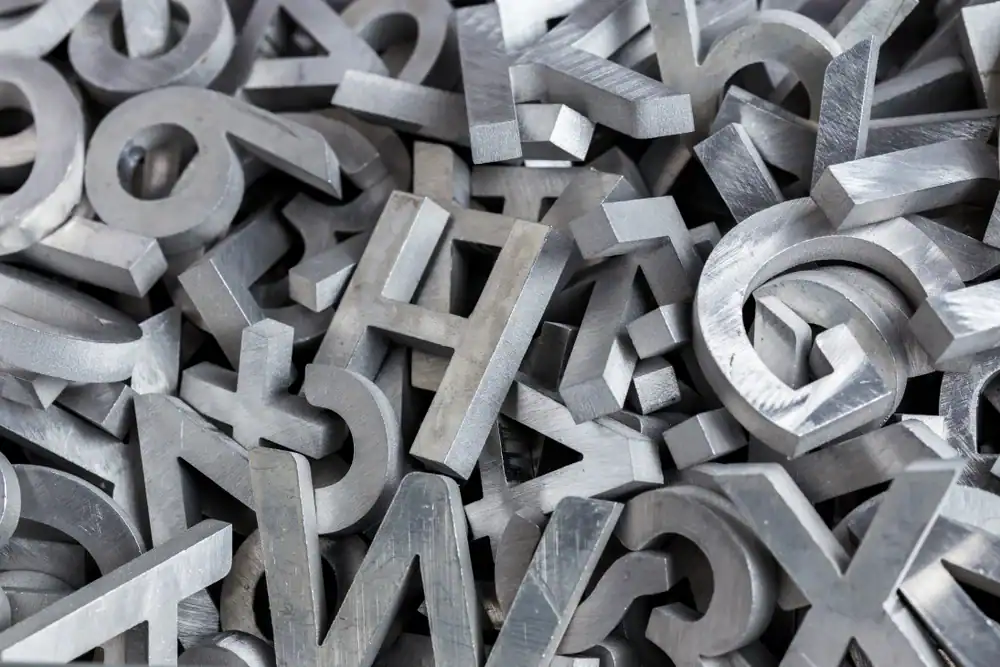
You don’t have time for do-overs. When you’re working with stainless steel, aluminum, titanium, or specialty alloys, the cut needs to be clean, accurate, and ready to install.
That’s what waterjet cutting metal does. No heat-affected zones that compromise your material’s integrity. No secondary finishing that eats into your timeline. Just precise cuts that match your specs, whether you’re fabricating brackets, custom panels, prototype parts, or production components.
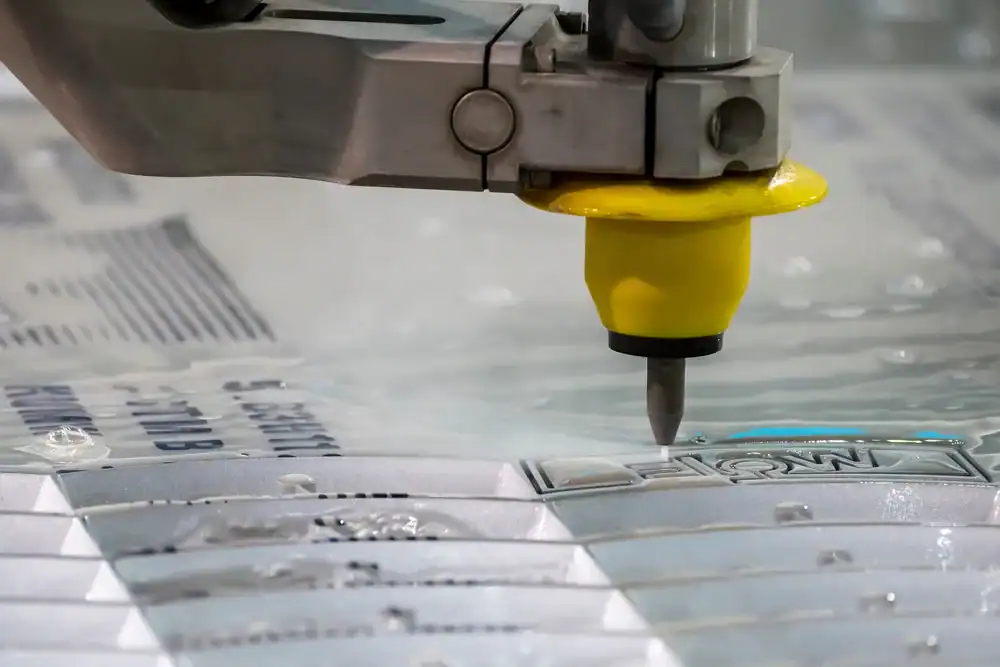
The process uses high-pressure water mixed with abrasive garnet to cut through metal without altering its properties. That means your stainless steel stays corrosion-resistant. Your aluminum doesn’t warp. Your titanium maintains its strength. You get parts that perform exactly as engineered, with tolerances tight enough for aerospace applications and edges clean enough for architectural work.
We serve manufacturers, contractors, and fabricators across Suffolk County from our facility in West Islip. We’re close enough to understand the pace of Long Island, NY business and equipped to handle the range of materials your projects demand.
Farmingville sits in the heart of Suffolk County’s manufacturing corridor, where over 2,000 companies depend on reliable fabrication services. You need a waterjet metal cutting shop that understands turnaround expectations and delivers consistent quality. We cut for construction firms working on tight deadlines, machine shops that need prototype parts yesterday, and manufacturers who can’t afford material waste or rework.
Our equipment handles intricate geometries and thick materials with the same precision. You bring the specs, we deliver the cuts.
You start by sending us your design file—DXF, DWG, or even a sketch if that’s what you’re working from. We’ll review it for any potential issues with material thickness, cut angles, or tolerances that might affect the outcome.
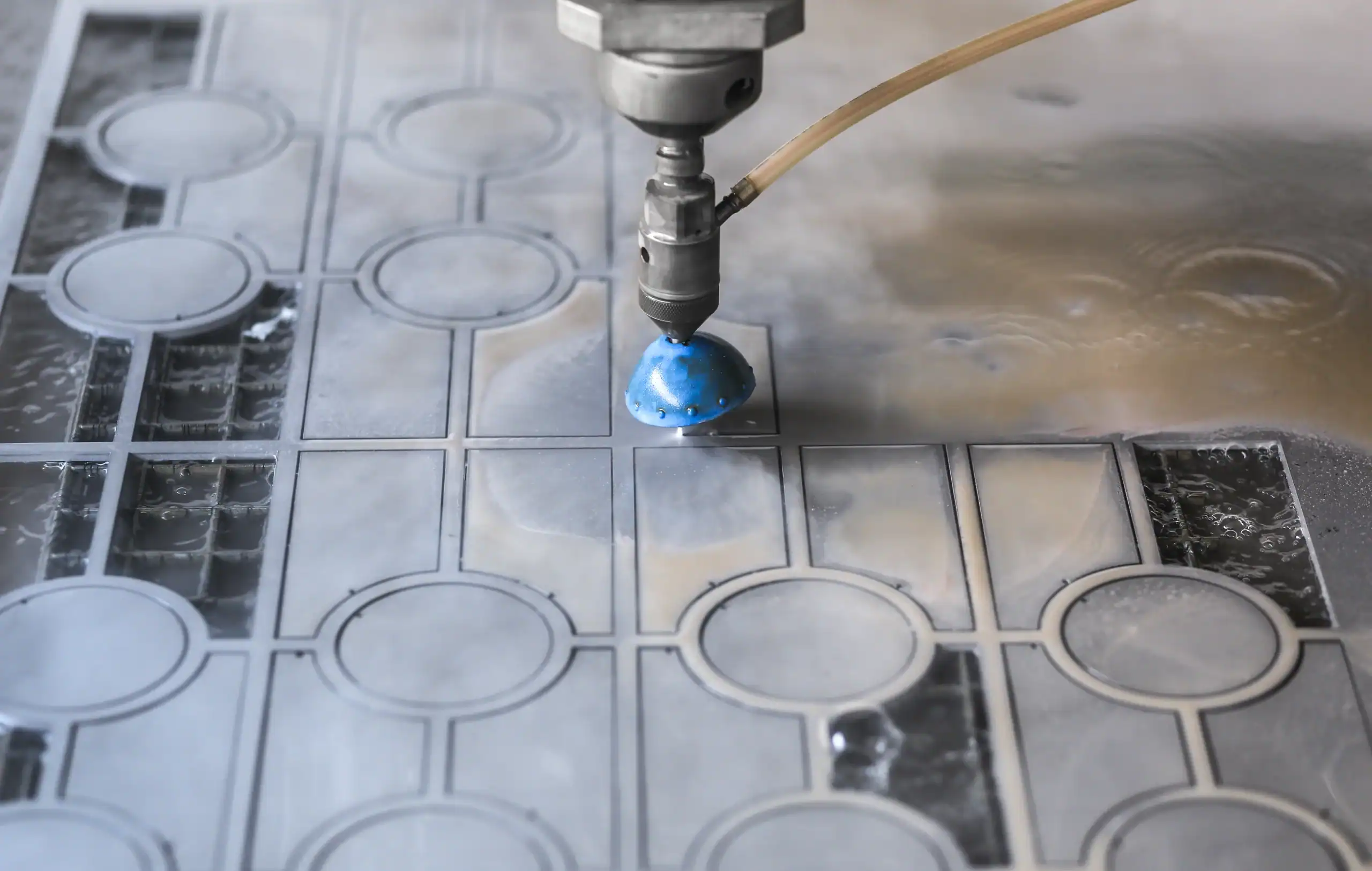
Once the design is confirmed, we program our CNC metal waterjet cutting system with your exact specifications. The machine uses a high-pressure stream of water mixed with abrasive garnet to cut through your material. There’s no heat, so there’s no distortion or hardening at the cut edge. The process is fast—significantly faster than conventional methods—and produces minimal waste.
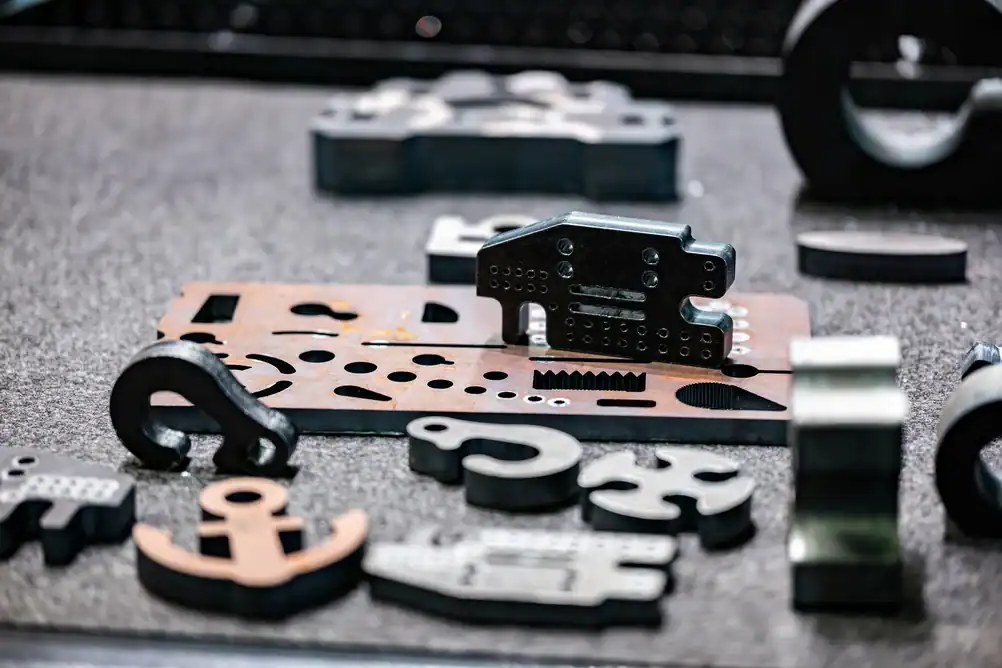
After cutting, we inspect each piece to verify it meets your tolerances. Most parts come off the machine ready to use, with clean edges that don’t require grinding or deburring. If you need multiple pieces, the CNC system ensures every cut matches the first one exactly. You get consistency across your entire order, whether that’s five parts or five hundred.
Ready to get started?
When you choose custom metal waterjet cutting in Farmingville, NY, you’re getting more than just a cutting service. You’re getting material consultation upfront—we’ll tell you if your chosen material is the right fit for your application or if there’s a better option that saves you money without compromising performance.
You get design support. If your CAD file has issues that’ll cause problems during cutting, we catch them before we start. That saves you from wasted material and delays.
The cutting itself handles virtually any metal—stainless steel, aluminum, titanium, copper, brass, tool steel, even exotic alloys used in aerospace and marine applications. Thickness isn’t a limitation. We cut thin gauge sheet metal for HVAC components and thick plate for structural brackets with the same accuracy.
Suffolk County’s manufacturing sector is diverse—from life sciences equipment to construction components to custom architectural elements. That diversity demands versatility. Waterjet cutting metal delivers it. One day we’re cutting precision gaskets for a medical device manufacturer. The next, we’re producing decorative panels for a commercial building renovation. The process adapts to your needs without requiring different tooling or setup costs.
You also get speed. Long Island, NY runs on tight schedules. We understand that your project timeline doesn’t have room for delays caused by slow fabrication. Our abrasive waterjet system cuts up to four times faster than conventional methods, which means faster turnaround for your parts.
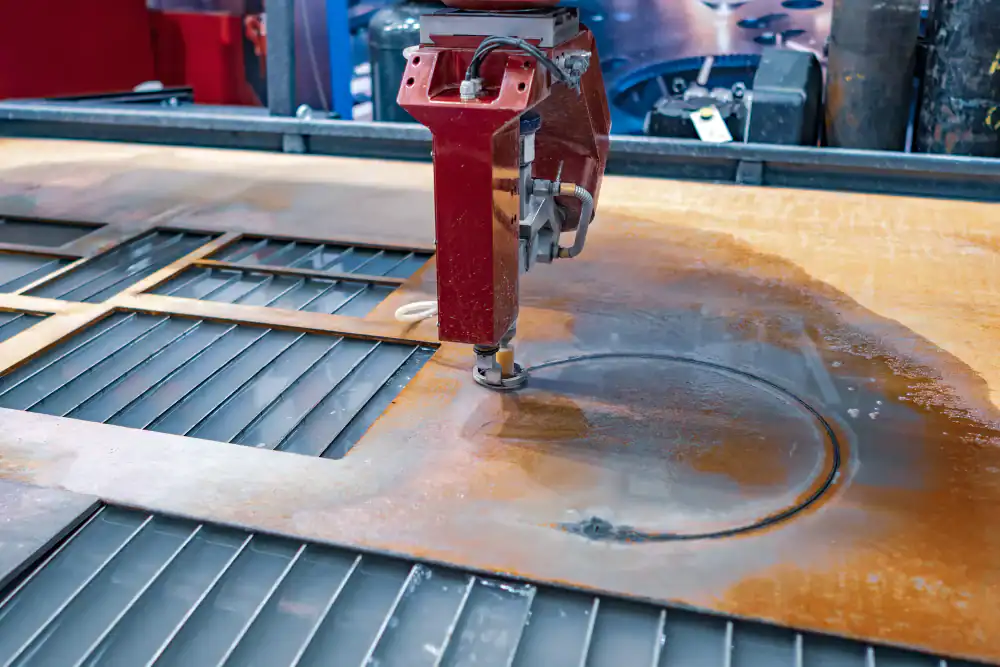
We cut virtually every metal you’d use in manufacturing or construction. Stainless steel in all grades—304, 316, 410, 17-4 PH. Aluminum from thin sheet to thick plate. Titanium for aerospace applications. Tool steels, copper, brass, bronze for marine hardware and electrical components.
The process also handles specialty alloys like Inconel, Hastelloy, and other high-temperature materials used in demanding industrial applications. If you’re working with composites or laminates that include metal layers, waterjet cutting handles those too without delamination.
Thickness ranges from thin gauge sheet metal up to several inches of plate, depending on the material. The key advantage is that waterjet cutting metal doesn’t change the material’s properties. Your hardened steel stays hardened. Your corrosion-resistant alloys maintain their protective qualities. There’s no heat-affected zone to create weak points or brittleness.
The main difference is heat. Laser and plasma both use extreme temperatures to melt through metal, which creates a heat-affected zone along the cut edge. That zone can be harder or softer than the base material, and it often shows discoloration or oxidation.
Waterjet cutting metal uses high-pressure water and abrasive, so there’s no heat. Your material’s properties stay consistent right up to the edge. That matters when you’re working with metals chosen for specific characteristics—you don’t want the cutting process to undo the engineering.
Waterjet also cuts thicker materials more effectively than laser. While laser struggles with anything over an inch in most metals, waterjet handles thick plate without issue. It’s also better for reflective metals like aluminum and copper, which can be problematic for laser systems.
The trade-off is speed on thin materials. For very thin sheet metal, laser can be faster. But for most applications—especially when material integrity and edge quality matter—waterjet delivers better results with fewer secondary operations.
Standard tolerance for CNC metal waterjet cutting is ±0.005″ on most materials and thicknesses. That’s tight enough for the majority of manufacturing and fabrication applications, including parts that need to fit together with minimal clearance.
For applications that demand even tighter tolerances—aerospace components, precision tooling, medical device parts—we can often achieve ±0.003″ or better, depending on material type and thickness. Thinner materials generally allow for tighter tolerances than thick plate.
The CNC system ensures repeatability. If you’re ordering multiple parts, each one will match the first within those tolerance ranges. That consistency matters when you’re producing components that need to be interchangeable or when you’re running production batches.
Keep in mind that tolerances can be affected by material characteristics. Some metals are more prone to slight movement during cutting than others. We’ll discuss any material-specific considerations during the design review so you know exactly what to expect.
Cutting time depends on material type, thickness, and complexity of your design. Simple shapes in thin material might take minutes. Intricate patterns in thick plate take longer. The abrasive waterjet process is fast—up to four times faster than conventional waterjet—but precision takes the time it takes.
For most projects, turnaround is measured in days, not weeks. Simple parts with straightforward geometry can often be completed within 24-48 hours. More complex jobs or larger production runs might take a few days to a week, depending on our current queue.
Being located in the tri-state area helps with logistics. You’re not waiting for parts to ship across the country. We can often accommodate rush requests when your project timeline gets compressed, though that depends on current workload.
The best approach is to reach out with your specs and timeline. We’ll give you a realistic estimate based on what your job actually requires, not a generic answer that doesn’t account for your specific situation.
Most parts come off the waterjet ready to use. The cut edge is clean, with minimal burr and no heat discoloration. For many applications—brackets, structural components, parts that get welded or fastened—no additional finishing is needed.
Some applications do benefit from light deburring, especially if you’re handling the parts frequently or if edges need to be perfectly smooth for assembly. But we’re talking about a quick pass with a file or abrasive pad, not extensive grinding or machining.
Compare that to laser or plasma cutting, where you often need to grind away heat-affected zones, remove slag, or deal with hardened edges that are difficult to work with. Waterjet cutting metal eliminates most of that secondary work, which saves you time and labor costs.
If your application requires specific edge finishes—chamfers, radiused edges, or polished surfaces—those would be additional operations. But the base cut quality from waterjet is high enough that you’re starting from a better position than with thermal cutting methods.
Proximity matters when you’re running a business in Suffolk County. Shorter shipping distances mean faster turnaround and lower freight costs. If there’s an issue with a part or a last-minute design change, you can address it quickly instead of dealing with cross-country logistics.
Local also means we understand the Long Island, NY manufacturing environment. We know the pace, the expectations, and the industries that drive the regional economy. When you’re fabricating components for construction projects in the area, or producing parts for local manufacturers, working with a shop that understands that context makes the process smoother.
You also get more direct communication. Need to discuss material options or design modifications? You can reach someone who knows your project, not a call center routing you through a queue. That responsiveness matters when deadlines are tight and decisions need to be made quickly.
The tri-state area has a strong manufacturing base, but not every shop has waterjet capabilities. Choosing a waterjet metal cutting shop in Farmingville means you’re accessing specialized equipment without the complications of working with distant suppliers.
Useful Links
Other Services we provide in Farmingville