Hear from Our Customers
You’re not dealing with warped edges that need rework. You’re not explaining to your client why the tolerances are off or why there’s heat discoloration on stainless steel that was supposed to be presentation-ready.
With CNC metal waterjet cutting in Huntington Station, NY, you get parts that fit the first time. No secondary finishing. No material distortion from heat. No microscopic cracks that show up later and compromise structural integrity.
The cold-cutting process keeps your material properties intact. Steel stays strong. Aluminum doesn’t warp. Titanium keeps its edge. Whether you’re running a prototype or a production batch, every piece comes out consistent because there’s no thermal influence changing how the material behaves during the cut.
That means faster project timelines. Less material waste. Fewer conversations about why something doesn’t fit. You send specs, we cut to those specs, and your fabrication or assembly moves forward without the usual delays.
We operate out of West Islip, NY, serving manufacturers, fabricators, and contractors throughout Huntington Station and the broader Long Island, NY area. We’re not new to this. We’ve handled projects for companies you’d recognize and custom jobs for shops that need one-off precision parts.
Huntington Station has a strong manufacturing presence, and that means tight deadlines and zero room for error. We get that. Our equipment handles everything from 1/8-inch aluminum sheets to thick steel plate, and we’ve cut for aerospace components, architectural installations, and custom fabrication projects that required tolerances most shops won’t touch.
You’re working with people who understand what’s at stake when a part doesn’t fit or a deadline gets missed. We don’t oversell. We cut metal the way it needs to be cut.
You send us your design file—DXF, DWG, or whatever format your CAD software outputs. We review it for any potential issues with tolerances, material thickness, or cut paths that might cause problems. If something looks off, we’ll tell you before we start cutting.
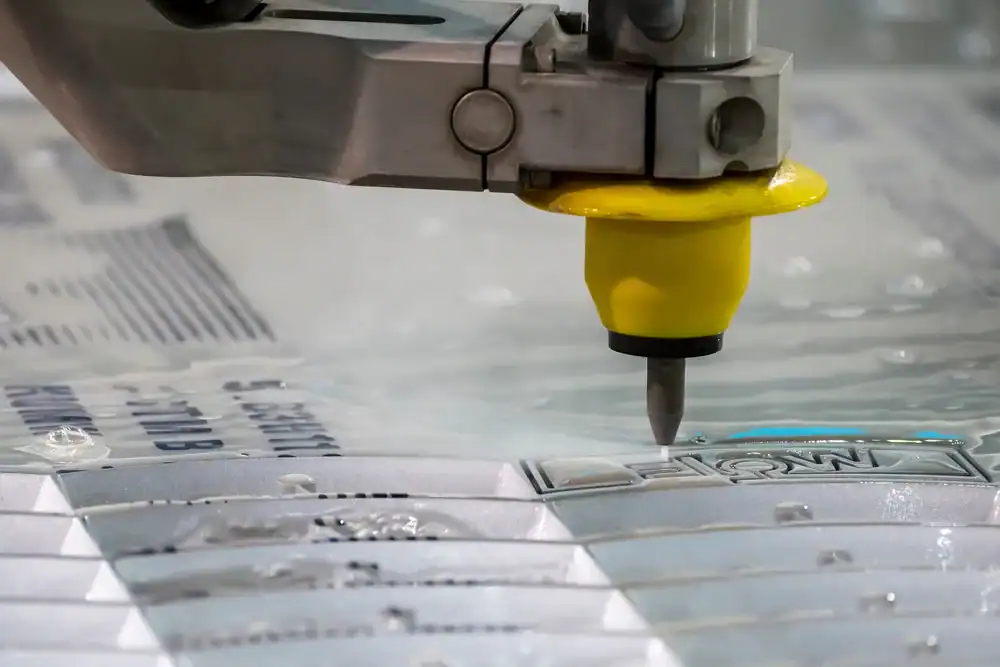
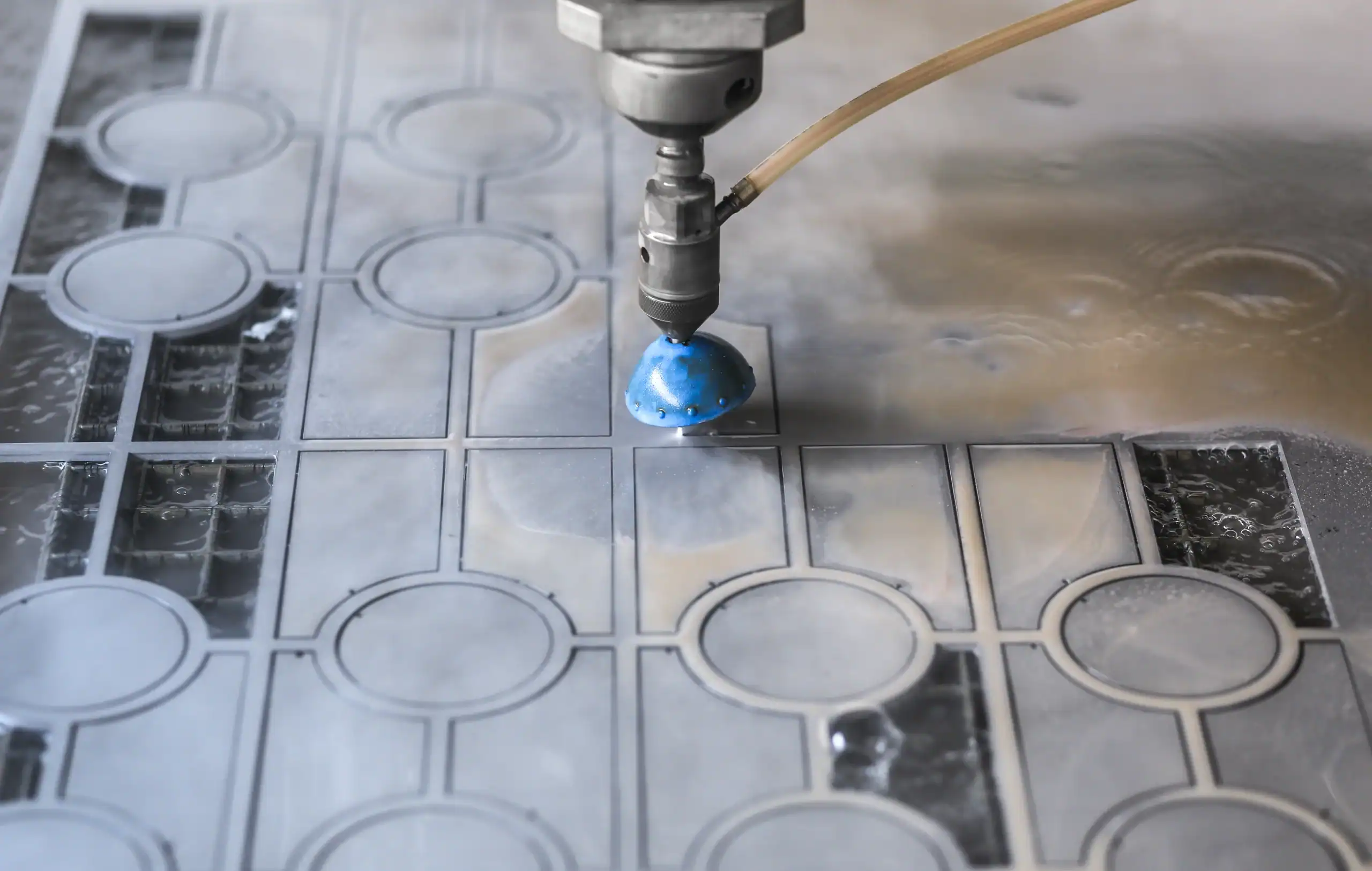
Once the file is dialed in, we load your material onto the cutting bed. Our waterjet system uses a high-pressure stream mixed with abrasive garnet to cut through the metal. No heat. No blades wearing down and affecting accuracy halfway through the job. Just water and abrasive doing exactly what the CNC program tells them to do.
The cutting head follows the programmed path with precision that stays consistent across the entire sheet. Complex geometries, tight inside corners, intricate patterns—it all gets cut in one pass. When the job’s done, you get parts with smooth edges that don’t need deburring or additional finishing unless your application specifically calls for it.
Turnaround depends on material type, thickness, and complexity, but we’re typically faster than you’d expect. Most custom metal waterjet cutting projects in Huntington Station, NY move through our shop in days, not weeks.
Ready to get started?
You get cuts that hold tolerances within ±0.005 inches. That’s tight enough for parts that need to fit together without adjustment or rework. You’re not guessing whether the holes will line up or if the bracket will mount flush.
We cut steel, stainless steel, aluminum, titanium, copper, brass, and most metal alloys up to several inches thick. If your project involves composites or layered materials, waterjet handles those too without delamination.
Because there’s no heat-affected zone, your material doesn’t get brittle around the cut edge. There’s no hardening, no temper change, no oxidation. For Huntington Station manufacturers working with metals that need to maintain specific properties for structural or aesthetic reasons, that matters.
You also get flexibility. Need a prototype before committing to a full production run? We can cut one piece or a thousand. Need changes mid-project? We adjust the CNC program and keep moving. The process scales to what you actually need, not what’s convenient for the cutting method.
And because the process doesn’t create hazardous fumes or require extensive secondary cleanup, your parts are ready faster. No waiting for cooling, no toxic residue, no additional environmental compliance headaches.
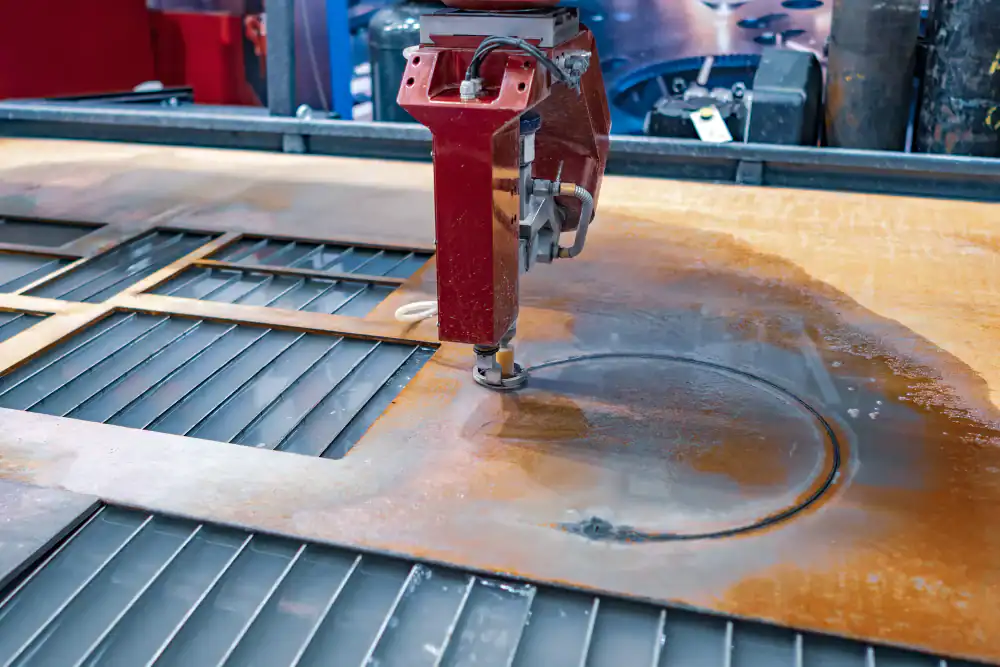
Waterjet cutting holds tolerances within ±0.005 inches consistently across the entire cut. Laser cutting can match that on thinner materials, but it struggles with thicker metals and creates a heat-affected zone that changes material properties near the cut edge. Plasma is faster for rough cuts but can’t touch waterjet for precision work.
The difference shows up when you’re assembling parts. Waterjet-cut components fit together without adjustment because the dimensions stay true throughout the cutting process. There’s no thermal expansion or contraction throwing off your measurements.
If you’re cutting stainless steel thicker than half an inch, or if you need complex geometries without any edge hardening, waterjet is the only method that delivers both precision and material integrity. Laser will burn through and leave you with discoloration. Plasma will bevel the edge and leave a rough finish that needs grinding.
We cut steel, stainless steel, aluminum, titanium, copper, brass, bronze, and most metal alloys. Thickness ranges from thin sheet metal up to several inches depending on material hardness and your tolerance requirements.
Waterjet doesn’t care about material hardness the way other cutting methods do. We’ve cut tool steel, hardened stainless, and titanium alloys that would destroy cutting tools or require multiple passes with other processes. The abrasive stream cuts through without wearing down or losing accuracy.
If you’re working with exotic alloys or materials that are expensive to replace when a cut goes wrong, waterjet is the safer choice. There’s no risk of heat damage, no chance of cracking from thermal stress, and no material waste from having to oversize parts to account for edge cleanup. What you spec is what you get.
Turnaround depends on material thickness, cut complexity, and current shop schedule, but most custom metal waterjet cutting projects in Huntington Station, NY are completed within a few days. Simple cuts on thinner materials can often be done same-day or next-day if your timeline is tight.
Thicker materials take longer because the cutting speed slows down to maintain precision. A quarter-inch aluminum sheet cuts faster than two-inch steel plate. Complex geometries with lots of detail work take more time than straight cuts or simple shapes.
We’ll give you a realistic timeline when you send your specs. If you’re up against a deadline, tell us. We’ve pushed projects through faster when it mattered, but we won’t promise a turnaround we can’t deliver. Most shops in the area are running two to three weeks out on custom work. We’re typically faster because waterjet doesn’t require the setup time or tool changes that other methods do.
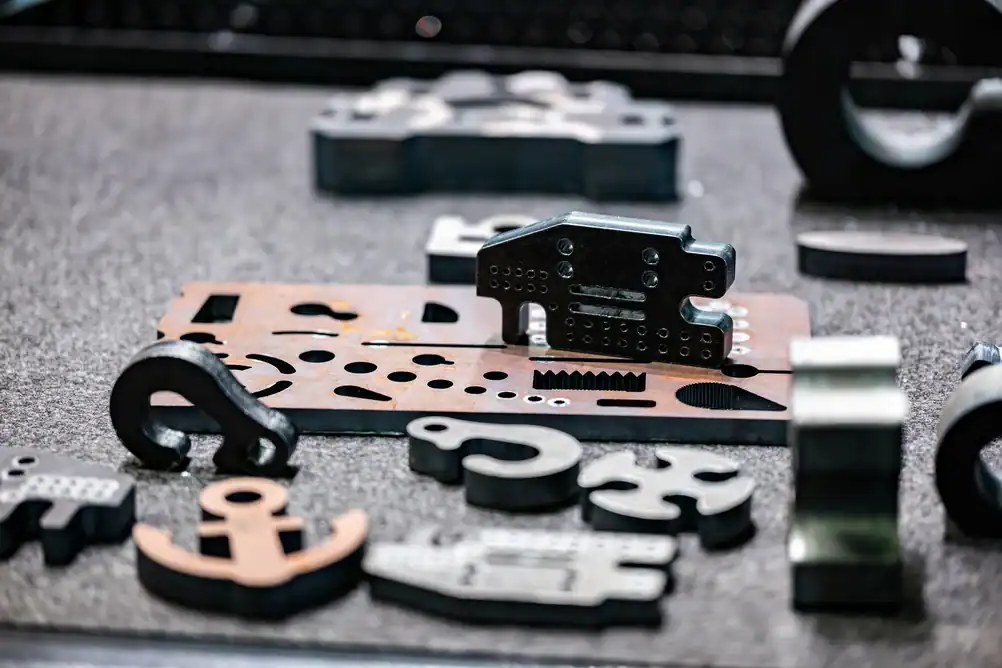
Waterjet cutting produces smooth edges with minimal to no burrs in most applications. You’ll get a clean cut that’s ready to weld, assemble, or finish without additional grinding or deburring. That’s one of the main advantages over plasma or mechanical cutting methods that leave rough edges.
The edge quality depends partly on cutting speed and material type. Softer metals like aluminum come out extremely smooth. Harder materials like stainless steel or titanium may have a slightly textured finish on the bottom edge where the waterjet exits, but it’s still cleaner than what you’d get from other processes.
If your application requires a specific edge finish—polished, deburred to a certain radius, or prepped for powder coating—we can discuss that upfront. But for most fabrication and assembly work, the parts come off our table ready to use. No secondary operations. No additional labor cost. That’s time and money saved on every piece.
Yes. We routinely cut steel plate several inches thick for industrial applications, structural components, and heavy equipment parts. Waterjet doesn’t have the thickness limitations that laser or plasma cutting do, and it maintains accuracy even on thick materials where other methods start to lose precision.
Thicker cuts take longer because the waterjet stream needs more time to penetrate and maintain a clean kerf through the entire thickness. But you’re getting a cut that’s perpendicular through the entire depth, with no taper or bevel that throws off your fit-up during welding or assembly.
For Huntington Station manufacturers working on industrial equipment, machinery components, or structural fabrication, waterjet handles the thick materials you need without compromising on tolerances. We’ve cut flanges, mounting plates, brackets, and custom machine parts from plate stock that would be difficult or impossible to cut accurately with conventional methods. If your project involves thick metal and tight tolerances, this is the process that gets it done right.
Waterjet doesn’t create a heat-affected zone. That means no warping, no edge hardening, no discoloration, and no change in material properties around the cut. For applications where material integrity matters—structural components, precision parts, anything that will be welded or heat-treated later—that’s critical.
Laser cutting is faster on thin materials and works well for high-volume production of simple shapes. But it struggles with thicker metals, reflective materials like aluminum or copper, and any application where heat distortion is a problem. You’ll also deal with dross buildup and edge oxidation that requires cleanup.
Waterjet cuts any metal regardless of reflectivity or thickness. It handles complex geometries without burning through corners or leaving heat marks. And because there’s no thermal distortion, parts stay flat and true to dimension. If you’ve ever had laser-cut parts come back warped or with burned edges that needed grinding, you know why waterjet is worth the consideration. It cuts once, cuts clean, and the parts are ready to use.
Useful Links
Other Services we provide in Huntington Station