Hear from Our Customers
You’re not looking for close enough. You need components that match your CAD files exactly, with edges that don’t need secondary finishing, and materials that haven’t been compromised by heat.
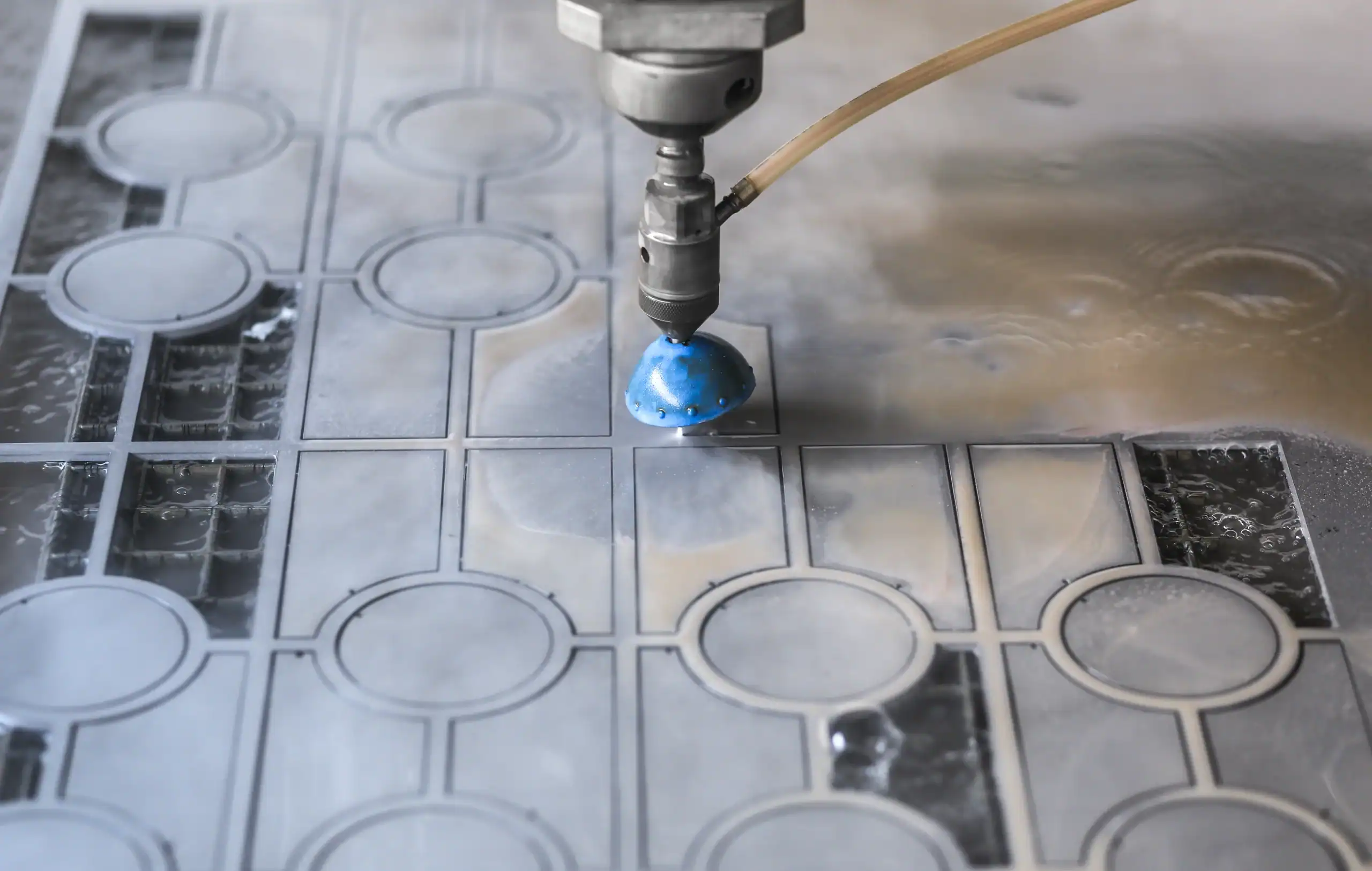
That’s what CNC metal waterjet cutting in Manhasset, NY gives you. The process uses high-pressure water mixed with abrasive garnet to cut through any metal—aluminum, stainless steel, titanium, hardened tool steel, exotic alloys—without generating heat. No warping. No hardening of the cut edge. No burn marks or weak points that show up later.
You get smooth, finished edges and tolerances as tight as ±0.002 inches on precision work. For most applications, you’re looking at ±0.005 inches, even on thicker materials. That means your parts fit together the way they’re supposed to, your assembly goes faster, and you’re not dealing with rework or scrapped pieces.
If you’re working on aerospace components, architectural metalwork, custom fabrication, or marine applications in Manhasset, this matters. Your reputation depends on delivering quality, and that starts with how your metal is cut.
We serve architects, designers, contractors, and fabricators throughout Manhasset, NY and the broader Long Island, NY area from our West Islip facility. We’ve built our reputation on delivering precision cuts and straight answers—no overselling, no surprises.
Our CNC waterjet systems are calibrated monthly and checked daily to maintain accuracy within ±0.003 inches. We work with your CAD files or help you develop designs that maximize material efficiency and cutting performance.
Manhasset’s mix of commercial construction, marine industry work, and high-end architectural projects demands a cutting partner who understands both the technical requirements and the timeline pressures. We handle everything from one-off prototypes to production runs, and we’re close enough to respond when your schedule shifts.
You send us your CAD file—DXF, DWG, or most common formats work. If you don’t have a finalized design yet, we can consult on material selection and geometry to optimize both cost and performance.
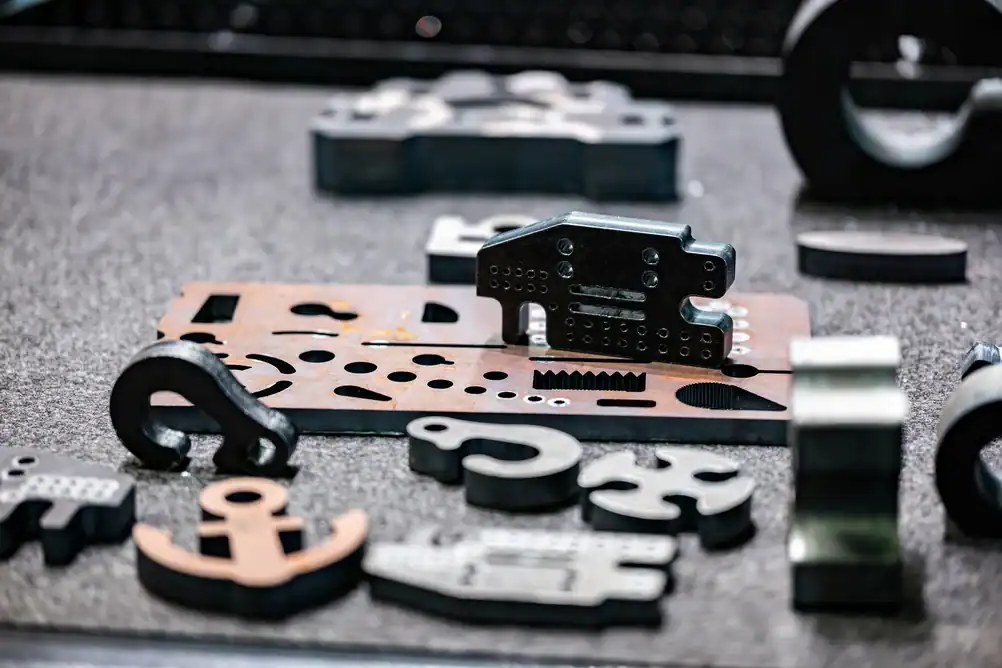
We program the cut path into our CNC system, accounting for material thickness, type, and your tolerance requirements. The waterjet nozzle moves along that path at speeds up to 200 inches per minute, mixing water pressurized to 60,000 PSI with fine abrasive garnet. That stream cuts through your metal without generating heat.
Because there’s no thermal stress, your material properties stay intact. The kerf width—the amount of material removed by the cut—is typically 0.030 to 0.040 inches, which means minimal waste and the ability to nest parts efficiently. Complex shapes, tight inside corners, intricate patterns—the waterjet handles them all in a single setup.
You get parts with smooth edges that often don’t require secondary finishing. For thicker materials or when you need the cleanest possible edge, we adjust pressure and cutting speed to deliver the finish quality your application demands.
Ready to get started?
You can cut materials up to 6 inches thick. That covers most structural steel, thick aluminum plate, and specialty alloys that other methods struggle with.
The process works on hardened metals without dulling or tool wear issues. If you’re cutting tool steel that’s already been heat-treated, or exotic alloys used in aerospace and marine applications common around Manhasset, waterjet cutting handles them without compromising the material or requiring special tooling.
You’re not limited to straight lines or simple shapes. The five-axis CNC control allows for beveled edges, compound angles, and intricate geometries that would require multiple setups on traditional equipment. One program, one setup, finished part.
The environmental aspect matters too, especially for facilities in Nassau County. Waterjet cutting doesn’t produce hazardous fumes, dust, or metal particles in the air. The abrasive and metal residue are captured in the water tank and can be filtered and disposed of safely. No special ventilation requirements, no air quality concerns.
For projects in Manhasset’s commercial and industrial sectors—whether you’re fabricating components for marine vessels, architectural metalwork for new construction, or precision parts for manufacturing—you get faster turnaround than traditional machining, better material utilization than plasma or laser cutting, and finished edges that meet your specifications.
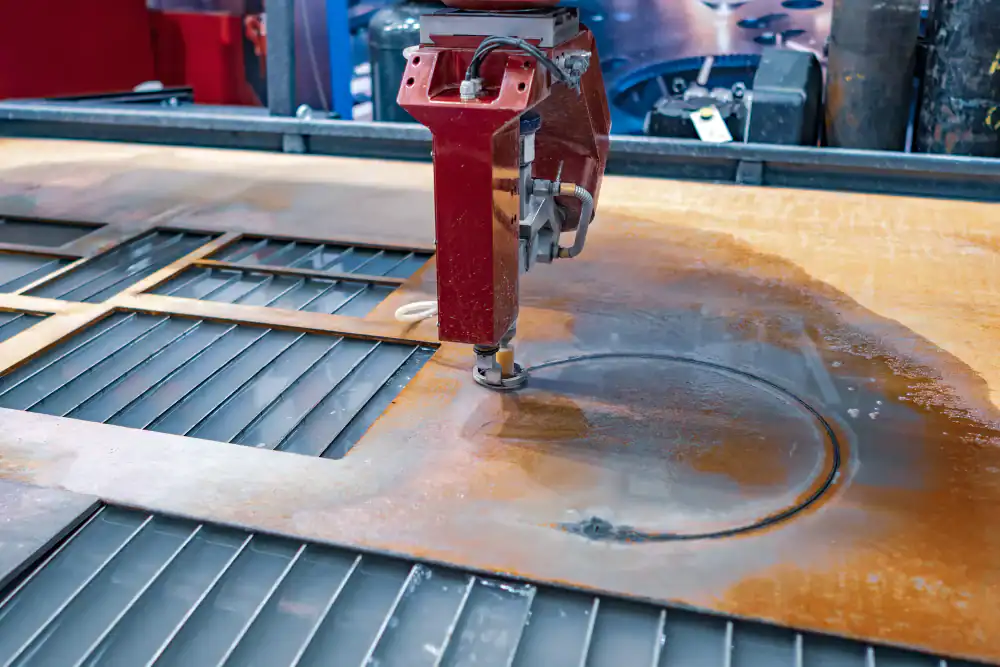
For precision applications, waterjet cutting can achieve tolerances as tight as ±0.002 inches. That’s the upper end—medical devices, aerospace components, parts that need to fit together with minimal clearance.
For most commercial and industrial work, you’re looking at ±0.005 inches, which is more than adequate for structural components, architectural metalwork, and general fabrication. On thicker materials beyond one inch, that ±0.005 inch tolerance is standard and reliable.
The tolerance you actually need depends on your application. If you’re cutting mounting brackets or structural supports, slightly looser tolerances work fine and cost less. If you’re making parts that interface with machined components or need specific fit requirements, we dial in tighter. We’ll discuss your specs upfront so you’re not paying for precision you don’t need, but you’re getting the accuracy your project requires.
Heat. That’s the fundamental difference and the reason waterjet cutting metal works better for many applications.
Laser and plasma cutting both use intense heat to melt through metal. That heat creates a zone around the cut edge where the material’s properties change—hardness, ductility, internal stress. You can see it as discoloration, and you can measure it in how the material behaves. For thin materials or applications where that heat-affected zone doesn’t matter, laser and plasma work fine and can be faster.
Waterjet cutting is a cold process. The material never heats up. That means no warping on thin sheets, no hardened edges that are difficult to drill or tap, no internal stresses that cause problems during welding or forming. For thicker materials, exotic alloys, or precision work where you can’t afford any material property changes, waterjet is the better choice. You also get the ability to cut materials that don’t respond well to heat—certain aluminum alloys, titanium, laminated metals.
All of them. That’s not an exaggeration—if it’s metal, waterjet cutting handles it.
Aluminum in all grades and thicknesses. Stainless steel, mild steel, hardened tool steel. Titanium and titanium alloys used in aerospace and marine applications. Brass, copper, bronze. Exotic alloys like Inconel, Hastelloy, and other high-temperature materials. Even pre-hardened metals that would destroy conventional cutting tools.
The process doesn’t care about hardness or heat sensitivity because it’s using mechanical erosion, not heat or tool contact. That makes it especially valuable for the marine industry work common in the Manhasset area, where you’re often dealing with corrosion-resistant alloys and specialty metals. It’s also why aerospace and precision manufacturing operations choose waterjet—you can cut materials that are difficult or impossible to process with other methods, and you’re not limited by what your tooling can handle.
Our systems handle materials up to 6 inches thick. For most commercial and industrial applications in Manhasset, you’re working with material under 2 inches, which cuts quickly and holds tight tolerances.
As material gets thicker, cutting speed decreases, but the capability remains. Cutting 4-inch steel plate is slower than cutting half-inch, but it’s absolutely doable and often more cost-effective than alternative methods. The edge quality stays consistent—you’re not dealing with the taper or roughness that other processes produce on thick materials.
The practical limit isn’t just thickness, it’s also about what makes sense for your application. Very thick materials take longer to cut, which affects cost. If you’re doing high-volume production of thick parts, other methods might be more economical. But for custom work, prototypes, or situations where you need the clean edges and lack of heat distortion that waterjet provides, cutting thick metal is one of the process’s strengths.
For straightforward cuts with standard materials, you’re typically looking at a few days from approved design file to finished parts. Rush jobs can often be accommodated faster, depending on our current queue and material availability.
The speed advantage comes from the process itself. Once we program your part, there’s no tooling to create, no multiple setups for complex shapes, no secondary operations to remove burrs or clean up edges in most cases. Your CAD file becomes a finished component without the intermediate steps that slow down traditional machining.
Material availability affects timeline more than cutting time. If you’re using common materials we stock or can source quickly in the Long Island, NY area, turnaround is faster. Exotic alloys or specialty metals might require ordering, which adds time. We’re upfront about that when you submit your project. For Manhasset-area customers, our West Islip location means we can coordinate pickups or deliveries efficiently, and we’re available to discuss timeline requirements before you commit.
Usually not. That’s one of the advantages—you get parts that are ready to use.
The waterjet process produces a smooth edge with minimal burr. For most applications, the edge quality straight off the machine is acceptable for welding, assembly, or final use. You’re not looking at the rough, oxidized edge from plasma cutting or the hardened, discolored edge from laser cutting.
Edge quality does vary based on cutting parameters. Faster cutting speeds produce a slightly rougher finish. Slower speeds with optimized abrasive flow produce edges that are smooth enough for visible applications without additional work. We adjust those parameters based on what you need. If you’re making structural components that will be welded or painted, standard edge quality works fine. If you’re cutting architectural metalwork that will be visible, or precision parts with specific surface finish requirements, we program the cut for higher quality. The point is that you’re not automatically adding deburring, grinding, or finishing steps—the waterjet does the work in one pass.
Useful Links
Other Services we provide in Manhasset