Hear from Our Customers
You’re not just cutting metal. You’re trying to meet a spec, hit a deadline, and avoid the rework that eats into your margin.
Heat-based cutting changes the material. It warps thin stock. It creates micro-cracks in high-strength alloys. It leaves you with secondary finishing work that costs time and money. Our waterjet cutting metal in Massapequa Park eliminates that entire problem because the process never generates heat.
The abrasive stream cuts through aluminum, stainless steel, titanium, brass, and specialty alloys without altering the material’s properties. You get a clean edge that’s ready to use. Tolerances stay tight. Your parts come out dimensionally accurate, even on complex geometries that would distort under thermal stress.
That means fewer rejected parts, faster turnaround, and the confidence that what you ordered is what you’ll receive. When your project has no room for error, the cutting method matters.
We serve fabricators, contractors, and designers across Massapequa Park, NY and the surrounding Long Island, NY region. We handle everything from one-off prototypes to production runs, working directly with your CAD files or helping you refine designs before the first cut.
Long Island, NY’s manufacturing base includes aerospace components, architectural metalwork, marine fabrication, and custom HVAC systems. These industries demand precision, and they don’t have time for cutting methods that introduce variables. That’s why waterjet has become the standard for shops that can’t afford to compromise on accuracy.
We’ve built our process around what matters to you: fast quotes, realistic lead times, and parts that match your specifications the first time.
You send us your design file or sketch. We review it for any potential issues with material choice, thickness, or tolerances, and we’ll flag anything that could cause problems before we start cutting.
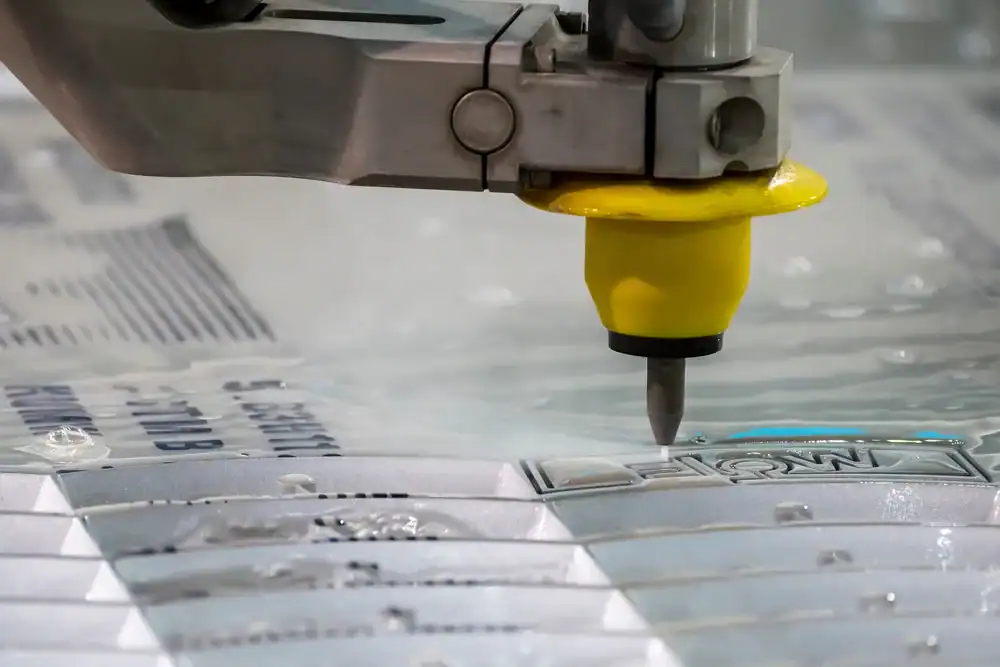
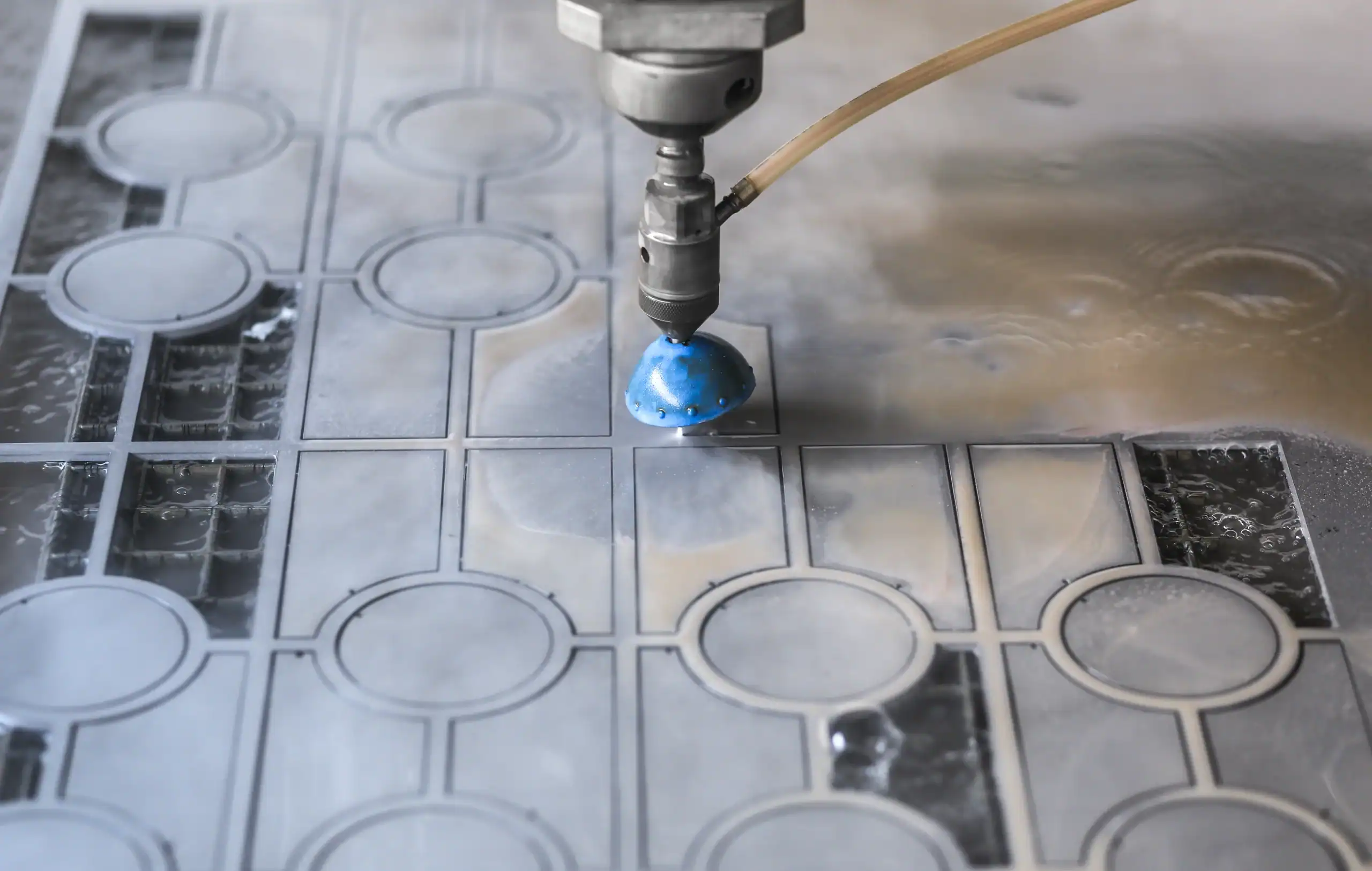
Once the design is confirmed, we program the CNC waterjet system with your exact specifications. The cutting head follows the programmed path, using a high-pressure stream of water mixed with abrasive garnet to cut through the metal. There’s no heat, no tool wear affecting accuracy, and no need to change setups between different materials or thicknesses.
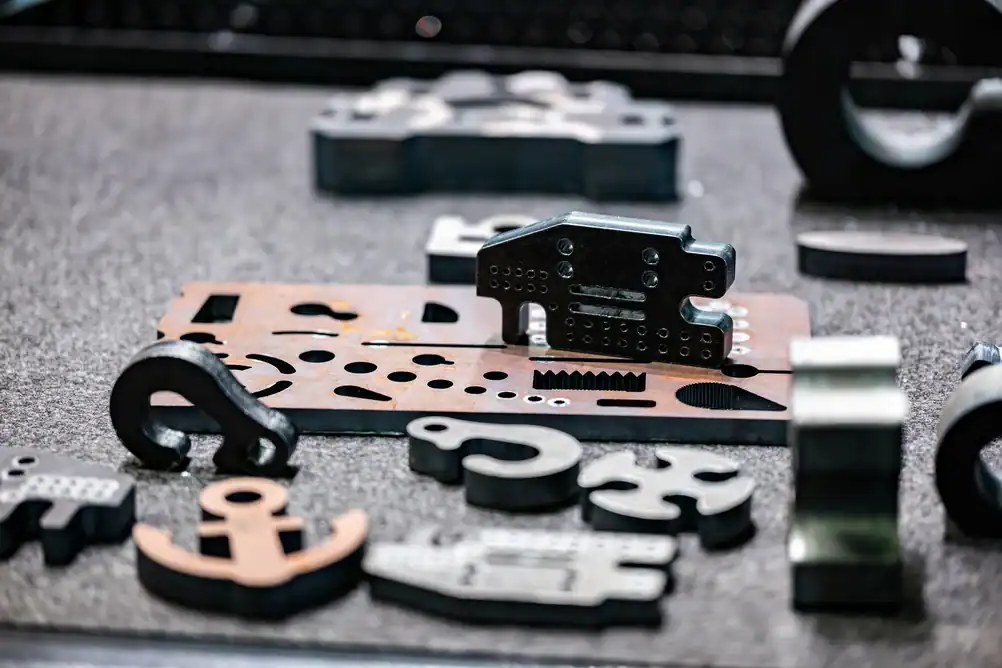
After cutting, we inspect dimensions to verify everything matches your requirements. Most parts come off the machine ready to use, with edge quality that doesn’t require additional finishing. If your project needs secondary operations like deburring or drilling, we can handle that too.
The entire process is built around predictability. You know what you’re getting, when you’re getting it, and what it’s going to cost before we make the first cut.
Ready to get started?
You get precision cutting with tolerances as tight as ±0.005 inches, which is what most mechanical assemblies and architectural applications require. The process handles material thicknesses from thin gauge sheet up to several inches, depending on the alloy.
Massapequa Park’s location on Long Island, NY puts you near a concentration of aerospace, defense, and marine manufacturing facilities that rely on waterjet cutting for critical components. These industries can’t use cutting methods that introduce heat-affected zones or compromise material integrity. Our waterjet cutting services in Massapequa Park meet those standards because the cold cutting process preserves the metal’s microstructure.
You also get material efficiency. The narrow kerf width means less waste, which matters when you’re working with expensive alloys like titanium or Inconel. We can nest multiple parts on a single sheet to maximize yield, and we can cut multiple sheets in a single pass for production runs.
The process is environmentally clean. No fumes, no hazardous waste, and the water is filtered and recycled. If you’re working with contractors or clients who track environmental compliance, waterjet cutting checks that box without adding complexity to your project.
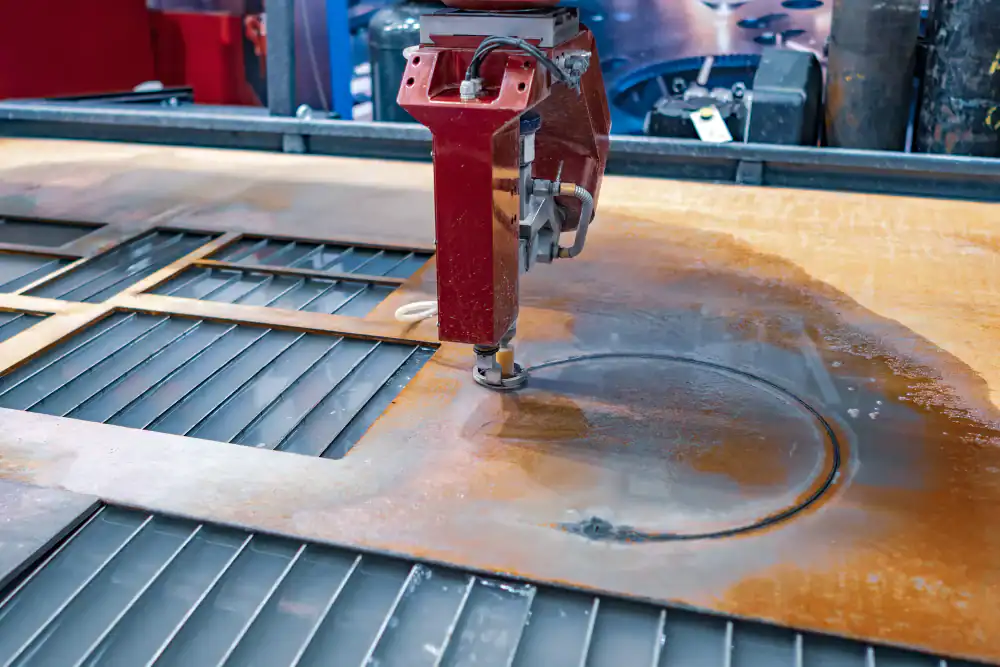
We cut aluminum, stainless steel, carbon steel, titanium, brass, copper, and specialty alloys. The process works on both soft and hardened metals without any change in setup or quality.
The advantage of waterjet is that it doesn’t care about material hardness. A laser struggles with reflective metals like copper and brass. A plasma cutter leaves a rough edge on stainless. Waterjet handles all of them with the same level of precision because it’s a mechanical process, not a thermal one.
If you’re working with exotic alloys for aerospace or medical applications, waterjet won’t alter the material properties. That’s critical when the metal has been heat-treated or hardened to specific specifications that can’t be compromised during fabrication.
We hold tolerances down to ±0.005 inches on most jobs, and tighter if the application requires it. That level of accuracy is repeatable across production runs because the CNC system follows the same programmed path every time.
The key factor is that waterjet doesn’t introduce variables. There’s no heat distortion, no tool deflection, and no material springback. The cut you get on part one is identical to the cut on part one hundred.
For parts that need to fit together in an assembly, or architectural panels that need to align perfectly, that consistency matters. You’re not dealing with dimensional drift or parts that need to be sorted and matched. Every piece comes out to spec.
Most parts come off the machine with a clean edge that doesn’t need additional work. The top edge is smooth, and the bottom edge typically has minimal burr that can be knocked off by hand if necessary.
Compare that to laser cutting, which leaves a heat-affected zone and often requires grinding. Or plasma cutting, which produces a rough edge that needs significant finishing. Waterjet eliminates those extra steps, which saves time and reduces your overall cost per part.
If your application requires a completely deburred edge or specific surface finish, we can handle that as a secondary operation. But for most fabrication and assembly work, the edge quality straight from the waterjet is acceptable as-is.
Turnaround depends on material availability, complexity, and current queue, but most projects are completed within a few days. Simple cuts on common materials can often be done faster if you’re on a tight deadline.
The advantage of waterjet is that setup time is minimal. We’re not building custom tooling or fixturing. We program your design into the CNC system, load the material, and start cutting. That means we can handle rush jobs without the lead time penalties you’d see with other processes.
For production runs, we can provide a realistic schedule based on part count and material. We don’t overpromise on timing because we’d rather give you an honest lead time than miss a deadline you’re counting on.
Yes, because there’s no expensive tooling or setup cost. You’re paying for machine time and material, not for dies, molds, or custom fixtures that only make sense at high volume.
That makes waterjet ideal for prototyping, where you might need one or two parts to test fit and function before committing to a production run. You can make design changes between iterations without incurring retooling costs.
Even for small production runs, waterjet stays competitive because the process is efficient. We can nest multiple parts on a sheet to minimize waste, and we can cut different designs in the same run without stopping to change setups. You get the flexibility of custom fabrication with the efficiency of a streamlined process.
Waterjet doesn’t generate heat, which means no warping, no hardened edges, and no heat-affected zones that can compromise material properties. That’s the fundamental difference that matters for precision work.
Laser cutting is fast and works well for thin materials, but it struggles with reflective metals and thicker stock. It also creates a heat-affected zone that can cause problems in high-stress applications. Plasma is even rougher, leaving an edge that almost always needs secondary finishing.
Waterjet gives you clean cuts across a wider range of materials and thicknesses, with edge quality that’s ready to use. For projects where dimensional accuracy and material integrity can’t be compromised, waterjet is the process that delivers consistent results without the thermal variables that other methods introduce.
Useful Links
Other Services we provide in Massapequa Park