Hear from Our Customers
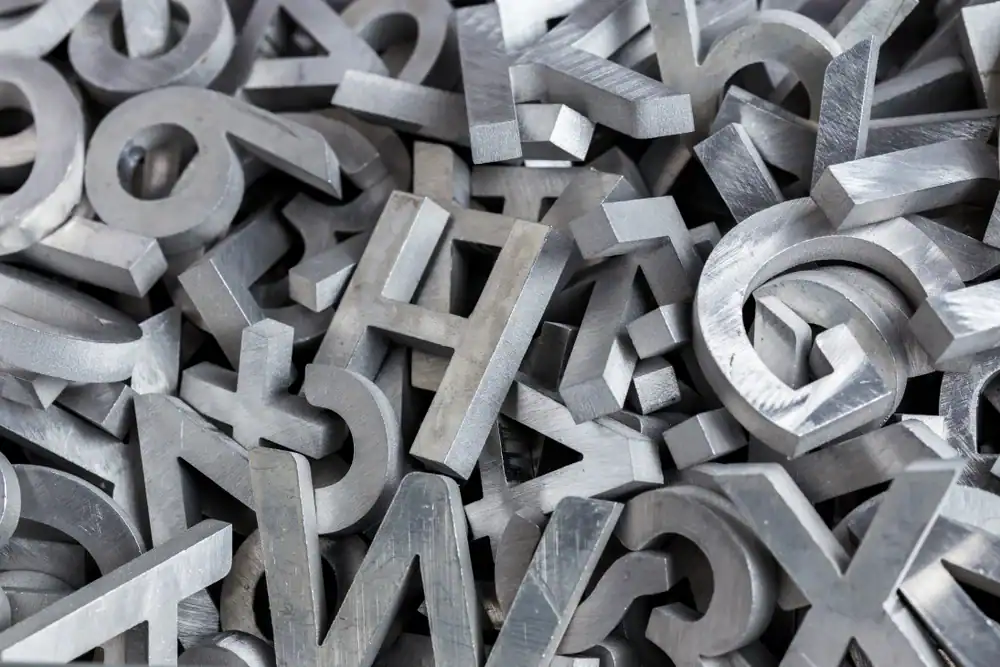
You don’t have time for warped sheets, misaligned assemblies, or parts that need rework. Heat-based cutting expands metal unevenly, throws off your tolerances, and creates a cascade of problems down your production line.
Metal waterjet cutting in Massapequa, NY solves that. No heat means no distortion. No warping means your parts maintain the exact dimensions you designed. No secondary finishing means you’re not paying twice for the same cut.
You get clean edges, tight tolerances down to ±0.005 inches, and the ability to cut intricate shapes in stainless steel, aluminum, titanium, and brass without changing your material’s properties. Whether you’re prototyping a single piece or running a full production batch, the cut stays consistent from first part to last.
We operate in the heart of Long Island, NY’s manufacturing ecosystem, where precision matters and deadlines are real. We’re not new to this. We understand what it takes to deliver quality cuts for architects, designers, contractors, and fabricators who need parts done right.
Massapequa sits near Hauppauge Industrial Park, the nation’s first planned industrial park and still one of the largest outside Silicon Valley. That means you’re surrounded by makers, manufacturers, and a supply chain that depends on precision. We’re part of that network, cutting custom parts and supporting projects from concept through completion.
You bring us your CAD files or your concept. We handle material consultation, design support, and CNC metal waterjet cutting in Massapequa, NY that meets your specs without the heat-affected zones that compromise other methods.
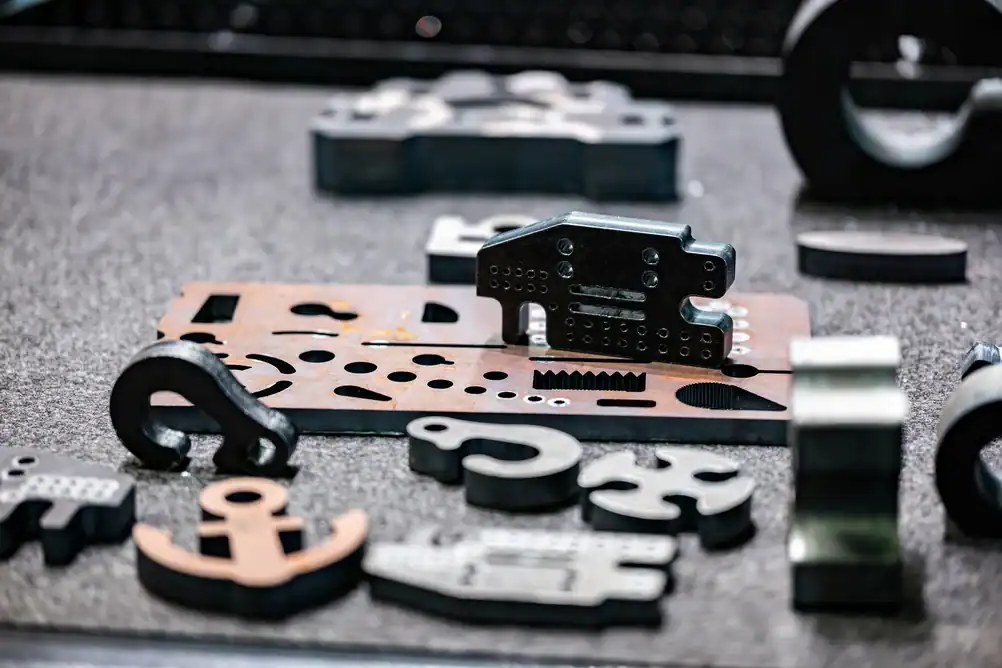
You start by sending us your design file or discussing your project requirements. We review your specs, confirm material selection, and provide guidance on optimizing your design for waterjet cutting if needed.
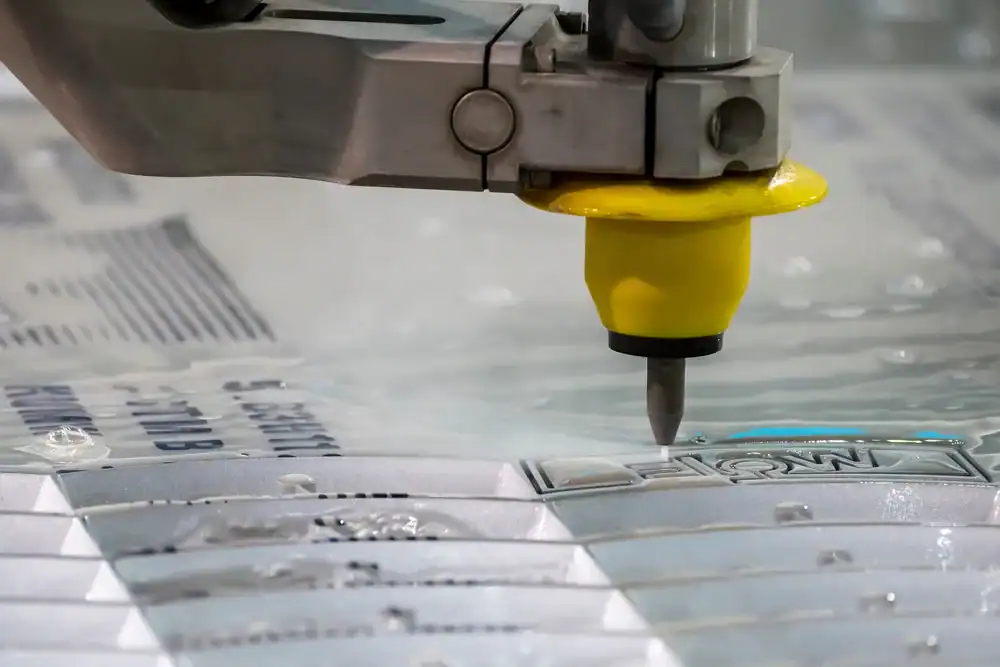
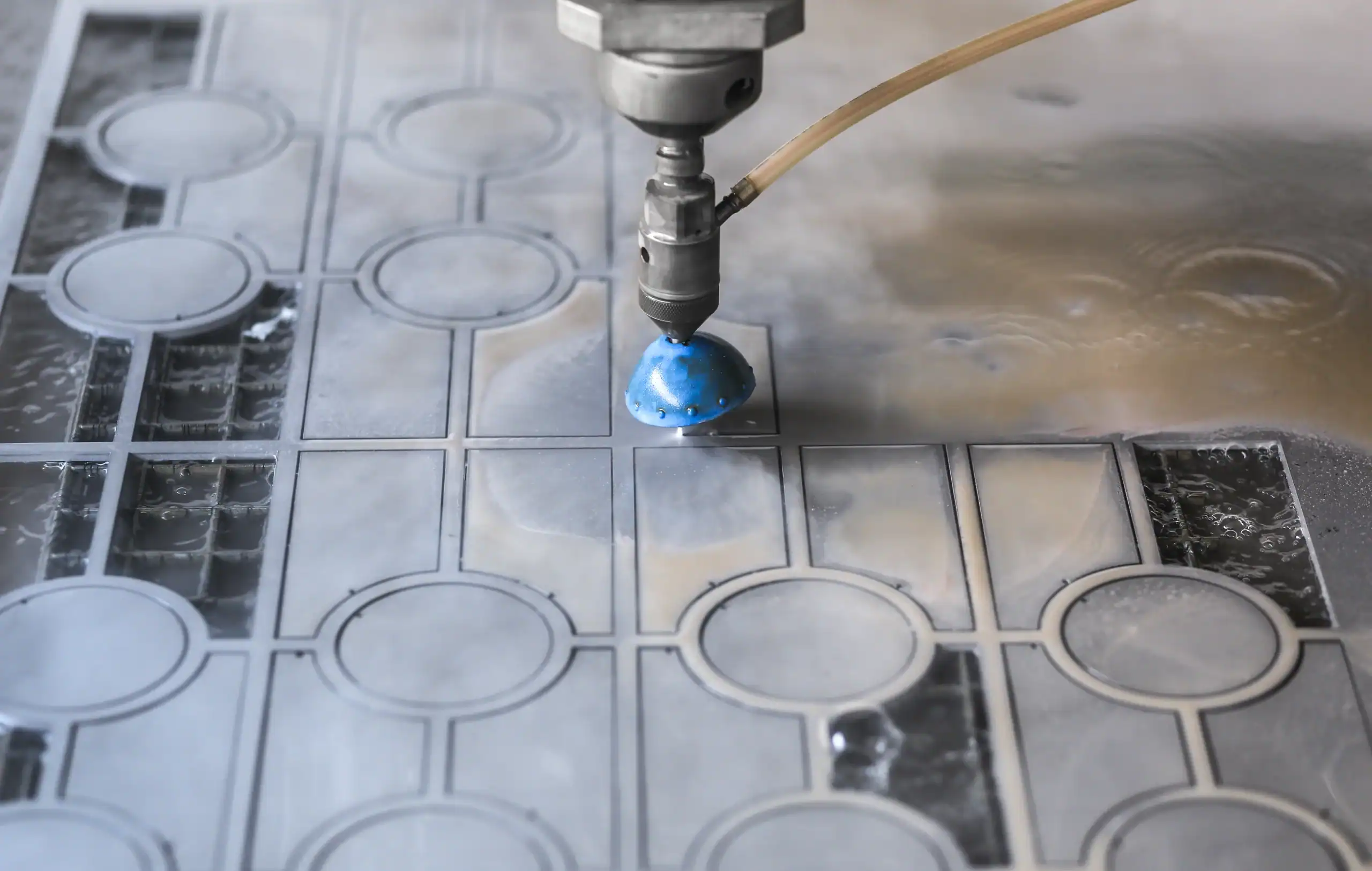
Once we’re aligned, we program the CNC system with your exact specifications. The waterjet uses high-pressure water mixed with abrasive garnet to cut through your metal with precision. There’s no heat, no tool wear, and no risk of altering your material’s structural integrity.
The cutting process is fast—abrasive waterjet technology cuts up to four times faster than conventional methods. You get parts with finished edges that often don’t require additional machining or grinding. We handle single prototypes and high-volume production runs the same way: with attention to tolerance and consistency.
After cutting, we inspect dimensions to ensure everything matches your requirements. Then your parts are ready for delivery or pickup, clean and ready to integrate into your next step.
Ready to get started?
You’re working with CNC-controlled precision that handles complex geometries, tight radii, and intricate patterns without multiple setups. The narrow kerf width minimizes material waste, which matters when you’re cutting expensive alloys or trying to maximize yield from each sheet.
Long Island, NY’s manufacturing sector invests locally and relies on regional networks. Over 80% of supply chain companies here source from other Island businesses. That means faster communication, quicker turnaround, and the ability to handle rush jobs without shipping delays eating into your timeline.
Waterjet cutting metal in Massapequa, NY gives you access to a process that’s environmentally clean—no hazardous fumes, no toxic waste, and water that can be filtered and recycled. If you’re working on projects with environmental compliance requirements or sustainability goals, this matters.
You also get versatility across thickness ranges and material types. From thin gauge aluminum to thick stainless plate, the waterjet adjusts without retooling. Whether you’re in aerospace, automotive, medical device manufacturing, or architectural metalwork, the process adapts to your industry’s demands without compromising quality.
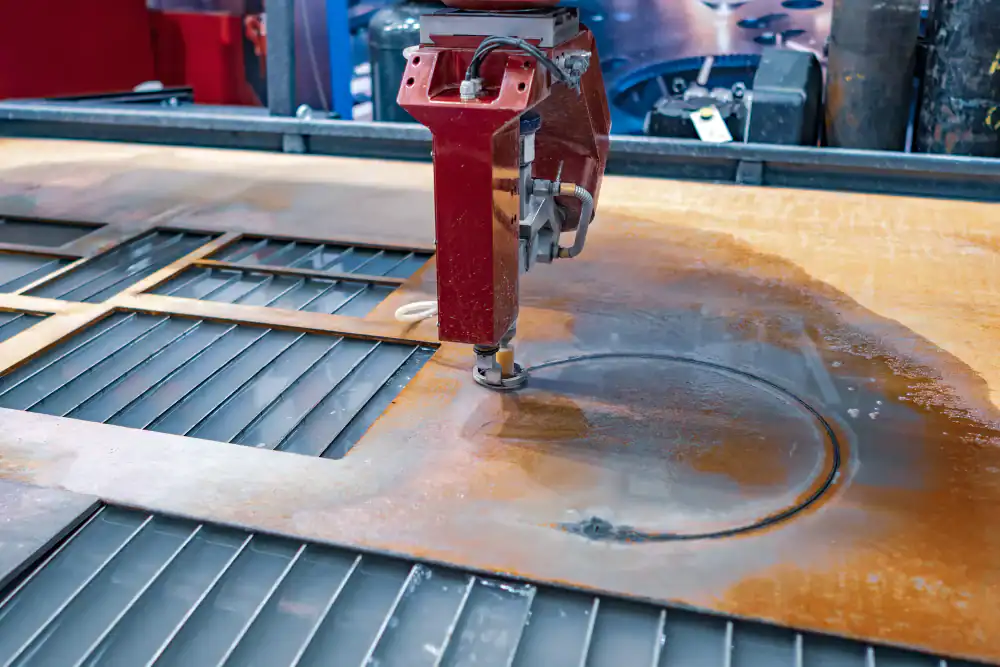
We cut a wide range of metals including stainless steel, aluminum, titanium, brass, copper, and various alloys. The waterjet process works across different hardness levels and thicknesses without the limitations you’d face with thermal cutting methods.
If you’re working with materials that are sensitive to heat or prone to warping, waterjet cutting handles them without altering the metal’s microstructure. That includes hardened tool steels, exotic alloys used in aerospace applications, and softer metals that would distort under laser or plasma cutting.
Thickness capacity depends on the specific material, but we regularly cut metals ranging from thin gauge sheet up to several inches thick. The key advantage is consistency—the cut quality stays uniform whether you’re working with 1/8-inch aluminum or 2-inch stainless plate.
Our waterjet cutting routinely achieves tolerances of ±0.005 inches, which puts it in the range required for precision manufacturing, medical components, and aerospace parts. The CNC control system guides the cutting head with repeatable accuracy across your entire production run.
Because there’s no heat distortion, the dimensions you program are the dimensions you get. Thermal cutting methods introduce variables—heat-affected zones, material expansion, and cooling contraction—that make tight tolerances harder to maintain. Waterjet eliminates those variables.
For context, industries requiring implant-grade precision or components that must fit into complex assemblies rely on waterjet cutting because it delivers burr-free edges and dimensional accuracy without secondary operations. If your project demands parts that fit right the first time, this level of precision matters.
The main difference comes down to heat. Laser and plasma cutting use thermal energy that melts or burns through metal. That creates heat-affected zones, can warp your material, and often requires secondary finishing to clean up rough edges or burn marks.
Waterjet cutting metal uses high-pressure water and abrasive, so there’s zero heat introduced to your material. Your metal doesn’t expand, doesn’t warp, and doesn’t experience changes in its temper or hardness. You get a clean, finished edge that’s often ready to use without grinding or additional machining.
Waterjet also handles a broader range of materials and thicknesses in a single setup. You’re not limited by reflectivity issues like you are with laser cutting aluminum, and you don’t deal with the edge quality problems that plasma cutting can create on thicker sections. If you need versatility, precision, and clean results, waterjet delivers all three.
Turnaround depends on project complexity, material availability, and current production schedule, but abrasive waterjet cutting is significantly faster than conventional methods—up to four times faster in many applications. That speed advantage translates to quicker project completion.
For straightforward cuts with standard materials, you’re often looking at days, not weeks. Rush jobs can be accommodated depending on shop capacity. Being located in Massapequa, NY means we’re part of Long Island, NY’s local manufacturing network, which helps with material sourcing and eliminates long shipping delays.
The CNC programming process is efficient, especially if you provide clean CAD files. Once programmed, the cutting itself is fast and doesn’t require tool changes or multiple setups for complex shapes. If you’re prototyping and need quick iterations, or running production parts on a deadline, the combination of speed and precision keeps your project moving.
In most cases, no. Waterjet cutting produces a finished edge that’s clean and often ready for assembly or next-stage processing without additional work. That’s a significant cost and time advantage over methods that leave rough edges, slag, or heat discoloration.
The cut edge quality depends partly on cutting speed and material type, but even at faster speeds, waterjet edges are smoother than what you’d get from plasma or oxy-fuel cutting. For applications where edge finish is critical, we can adjust parameters to optimize surface quality.
This eliminates the labor and expense of secondary grinding, filing, or machining operations. It also reduces the risk of introducing new errors during finishing. When you’re calculating cost-per-part, factor in the time you’re not spending cleaning up edges—that’s where waterjet cutting often proves more economical than it appears at first glance.
Yes. The same CNC system that cuts a single prototype part can run hundreds or thousands of identical pieces with consistent quality. There’s no tooling cost to absorb, no setup penalty for small quantities, and no degradation in cut quality as you scale up volume.
For prototyping, this flexibility means you can test designs, make revisions, and iterate quickly without committing to expensive tooling or minimum order quantities. For production runs, the process delivers repeatable accuracy and fast cycle times that keep your costs predictable.
Whether you need one custom architectural panel or a full production run of precision components, the approach stays the same: program once, cut accurately, deliver on time. That consistency across order sizes is particularly valuable if you’re moving from development into production and need a single source that understands both phases of your project.
Useful Links
Other Services we provide in Massapequa