Hear from Our Customers
Your project doesn’t fail because of a bad cut. It fails because that cut created downstream problems you didn’t see coming.
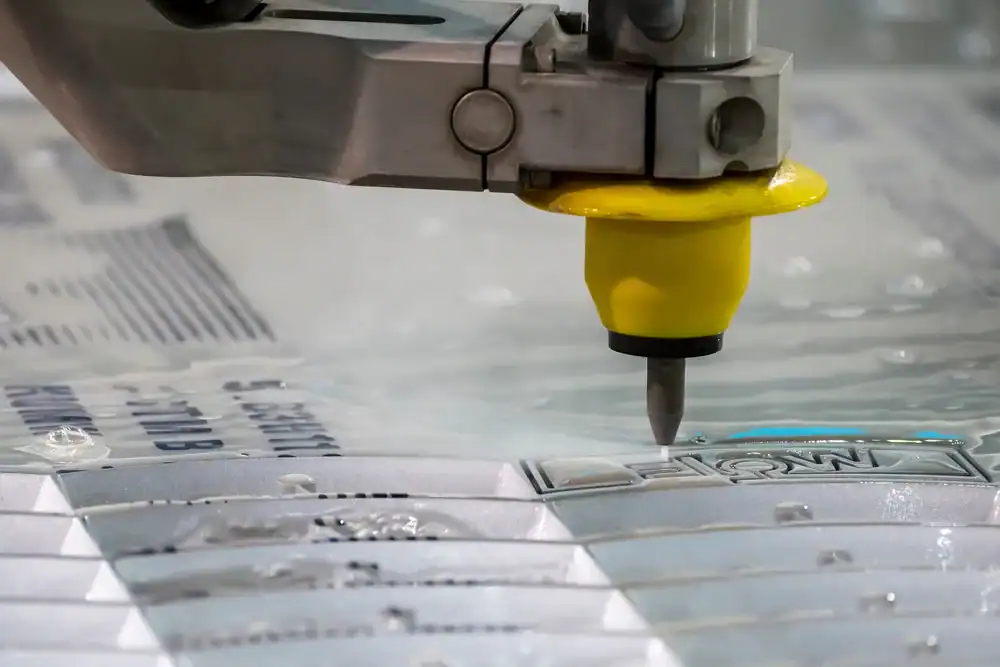
When you’re working with metal that can’t afford heat distortion, warping, or a heat-affected zone, waterjet cutting metal removes those variables entirely. The process uses high-pressure water mixed with abrasive garnet to cut through steel, aluminum, titanium, brass, or Inconel without generating heat. No melting. No warping. No mechanical stress that compromises your material’s integrity.
You get parts with tolerances as tight as ±0.005 inches and edges smooth enough that buffing or deburring becomes optional, not required. That means your fabrication timeline shortens, your material waste drops, and your parts fit right the first time. When you’re prototyping or running production, that consistency matters more than anything else.
We operate out of West Islip, strategically positioned to serve manufacturers, fabricators, contractors, and design firms across Suffolk County and the broader Long Island area, including Mastic Beach, NY. We’re not the biggest shop, and we’re not trying to be.
What we do is run CNC metal waterjet cutting with the kind of precision that aerospace, automotive, and architectural projects actually require. Our equipment handles materials up to several inches thick, and our process doesn’t introduce the thermal issues that plasma or laser cutting can create.
Long Island has a deep manufacturing ecosystem. You’ve got sheet metal fabricators, welding shops, and contractors who’ve been operating here for decades. We work with that ecosystem, not against it. If you need custom metal waterjet cutting that integrates into a larger project or production run, we understand the timeline pressures and quality standards you’re dealing with.
You send us your design file or specifications. We review it for material type, thickness, tolerances, and any potential issues that could affect the cut quality or your timeline.
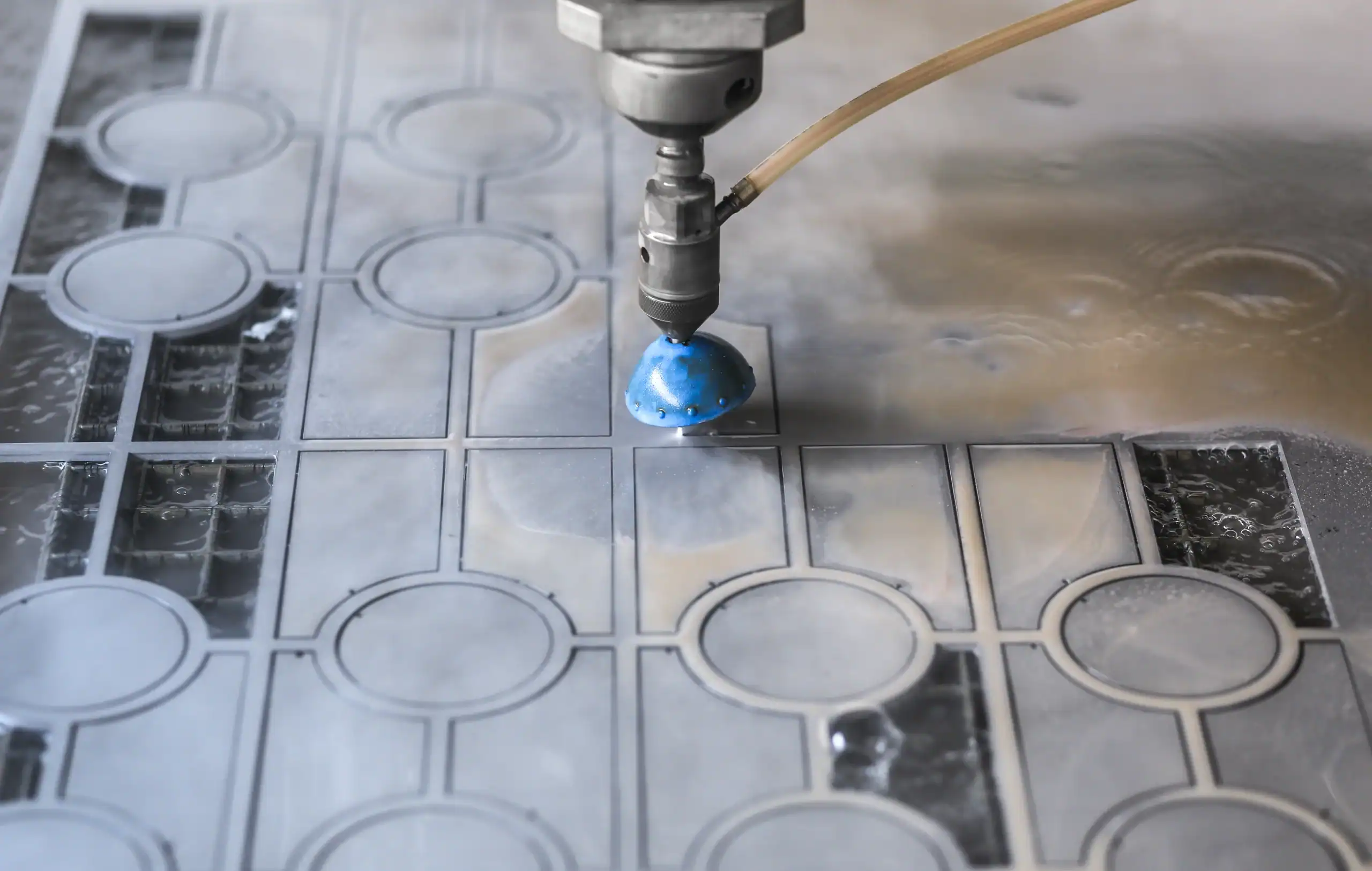
Once we confirm the details, your material gets loaded onto our CNC waterjet table. The system uses a high-pressure stream—often exceeding 60,000 PSI—mixed with abrasive garnet particles to cut through the metal. Because there’s no heat involved, your material’s properties stay intact. No hardening. No softening. No warped edges that throw off your assembly later.
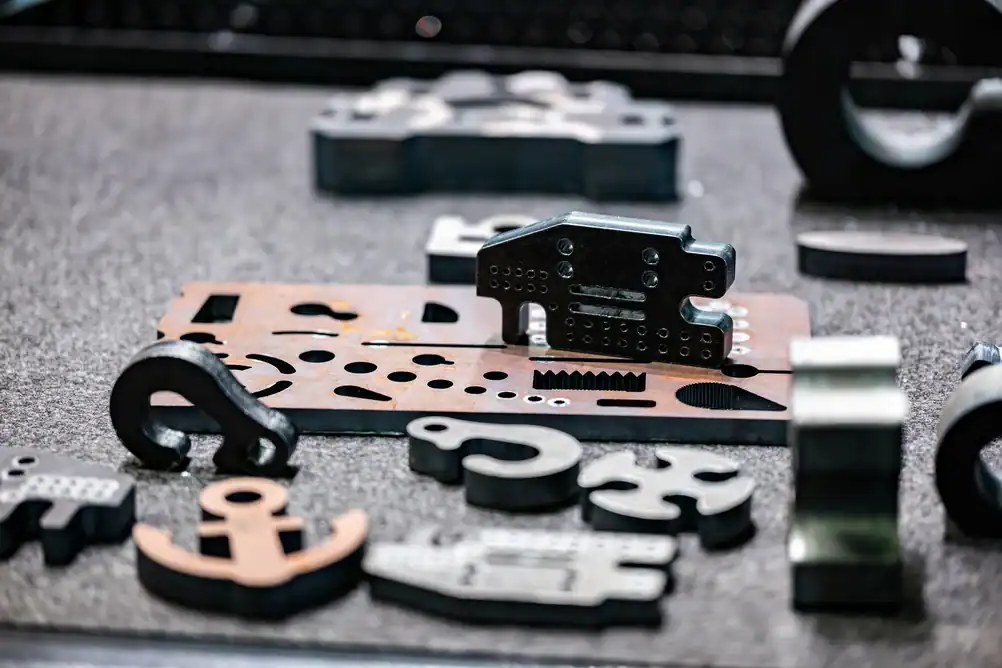
The CNC system follows your design with repeatable accuracy, whether you need one prototype part or a full production run. Complex shapes, tight inner radii, sharp corners, small holes—all of it gets handled in a single pass. After cutting, the parts come off the table with smooth edges and dimensional accuracy that typically eliminates secondary machining.
You’re not waiting weeks. Turnaround depends on material thickness and complexity, but most projects move faster than traditional machining because there’s no tooling to fabricate and no multi-step process to coordinate.
Ready to get started?
You’re not just getting a cut piece of metal. You’re getting a part that’s ready for the next stage of your project without additional prep work eating into your schedule.
Waterjet cutting metal in Mastic Beach, NY means you can work with materials that other cutting methods struggle with. Titanium, Inconel, tool steel, brass, aluminum—thickness ranging from thin gauge sheet up to 8 inches or more. The kerf width stays narrow, usually between 0.030 and 0.040 inches, so you can nest parts tightly and reduce scrap. When material costs are high, that efficiency adds up fast.
The process also handles complexity that would require multiple setups on a mill or lathe. If your part has intricate geometry, tight radii down to 0.020 inches, or internal cutouts, the waterjet handles it in one operation. You’re not coordinating between multiple vendors or waiting for different machines to free up.
For manufacturers and contractors in the Long Island area, this matters because project timelines are tight and quality expectations are non-negotiable. Whether you’re fabricating custom architectural elements, producing automotive components, or prototyping aerospace parts, the lack of heat-affected zones and mechanical stress means your parts perform exactly as your material specs intended.
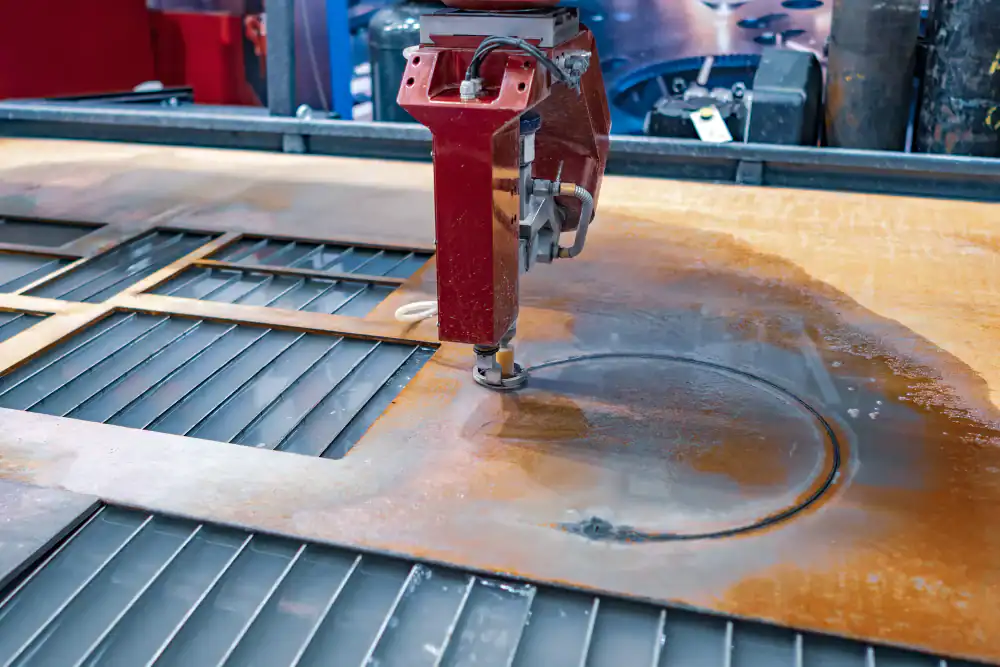
Waterjet cutting handles virtually any metal you’re working with. Steel, stainless steel, aluminum, titanium, brass, copper, Inconel, and tool steel all cut cleanly without heat distortion.
The process works regardless of hardness because it’s not relying on thermal energy or mechanical force that could alter the material. If you’re working with exotic alloys or metals that work-harden easily, waterjet cutting removes the risk of changing the material’s properties during fabrication.
Thickness capacity typically ranges from thin gauge sheet metal up to 8 inches or more, depending on the material. Harder metals take longer to cut through, but the quality stays consistent. If you’re unsure whether your specific material or thickness will work, a quick conversation about your specs will clarify what’s possible.
Waterjet cutting delivers tolerances as tight as ±0.005 inches, which puts it in the same range as quality laser cutting for most applications. The difference is that waterjet doesn’t create a heat-affected zone, so there’s no risk of warping, hardening, or softening the material along the cut edge.
Laser and plasma both generate significant heat, which can alter the metal’s properties and introduce stresses that affect dimensional accuracy, especially on thinner materials. Waterjet eliminates that variable entirely, so your parts come off the table dimensionally stable and ready for assembly or further machining without correction.
For parts that require tight tolerances and can’t afford any thermal distortion—like aerospace components, precision fixtures, or parts that will undergo additional heat treatment—waterjet cutting is often the better choice. The CNC control ensures repeatability across production runs, so part-to-part consistency stays high.
Waterjet cutting typically produces a smooth edge that doesn’t require deburring or secondary finishing. The edge quality is often described as satin-smooth, which means it’s clean enough for most applications right off the table.
There can be slight variation in edge finish depending on cutting speed and material thickness. Faster cuts may leave a slightly rougher texture on the bottom edge, but even that is usually acceptable for functional parts. If your application requires a specific edge finish, adjusting the cutting parameters can deliver the surface quality you need.
This is a significant advantage over plasma or oxy-fuel cutting, which often leave heavy slag and rough edges that require grinding. By eliminating that secondary operation, your parts move through production faster and your labor costs drop. For projects with tight timelines, that efficiency can be the difference between meeting a deadline and missing it.
Turnaround time depends on material type, thickness, part complexity, and current shop workload. Simple parts in thinner materials might be completed in a day or two, while thicker materials or intricate geometries take longer.
Cutting speed varies significantly with material hardness and thickness. Aluminum cuts faster than titanium. A quarter-inch plate cuts faster than 2-inch plate. Complex shapes with tight radii and detailed internal features take more time than simple rectangular cuts. But because waterjet cutting is a single-operation process with no tooling fabrication required, the overall timeline is often shorter than traditional machining.
If you’re working on a time-sensitive project, communicating your deadline upfront helps. Rush jobs can often be accommodated depending on shop capacity. For production runs, the first part takes the longest because of setup and programming, but subsequent parts run much faster since the CNC program is already dialed in.
Waterjet cutting typically costs more per hour to operate than plasma cutting but less than high-precision laser cutting or extensive CNC machining. Operating costs generally run between $12 and $30 per hour depending on system specifications and abrasive consumption.
But cost per hour doesn’t tell the full story. Waterjet cutting often eliminates secondary operations like deburring, grinding, or heat treatment to correct warping. It also reduces material waste because of the narrow kerf width and ability to nest parts tightly. When you factor in those savings, the total project cost can be competitive or even lower than methods that seem cheaper on the surface.
For low-volume or prototype work, waterjet cutting is especially cost-effective because there’s no expensive tooling to fabricate. You’re paying for machine time and material, not for custom dies or fixtures. If you need one part or a hundred, the per-part economics stay reasonable. For high-volume production, the lack of tool wear and consistent cut quality mean fewer rejected parts and less downtime.
Waterjet cutting handles thick metal effectively, with systems capable of cutting steel, aluminum, and other metals up to 8 inches thick or more. The process doesn’t lose accuracy as thickness increases, though cutting speed does slow down with thicker materials.
For structural components, heavy equipment parts, or applications where material integrity is critical, waterjet cutting’s lack of heat input is a major advantage. Thick steel that’s been cut with oxy-fuel or plasma often has a heat-affected zone that extends deep into the material, potentially compromising strength or creating internal stresses. Waterjet cutting leaves the material’s grain structure and mechanical properties completely unchanged.
If you’re fabricating parts that will be welded, machined further, or subjected to high stress loads, starting with a waterjet-cut blank means you’re working with material that hasn’t been thermally compromised. That’s particularly important for structural steel, pressure vessels, or heavy machinery components where failure isn’t an option. The clean cut also makes fit-up easier during assembly, which saves time and reduces the need for field adjustments.
Useful Links
Other Services we provide in Mastic Beach