Hear from Our Customers
When you’re cutting hardened steel, thick aluminum plate, or titanium components, heat becomes your enemy. Laser and plasma cutting create a heat-affected zone that changes your material properties right where you need them most. You end up with hardened edges that crack during forming, warped parts that don’t fit assemblies, and discolored surfaces that need grinding before welding or coating.
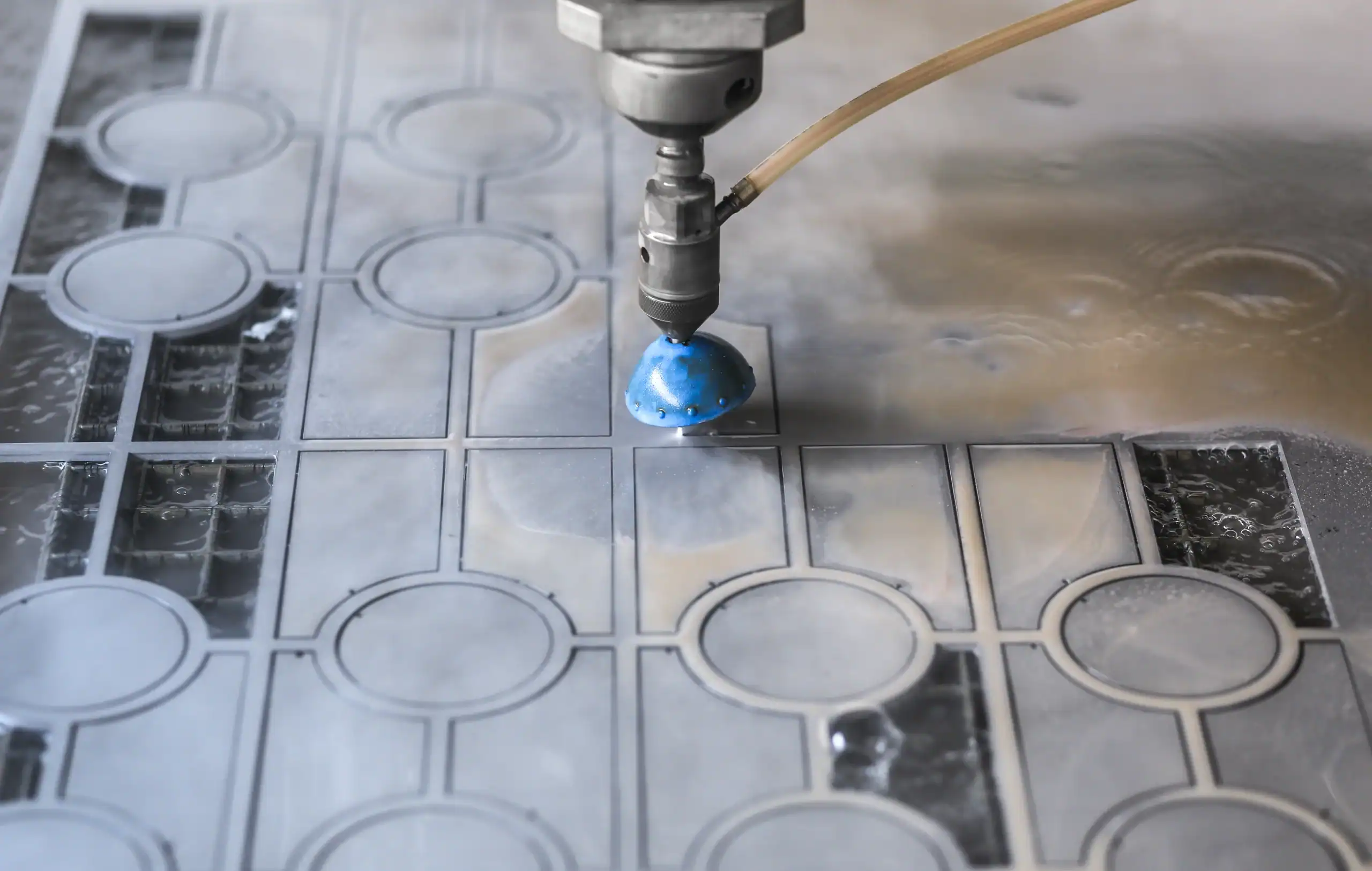
Waterjet cutting metal in North Bay Shore, NY eliminates that entire problem. The process uses high-pressure water mixed with abrasive garnet to cut through your material at room temperature. Your steel doesn’t harden. Your aluminum doesn’t warp. Your titanium keeps its temper. The edge comes out smooth enough that most parts go straight to assembly without secondary operations.
You also get tolerances down to ±0.005″ when the job requires it. The CNC control reads your CAD file directly and follows your geometry exactly—tight inside radii, sharp corners, complex shapes that would take multiple setups on a mill. One pass through the waterjet and you’re done.
We’ve been running custom metal waterjet cutting services in North Bay Shore, NY since the area’s manufacturing base started demanding precision without the heat problems. We’re set up to handle prototype runs for machine shops testing new designs, production batches for fabricators building structural components, and emergency turnaround when a part failure puts your line down.
North Bay Shore sits in the middle of Long Island, NY’s industrial corridor where automotive suppliers, aerospace subcontractors, and architectural metalworkers all need access to precision cutting. You’re not shipping parts out of state and waiting a week. You’re working with a shop that understands the local market and can turn jobs around when your schedule demands it.
Our Flow Mach 500 waterjet runs CNC control with 90,000 PSI cutting pressure. That’s not marketing language—it’s the spec that determines how fast we cut through thick plate and how clean the edge quality comes out on your parts.
You send us your CAD file—DXF, DWG, or most common formats work fine. We review the geometry to confirm the design will cut cleanly and nest your parts efficiently on the material to minimize waste. If there’s an issue with inside radii, corner relief, or edge clearance, we’ll flag it before we start cutting so you’re not surprised later.
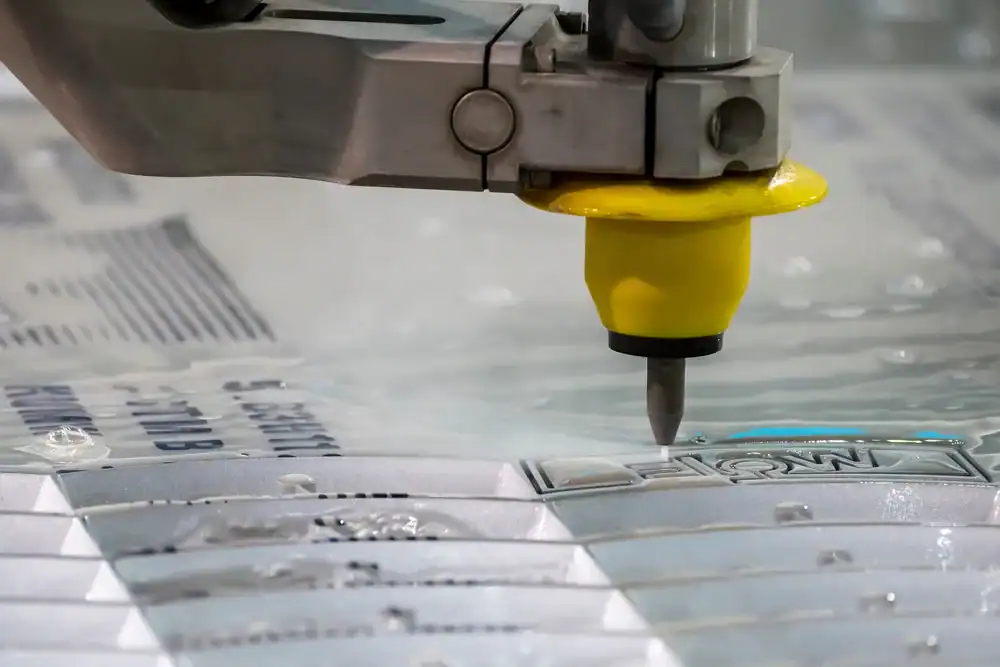
Once the file is programmed, we load your material onto the cutting table and run the job. The waterjet head moves along your programmed path while high-pressure water mixed with garnet abrasive cuts through the metal. There’s no clamping pressure distorting thin material, no heat warping your parts, no tool deflection throwing off your tolerances on the last piece in a batch.
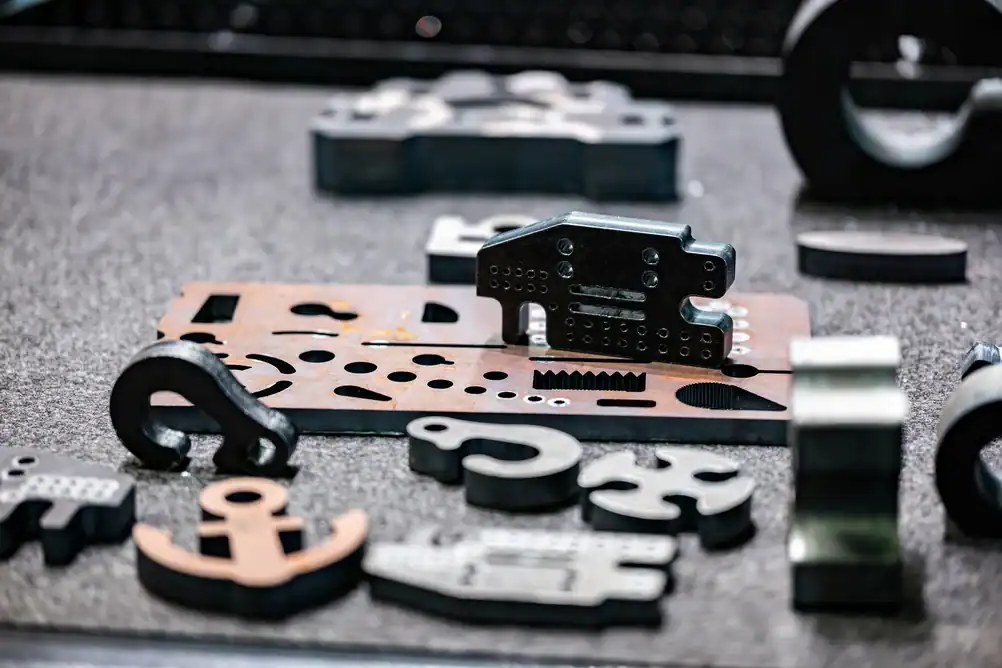
After cutting, parts come off the table ready for whatever’s next in your process. Most edges are smooth enough for welding or hardware installation without deburring. If you need secondary operations like drilling, tapping, or bending, the material properties haven’t changed—it machines and forms exactly like it did before cutting.
Ready to get started?
We cut steel plate up to several inches thick—structural beams, mounting brackets, base plates, whatever your job requires. Aluminum cuts fast and clean, which matters when you’re running production quantities of parts for automotive or aerospace assemblies. Stainless steel, titanium, brass, copper, and tool steel all process without the material-specific problems you’d face with thermal cutting methods.
North Bay Shore’s manufacturing sector includes a lot of custom fabrication work where every job is different. Architectural metalwork needs complex curves and precise fitment. Machine shops need replacement parts that match original specs exactly. Contractors need structural components cut to engineer-stamped drawings. The waterjet handles all of it because the process doesn’t care what material you’re cutting or how complex the shape is.
You also get material consultation if you’re not sure what thickness or grade will work best for your application. We’ve cut enough parts across enough industries that we can tell you what’s going to machine well, what’s going to weld cleanly, and what’s going to hold up in service. That’s worth something when you’re prototyping a new design or switching materials to reduce cost.
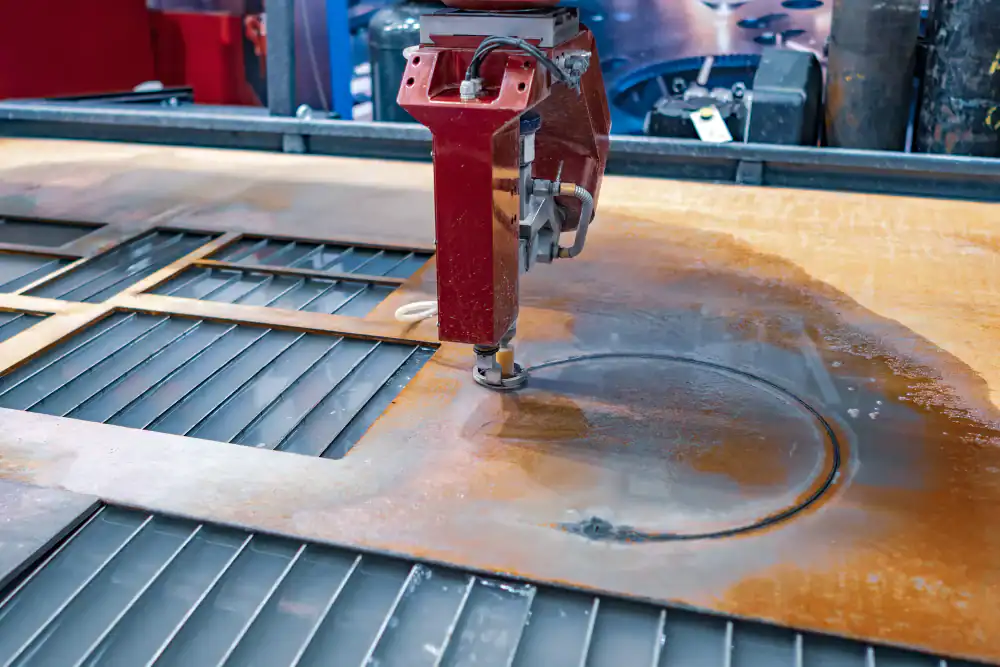
The fundamental difference is heat. Laser and plasma cutting use thermal energy to melt through metal, which creates a heat-affected zone along the cut edge. That zone changes your material properties—steel hardens, aluminum softens, and everything can warp depending on thickness and geometry. You’ll often need secondary grinding or machining to remove the HAZ before welding or assembly.
Waterjet cutting metal in North Bay Shore, NY is a cold process. The abrasive stream erodes material mechanically without generating heat, so your steel maintains its original hardness, your aluminum keeps its temper, and nothing warps. The edge comes out smooth with no oxidation, no dross, and no hardened layer. For structural components, aerospace parts, or anything where material properties matter, that’s a significant advantage.
Speed is where thermal cutting wins—laser and plasma cut faster on thin material. But waterjet handles thick plate better, cuts materials that would damage a laser lens, and produces parts that often skip secondary operations entirely. If you’re cutting production quantities of thin sheet metal, thermal methods make sense. If you’re cutting thick plate, exotic alloys, or parts where edge quality matters, waterjet is the better process.
Standard waterjet cutting in North Bay Shore, NY holds ±0.010″ without special fixturing or programming. That’s tight enough for most fabrication work, structural components, and parts that get machined or welded after cutting. If your application requires closer tolerances, we can hold ±0.005″ by adjusting cutting speed, using taper compensation, and controlling for kerf width variation.
The tolerance you actually get depends on material thickness, part geometry, and how the material is supported during cutting. Thin material can shift slightly under the waterjet stream if it’s not properly supported, which affects accuracy on small features. Thick plate cuts slower, which gives us better control over edge quality and dimensional accuracy. Complex shapes with tight inside radii or sharp corners may require slower cutting speeds to maintain tolerance.
CNC control is what makes tight tolerances possible. The machine reads your CAD file directly and follows the programmed path with consistent speed and pressure. There’s no operator error from manual torch control, no tool deflection like you’d see on a mill cutting thick plate, and no thermal expansion throwing off dimensions as the material heats up. The first part in a batch cuts the same as the last part.
Waterjet cuts through metal plate several inches thick without losing accuracy or edge quality. We’ve cut structural steel beams, thick aluminum base plates, and hardened tool steel that would burn up a bandsaw blade or take hours on a mill. The process doesn’t care about material hardness or thickness—it just takes longer to cut through thicker material.
For North Bay Shore fabricators working on structural projects, that capability matters. You can cut mounting plates, gussets, brackets, and beam connections directly from thick plate without pre-drilling or multiple setups. The edge quality is clean enough for welding without grinding, and the lack of heat-affected zone means you’re not introducing stress risers or hardened areas that could crack under load.
Cutting speed drops as thickness increases, so thick plate takes longer than thin sheet. But you’re still faster than drilling and sawing by hand, and you eliminate the secondary cleanup work that comes with torch cutting. If you’re cutting one-off parts or small batches where setup time matters more than cutting speed, waterjet makes sense even on thick material.
We handle both. Prototype work usually means cutting a few parts so you can test fit, check dimensions, and verify the design before committing to production. We’ll work directly from your CAD file, flag any potential issues with the geometry, and turn parts around quickly so you’re not waiting days to see if your design works.
Production runs get the same attention to detail but with a focus on consistency and efficiency. We nest parts to minimize material waste, program the job to maintain tolerances across the entire batch, and verify dimensions throughout the run. If you’re cutting 500 brackets that need to bolt up to an existing assembly, every part needs to match—not just the first few.
Custom metal waterjet cutting in North Bay Shore, NY also covers the jobs that don’t fit standard categories. Architectural metalwork with complex curves, replacement parts for equipment that’s no longer manufactured, one-off components for R&D projects—if you can draw it in CAD, we can cut it. The waterjet doesn’t require custom tooling or special fixtures, so there’s no setup cost penalty for low-volume work.
Standard turnaround runs three to five business days from the time we receive your CAD file and material specifications. That includes programming, material procurement if we’re supplying it, cutting, and quality verification. If you’re supplying your own material, we can often cut parts within a day or two once the material arrives.
Rush jobs get handled differently. If a machine breakdown or design change puts you in a bind, we can prioritize your work and turn parts around same-day or next-day when the schedule allows. That costs more than standard turnaround, but it’s available when you need it. North Bay Shore’s manufacturing base includes a lot of job shops and fabricators who occasionally face emergency situations—we’re set up to handle that.
Lead time also depends on material availability and job complexity. Common materials like steel and aluminum plate are usually in stock or available quickly from local suppliers. Exotic alloys, thick plate, or specialty grades may take longer to source. Complex parts with tight tolerances take longer to program and cut than simple shapes. We’ll give you a realistic timeline when you submit your files so you know what to expect.
Steel in all grades—mild steel, stainless, tool steel, hardened steel. Aluminum from thin sheet to thick plate. Titanium, copper, brass, bronze, and most specialty alloys. The waterjet process doesn’t generate heat, so we’re not limited by melting point or thermal conductivity like you would be with laser or plasma cutting.
We also cut materials that would be difficult or impossible with other methods. Hardened tool steel that would destroy a bandsaw blade cuts cleanly with waterjet. Titanium that would catch fire under a plasma torch cuts without issue. Thick copper plate that would absorb a laser beam and refuse to cut processes just fine with abrasive waterjet. If it’s metal and you need it cut to shape, waterjet can handle it.
Material thickness ranges from thin sheet up to several inches of plate depending on the specific alloy and edge quality requirements. Thicker material takes longer to cut but doesn’t present any technical limitations. If you’re not sure whether your material will work or what thickness makes sense for your application, we can advise based on what we’ve cut before and how the parts will be used.
Useful Links
Other Services we provide in North Bay Shore