
Hear from Our Customers
You need parts that fit. Not parts that almost fit, or parts that need another shop to clean up the edges, or parts that show up warped because someone used a torch or laser that cooked the material.
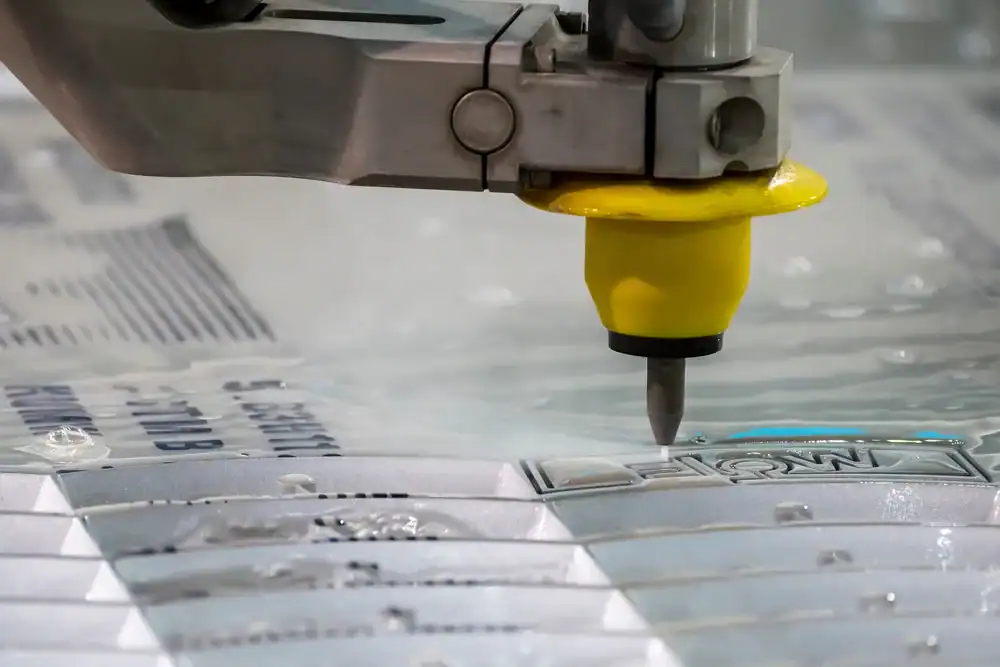
Waterjet cutting metal in Oceanside, NY means your steel, aluminum, or titanium gets cut cold. No heat-affected zones. No hardened edges. No distortion that throws off your tolerances. The edge quality comes off the machine ready to use, which means you skip the deburring, grinding, or secondary finishing that eats into your timeline and budget.
If you’re working with tight specs—aerospace components, architectural metalwork, custom fabrication—you already know that inconsistent cuts create expensive problems downstream. CNC metal waterjet cutting removes that variable. The stream follows your CAD file exactly, handles complex geometries without tool changes, and maintains accuracy whether you’re cutting 1/8-inch aluminum or 6-inch steel plate.
We serve fabricators, contractors, and manufacturers across Oceanside and the broader Long Island, NY area. We’ve handled projects for aerospace contractors who need zero tolerance for error, architectural firms working with exotic metals, and production shops that can’t afford downtime from bad cuts.
The Oceanside manufacturing sector has companies like National Metal Industries and Performance Sheet Metal that have been operating for decades. That kind of longevity happens because the work gets done right. We operate with that same standard—your specs are our specs, and if the cut doesn’t meet tolerance, it doesn’t leave our shop.
You’re not looking for the cheapest option. You’re looking for the option that doesn’t create more work for you. That’s what custom metal waterjet cutting delivers.
You send us your CAD file or technical drawing with material specs and tolerances. We review it to confirm the design works for waterjet cutting and flag any potential issues before we start—not after you’ve already paid for a bad run.
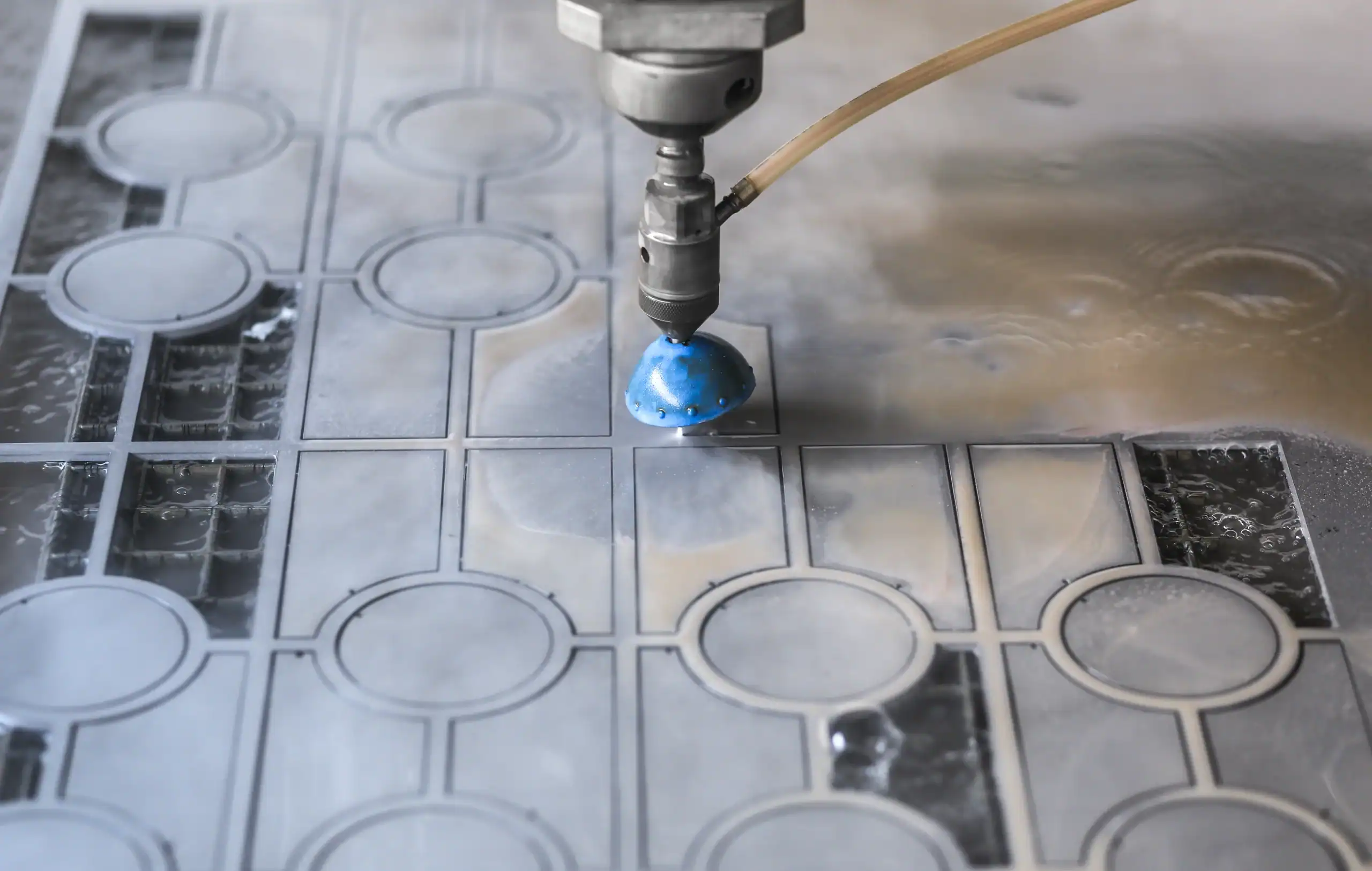
Once the file is programmed into our CNC system, we load your material onto the cutting bed. The waterjet stream operates at pressures exceeding 60,000 PSI, mixed with abrasive garnet that does the actual cutting. The stream is thinner than a credit card, which means tight kerf width and minimal material waste.
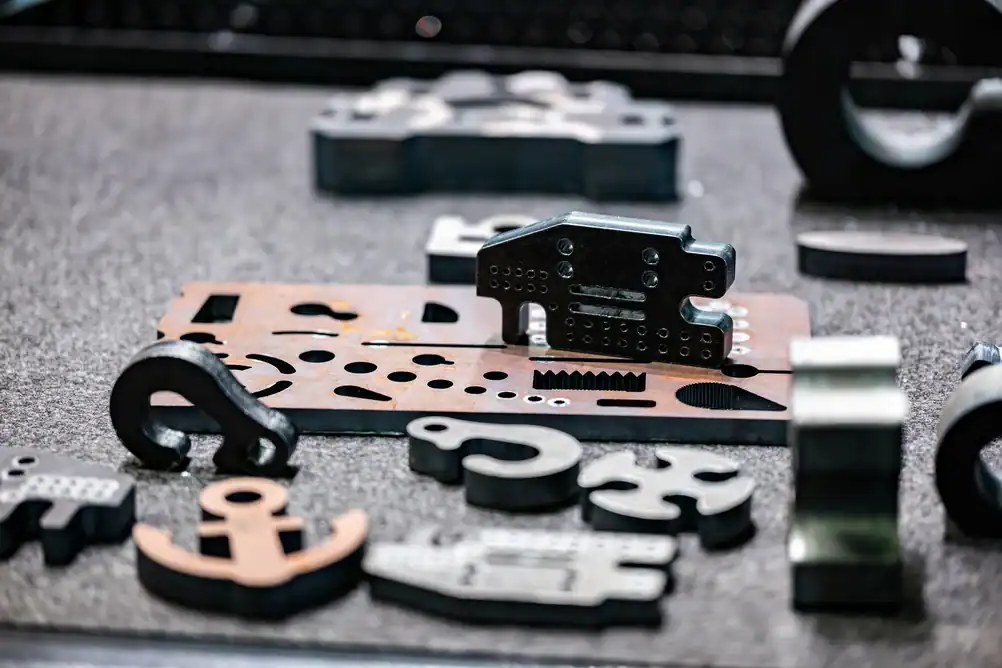
The cutting head follows your programmed path with precision. There’s no blade to dull, no heat to manage, no tool changes between materials or thicknesses. Complex shapes, sharp internal corners, small holes—the stream handles it all in a single pass. After cutting, parts come off the table with clean edges and no thermal stress. If your specs call for it, we can hold tolerances as tight as ±0.003 inches.
You get parts that match your design file, cut from the material you specified, ready for assembly or installation. No surprises, no rework, no excuses.
Ready to get started?
We cut hardened tool steel, stainless steel, aluminum, titanium, brass, copper, and exotic alloys that give other cutting methods trouble. Thickness capacity runs from thin gauge sheet up to 10 inches, depending on material. If you’re prototyping, we handle single-piece runs. If you’re in production, we scale to your volume requirements without sacrificing accuracy.
Oceanside’s proximity to New York City and the broader tri-state manufacturing corridor means fast turnaround matters. We don’t sit on jobs. Standard lead times keep your project moving, and we accommodate rush requests when your timeline gets compressed. You’ll get a realistic delivery estimate upfront, not a promise we can’t keep.
The abrasive waterjet process is environmentally cleaner than thermal cutting. No hazardous fumes, no toxic runoff. The water and garnet abrasive get filtered and recycled. For shops operating under environmental regulations or working in occupied buildings, that matters.
You also get burr-free edges in most applications, which eliminates the time and cost of secondary deburring operations. The cold cutting process preserves material properties—no annealing, no case hardening, no microfractures from thermal shock. For aerospace, medical, or structural applications where material integrity is non-negotiable, that’s the difference between a part that passes inspection and one that gets scrapped.
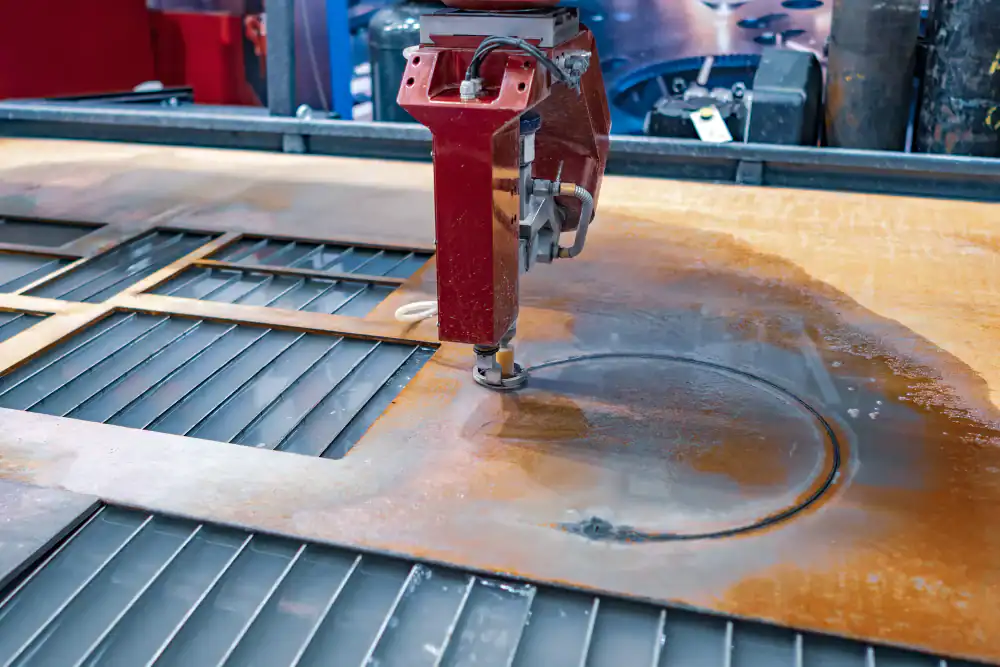
Waterjet handles virtually any metal you’re working with. That includes common materials like aluminum, stainless steel, mild steel, and copper, as well as harder or more exotic options like titanium, Inconel, hardened tool steel, brass, and bronze.
The process doesn’t rely on heat, so it won’t alter the material’s properties or create a heat-affected zone that weakens the structure. This makes it especially useful for aerospace-grade titanium, pre-hardened steel, or any application where you can’t risk thermal distortion.
If you’re cutting laminated materials, composites with metal layers, or dissimilar metals bonded together, waterjet works without delaminating or creating separation issues. There’s no mechanical force that would cause layers to shift or peel. The stream cuts straight through without compromising the bond.
Standard waterjet cutting holds tolerances around ±0.005 inches, which covers most fabrication and manufacturing needs. If your application requires tighter specs, CNC systems with dynamic waterjet technology can achieve ±0.003 inches or better on critical dimensions.
Accuracy depends on several factors: material thickness, cutting speed, abrasive flow rate, and whether the system compensates for taper. Thicker materials can develop a slight taper where the bottom edge is marginally wider than the top. Quality waterjet shops adjust cutting parameters or use taper compensation to minimize this effect on precision parts.
For parts with complex geometries, tight internal radii, or small holes, waterjet maintains consistency that punch presses and plasma cutters can’t match. The narrow kerf width—often less than 0.04 inches—means you’re not losing significant material to the cut itself, which matters when you’re nesting parts efficiently or working with expensive alloys.
If you’re comparing waterjet to laser cutting, waterjet has the edge on thicker materials and metals that reflect laser energy. If you’re comparing to plasma, waterjet delivers cleaner edges without the dross and heat distortion that plasma creates.
In most cases, waterjet cutting produces smooth, burr-free edges that don’t require additional finishing. The abrasive stream creates a clean cut without the rough edges, slag, or dross you’d see from plasma or oxy-fuel cutting.
Edge quality depends on cutting speed and abrasive flow. A slower, finishing-quality pass produces a smoother edge than a faster roughing pass. For parts that need the cleanest possible finish, the cutting parameters get adjusted to prioritize edge quality over speed.
Thicker materials or faster production cuts might show minor burrs on the exit side of the cut, but they’re typically small enough to remove with a quick pass of a file or deburring tool—nothing like the cleanup required after thermal cutting. For many applications, parts go straight from the waterjet table to assembly without any additional work.
This eliminates the labor cost and time associated with grinding, sanding, or machining edges after cutting. It also reduces the risk of damaging the part during secondary operations. If you’re cutting finished parts that can’t afford scratches or handling damage, waterjet’s ready-to-use edge quality is a significant advantage.
Turnaround time depends on material availability, job complexity, and current shop capacity. For straightforward cuts on standard materials, you’re typically looking at a few days to a week. Rush jobs can often be accommodated if you’re under a tight deadline, though that may affect pricing.
Complex parts with intricate geometries or very tight tolerances take longer to program and cut. Thicker materials also slow down cutting speed—a 4-inch steel plate cuts significantly slower than 1/4-inch aluminum. If you’re ordering a high-volume production run, setup time gets amortized across all the parts, but the total cutting time increases with quantity.
Material sourcing can be the bottleneck if you’re working with exotic alloys or non-standard sizes. If you supply the material, that eliminates the procurement delay. If we’re sourcing it, factor in a few extra days depending on what you need.
Getting a realistic timeline upfront matters more than getting an optimistic estimate that doesn’t hold up. We’ll give you an honest lead time based on our current workload and your specific job requirements, not a generic answer that sounds good but creates problems when your parts don’t show up on schedule.
Waterjet cuts without heat, which means no warping, no heat-affected zones, and no change to the material’s properties. Laser and plasma both generate significant heat that can distort thin materials, harden edges, or create internal stresses that cause problems during welding or forming.
For thick materials—anything over 1 inch—waterjet maintains accuracy and edge quality that lasers struggle with. Plasma can cut thick steel, but the edge quality deteriorates and you’ll spend time cleaning up dross and slag. Waterjet produces a clean edge regardless of thickness.
Waterjet also handles reflective metals like aluminum, copper, and brass without the issues lasers face. Laser energy reflects off these materials, reducing cutting efficiency and potentially damaging the machine. Waterjet doesn’t care what the material reflects—it cuts through regardless.
Material versatility is another factor. Waterjet cuts hardened steel, titanium, Inconel, and other tough alloys that cause excessive wear on cutting tools or require specialized equipment with other methods. There’s no tool to dull or replace, and the same setup cuts soft aluminum and hardened steel without adjustments.
The tradeoff is speed. Laser cutting is faster on thin materials, especially for high-volume production runs of simple shapes. If you’re cutting large quantities of thin sheet metal with basic geometries, laser might be more cost-effective. But if you need thick material capacity, superior edge quality, or the ability to cut without thermal distortion, waterjet is the better choice.
Pricing depends on material type, thickness, cutting time, and job complexity. Operating costs for waterjet cutting typically run $30 to $35 per hour, but your final price reflects the total time required to cut your specific parts, plus material costs if we’re supplying it.
Thicker materials take longer to cut, which increases cost. A complex part with intricate details, tight internal radii, or numerous small holes requires slower cutting speeds to maintain accuracy, which also adds time. Simple shapes cut from thin material cost less because they’re faster to program and cut.
Material costs vary significantly. Cutting standard aluminum or mild steel is cheaper than cutting titanium, Inconel, or other exotic alloys. If you’re supplying the material, you eliminate that variable and only pay for cutting time and setup.
Volume matters too. A single prototype part carries the full setup and programming cost. A production run of 100 identical parts spreads that fixed cost across all the pieces, reducing the per-part price. If you’re running repeat orders, we’ll store your program and reduce setup charges on subsequent runs.
You’re not just paying for cutting time—you’re paying for precision, material integrity, and edges that don’t need additional finishing. When you factor in the cost of secondary operations, rework from bad cuts, or scrapped parts from heat distortion, waterjet often delivers better value than cheaper cutting methods that create expensive problems downstream.
Useful Links
Other Services we provide in Oceanside