Hear from Our Customers
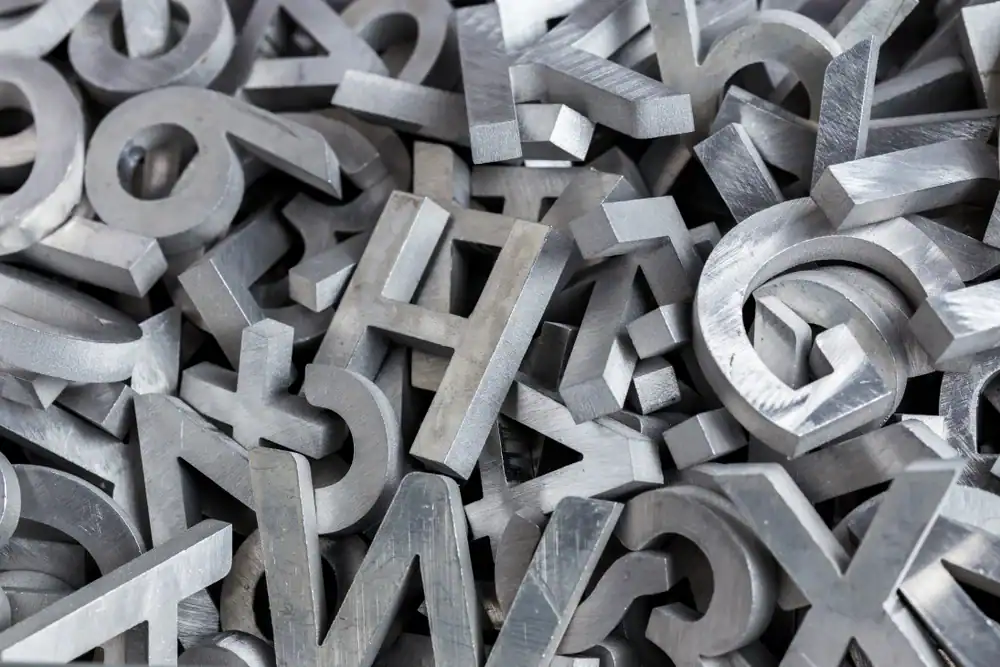
Your project timeline doesn’t have room for do-overs. When you’re working with stainless steel, aluminum, titanium, or inconel, traditional cutting methods introduce heat that warps material and changes its properties. That means rework, delays, and parts that don’t meet spec.
Waterjet cutting metal eliminates that problem entirely. No heat means no distortion, no hardened edges, and no compromised material integrity. You get satin-smooth edges that typically don’t require secondary finishing, which saves you time and keeps your project moving.
The process handles materials up to 300mm thick and cuts virtually any two-dimensional shape you need. Complex geometries, tight nesting to reduce waste, bevel cuts up to 68 degrees. If you’re prototyping or running short production batches with hard-to-machine metals, this process is faster and more cost-effective than conventional methods, especially for materials over an inch thick.
We serve architects, designers, contractors, and fabricators across Port Washington and Nassau County. This area has deep roots in aerospace and defense manufacturing, which means the supply chain here understands precision. You don’t settle for “close enough,” and neither do we.
We bring your designs to life from concept to completion. That includes material consultation, custom design support, and the actual cutting work. You’re not handed off between departments or left guessing about feasibility.
Port Washington’s industrial sector demands reliable turnaround and consistent quality. We’ve built our operation around those expectations because we know what’s at stake when your project is on the line.
You start by sending us your design specs or working with us to develop them. We review material type, thickness, tolerances, and any special requirements like bevel cuts or intricate geometries. If there’s a more efficient way to nest your parts or a material consideration that affects the outcome, we’ll tell you upfront.
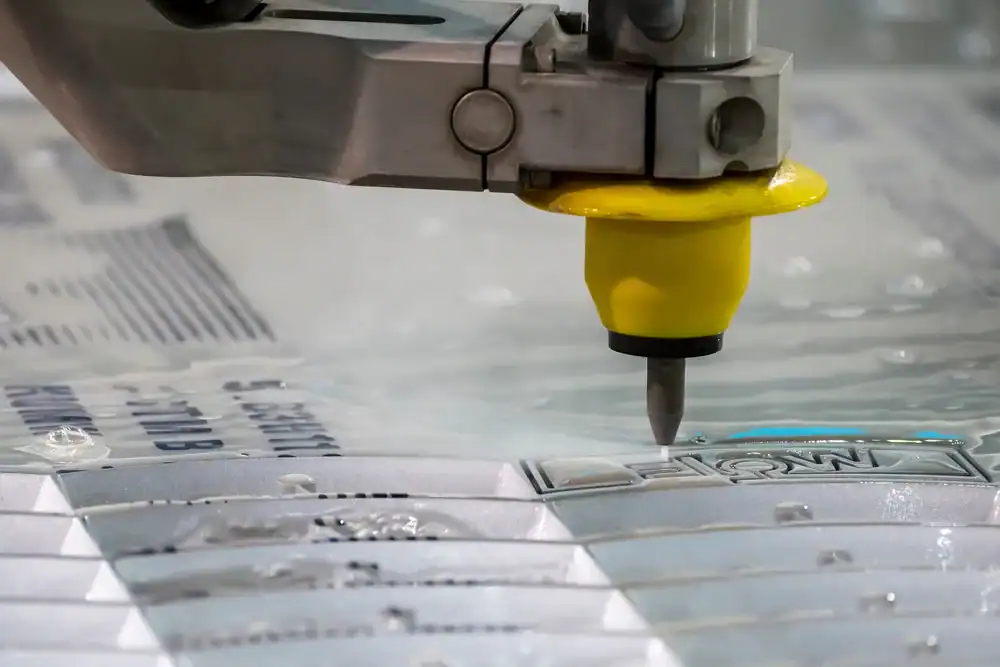
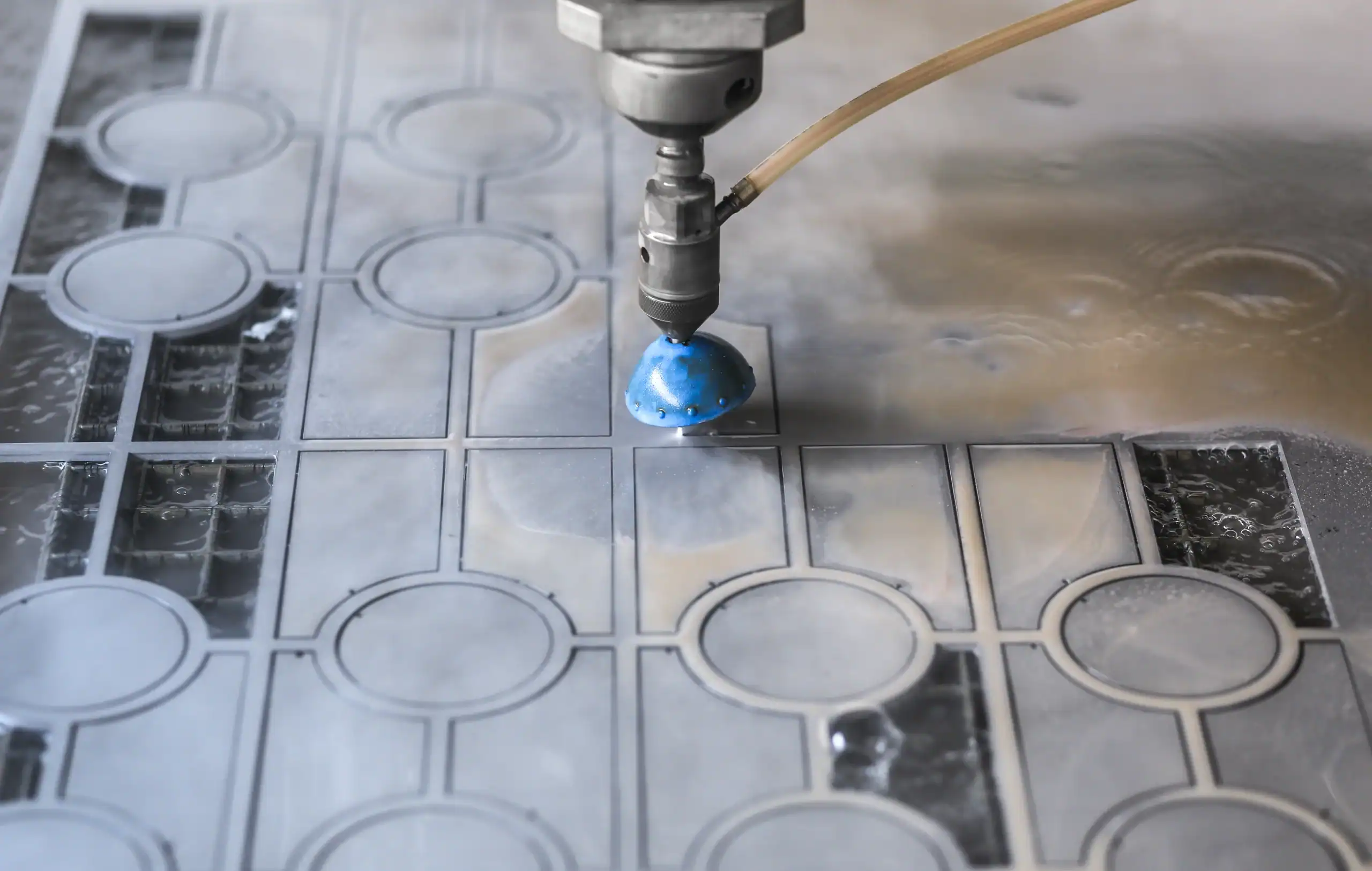
Once the design is locked in, we program the CNC waterjet system. The machine uses a high-pressure stream of water mixed with abrasive garnet to cut through your material with precision. Because there’s no heat involved, your material stays cool and retains its original properties throughout the process.
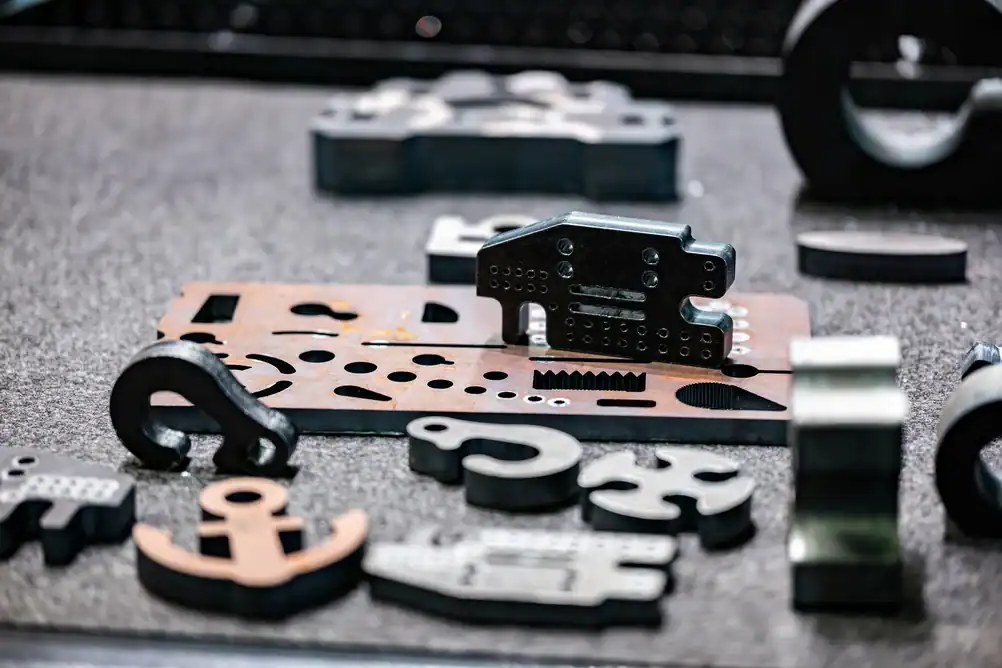
After cutting, most parts come off the machine ready to use. The edges are smooth and clean, without burrs or heat-affected zones. If your project requires additional finishing or fabrication, we can discuss that during the consultation. You get parts that meet your specifications, delivered on the timeline you need.
Ready to get started?
You’re working with a process that handles extreme material variety. Stainless steel, aluminum, titanium, inconel, mild steel—materials that are difficult or expensive to cut conventionally are routine here. Thickness capacity goes up to 300mm, and the system cuts any shape your project requires.
Port Washington’s manufacturing landscape includes aerospace components, architectural metalwork, custom fabrication, and automotive parts. These industries can’t afford material waste or imprecise cuts. Our waterjet metal cutting shop in Port Washington reduces material waste by up to 30% compared to traditional methods, which directly impacts your project budget.
The process is environmentally sound. No harmful vapors, no toxic gases, and the water used in cutting can be recycled. For companies in Port Washington focused on sustainable manufacturing practices, this matters.
You also get custom design services and material consultation. If you’re in the early stages of a project and need guidance on material selection or design feasibility, that’s part of the conversation. We’re not just running a machine—we’re helping you figure out the best path from concept to finished part.
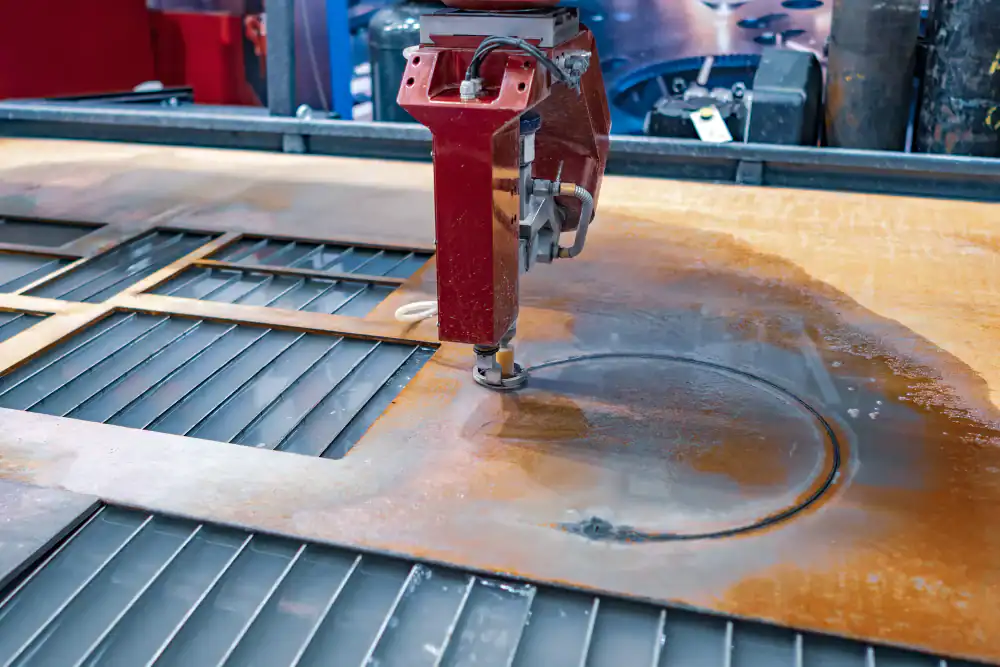
Waterjet cutting works on virtually any metal you’re likely to use. Stainless steel, aluminum, titanium, inconel, mild steel, copper, brass—if it’s a metal, the process can cut it. This includes extremely hard materials that are difficult or expensive to machine using conventional methods.
The process handles thicknesses up to 300mm, which covers everything from thin sheet metal to heavy plate. There’s no material hardness limit because the cutting mechanism doesn’t rely on tool hardness or heat. The high-pressure water stream mixed with abrasive garnet erodes the material regardless of how hard it is.
This makes waterjet particularly valuable for aerospace and defense applications common in the Port Washington area, where materials like titanium and inconel are standard. You’re not limited by what a blade can cut or what a laser can penetrate without creating a heat-affected zone.
The cutting process uses water and abrasive garnet, not heat. The material never gets hot enough to change its properties, warp, or develop a heat-affected zone. This is critical when you’re working with metals that are heat-sensitive or when dimensional accuracy is non-negotiable.
Traditional thermal cutting methods like plasma or laser generate intense heat that can harden edges, create internal stresses, and warp thin materials. You end up with parts that don’t meet tolerance or require extensive secondary work to correct heat damage. That’s time and money you don’t get back.
With our waterjet cutting metal in Port Washington, your parts come off the machine with the same material properties they had going in. No hardened edges, no warping, no stress cracks. For precision work where material integrity matters—aerospace components, medical device parts, custom architectural elements—this is the difference between a part that works and one that doesn’t.
Modern waterjet systems achieve tolerances within 0.01mm. That’s tight enough for most precision manufacturing applications, including aerospace and automotive work. The CNC control ensures repeatability across production runs, so part one matches part one hundred.
Tolerances depend partly on material thickness and type, but for typical metal fabrication projects in Port Washington, you’re looking at accuracy that eliminates the need for secondary machining in most cases. The edges come off smooth—what’s called a satin finish—without burrs or roughness that requires grinding or finishing.
If your project has specific tolerance requirements, that’s part of the initial consultation. We program the system based on your specs and verify that the process can deliver what you need before cutting begins. You’re not guessing about whether the parts will fit—you know upfront.
Waterjet cutting can reduce material waste by up to 30% compared to traditional cutting methods. The cutting stream is narrow—typically less than 1mm—which means you lose very little material to the kerf. Tight nesting of parts on the sheet becomes possible, maximizing how much usable material you get from each plate.
This matters significantly when you’re working with expensive metals like titanium or inconel, which are common in Port Washington’s aerospace and defense manufacturing sector. Every square inch of material you save translates directly to cost savings, especially on large or ongoing projects.
The process also eliminates waste from rework. Because there’s no heat distortion and the cuts are precise, you’re not scrapping parts that don’t meet spec. First-time accuracy means the material you cut is the material you use, not material you throw away and recut.
Yes to both. The process cuts virtually any two-dimensional shape you can design. Complex geometries, tight radiuses, intricate patterns—if you can draw it, waterjet can cut it. The CNC system follows your programmed path precisely, which makes it ideal for custom fabrication work and prototyping.
Thickness capacity goes up to 300mm for metals, which covers everything from thin gauge sheet to heavy structural plate. The process is actually more cost-effective than traditional methods for materials over an inch thick because it’s faster and doesn’t require expensive tooling or multiple setups.
For Port Washington fabricators and contractors working on custom architectural projects or specialized industrial components, this versatility eliminates the need to farm out different parts of a job to multiple shops. One process handles the full range of cutting requirements, which simplifies your workflow and keeps the project under one roof.
Turnaround depends on project complexity, material thickness, and current queue, but waterjet cutting is generally faster than traditional machining methods, especially for thick materials or complex shapes. Simple parts can often be completed within days, while more involved projects might take a week or two.
The process doesn’t require custom tooling or extensive setup time, which speeds things up considerably. Once your design is programmed into the CNC system, cutting begins. There’s no waiting for tool fabrication or multiple machine setups like you’d have with conventional machining.
For Port Washington businesses working on time-sensitive projects—whether that’s a construction deadline, a prototype review, or a production run—we discuss timeline upfront during the consultation. You’ll know what to expect before committing to the project, and we build our schedule around keeping your project moving.
Useful Links
Other Services we provide in Port Washington