Hear from Our Customers
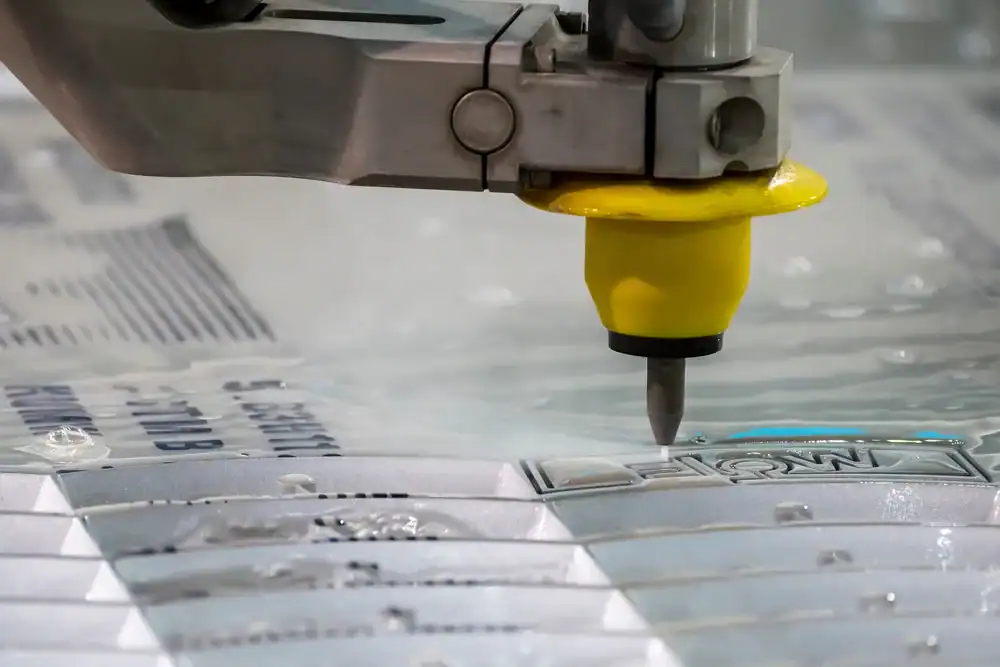
You need parts that match your specifications exactly. Not close—exact. Waterjet cutting metal in Rocky Point, NY means your architectural panels, custom components, and prototype pieces come out with finished edges and dimensional accuracy measured in thousandths of an inch.
No heat-affected zones. No material stress. No warping that throws off your assembly or installation. The high-pressure water stream cuts through steel, aluminum, copper, and exotic alloys without changing their properties or introducing distortion.
Your CAD files translate directly into physical parts. We review DXF and DWG files before cutting starts, catching potential issues before they waste your material or delay your timeline. Whether you’re running one prototype or a hundred production pieces, the cut quality stays consistent because there’s no tool wear to manage.
We operate from Rocky Point, NY with OMAX CNC equipment and a background in traditional machining. That combination matters when you’re converting digital designs into physical metal parts.
Our owner-operated approach means you’re working with people who understand both the engineering side and the practical realities of fabrication. We review files with experienced CAD designers who know what works and what doesn’t. Projects for companies like Metfab Metals and Ralph Lauren required that level of technical competence—the kind where tight tolerances and complex geometries aren’t just marketing talk.
Rocky Point’s location serves the broader tri-state manufacturing community, from architectural firms needing decorative screens to industrial shops requiring custom components. Our focus stays on precision work where waterjet cutting’s advantages—no heat, no distortion, finished edges—actually matter to your end result.
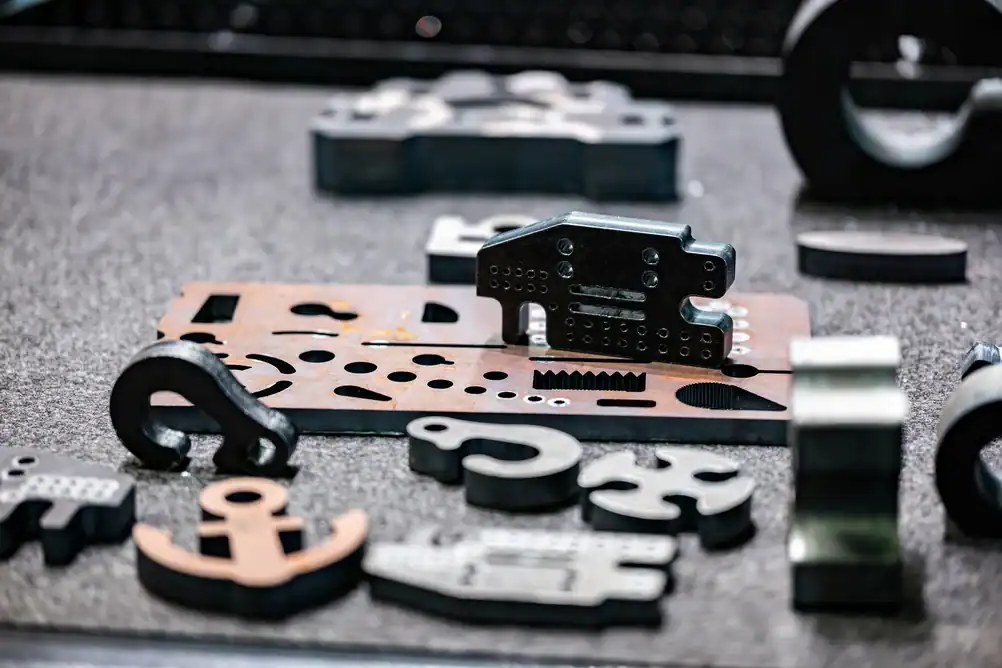
You send your CAD files—DXF or DWG format works. Our in-house design team reviews every file before programming starts. We’re looking for potential issues: geometry that won’t cut cleanly, tolerances that don’t match material capabilities, or file errors that would cause problems mid-cut.
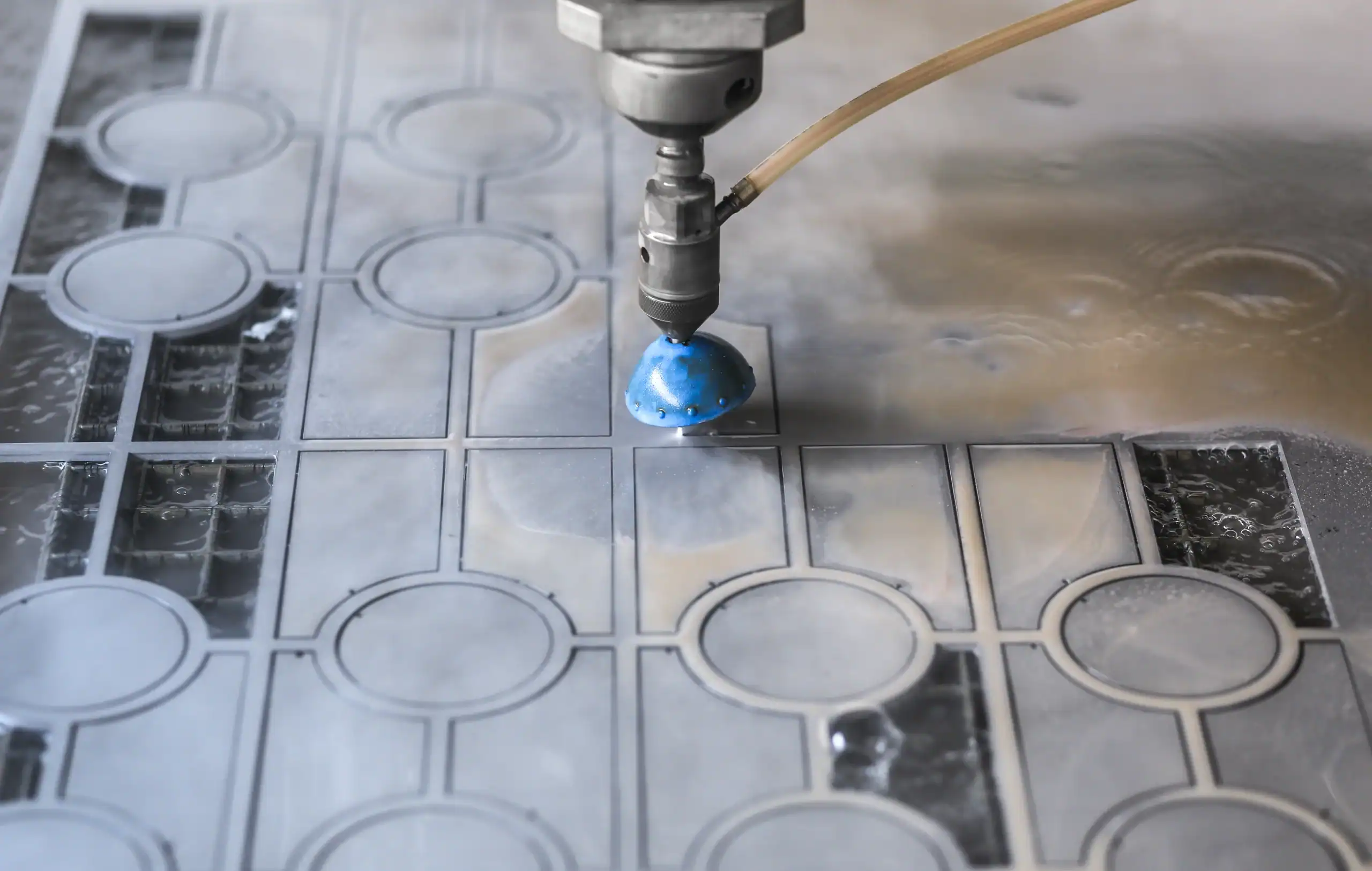
Once the file’s confirmed, it converts into CNC programming for our OMAX waterjet system. Material gets fixtured on the cutting table. The high-pressure water stream—mixed with garnet abrasive for metal cutting—follows your programmed path with precision measured in thousandths.
The cutting happens at room temperature. No heat means no hardened edges, no warped material, no heat-affected zones that compromise your part’s integrity. Complex shapes, tight inside corners, intricate patterns—the waterjet handles geometry that would require multiple setups or specialized tooling with conventional methods.
Parts come off the table with finished edges in most applications. You’re not paying for secondary deburring or edge finishing unless your specs require it. Turnaround depends on complexity and queue, but the process itself is straightforward: file review, programming, cutting, quality check.
Ready to get started?
Waterjet cutting metal in Rocky Point, NY handles materials from thin gauge sheet up to several inches thick. Aluminum, stainless steel, mild steel, copper, brass, titanium—if it’s metal, the waterjet cuts it without heat distortion.
You get dimensional accuracy that matches your CAD specifications. Tolerances in the thousandths range are standard, not special requests. The cutting process doesn’t introduce mechanical stress, so your parts don’t warp or bend after cutting. That matters for assemblies where fit and alignment are critical.
Complex geometries don’t require special tooling or multiple setups. One programming cycle handles intricate shapes, tight inside radii, and detailed patterns. The process works for single prototypes testing a design concept or production runs up to several hundred pieces where consistency matters across every part.
Rocky Point’s manufacturing environment includes established metal fabricators and architectural component suppliers. Our custom metal waterjet cutting serves both markets—industrial parts requiring tight tolerances and architectural elements where edge quality and precision affect the finished installation. The local market understands that waterjet’s higher operating costs make sense when the alternative is scrapped parts, secondary operations, or compromised tolerances.
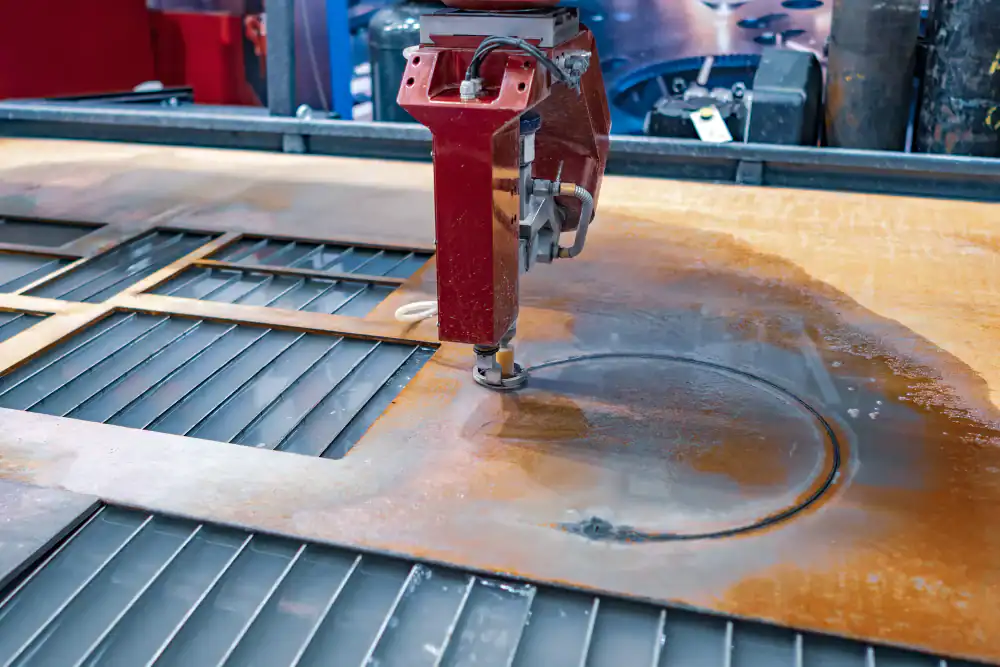
Waterjet cutting delivers tolerances in the ±0.003″ to ±0.005″ range on most metals, which matches or exceeds laser cutting for many applications. The key difference isn’t just accuracy—it’s what happens to your material during the cut.
Laser and plasma both use heat, which creates a heat-affected zone along the cut edge. That zone can harden the material, introduce stress, and cause warping, especially on thinner metals. You’ll often need secondary operations to address those issues.
Waterjet cuts at room temperature. The high-pressure water stream doesn’t change your material’s properties, doesn’t create hardened edges, and doesn’t introduce thermal stress. For parts where dimensional stability matters—assemblies, architectural components, precision fixtures—that’s the difference between parts that fit and parts that need rework.
Waterjet cutting handles metal from thin gauge sheet up to 6-8 inches thick in most materials. The practical limit depends more on your timeline and budget than the machine’s capability.
Thicker materials cut slower because the water stream needs more time to penetrate and maintain kerf quality through the full thickness. A 2-inch steel plate takes significantly longer than 1/4-inch material. That affects your cost-per-part, especially for production runs.
The sweet spot for waterjet cutting metal in Rocky Point, NY typically runs from 1/8″ up to about 2″ thickness. That range gives you good cutting speed, excellent edge quality, and reasonable costs. Thicker than that, waterjet still works—but you need to balance the cutting time against your project requirements and whether alternative methods might be more cost-effective for your specific application.
DXF and DWG files work directly with our CNC programming system. Your files should be clean—closed polylines, no overlapping geometry, and dimensions that match your actual requirements. But you don’t need to be a CAD expert to submit files.
Our design team reviews every file before cutting starts. We’re checking for common issues: open corners that won’t cut properly, geometry that’s too complex for the material thickness, or tolerances that don’t match what waterjet can realistically hold. If something needs adjustment, you’ll know before any material gets loaded.
Simple sketches or concept drawings work too. Our in-house CAD designers can create production-ready files from your specifications. That’s useful for custom one-off parts where you know what you need but don’t have formal CAD documentation. The goal is getting your design cut correctly—whether that starts with a polished CAD file or a marked-up print doesn’t change the end result.
Waterjet cutting typically costs more per hour than plasma or oxy-fuel cutting, but less than laser cutting for thicker materials. The real cost comparison depends on what you’re actually paying for across the complete job.
Waterjet produces finished edges in most applications. You’re not paying for deburring, grinding, or secondary finishing that other methods require. No heat-affected zones means no stress-relieving or flattening operations. Complex shapes cut in one setup without special tooling or fixtures.
For prototypes and short runs, waterjet often comes out ahead because there’s no tooling cost and no setup penalties for complex geometry. Production runs depend on part complexity and material thickness—sometimes waterjet wins on total cost, sometimes it doesn’t. The abrasive material represents over half the operating cost, and that factors into pricing for every job. Custom metal waterjet cutting makes the most sense when precision, edge quality, and material integrity matter more than raw cutting speed.
Turnaround depends on three factors: file complexity, material thickness, and current queue. Simple parts from thin material can turn around in days. Complex geometries from thick plate take longer because the actual cutting time extends.
File review happens first. That catches problems before cutting starts and typically adds a day to the front end. Programming time varies with complexity—simple shapes program quickly, intricate patterns with multiple features take longer.
The cutting itself runs at speeds determined by material type and thickness. Quarter-inch aluminum cuts faster than half-inch stainless. Intricate details with tight tolerances require slower feed rates than simple profiles. A single prototype part might cut in under an hour. A production run of fifty complex pieces could take days of machine time. Our CNC metal waterjet cutting services handle both rush jobs and scheduled production runs—but realistic expectations about cutting speeds help you plan your project timeline accurately.
Waterjet cuts hardened tool steel, titanium, Inconel, and other exotic alloys that cause problems for conventional cutting methods. The high-pressure water stream doesn’t care about material hardness the way drill bits or end mills do.
That capability matters for aerospace components, medical device parts, and specialized industrial applications where material selection is driven by performance requirements, not machinability. You’re not compromising on material choice because your fabricator can’t cut it.
The abrasive waterjet stream cuts through virtually any metal without work hardening the edge or changing material properties. Titanium stays titanium. Hardened steel stays hardened. The cutting process doesn’t introduce heat that would alter the metallurgy you specifically selected for your application. Cutting speed does slow down with harder materials, which affects cost—but the capability exists when your project requires materials that other cutting methods struggle with or can’t handle at all.
Useful Links
Other Services we provide in Rocky Point