Hear from Our Customers
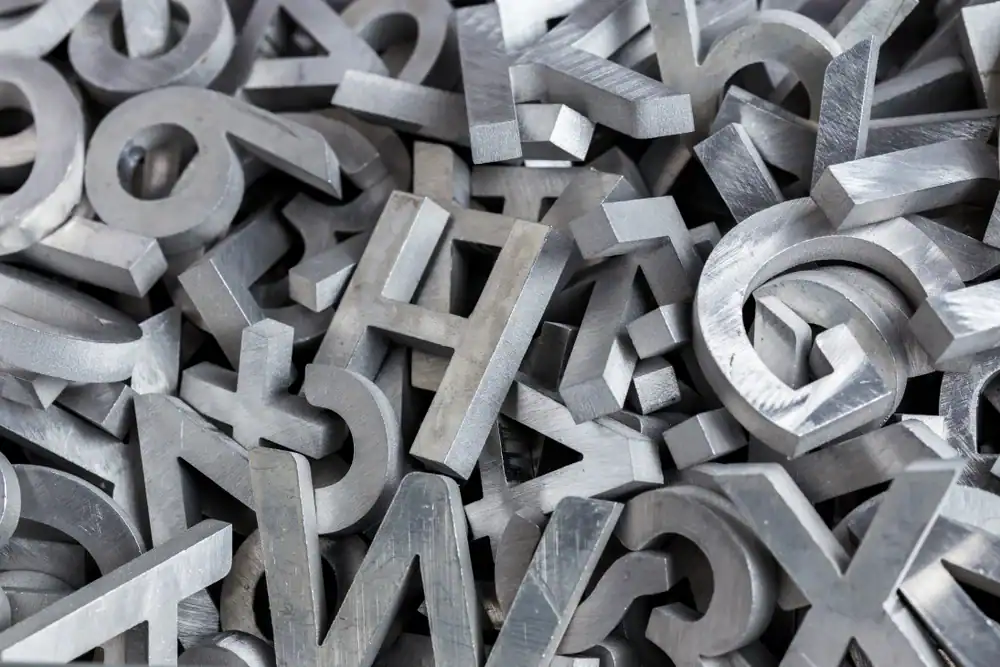
When you’re cutting hardened steel, aluminum, titanium, or exotic alloys, heat is your enemy. It warps dimensions, creates burrs, and forces you into grinding, deburring, and rework that eats up time and budget.
Waterjet cutting metal eliminates that problem entirely. No torches, no lasers, no plasma—just high-pressure water mixed with fine abrasive that cuts through thick plate without changing the material properties. You get clean edges, tight tolerances down to ±0.003″, and parts that go straight into assembly.
That means fewer rejected pieces, faster project timelines, and no surprise costs from secondary operations. Whether you’re fabricating architectural panels, aerospace components, or custom industrial parts in Salisbury, NY, you’re getting precision that holds up under inspection—and a process that doesn’t create more work downstream.
We’ve been serving manufacturers, fabricators, and engineers across Salisbury, NY and the surrounding region with precision metal cutting services that don’t compromise on quality. We’re not a general shop trying to do everything—we specialize in waterjet cutting metal, and we’ve built our reputation on getting complex jobs done right.
Our equipment includes Flow Dynamic Waterjet systems with CNC servo motors, taper compensation, and vibration-dampened tables. That’s not marketing talk—it’s what allows us to hold tolerances that other processes can’t match, especially on thicker materials up to 8 inches. Before we cut anything, our team reviews your files to catch issues early, verify dimensions, and make sure what comes off our table matches what you need on the floor.
Salisbury’s manufacturing sector depends on precision and reliability. You’re working with tight deadlines, demanding specs, and customers who won’t accept “close enough.” We get that, because we’re in the same environment.
You send us your design files—DXF, DWG, or STEP formats work best. Our team reviews them to confirm dimensions, check for any potential cutting issues, and optimize the toolpath for your specific material and thickness. If something looks off or could be improved, we’ll reach out before we start cutting. That saves you time and prevents expensive mistakes.
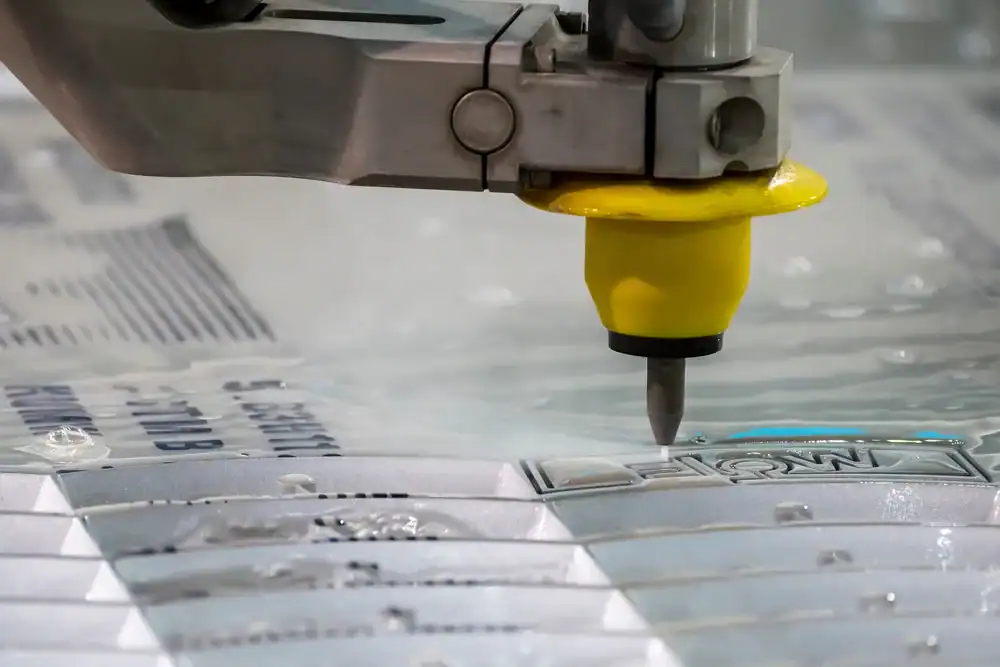
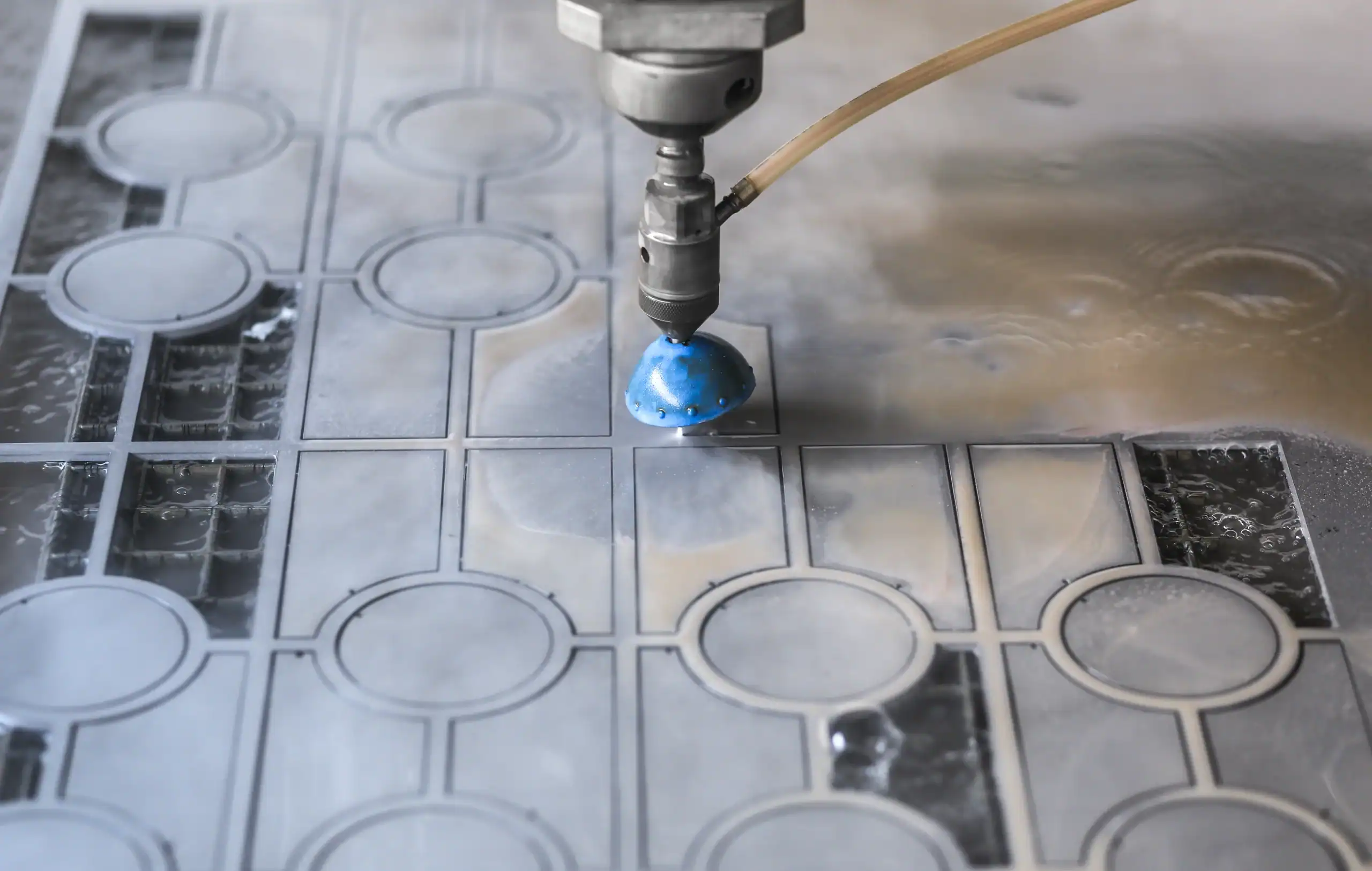
Once the file is verified, we load your material onto our CNC-controlled waterjet table. The system uses a high-pressure stream—often above 60,000 PSI—mixed with fine garnet abrasive to cut through steel, aluminum, stainless, titanium, or whatever metal you’re working with. Because it’s a cold-cutting process, there’s no heat-affected zone, no hardening, and no thermal distortion. The material stays flat and true to spec.
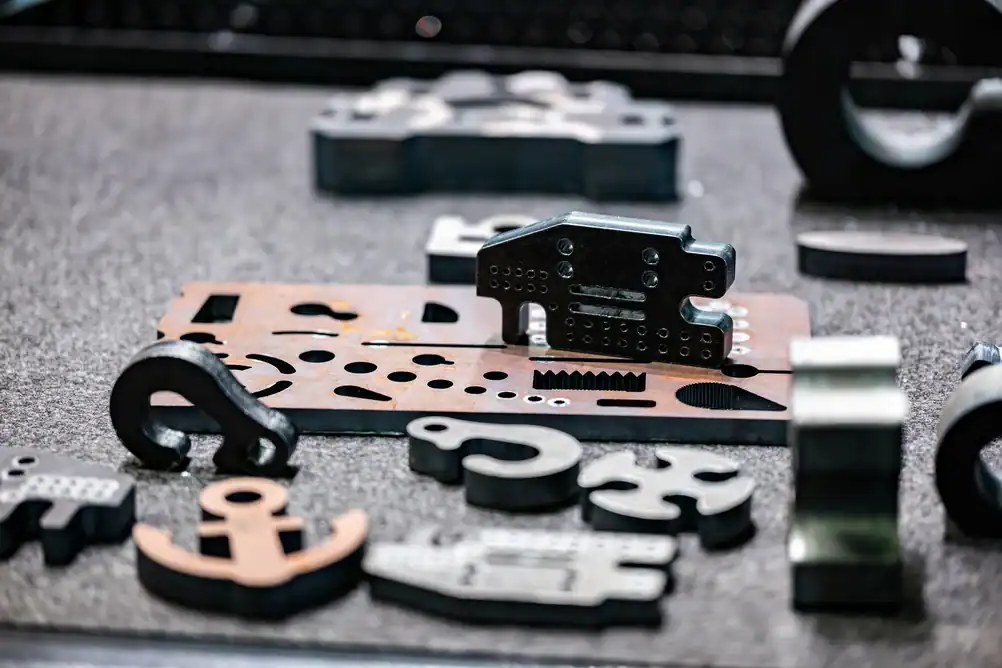
After cutting, we inspect each piece against your tolerances and flatness standards. Most parts come off the table ready to use, with smooth edges and minimal kerf width around 0.040″. If your project requires additional finishing, we’ll let you know upfront—but in many cases, you’re looking at parts that go straight into your next operation without extra cleanup, grinding, or deburring.
Ready to get started?
When you work with us for metal waterjet cutting in Salisbury, NY, you’re getting more than just a cut part. You’re getting a process designed to reduce your total project cost and timeline.
First, you’re getting precision that rivals traditional machining—linear accuracy of ±0.003″ to ±0.005″ on complex geometries, tight inside corners, and intricate profiles. That level of control matters when parts need to fit together perfectly or meet strict dimensional tolerances for aerospace, automotive, or architectural applications.
Second, you’re avoiding the secondary operations that other cutting methods create. Laser cutting leaves oxidized edges that need chemical or mechanical cleaning. Plasma creates rough surfaces that require grinding. Waterjet cutting metal delivers smooth, clean edges right off the table, which means you’re not paying for extra labor, extra time, or extra equipment to finish the job.
Third, you’re working with a shop that understands New York’s metal fabrication landscape. Salisbury sits in a region where precision manufacturing, custom fabrication, and industrial production demand reliable partners who can handle both prototype runs and production volumes. We’ve cut everything from architectural metal panels to ballistic components, and we know what it takes to meet specs in industries where there’s no room for error.
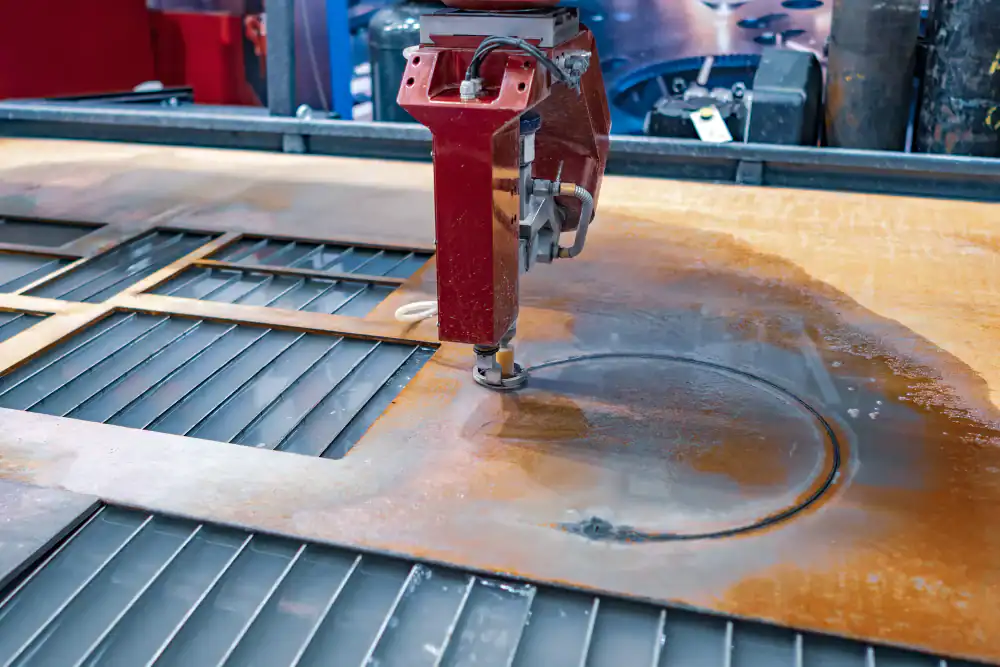
We cut every common metal and most exotic alloys you’ll encounter in manufacturing and fabrication. That includes steel, stainless steel, aluminum, titanium, brass, copper, tool steel, and hardened metals that are difficult or impossible to cut with other methods.
Waterjet cutting metal works because it’s a cold process—there’s no heat to harden edges, warp thin materials, or change the temper of pre-treated metals. If you’re working with materials that have been heat-treated, annealed, or hardened, waterjet keeps those properties intact. You’re not introducing thermal stress that compromises strength or dimensional stability.
Thickness isn’t a limitation either. We routinely cut materials up to 8 inches thick with full-depth precision, which makes waterjet ideal for heavy plate, structural components, and applications where you need clean cuts all the way through without multiple passes or secondary machining.
Laser and plasma are faster on thin materials, but they introduce heat—and heat creates problems. Laser cutting leaves oxidized edges that need cleaning before welding or painting, and it can harden the cut surface, making secondary machining more difficult. Plasma is even rougher, with wider kerfs and edge quality that often requires grinding.
Waterjet cutting metal eliminates those issues. You get smooth edges with minimal kerf width, no oxidation, no hardened zones, and no thermal distortion. For thicker materials—anything over half an inch—waterjet is often faster and more cost-effective than laser because you’re cutting in one pass without losing edge quality.
If your parts need to fit together precisely, if you’re working with materials that can’t tolerate heat, or if you want to avoid paying for secondary finishing, waterjet is the better process. It’s not the fastest option for every job, but it’s the most versatile and often the most economical when you factor in total project cost.
We consistently hold linear cutting accuracy of ±0.003″ to ±0.005″, which rivals or exceeds what you’d get from traditional machining on most geometries. That’s tight enough for precision inserts, mating parts, and applications where dimensional accuracy directly affects function.
Our Flow Dynamic Waterjet systems include taper compensation, which corrects for the natural taper that occurs in waterjet cutting. Without compensation, the top edge of a cut can be slightly wider than the bottom edge—usually just a few thousandths, but enough to matter on precision work. Taper compensation adjusts the cutting angle in real time to keep edges square and dimensions consistent through the full thickness of the material.
For architectural work, ballistic components, and aerospace parts, we’re hitting quality levels Q4 to Q5, which means smooth surfaces with minimal striations and edges that meet strict visual and functional standards. If your project has tighter tolerances or specific edge finish requirements, we’ll review your specs during file prep and let you know what’s achievable.
Turnaround depends on material thickness, complexity, and current shop schedule, but most jobs are completed within a few days of file approval. Simple cuts on thinner materials can often be done same-day or next-day if you’re in a bind.
Waterjet cutting metal is slower than laser or plasma on a per-inch basis—there’s no way around that. But when you factor in the time you’d spend deburring, grinding, or cleaning up parts from other processes, waterjet often comes out ahead on total project time. You’re getting parts that are ready to use, not parts that need another trip through the shop.
For production runs or repeat orders, we can optimize toolpaths and nesting to maximize efficiency and keep costs down. If you’re prototyping and need fast iteration, waterjet gives you the flexibility to make changes between runs without retooling or reprogramming complex setups. We’ll give you a realistic timeline when you submit your files, and we’ll let you know if we see any delays before they affect your schedule.
DXF, DWG, and STEP files work best because they give us clean geometry and accurate dimensions. If you’re working in CAD, export your 2D profiles as DXF or DWG, and make sure all lines are closed paths—open or overlapping lines can cause issues during cutting.
Before we cut anything, our team reviews your file to check for potential problems: gaps in geometry, duplicate lines, dimensions that don’t match your specs, or features that might be too small or too tight for the material thickness. If we catch something, we’ll reach out and work with you to fix it. That review process saves hours of back-and-forth and prevents costly mistakes.
If you’re not sure whether your file is ready, send it over anyway. We’d rather look at it early and help you get it right than start cutting and realize halfway through that something’s off. Clean files equal faster quoting, faster setup, and cleaner cuts—so it’s worth taking a few extra minutes upfront to make sure everything’s dialed in.
Cost depends on material type, thickness, cutting time, and complexity of the geometry. Waterjet operates at around $30 to $35 per hour, but the real cost comes down to how long your parts take to cut and how much material you’re using.
Thicker materials take longer because the stream has to penetrate deeper. Complex shapes with tight inside corners or intricate details also add time. But here’s where waterjet often saves you money: you’re not paying for secondary operations like deburring, grinding, or edge cleanup that other cutting methods require. You’re also not dealing with scrapped parts from heat distortion or dimensional issues.
For an accurate quote, send us your design files along with material specs and quantity. We’ll review the job, calculate cutting time, and give you a clear number with no surprises. If there’s a way to optimize the design or nesting to reduce cost, we’ll let you know. We’re not here to upsell you on features you don’t need—we’re here to get your parts cut right, on time, and within budget.
Useful Links
Other Services we provide in Salisbury