Hear from Our Customers
When you’re working with steel, aluminum, or specialty metals, heat is your enemy. Traditional cutting methods create heat-affected zones that change your material’s properties, warp edges, and force you into secondary cleanup that eats time and budget.
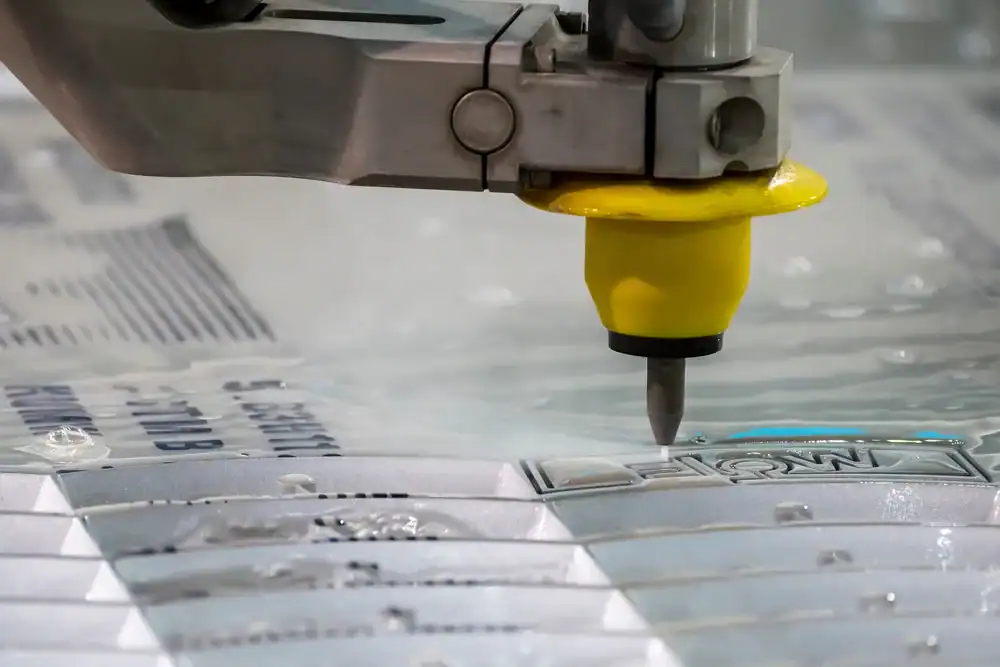
Waterjet cutting metal eliminates that problem entirely. No torches. No plasma. Just high-pressure water mixed with abrasive garnet that cuts through your material without raising its temperature. Your edges come out clean, your tolerances stay tight, and your material keeps its structural integrity.
You also get the freedom to cut complex shapes, tight radiuses, and intricate patterns that other methods can’t handle. Whether you’re prototyping a single piece or running production orders, the process stays consistent. That means fewer rejected parts, less rework, and projects that actually finish on schedule.
We operate right here in St. James, NY, serving manufacturers, contractors, and designers across Long Island, NY and the surrounding tri-state area. We’re not a massive production facility trying to squeeze you into a schedule built for volume orders. We’re a focused shop that handles everything from one-off prototypes to full production runs.
Our Flow Mach 500 CNC system cuts directly from your CAD files, which means what you design is what you get. No interpretation errors. No manual adjustments that introduce variance. The machine reads your file and executes it with tolerances as tight as +/- 0.001 inches.
We’ve worked with enough architects, fabricators, and engineers in this area to know what Long Island, NY projects demand: quick communication, fast turnaround, and parts that fit the first time. That’s what we’re set up to deliver.
You send us your CAD file or design specs. If you don’t have a file ready, our design team can help you create one using your sketches, measurements, or concepts. We’ll also consult with you on material selection if you’re weighing options between steel grades, aluminum alloys, or other metals.
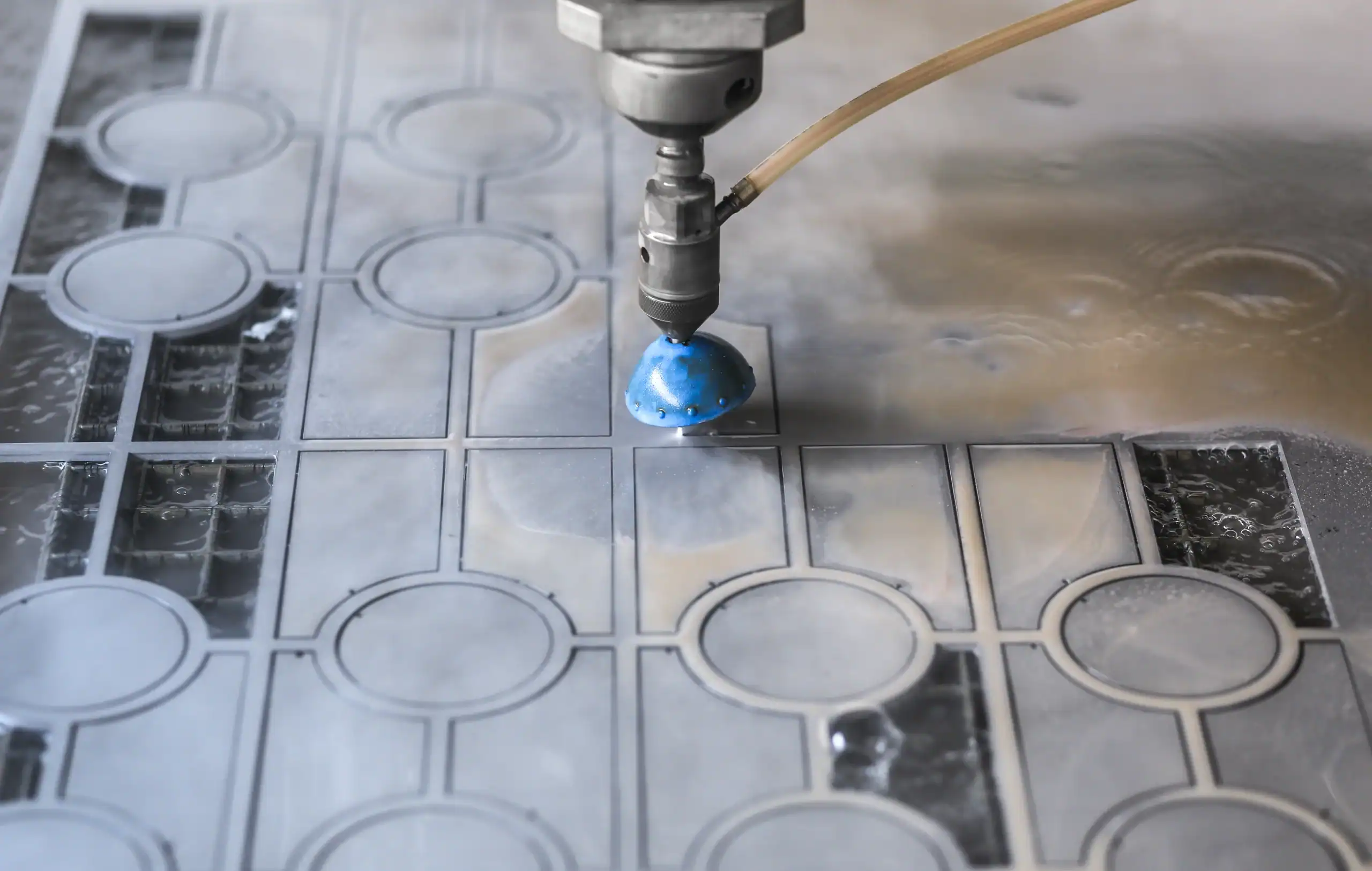
Once the design is locked in, we load your file into the Flow Mach 500 CNC system. The machine positions your parts to maximize material usage and minimize waste, a process called nesting. Then the cutting starts: a high-pressure stream of water mixed with abrasive garnet follows your design’s exact path, slicing through the metal without heat, sparks, or distortion.
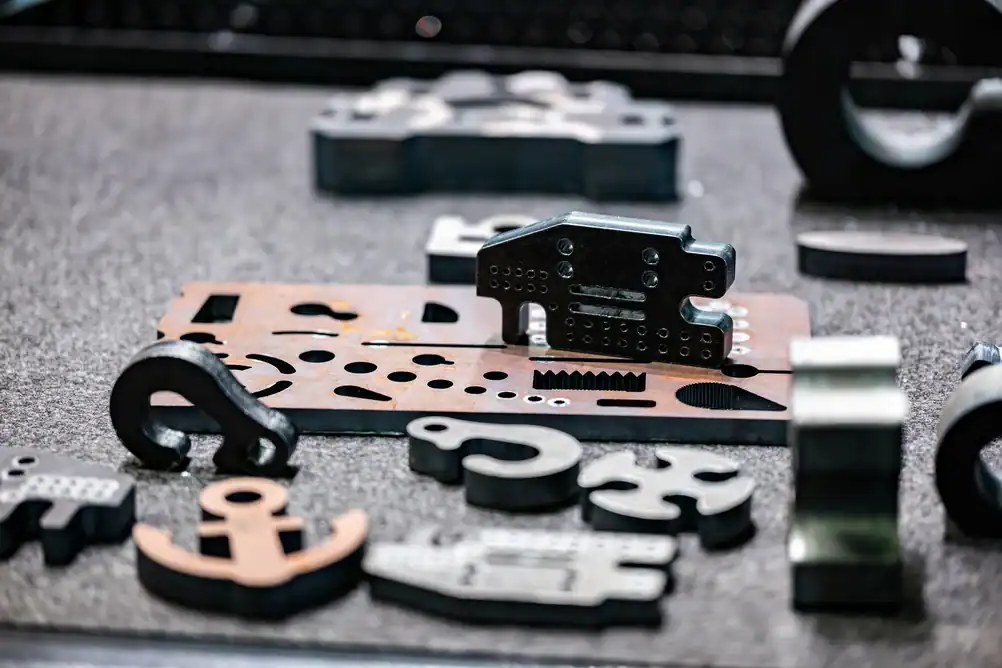
After cutting, your parts come off the table with smooth edges and minimal burrs. Most projects don’t need secondary finishing, but if yours does, we’ll handle deburring or edge prep before delivery. You get parts that are ready to install, assemble, or integrate into your next step. No surprises. No rework.
Ready to get started?
Every project starts with material consultation. If you’re not sure whether 304 stainless or 6061 aluminum is the better choice for your application, we’ll walk through the pros and cons based on your environment, load requirements, and budget. That’s part of the service, not an upsell.
You also get design review before we cut. Our team checks your file for potential issues like tight tolerances that might not be achievable, or geometries that could be optimized for strength or cost. It’s a quick step that prevents expensive mistakes down the line.
St. James sits in the middle of Long Island, NY’s manufacturing corridor, which means we’re close to metal suppliers, fabrication shops, and job sites across Nassau and Suffolk counties. That proximity matters when you’re on a tight deadline. We can turn around rush orders faster than shops operating out of distant facilities, and local pickup is always an option if you need parts immediately.
The waterjet process itself is environmentally friendly compared to laser or plasma cutting. No hazardous fumes. No toxic chemicals. Just water and garnet abrasive, which can be filtered and reused. For projects with environmental or safety requirements, that’s a real advantage.
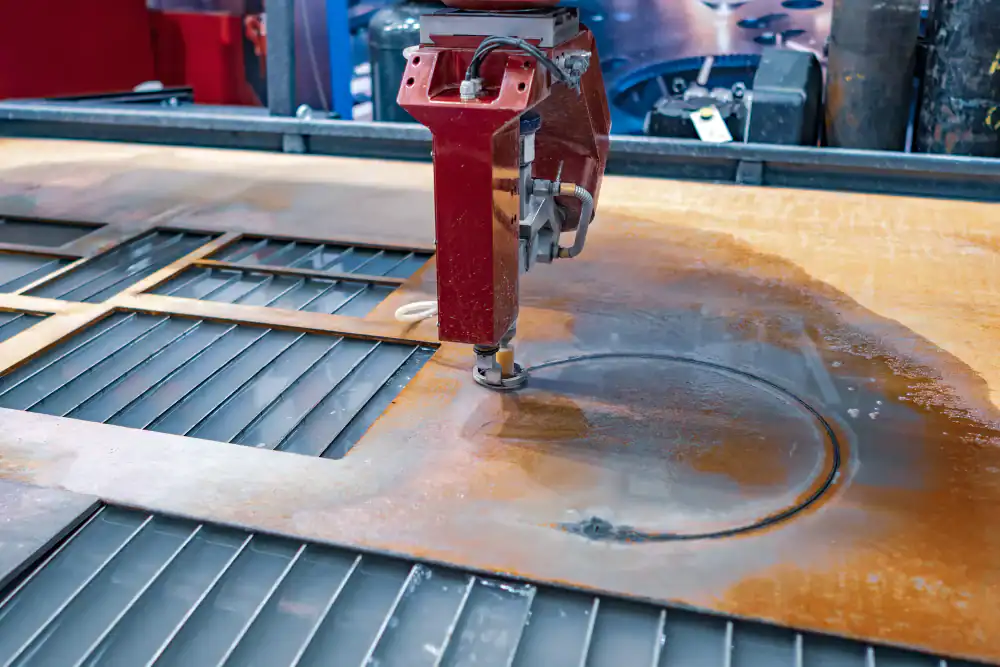
We cut virtually any metal you’re working with: steel plate, stainless steel, aluminum, brass, copper, titanium, and specialty alloys. The waterjet process doesn’t rely on heat, so it works on materials that would warp or harden under thermal cutting methods.
Thickness capacity depends on the material, but we routinely handle steel up to several inches thick. Thinner materials cut faster and with tighter tolerances, while thicker stock takes more time but still delivers clean edges without heat-affected zones. If you’re working with an unusual alloy or aren’t sure about material specs, bring us the details and we’ll confirm capability before you commit.
The abrasive waterjet stream is also effective on hardened metals that would dull traditional cutting tools. That makes it a go-to option for tool steels, pre-hardened components, or materials that have already been heat-treated.
Our Flow Mach 500 system holds tolerances as tight as +/- 0.001 inches on most cuts, which is more than sufficient for precision parts, brackets, flanges, and custom components. The CNC control reads directly from your CAD file, so there’s no manual layout or human error in the cutting path.
That said, tolerances can vary slightly based on material thickness and cutting speed. Thicker materials may introduce a small amount of taper as the waterjet stream travels through the stock, but we account for that during setup and adjust parameters to keep your parts within spec. For critical dimensions, we can program the machine to make multiple passes or slow the feed rate to tighten accuracy.
If your project has specific tolerance requirements, call them out upfront. We’ll let you know if waterjet is the right process or if you’d be better served by a secondary machining step after cutting. Transparency saves you time and money.
Standard jobs usually ship within a few days, depending on material availability and our current queue. Rush orders can often be completed within 24 to 48 hours if you need parts fast for a deadline or an unexpected project change.
Turnaround depends on a few factors: material thickness, complexity of the design, and whether we need to source your material or you’re supplying it. Simple cuts on stock materials move faster than intricate patterns on specialty alloys that require special ordering. We’ll give you a realistic timeline when you submit your design, not an optimistic guess that falls apart halfway through.
Being located in St. James gives us an edge on delivery speed for Long Island, NY projects. You’re not waiting on freight from out of state or dealing with shipping delays. Local pickup is available if you’re nearby, and we work with reliable couriers for same-day or next-day delivery across the tri-state area.
Waterjet cutting produces significantly less burr than plasma, laser, or mechanical cutting methods. Most parts come off the table with smooth edges that are ready to use, especially on thinner materials and softer metals like aluminum.
Harder materials or thicker stock may have minor burrs on the bottom edge where the waterjet stream exits, but they’re typically small and easy to remove. If your application requires completely deburred edges or specific surface finishes, we can handle that as part of the job. Just let us know your requirements upfront.
One of the biggest advantages of waterjet cutting metal is that there’s no heat-affected zone, which means no hardened edges, no discoloration, and no warping. You won’t need to grind off burnt material or flatten parts that curled under thermal stress. That alone eliminates a lot of secondary work that other cutting methods force on you.
Yes. We cut single prototypes just as readily as we handle production orders. The CNC process doesn’t require expensive tooling or setup costs that only make sense at high volumes, so low-quantity jobs are economically viable.
For prototypes, the advantage is speed and flexibility. You can test a design, make revisions, and recut without waiting weeks or paying for new dies. That’s critical when you’re refining a product or troubleshooting fit issues on a custom project.
Production runs benefit from the same precision and consistency. Once your design is dialed in, the CNC system replicates it exactly across every part. There’s no tool wear or drift that introduces variation over time. Whether you need ten parts or a thousand, each one matches your CAD file with the same tight tolerances.
Waterjet doesn’t introduce heat, which is the main reason to choose it over laser or plasma. Heat changes your material’s properties, creates hardened edges, causes warping, and often requires secondary grinding or machining to fix. Waterjet eliminates all of that.
It’s also more versatile across different materials and thicknesses. Laser cutting works well on thinner metals but struggles with thicker stock or reflective materials like aluminum and copper. Plasma is fast but rough, leaving heavy dross and wide kerfs that eat into your tolerances. Waterjet handles thick steel, soft aluminum, hardened alloys, and everything in between without changing the process.
The edge quality is another factor. Waterjet cuts leave smooth, clean edges with minimal secondary cleanup. You’re not grinding off slag or dealing with heat discoloration. For parts that need to fit precisely or have visible edges, that’s a significant advantage. If your project prioritizes accuracy, material integrity, and clean results, waterjet is the better process.
Useful Links
Other Services we provide in St. James