Hear from Our Customers
You send over a design with tight tolerances and complex curves. You need it back fast, cut clean, and ready to install or assemble without additional machining. That’s what waterjet cutting metal in Westbury, NY does—it holds tolerances within 0.01 mm, cuts through materials up to 10 inches thick, and leaves edges so smooth you can skip the finishing step entirely.
No heat means no warped edges, no burnt material, and no compromised structural integrity. Whether you’re working with stainless steel, aluminum, titanium, or specialty alloys, the cold cutting process keeps your material properties intact. You get parts that fit the first time, which means fewer delays, less rework, and no surprises when it’s time to assemble.
If you’ve dealt with laser cutting that chars edges or plasma that leaves rough finishes, you know how much time gets wasted cleaning up cuts. CNC metal waterjet cutting in Westbury eliminates that problem. The abrasive waterjet stream cuts through metal with a finished edge, so your parts move directly from the cutting table to your production line.
We operate right here in Westbury, NY, serving manufacturers, fabricators, architects, and contractors across Long Island, NY and the greater New York metro area. We’ve handled custom metal waterjet cutting for companies like Metfab Metals, Les Metalliers, Apparatus Studio, and major brands including Tory Burch, Ralph Lauren, and Coach.
Our location puts us in the center of Long Island, NY’s manufacturing corridor, which means faster turnaround for local projects and easy coordination when timelines are tight. We’re not a massive production facility trying to squeeze your job into a packed schedule. You work directly with people who understand precision metal cutting and know how to handle complex specifications without the back-and-forth runaround.
Westbury’s proximity to NYC gives us access to a diverse range of industries—from aerospace components to architectural metalwork—so we’ve seen just about every cutting challenge that comes through the door. That experience shows up in how we approach your project.
You start by sending us your design file—DXF, DWG, or another CAD format works fine. If you don’t have a finalized design yet, we can help with material consultation and design adjustments to optimize the cutting process. Once we review your specs and material requirements, we’ll confirm tolerances, edge finish expectations, and timeline.
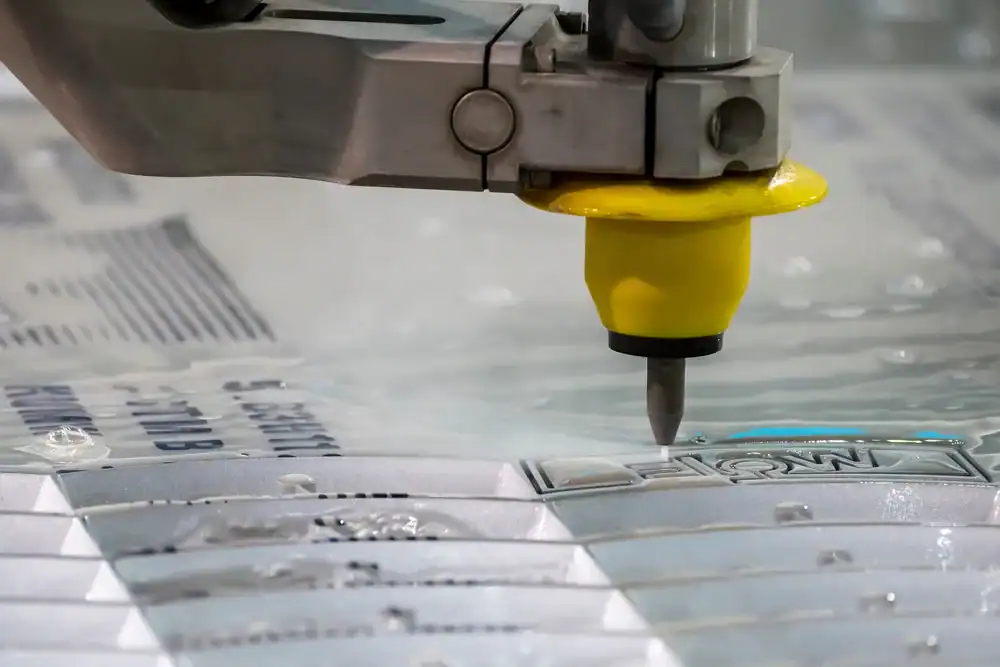
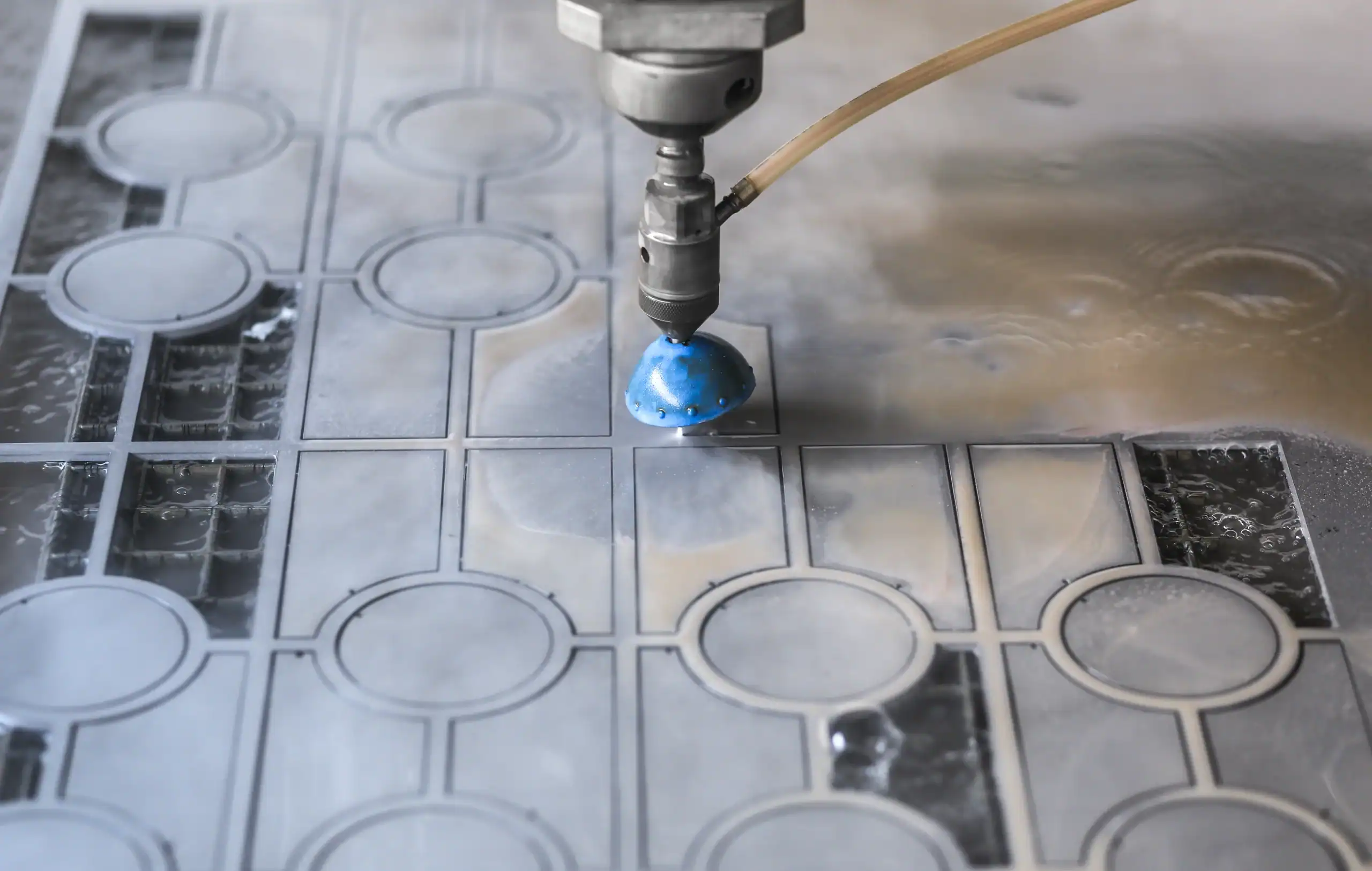
The actual cutting happens on a CNC-controlled waterjet system that follows your design with extreme accuracy. A high-pressure stream of water mixed with abrasive garnet cuts through the metal without generating heat, which means no thermal distortion and no hardened edges. The machine handles intricate curves, sharp angles, and tight inside corners that would be difficult or impossible with traditional cutting methods.
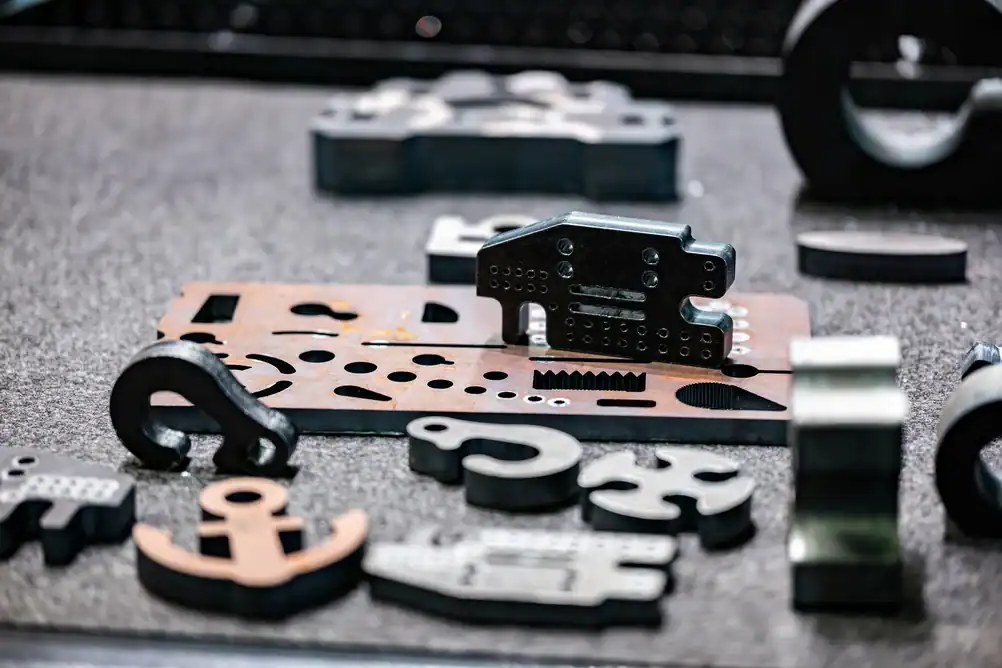
After cutting, your parts come off the table with smooth, burr-free edges. In most cases, they’re ready to use immediately—no grinding, no deburring, no secondary operations. If your project requires multiple identical pieces, the CNC system ensures perfect repeatability across the entire run. You get consistent quality whether you’re ordering one custom piece or a hundred matching components.
For thicker materials or especially complex shapes, we adjust pressure, speed, and abrasive flow to maintain edge quality throughout the cut. That’s the advantage of custom metal waterjet cutting in Westbury, NY—you’re not locked into a one-size-fits-all process. We dial in the settings based on what your specific project needs.
Ready to get started?
You get access to a cutting method that handles materials from 0.010-inch acrylic all the way up to 10-inch thick stainless steel. That range matters when you’re working on projects that involve multiple material types or when you need a single supplier who can handle both thin decorative elements and heavy structural components.
The process works on virtually any metal—stainless steel, aluminum, brass, copper, titanium, Inconel, tool steel, and more. If you’re in aerospace or automotive manufacturing, you already know how critical it is to avoid heat-affected zones that compromise material properties. Waterjet cutting keeps your metals cold, which preserves hardness, tensile strength, and corrosion resistance.
Westbury’s manufacturing landscape includes everything from custom architectural metalwork to precision industrial components. That diversity means we’re set up to handle both one-off custom pieces and production runs. You’re not paying for capabilities you don’t need, and you’re not limited by a shop that only handles high-volume orders.
The environmental angle matters too, especially if you’re working with clients who track sustainability metrics. Waterjet cutting produces minimal waste, no harmful fumes, and no hazardous byproducts. The abrasive garnet is inert and recyclable, and the water gets filtered and reused. It’s one of the cleanest cutting methods available, which helps if you need to meet green building standards or corporate environmental requirements.
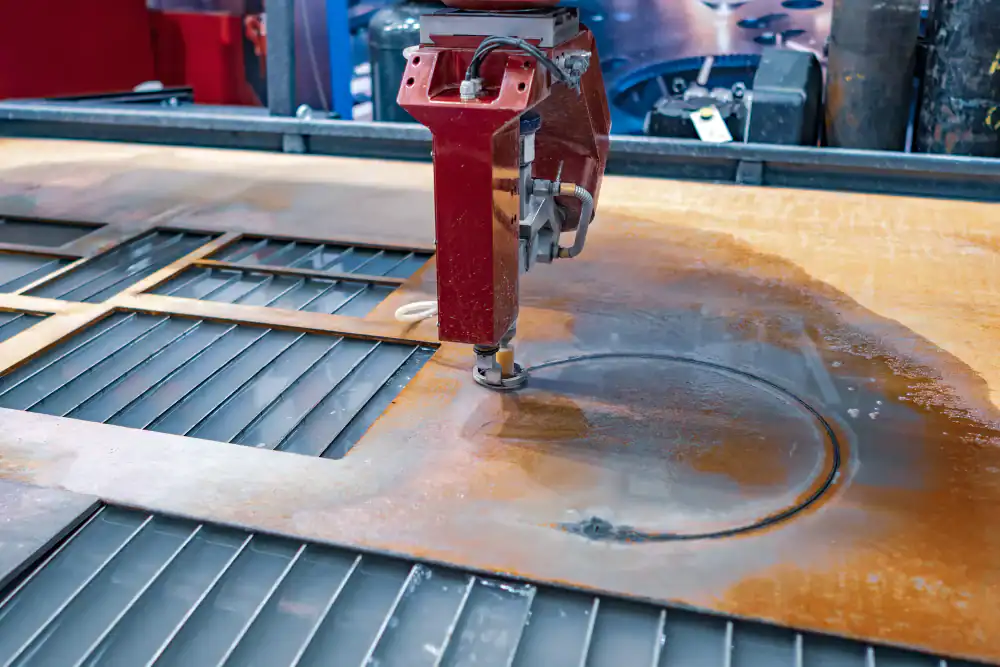
Waterjet cutting holds tolerances within 0.01 mm, which puts it in the same accuracy range as laser cutting but without the heat distortion. Laser cutting works well for thinner materials, but once you get into thicker metals, the heat-affected zone starts causing warping and edge hardening. Plasma cutting is faster for rough work, but the edge quality doesn’t compare—you’ll spend extra time grinding and finishing to get a usable surface.
The advantage with waterjet is that the cold cutting process doesn’t change the material’s properties. If you’re cutting hardened tool steel or heat-treated aluminum, you don’t have to worry about annealing the edges or creating stress points that lead to cracking later. The cut edge comes out smooth and square, with no secondary hardening that makes drilling or tapping more difficult.
For complex shapes with tight inside corners or intricate curves, waterjet handles details that would require multiple setups on a mill or router. You get finished parts faster because the cutting process does in one pass what other methods need multiple operations to achieve.
We cut metal up to 10 inches thick, though the practical limit depends on the material and the edge quality you need. Stainless steel, aluminum, and mild steel at that thickness cut cleanly, but the process slows down compared to thinner materials. If you’re working with something in the 6- to 10-inch range, expect the cutting speed to drop, but the edge finish stays consistent.
Thicker materials sometimes develop a slight taper—the top edge might be a few thousandths wider than the bottom edge. For most applications, that taper is negligible and doesn’t affect fit or function. If your project requires perfectly square edges on thick material, we can adjust the cutting parameters or make multiple passes to tighten up the geometry.
The real question is whether waterjet makes sense for your specific thickness and material. For anything under 2 inches, it’s almost always the fastest and cleanest option. Once you get above 4 inches, we’ll talk through your tolerances and timeline to make sure waterjet is the right fit. Sometimes it is, sometimes another method works better—we’ll tell you straight either way.
Waterjet cutting leaves a smooth, finished edge with minimal to no burrs, especially compared to plasma, laser, or mechanical cutting. The abrasive waterjet stream cuts through metal with a consistent finish from top to bottom, so you don’t get the rough, oxidized edge that plasma leaves or the heat-affected zone that laser cutting creates.
The top edge of the cut is typically the smoothest because that’s where the waterjet stream first contacts the material. As the stream exits the bottom, you might see a very slight roughness, but it’s usually minor enough that no secondary finishing is needed. If your application requires a completely smooth edge on both sides—like for a part that will be visible or needs to seal tightly—we can adjust the cutting speed and pressure to improve the bottom edge finish.
For parts that will be welded, painted, or assembled with fasteners, the edge quality straight off the waterjet table is more than adequate. You skip the deburring step, which saves time and keeps your parts moving through production faster. That’s one of the biggest advantages of waterjet over other cutting methods—you get a finished product, not a rough cut that needs cleanup.
Cutting time depends on material thickness, complexity of the design, and the level of edge finish you need. A simple shape in quarter-inch aluminum might take a few minutes per part. A complex pattern in 2-inch stainless steel with tight tolerances and intricate curves could take significantly longer. Abrasive waterjet cutting is roughly four times faster than pure waterjet, so most metal cutting falls into the faster category.
Turnaround time for your project also depends on our current workload and how much setup your job requires. If you send over a clean CAD file with clear specs, we can usually get your parts cut within a few days. Rush jobs are possible when timelines are tight—we’ve handled plenty of last-minute requests for contractors and manufacturers who need parts fast.
The trade-off with waterjet is that it’s not always the fastest cutting method for simple, straight cuts in thin material. If you’re cutting basic shapes in sheet metal, laser or plasma might be quicker. But if your design has curves, angles, or details that would require multiple setups on other equipment, waterjet often ends up being faster overall because it completes the job in one pass.
We handle both. If you need a single custom piece for a prototype, architectural element, or specialty application, waterjet cutting works perfectly because the CNC system follows your design file exactly. There’s no tooling cost, no die to build, and no minimum order quantity. You send the file, we cut the part, and you get exactly what you designed.
For production runs, the CNC system ensures every part matches the first one. Whether you need ten pieces or a thousand, the repeatability stays consistent. That matters when you’re manufacturing components that need to fit together or when you’re supplying parts to a client who expects identical dimensions across the entire order.
Custom metal waterjet cutting in Westbury, NY gives you flexibility that traditional fabrication methods don’t. If you need to tweak the design between runs or produce several different parts in the same material, we can switch between files quickly without retooling. That keeps costs down and timelines short, especially for projects where the design is still evolving or where you’re producing limited quantities of multiple variations.
Waterjet cuts just about any metal you’d use in fabrication or manufacturing. Stainless steel, aluminum, and mild steel are the most common, but we also cut brass, copper, titanium, Inconel, tool steel, and hardened alloys. If it’s a metal, waterjet can cut it—no concerns about melting points, hardness, or reflectivity like you’d have with laser cutting.
Some materials perform better than others. Aluminum cuts fast and leaves an excellent edge finish. Stainless steel takes a bit longer but still produces clean, burr-free edges. Titanium and Inconel are slower to cut because they’re denser, but waterjet is one of the few methods that handles them without work hardening the edges or creating heat stress.
If you’re working with exotic alloys or materials that are difficult to machine, waterjet is often the best option. The cold cutting process doesn’t create tool wear, doesn’t generate heat that changes material properties, and doesn’t put mechanical stress on the part. For aerospace components, medical devices, or any application where material integrity is critical, that makes waterjet the safer choice compared to thermal cutting methods.
Useful Links
Other Services we provide in Westbury