Hear from Our Customers
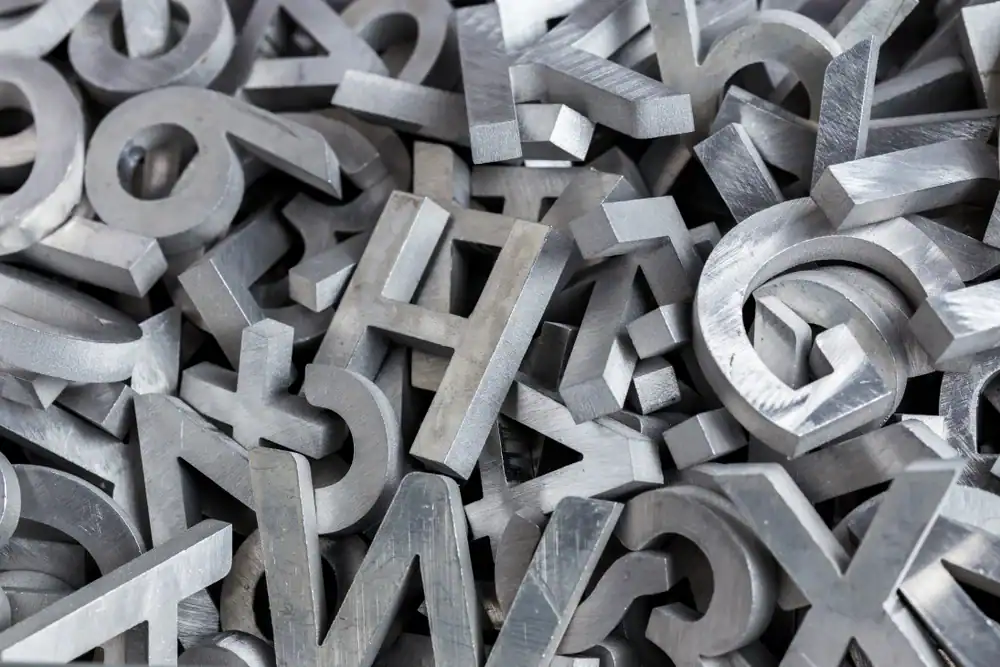
You get parts that fit the first time. No burned edges to grind down. No warped material from torch heat. No secondary operations eating into your timeline.
Waterjet cutting metal in Wyandanch means your steel, aluminum, or stainless comes off the table ready to weld, assemble, or install. The kerf is narrow, so you’re not wasting expensive material on wide cuts. The edge quality is clean enough that most jobs don’t need finishing work.
If you’re running prototypes, you can test fit and iterate without waiting days for a new batch. If you’re in production, you get repeatability across hundreds of identical parts. Either way, you’re not dealing with heat-affected zones that compromise strength or create stress points that fail later.
We operate out of West Islip and serve fabricators, contractors, and manufacturers throughout Wyandanch and the surrounding Long Island, NY area. We’re not a national chain running your job through a queue in another state.
You’re working with people who understand the local industrial landscape—the machine shops in Babylon, the contractors in Deer Park, the fabricators in Brentwood. We know what tight deadlines look like here, and we know that when you call about a rush job, it’s because your customer is breathing down your neck.
Our equipment handles everything from eighth-inch aluminum sheet to four-inch steel plate. We cut for one-off custom projects and recurring production runs, and we’ve seen enough jobs to help you avoid the mistakes that cost time and material.
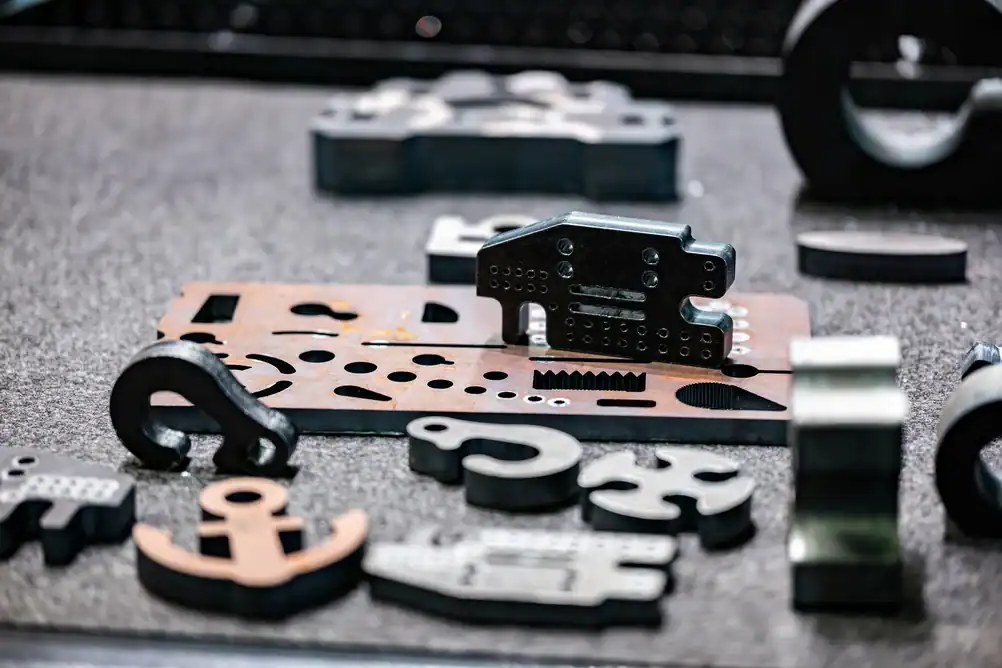
You send us a DXF file, a sketch, or even a sample part you need duplicated. We review it for any potential issues—tight inside corners that need a lead-in, dimensions that might cause problems during nesting, materials that won’t work for your application.
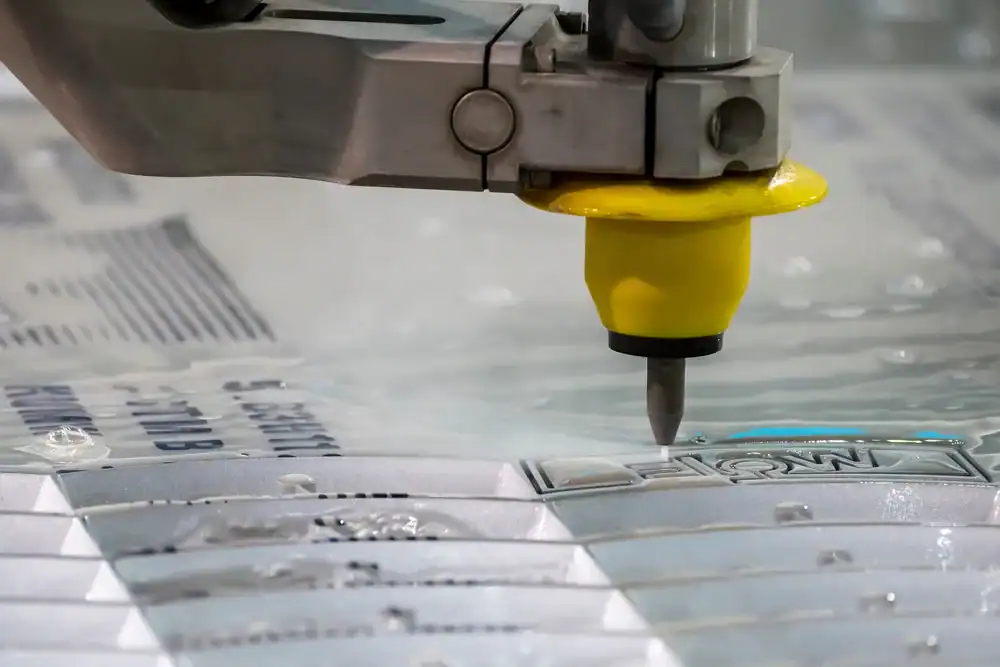
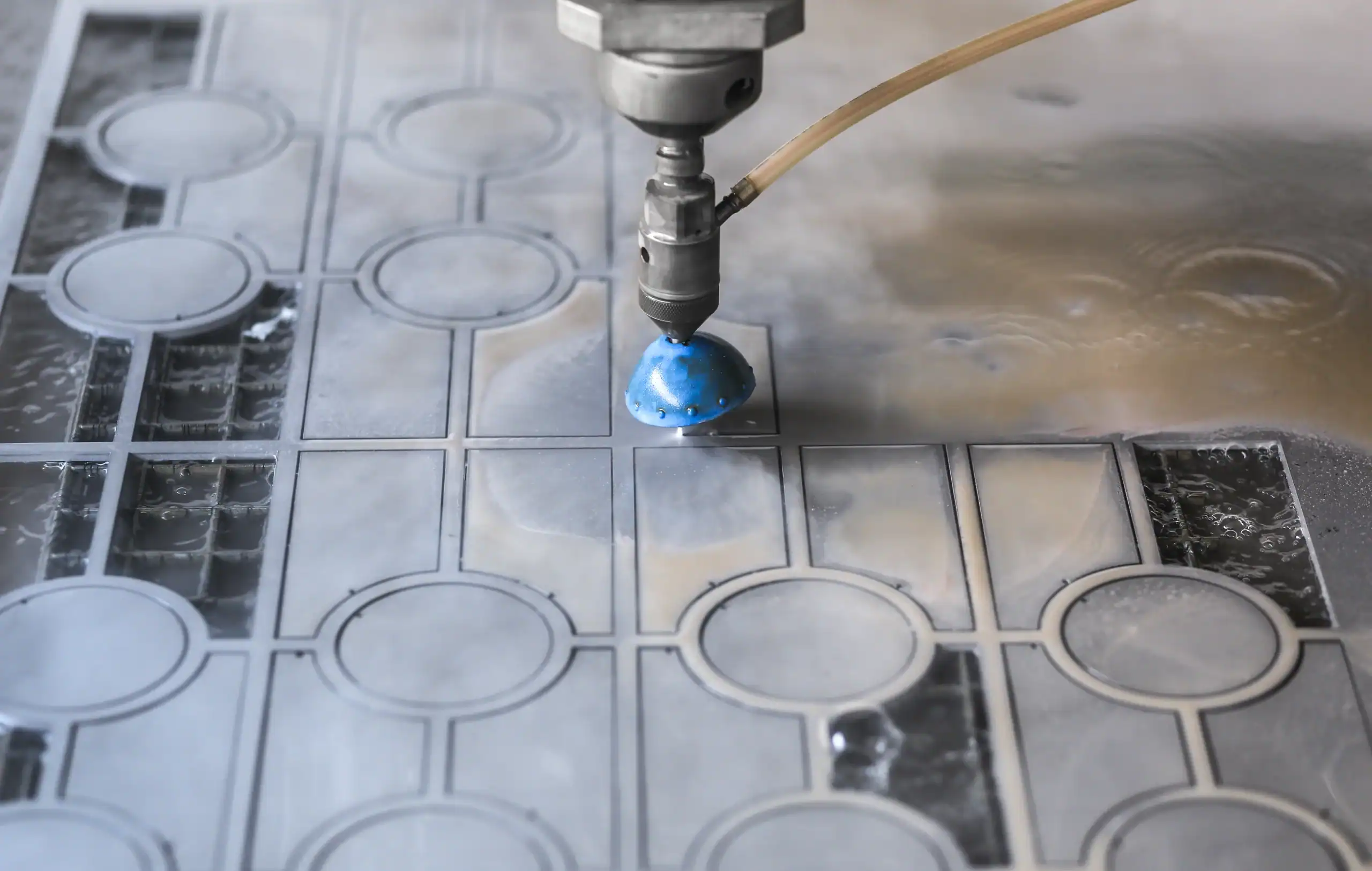
Once the file is dialed in, we program the CNC waterjet and nest your parts to minimize scrap. The abrasive waterjet stream cuts through your material with a mix of high-pressure water and garnet, following the programmed path with repeatability you can’t get from a plasma torch or hand cutting.
After cutting, we inspect dimensions and edges. If you need deburring or additional prep, we handle that too. Most customers pick up locally or we arrange delivery if you’re coordinating a larger project timeline. The whole process—from file to finished part—usually takes days, not weeks.
Ready to get started?
We cut metals primarily: steel, stainless steel, aluminum, copper, brass, and tool steel. Thickness ranges from thin gauge sheet up to four inches, depending on material hardness and your tolerance requirements.
Wyandanch sits in a manufacturing corridor where a lot of shops are dealing with custom architectural metalwork, industrial equipment parts, and specialized fabrication for the construction trades. That means odd shapes, one-off brackets, decorative panels, and prototype parts that need to be right the first time. Our waterjet handles that variety without tooling changes or setup delays.
You also get the advantage of cutting materials that would be a nightmare with heat-based methods. Composites, laminates, rubber gaskets, plastics—waterjet handles them without melting, charring, or delaminating. If you’re a fabricator juggling multiple materials on one project, you’re not bouncing between three different cutting vendors.
We also do design consultation if you’re not sure whether your part will cut cleanly or if there’s a better way to approach the geometry. Sometimes a small tweak to a radius or a corner saves you money and makes the part stronger.
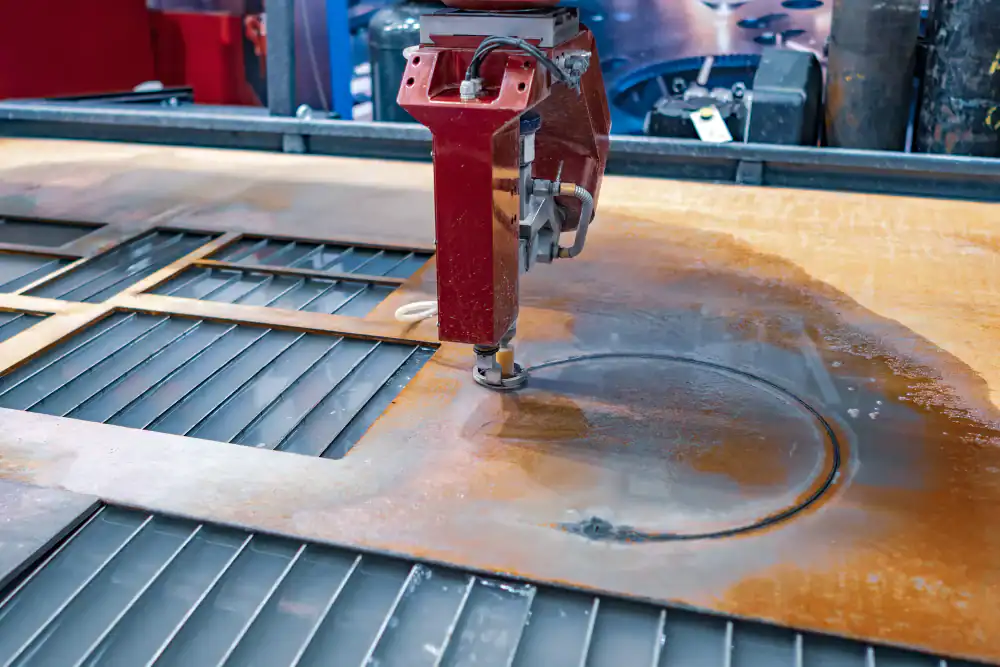
Waterjet holds tolerances around ±0.005″ on most jobs, which is tighter than plasma and comparable to laser for many applications. The difference is that waterjet doesn’t create a heat-affected zone, so your material properties don’t change along the cut edge.
Laser is faster on thin material, but once you get past half an inch in steel, waterjet becomes more practical. Plasma is cheaper per part on rough cuts, but the edge quality isn’t close. If you’re welding, machining, or powder coating after the cut, waterjet gives you a cleaner starting point.
For parts that need to bolt together or fit into assemblies without adjustments, waterjet delivers the consistency you need. You’re not filing down edges or dealing with dross cleanup.
We regularly cut steel up to four inches thick. Aluminum and stainless can go that thick as well, though cut speed slows down as thickness increases. For most commercial and industrial work, you’re looking at material between quarter-inch and two inches, which is the sweet spot for waterjet.
Thicker cuts take longer because the abrasive stream needs more time to penetrate and maintain kerf quality through the entire depth. But you’re still avoiding the warping and edge hardening that comes with flame cutting thick plate, and you’re getting a square edge that doesn’t need beveling or grinding.
If you’re cutting something thicker than four inches, we’ll talk through whether waterjet is the right process or if you’d be better off with a different method. We’d rather tell you upfront than waste your time and material.
Yes. Waterjet is ideal for intricate patterns, logos, decorative panels, and custom architectural elements. Because there’s no heat, you’re not worrying about thin sections warping or delicate features distorting during the cut.
We’ve cut everything from ornamental railings to custom signage to perforated metal screens for building facades. If you can draw it or provide a vector file, we can cut it. The narrow kerf means fine details stay sharp, and you’re not losing definition in tight curves or small cutouts.
For designers and architects working in the Wyandanch area, this is a faster and more accurate option than hand plasma or router cutting. You get repeatability if you’re doing multiples, and you get precision if it’s a one-time installation piece that has to fit a specific opening or match existing work.
Most jobs are done within three to five business days from file approval. Rush work can often be completed in 24 to 48 hours if we have the material in stock and the schedule allows for it.
Turnaround depends on material thickness, complexity, and current workload. A simple bracket cut from quarter-inch aluminum goes faster than a complex assembly part cut from two-inch stainless. If you’re on a tight deadline, call us before you submit the file—we’ll tell you honestly whether we can hit your date.
For recurring production work, we can often stage material and keep your job in the rotation so you’re getting consistent delivery without long lead times. That’s helpful if you’re a contractor or fabricator managing multiple projects and need reliable access to cut parts without holding up your crew.
We focus primarily on metal, but waterjet can handle glass, stone, composites, thick plastics, rubber, and gasket material. If you’re working on a project that mixes materials—say, metal frames with composite panels—we can cut both without changing equipment.
The advantage is that you’re not introducing heat into materials that can melt, burn, or off-gas. Plastics stay dimensionally stable. Composites don’t delaminate. Rubber cuts clean without tearing. For industrial applications where you need gaskets, wear plates, or non-metallic components alongside metal parts, waterjet keeps everything in one workflow.
If you’ve got a material question, send us a sample or the specs. We’ll test it and let you know whether waterjet is the right process or if you’d get better results another way. We’re not trying to force every job onto the waterjet if it doesn’t make sense.
DXF and DWG files work best because they’re vector-based and translate directly into tool paths. We can also work with PDF, AI, or even hand sketches if that’s all you have. The cleaner the file, the faster we can program and cut.
If your file has overlapping lines, duplicate geometry, or unclosed shapes, we’ll clean it up before cutting. But if you’re able to export a clean DXF with dimensions noted, that saves time on the front end. For repeat jobs, we keep your files on record so reorders are faster.
If you’re not sure how to prepare a file, we’ll walk you through it. A lot of our customers are contractors or small fabricators who don’t run CAD daily, and we’d rather spend five minutes on the phone than have you struggle with software you don’t use regularly.
Useful Links
Other Services we provide in Wyandanch